

Gaming without battle passes.
Takes without paywalls.
And stories without reposts.

A.A.U. Black Site Preview: Greetings from F.E.A.R.
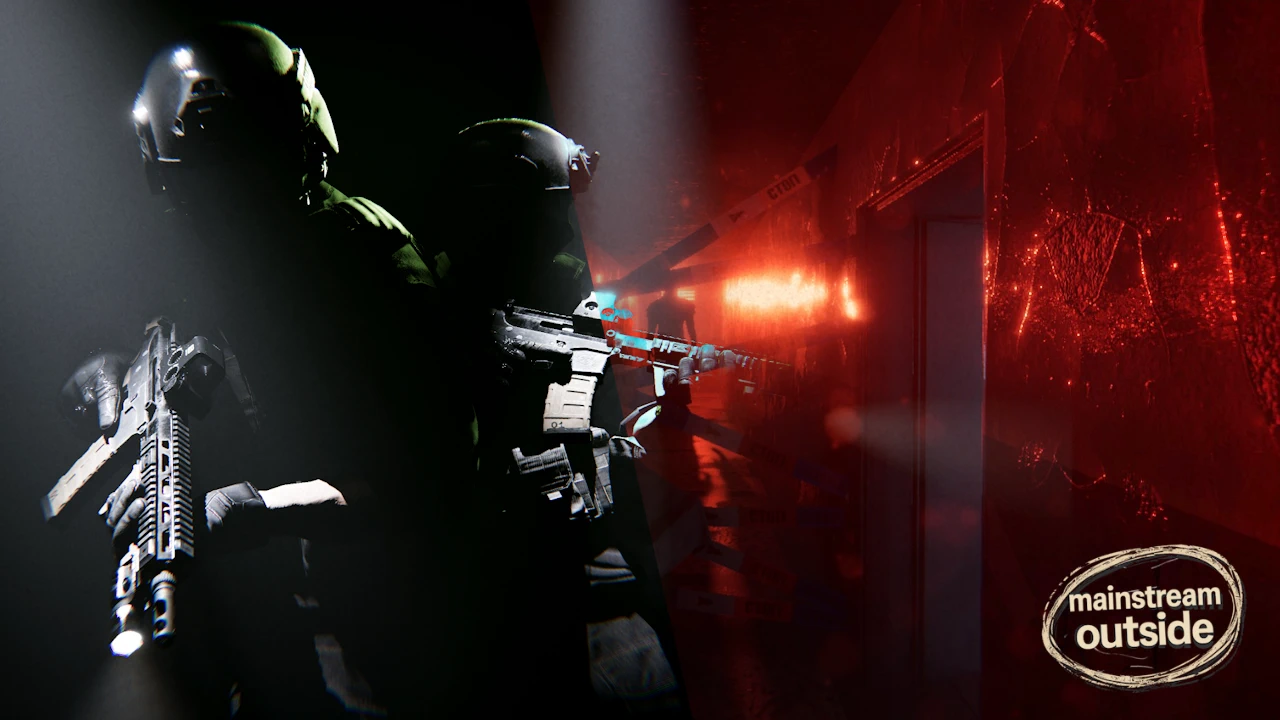
If you’re one of those gamers who already has their will written, Monolith Productions’ F.E.A.R. might ring a bell. The first-person shooter mixes tactical shootouts against frighteningly smart AI with paranormal horror—and A.A.U. Black Site does exactly the same thing.
A first-person shooter that follows the F.E.A.R. playbook? Good grief, I never thought I’d get to write that again. Sure, around three years ago we got Trepang², a cool (and brutally tough) slice of gun-heavy chaos that definitely called F.E.A.R. to mind. Still, it just wasn’t the same.
A.A.U. Black Site, though, builds itself around the same structure as its 2005 role model. That means the game alternates between two distinct modes: vicious, crunchy shootouts on one side, combat-free psychological horror on the other. Thankfully, A.A.U. hasn’t forgotten the thick atmosphere or the capable combat AI either.
I know this because I recently played through the final version of the demo. Below, you’ll find what I saw there and how this no-mercy shooter is shaping up. I’ll also answer the nasty question of whether A.A.U. has the potential to outdo the almost 21-year-old F.E.A.R.. Yes, believe me—modern first-person shooters do not enjoy that comparison.
Double-crossed special agent
A.A.U. Black Site is, "of course," a single-player shooter—and at least for now, that’s all it is. Developer Raspberry Studio is planning an Early Access release, though, so maybe a multiplayer mode will come out of that at some point. We’ll see.
As a battlefield for solo players, A.A.U. also serves up a story: you play Echo One, an agent of the secret special unit A.A.U., whose covert mission in Serbia goes sideways. The poor guy gets set up and captured; when he comes to, he finds himself in the abandoned territory of the former Yugoslav town of Uzovnica. His goal now is to figure out what led to all of this.
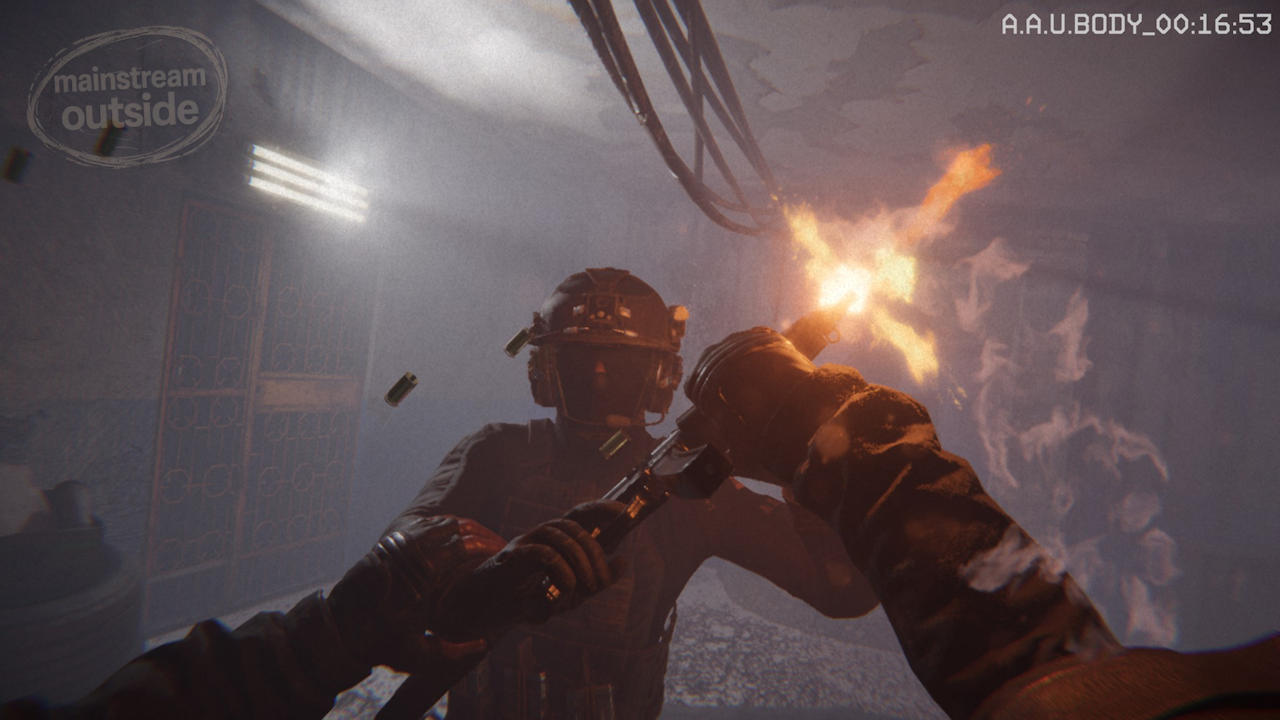
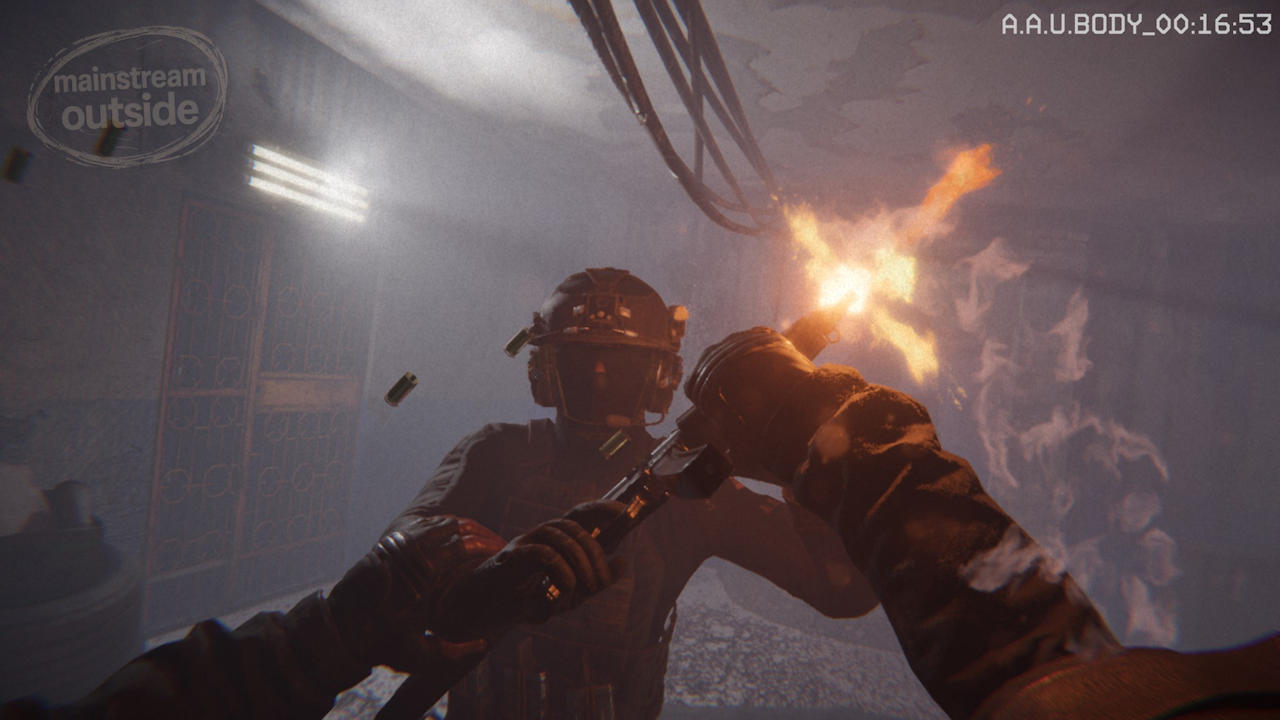
Once Echo One regains consciousness, things soon get physical with this enemy soldier.
Whether the story could fit on a beer mat is impossible to say based on the demo, of course. It only consists of one level, though that level is fairly large. The initial Early Access version is set to include two levels. Either way, Echo One gets the same kind of storytelling treatment Point Man did back in F.E.A.R.. In other words: every now and then, someone talks our hero’s ear off over the radio, purely for atmosphere.
Bodycam and photogrammetry
That said, A.A.U. Black Site doesn’t copy every single thing Monolith’s cult shooter did. One difference shows up in the visual style, for instance, because Raspberry Studio is using the currently trendy bodycam perspective. If you’re sick of that whole thing, don’t worry: I barely noticed the usual fisheye effect at all.
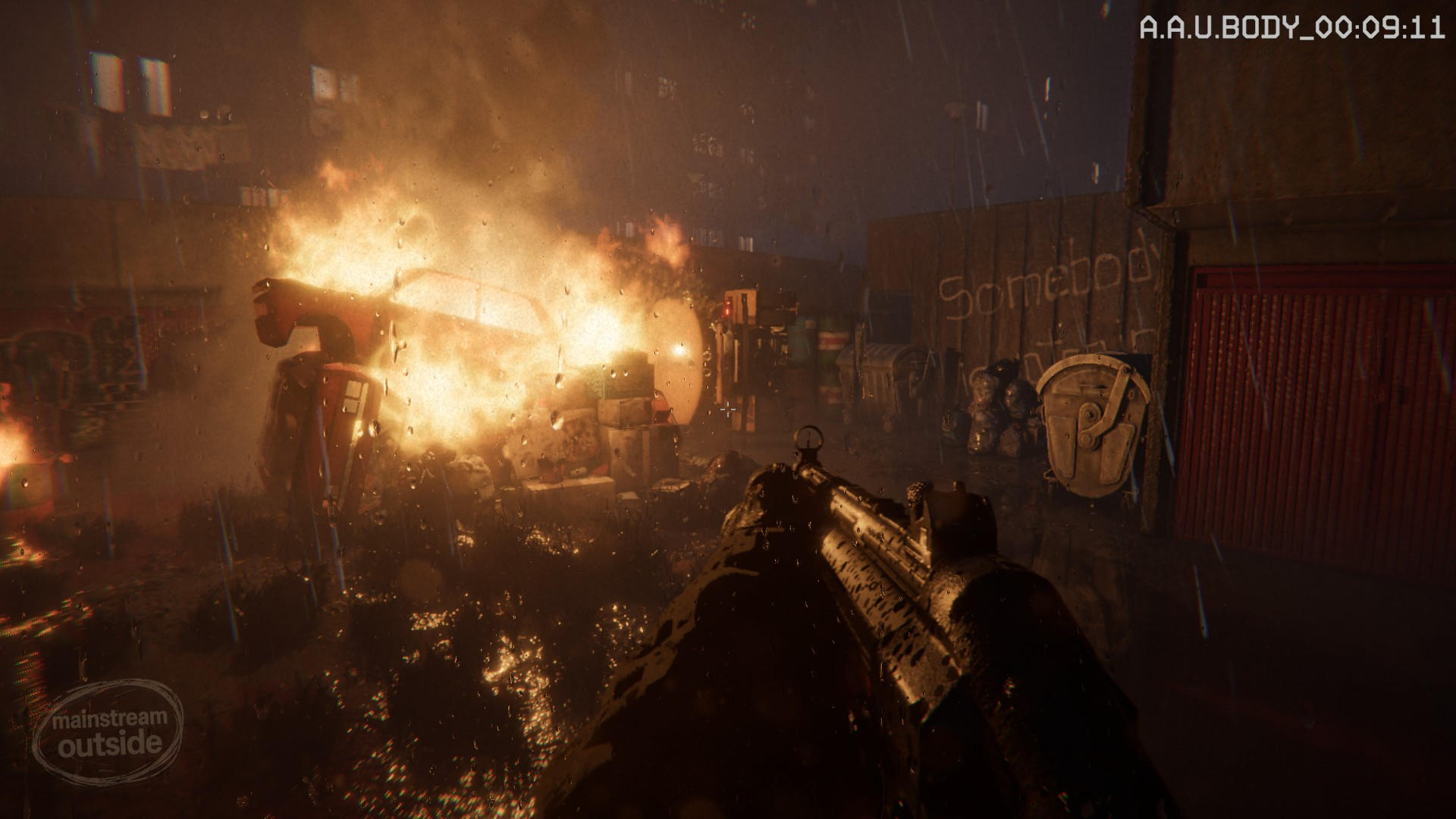
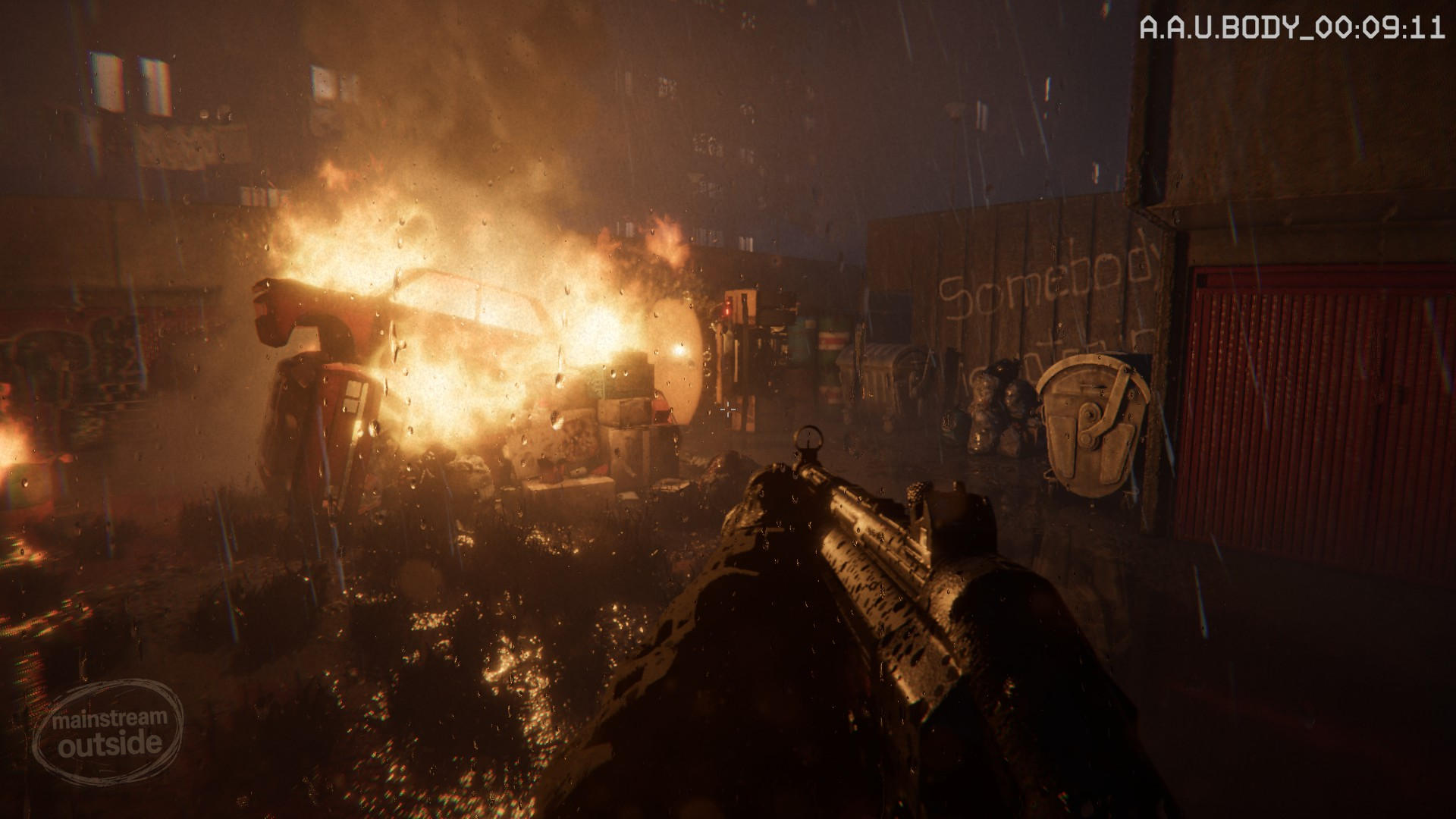
Yes, technically, A.A.U. is a bodycam shooter. But—do you really see much of that in this screenshot? I don’t.
So honestly, you can almost ignore the fact that A.A.U. calls itself a bodycam shooter. What does stand out, though, is the photogrammetry used here. You know the drill: environments and objects are largely assembled from real-world photos.
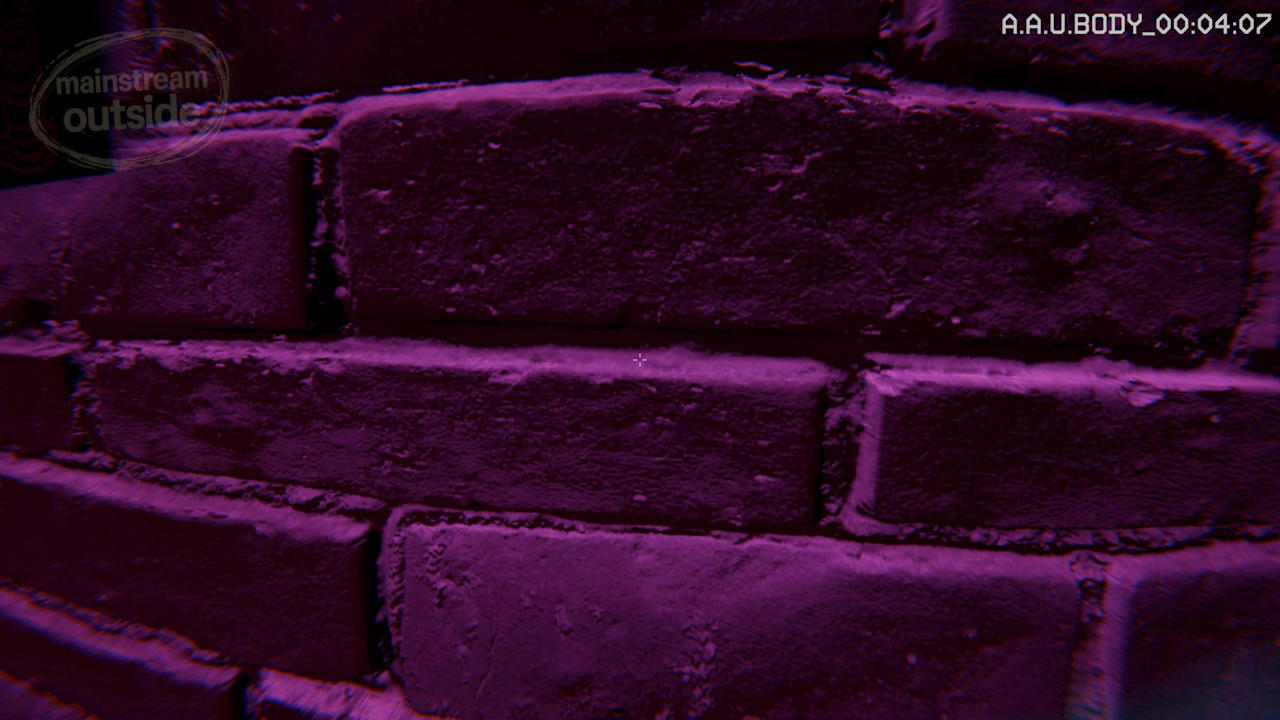
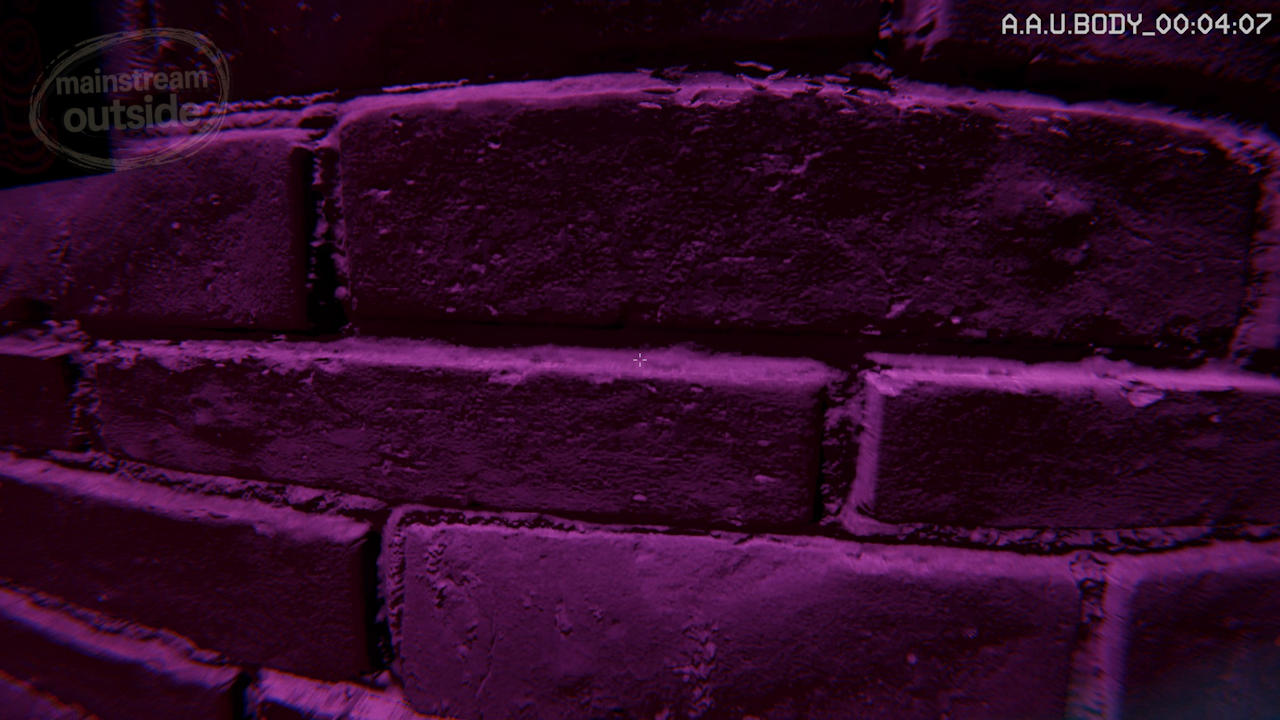
Some bodycam shooters fail to keep up their perspective-driven realism once you get close to things. Textures often turn to mush, but Black Site passes that test most of the time. To prove it, I took a few close-up shots; you can see one of them below.
Even when you get right up in a wall’s business, A.A.U. still looks pretty convincing.
Even so, while playing the demo, I never truly felt like I was inside some alternate reality. But it would be a lie to say A.A.U. Black Site doesn’t look good. I was especially impressed by the lighting and effects; you’ll see plenty of that in the next screenshots.
Smart levels, solid gunplay
Let’s move on to the game’s "phase one": the shootouts. What do those need to be fun? Exactly: smartly designed levels. You walk, run, or sprint through claustrophobic corridors in buildings ready for demolition, neon-lit clubs, and dark outdoor areas—in the demo, that mostly means garages and backyards.
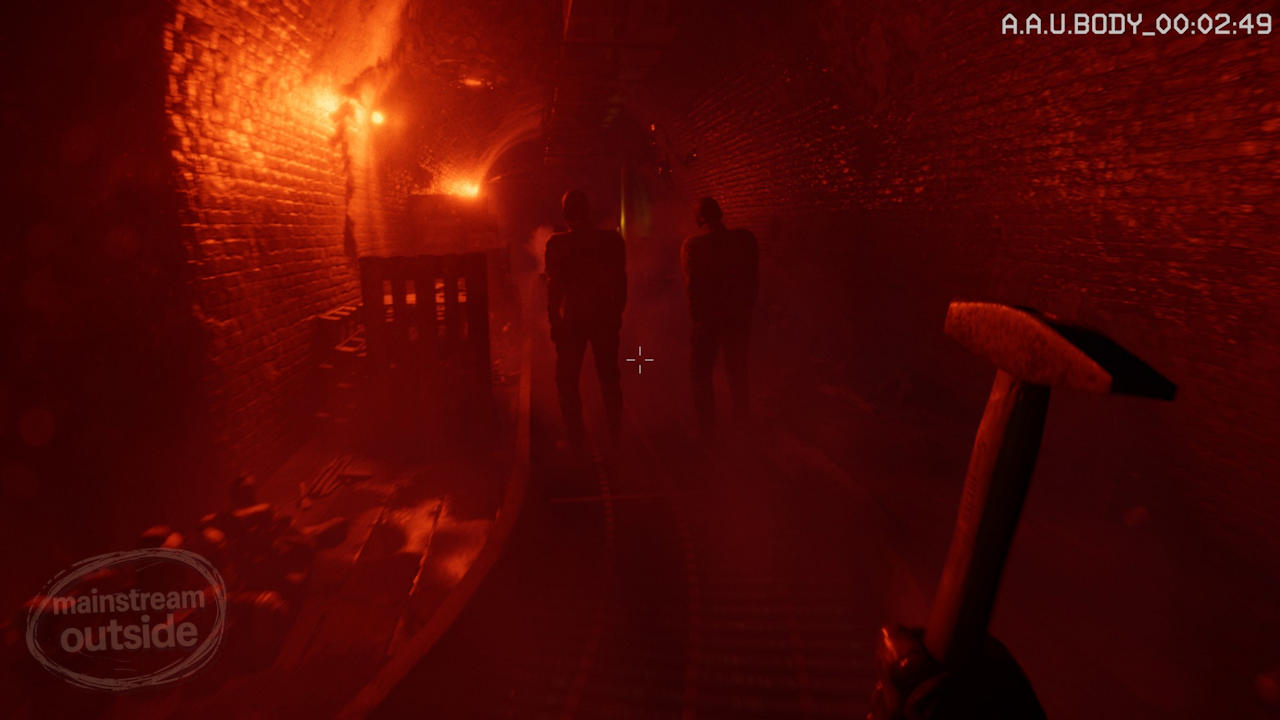
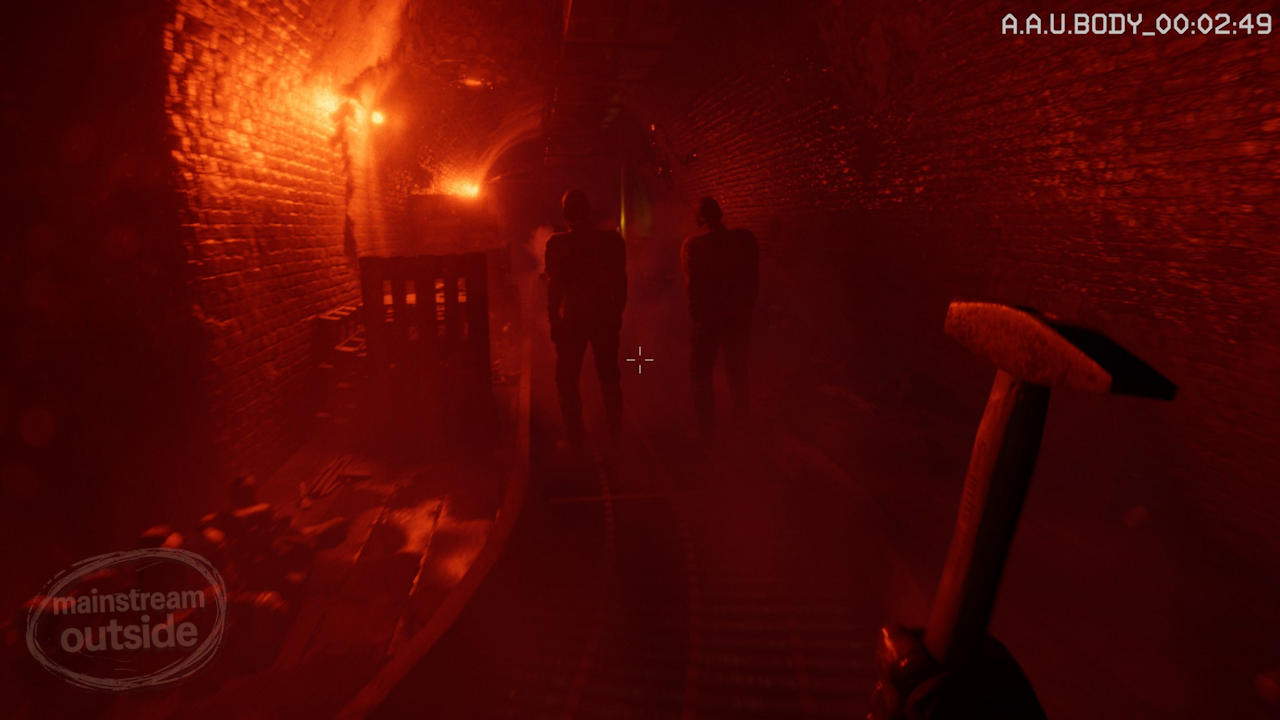
Whenever it matters, these spaces are designed with some imagination. Early on, that doesn’t matter much, because you’re busy smashing enemy heads with a hammer in an underground tunnel system. Those guys either have their backs turned to you, opening them up for takedowns, or they’re easy to outsmart. Mostly, this lets you enjoy the bloodbath. And yes, naturally—as a horror shooter, A.A.U. can get pretty damn brutal.
These two soldiers are about to develop catastrophic headaches. Assuming their heads stay attached.
Tactics are allowed
Once the evil hammer gives way to a pistol, shotgun, SMG, or machine gun, you need cover and tactical options, and the demo delivered. I could peek out from behind overturned tables or doorframes, shoot through car windows, ambush enemies inside an ammo room, blow up explosive barrels—basically everything you’d expect from a "modern" first-person shooter. Just one thing is missing: sliding. Which is why I died once in the garage courtyard.
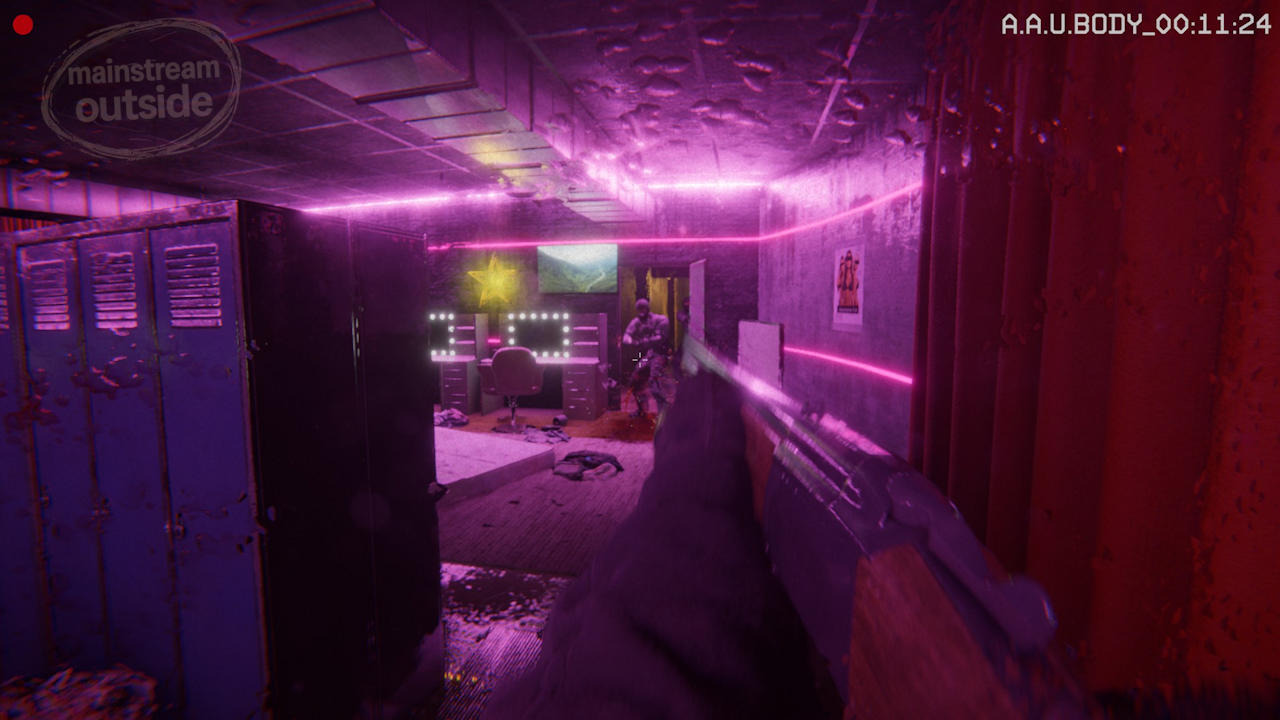
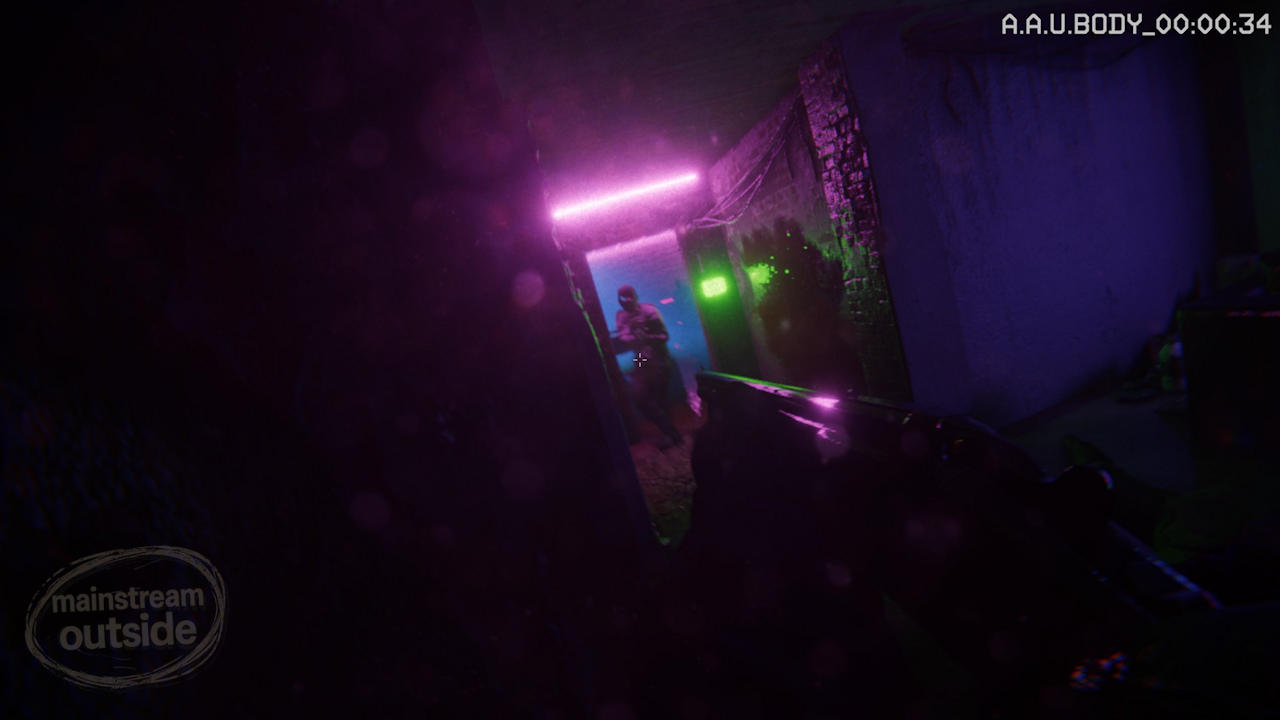
Bang, bang: when things get dicey, there’s always enough cover around.
Speaking of death: manual saving isn’t possible, and the designers clearly want it that way. Instead, you get the usual checkpoints, which felt fairly placed within the demo level. To make things easier or nastier, there are four difficulty levels, and only the lowest one, "Basic," is genuinely easy.
But let’s stick with the gunfights. There isn’t much to complain about when it comes to hit feedback or weapon sounds. Enemies respond both visually and audibly, and the guns feel punchy, though they’re not in id Software territory. If you like fiddling with fire modes, by the way, most weapons support them: single-shot, semi-auto, and full-auto.
The enemy AI knows what it’s doing
But what about that all-important enemy AI? Well, I could definitely tell the developers know F.E.A.R.. Enemy soldiers mostly avoid dumb, head-on pushes—only rarely do they march straight into the lion’s den.
Depending on the difficulty and whether your flashlight is on or off, these guys shoot increasingly well. I’d say their aim is generally good to occasionally too good; the downside is that they don’t pull off the brilliantly nasty AI maneuvers from Monolith’s classic. But they do actively flank you. Am I happy with that? Yeah, pretty much. I had a good time with the gunfights.
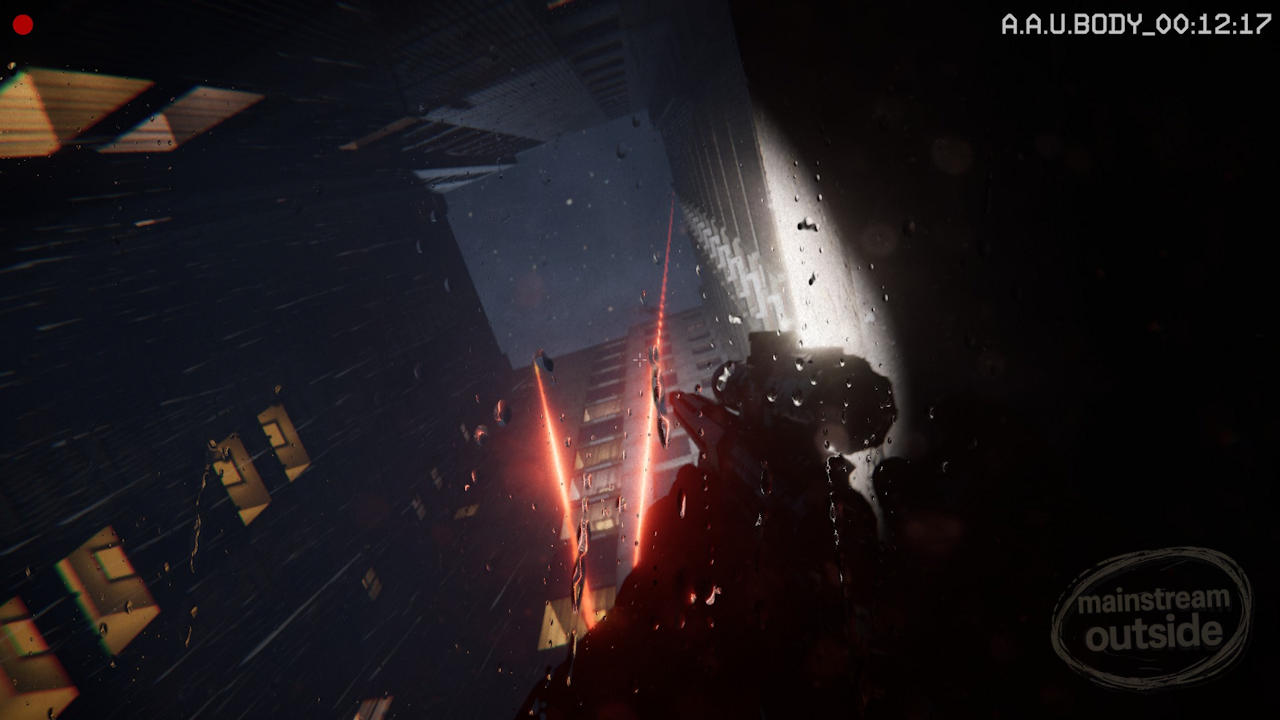
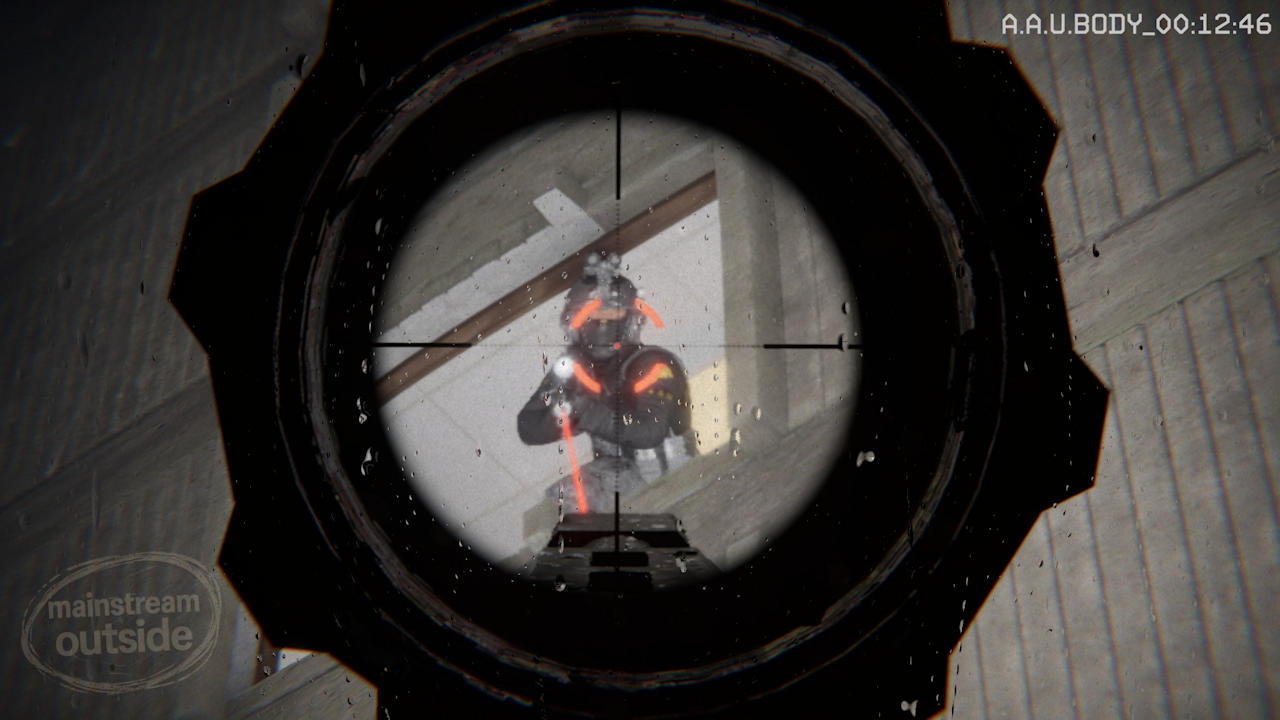
Ever been caught in a full-on sniper wave attack? A.A.U. Black Site has one.
My personal highlight of the demo was a high-rise courtyard where a ridiculous number of snipers had taken up positions along open corridors. At times, it felt like I’d stumbled into a sniper disco, because I was basically dancing through the laser sights of their rifles. Absurd on the one hand, hugely demanding and fun on the other. I especially liked that some of the shooters were positioned extremely far above me. That created a genuinely exciting sense of perspective.
When the darkness rolls in
With its horror side, A.A.U. Black Site steps into my personal top tier. Not only do I love horror in every form, I also make it myself as a musician and developer. 😉 I do want to praise the atmosphere of the scare sequences. Both the visual direction—sickly and beautifully grimy—and the heavy, pitch-black soundscapes work. Sometimes, though, they could dig their claws into the player a bit harder.
A good (or not quite so good) example is Lady Dimitrescu’s "little" sister, as I’m just going to call her. The room-high lady guards a key inside a rundown apartment and seems not entirely happy with herself; at least, she spends the whole time stabbing herself with a chunky kitchen knife.
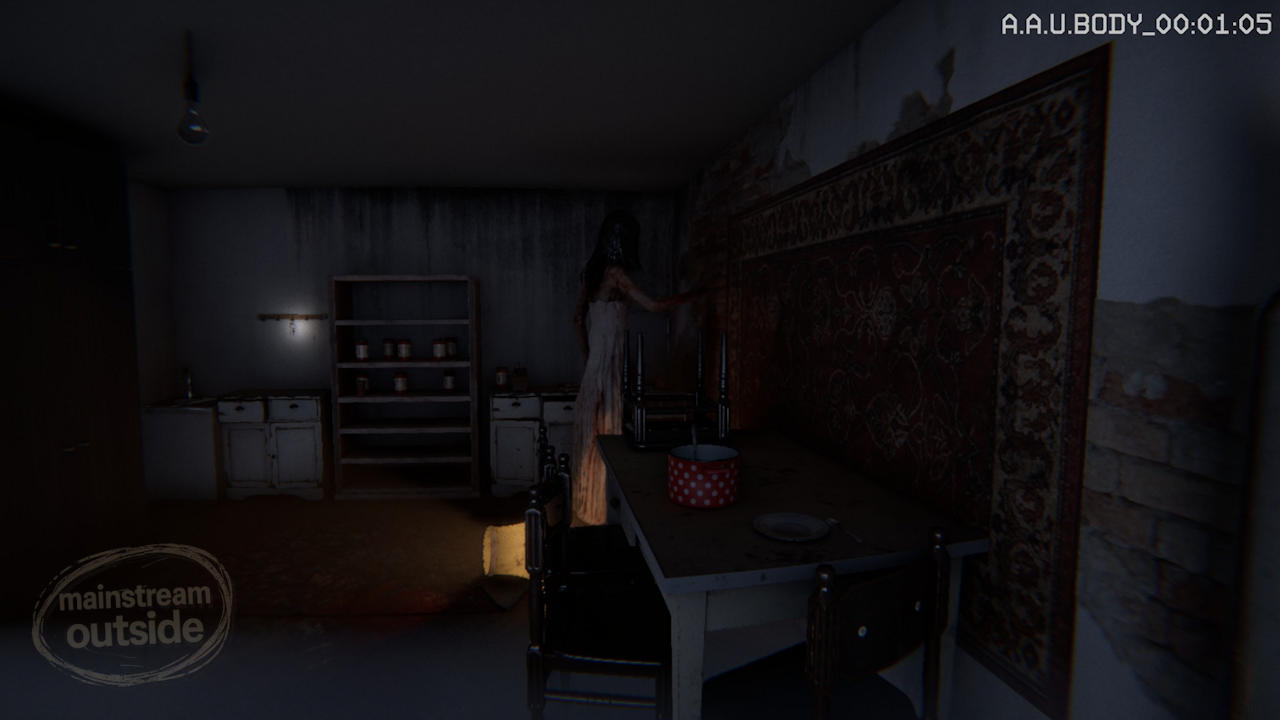
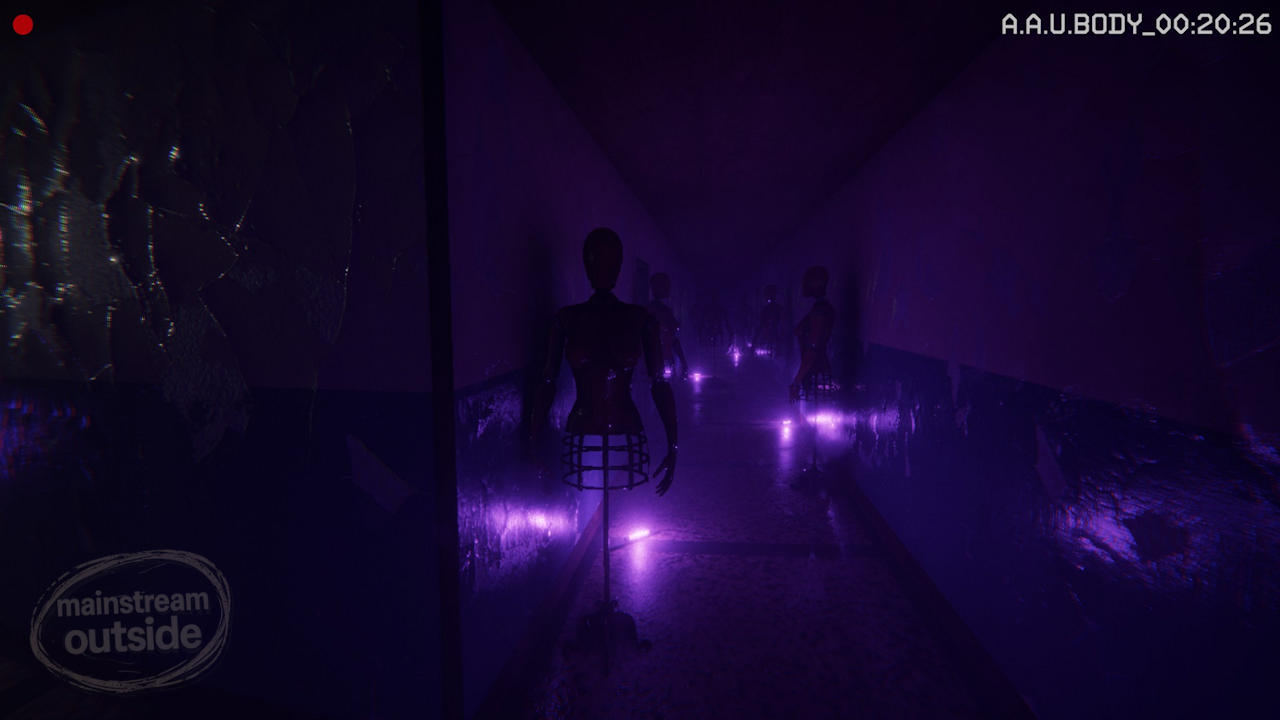
Two glimpses into A.A.U. Black Site’s horror department. Not especially innovative, but atmospheric.
Tricking this unsuccessful suicide candidate and then running away like a lunatic is fun, to be clear. Still, her screams and physical presence could hit much harder. The audio needs a little more dynamism, and I’m not even sure whether little sis makes footstep sounds at all. I’d have to listen for them specifically.
If I wanted to be mean, I could say we’ve seen these horror apartments packed with wooden mannequins before. Because we have. But—and this matters to me a lot—none of it felt lazily slapped together. I could tell Raspberry Studio had thought about when, where, and how it wanted to scare the player. And I’m pretty sure it’ll work on plenty of people.
Successful or not, though: based on the demo, A.A.U.’s jump-scare passages are also puzzle-driven. The preview doesn’t show off any challenging puzzles, but it does have some neat ideas. Like one sequence that makes you stab dolls and then throws in an unexpected twist. So the horror phases are a little like popcorn cinema: no major innovations, but definitely entertaining.
Verdict: Horror shooter fans should keep an eye on this
Compared to its grand role model F.E.A.R., A.A.U. Black Site still needs to step things up a little. Despite the massive age gap of almost 21 years, its enemy AI and gunplay still don’t quite reach Monolith’s shooter. Then again, that’s true of a lot of current shooting galleries.
Still, the developers clearly understand the formula that made their inspiration work, and they already reproduce it well in the demo—without merely copying it. The game’s technical state also leaves a positive impression: during my session, I only noticed minor rough edges, such as the occasionally superhuman aim of its enemies.
A lot can still change during Early Access, starting May 21, and the potential to move closer to F.E.A.R. is definitely there. So if you like horror shooters, my verdict is clear: keep this one on your radar. You can also try the final demo yourself right now on Steam.

Read next:
Comments