

Gaming without battle passes.
Takes without paywalls.
And stories without reposts.

Frostrail Preview: A Rusty Train, a Frozen Hell—and a Survival Game Already on the Right Track
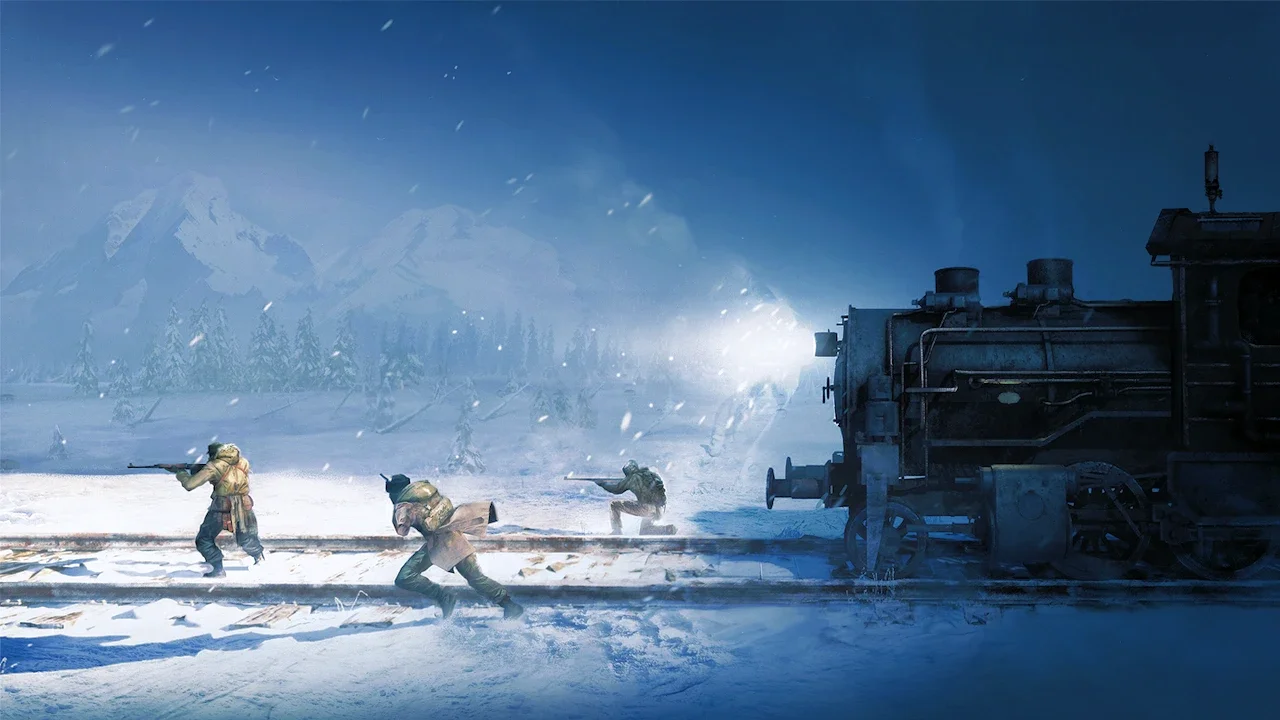
Frostrail takes survival onto frozen rails, much like a few other recent games in the genre. I wanted to find out whether this train ride through the icy tundra might be worth taking for solo players too, so I jumped into the current playtest.
Winter survival on rails? I first came across this quite literally cool idea—fittingly enough—in the winter of 2024. That was when the rather unwieldy battle train of Heat Death: Survival Train rolled into Early Access. Unwieldy because developer Mass Game Devs lets you cram things like entire base-building setups into its freight cars.
In other words, you can expand the train in all sorts of ways and, with a little creativity, even turn it into something else entirely—a "submarine," for instance. Frostrail is aiming for something similar, but unlike the single-player-focused Heat Death, it also comes with online co-op.
And that's exactly what I'm interested in ... not. 🙂 After all, even sorting peas while dosed up on Valium can be fun with the right company. No, I wanted to know whether Frostrail still has enough steam once you strip away the multiplayer dynamics, campfire stories and impromptu clown shows with friends.
The good news: when it comes to steam, Frostrail at least puts a proper old-fashioned locomotive on the tracks.
An emperor and his pact with the Void
My first question for Frostrail was why I'm supposed to be trundling through the tundra in a smoke-belching locomotive in the first place. What's the goal here? Escape to a warm beach in Hawaii? The current playtest build didn't give me an answer. It simply dumped me at a half-buried, crumbling station and immediately kicked off a basic tutorial.
So I had no choice but to consult the highly official Steam description. It tells of a once-mighty empire transformed into a frozen wasteland haunted by the undead and supernatural creatures after its emperor made a pact with the Void. Why His Majesty thought that was a good idea remains a mystery for now.
As a Penitent Gardener, you now cross this hostile world aboard the aforementioned steam train, fighting the cursed creatures and "finding salvation." That last part sounds suspiciously like a determined leap off a cliff, but presumably it means freeing the empire from whatever evil has consumed it.
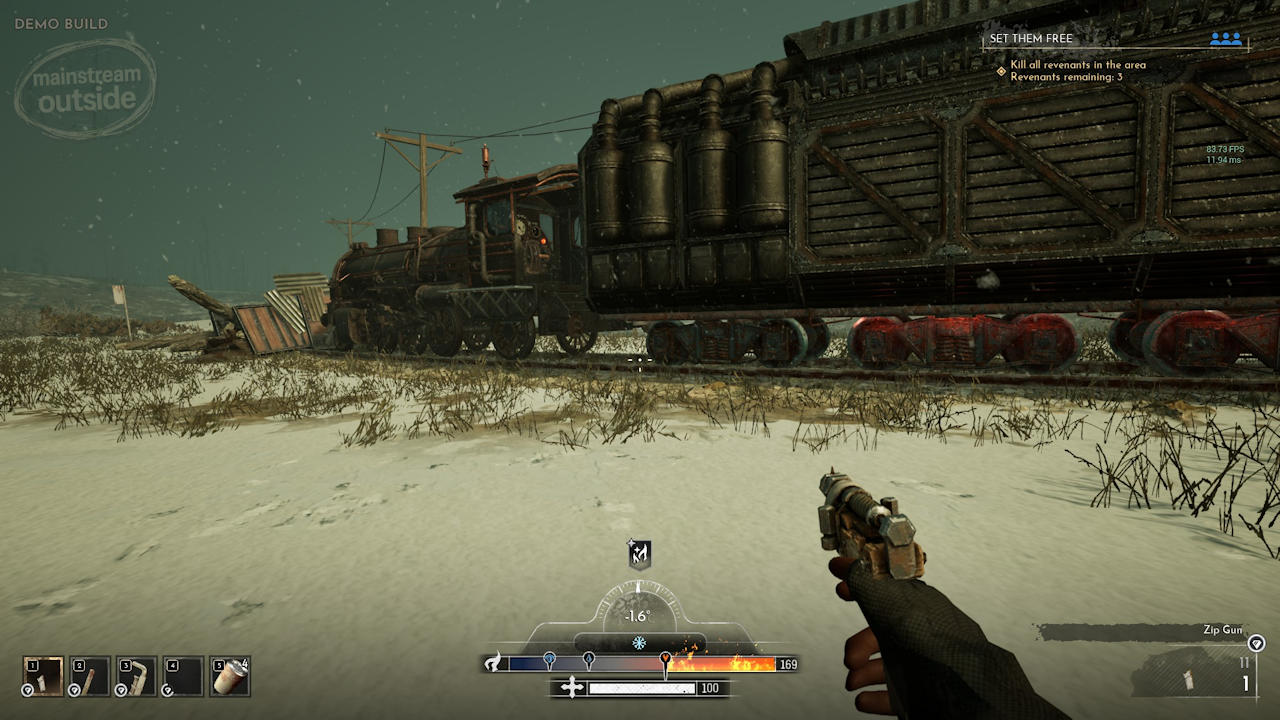
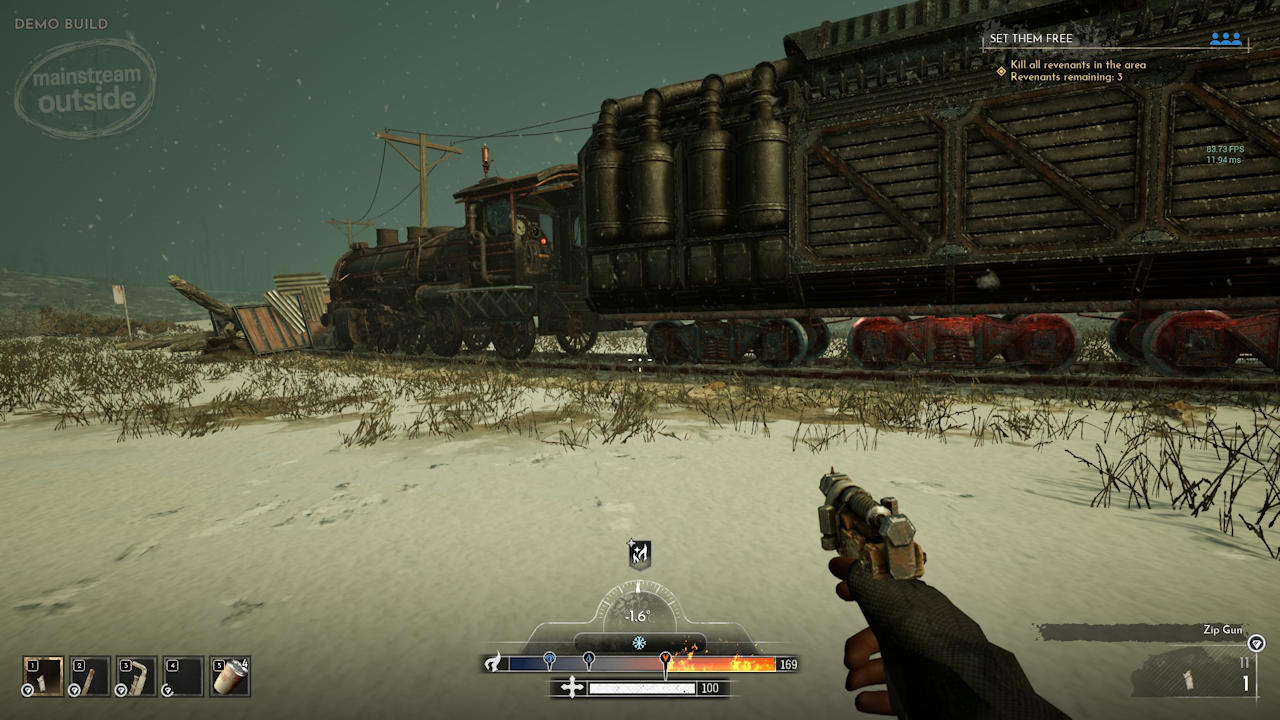
There it is: the steam train, still very short at the start of the game. A huge pile of scrap on the tracks blocks the way ahead.
Along the way, your armored train serves as a mobile base that you can keep expanding. New cars, crafting and weapon stations, storage containers, heavier armor and engine upgrades gradually turn the whole contraption into a fortress on wheels. And since we're on the subject, let's take a look at how you actually drive the thing.
How the "Iron Horse" works
Frostrail clearly isn't trying to be a realistic train simulator, but operating its controls still gives you a nice little taste of being an engineer. Before the steel beast can start puffing down the tracks, you first have to throw something combustible into the firebox.
Unlike on a real steam locomotive, the firebox isn't inside the engine itself. It's housed in the car directly behind it. I doubt the developers were trying to rewrite railway history here; it's more likely about keeping the game's main functions in one convenient place. Because moving the firebox out of the locomotive means you can set up your most important workbenches right around it.
Coal is obviously the ideal resource for building pressure, but you don't have any at the beginning. So instead, you stuff whatever you can find into the firebox slots: branches, logs, books, table lamps and so on. Then you light it and regulate the pressure with a lever. The higher the pressure, the faster the train goes—but higher speeds also burn through fuel more quickly. Makes sense.
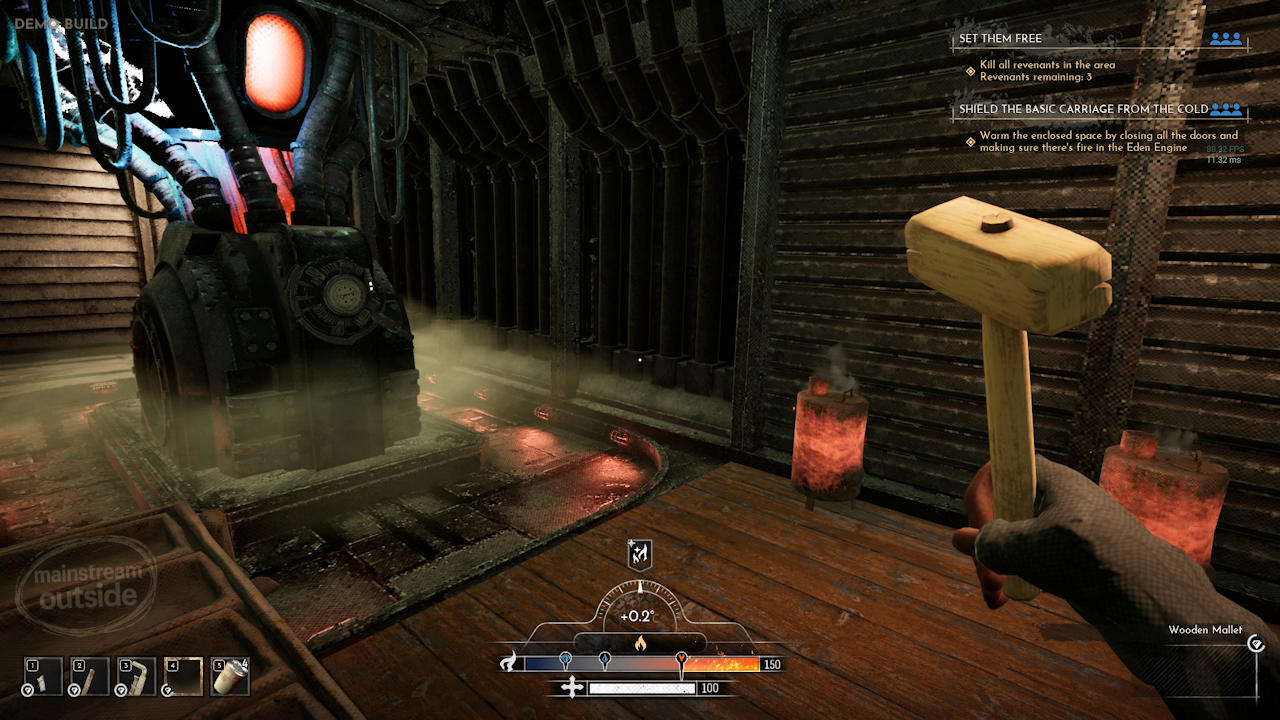
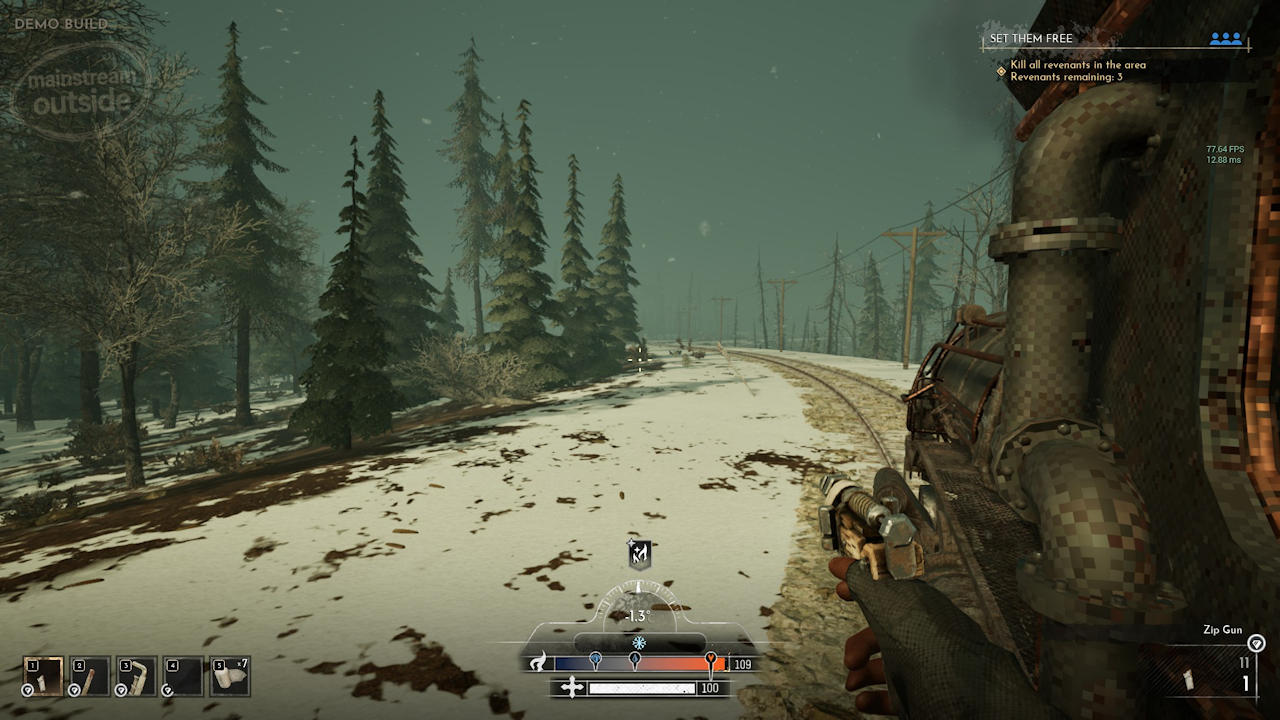
Left: I've already installed a few heaters here. The firebox is just to their left. Right: Standing on the locomotive's ledge.
The locomotive cab itself contains just two levers and a few buttons for the lights. The first lever controls the train's direction and gets it moving, while the second acts as an automatic brake. Push it upward and the locomotive stops at stations and points of interest. Push it down and the train keeps rolling without stopping until it runs out of fuel—or something like a barricade or a dead-end track brings the journey to a temporary halt.
All of this already worked pretty well in the playtest, although Frostrail is heading into Early Access, so naturally it still has a few quirks. One example: after my train plowed straight into a barricade, I hopped out to inspect the obstacle. And guess what? The locomotive promptly decided to accelerate in the opposite direction and—bye!—disappeared over the horizon, practically laughing as it went. Well, it felt like it was laughing. At least I managed to retrieve the smoking fugitive at the previous station and file the whole thing under harmless alpha mishap.
A workshop on wheels
At first, the inside of the armored train looks like a run-down state apartment in Cuba five minutes after you've been handed the keys. So one of your first jobs is repairing the half-destroyed rear car, which is little more than a floor, a roof and some wheels.
Base building works much like it does in countless other survival games: you pull out a hammer or a repair tool and right-click to either select one of the available blueprints or interact with a damaged section. If you've got the required resources in your inventory, you're basically good to go.
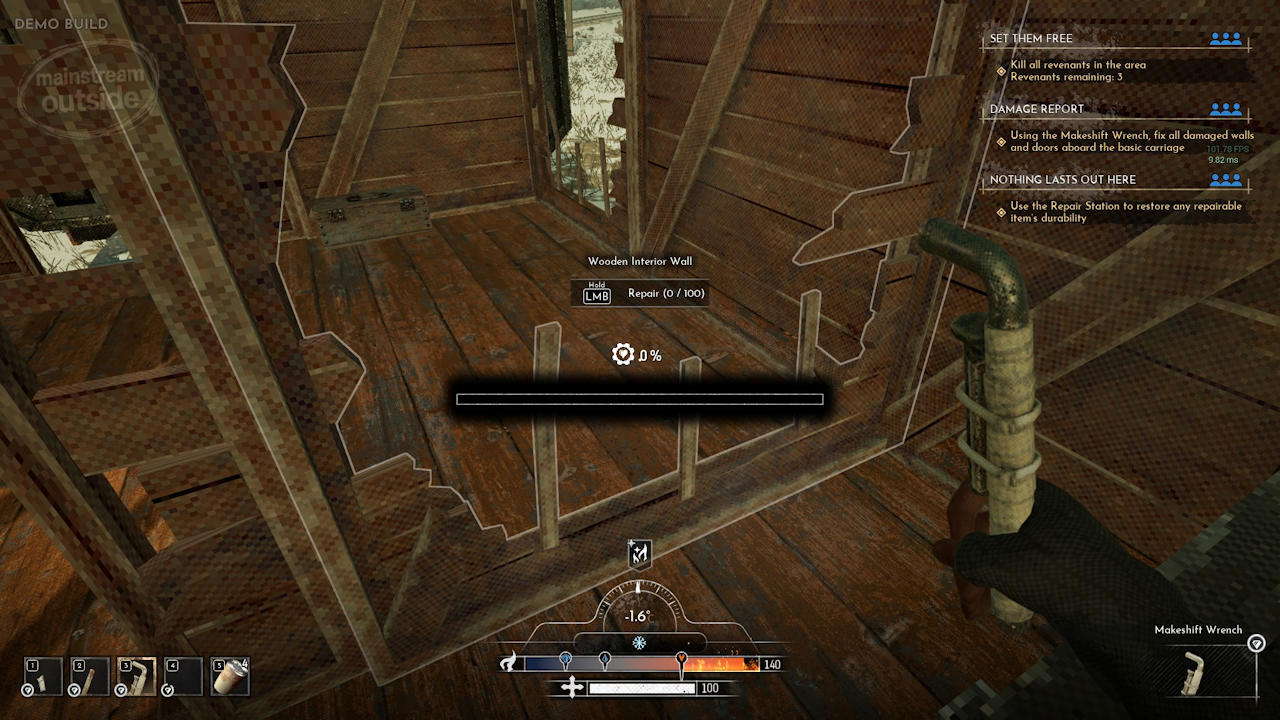
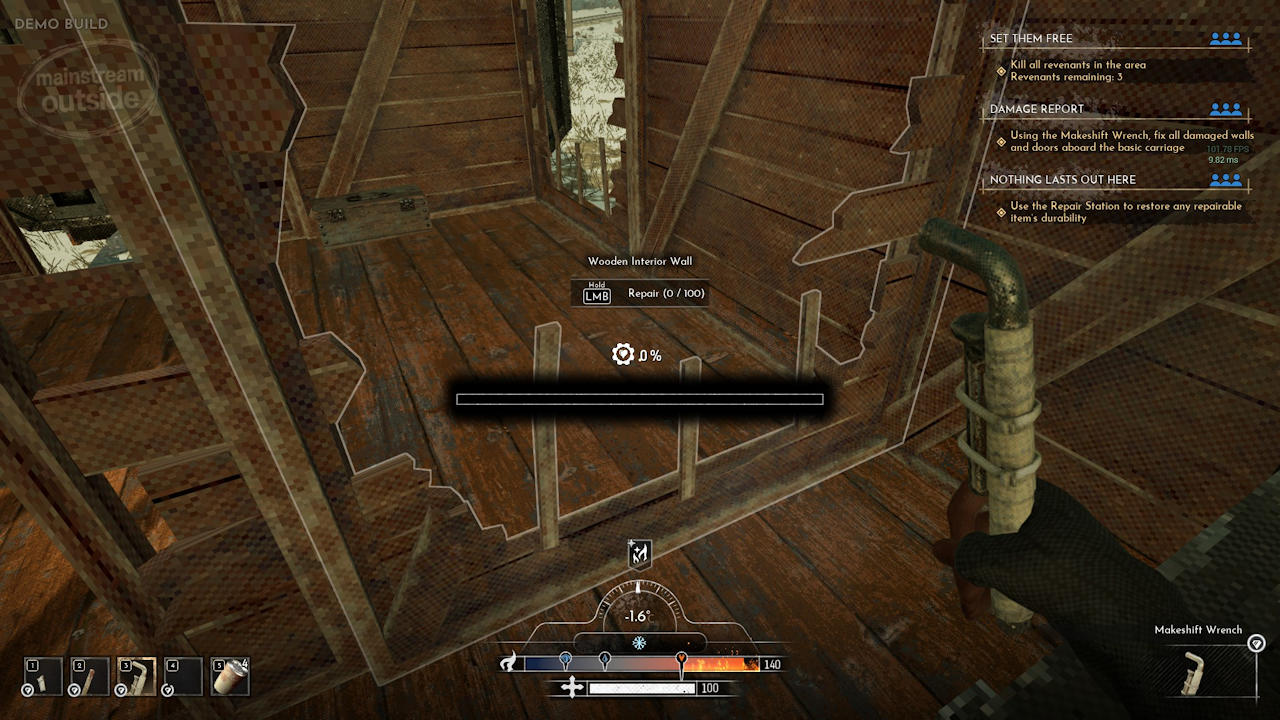
The train's rear car is half destroyed. Here I'm repairing an interior wall with the repair tool.
Repairs are completed with a click in a matter of seconds, while new objects sometimes need to be rotated before you place them inside the car. Placement isn't completely freeform, but you can use the limited number of available spots however you like. New blueprints unlock in a linear progression: if you want access to more building plans, you first need to construct the objects you've already unlocked. Early on, you can build things including:
- Cooking station with plenty of recipes (the recipes also unlock in a linear progression)
- Recycling/sorting station for extracting resources from all kinds of objects
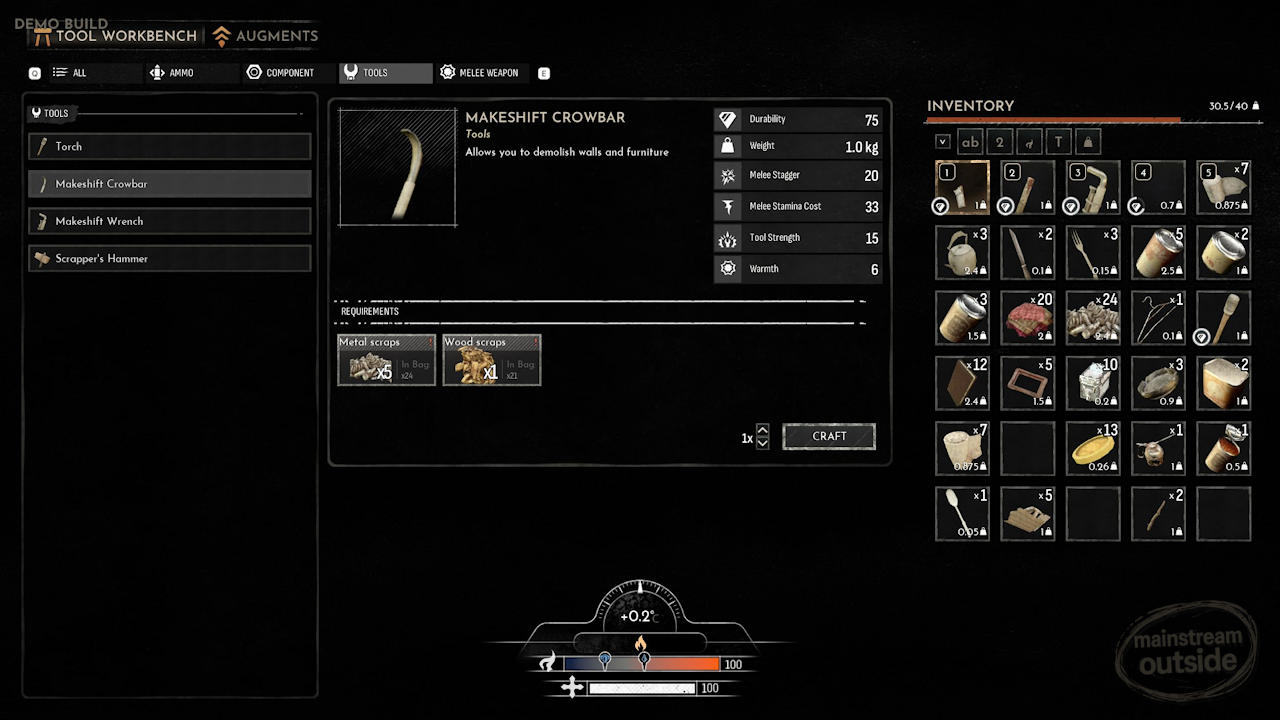
- Tool bench for crafting tools as well as improvised melee weapons and firearms
- Repair bench for restoring worn-out items
- Heaters
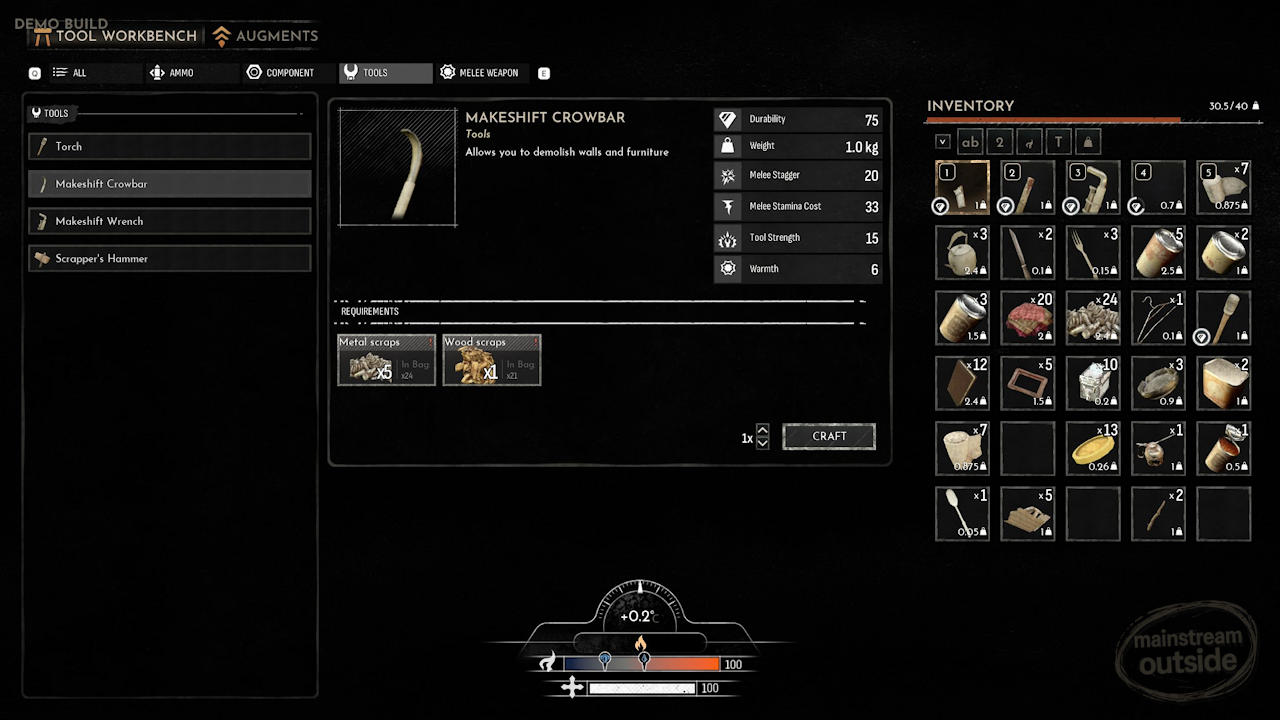
The tool workbench interface. I'm currently crafting a makeshift crowbar.
Although your character starts suffering from the cold depending on the temperature and what they're wearing, heaters are pretty unnecessary during the opening stretch. For one thing, the temperature inside the train generally doesn't drop below the critical zero-degree mark. More importantly, the firebox still gives off enough heat even when there's absolutely nothing burning inside it—which probably isn't quite how that's meant to work. So if you've been freezing your nose off outside, just stand next to the firebox for a moment and you'll be nice and toasty again.
I don't have any major complaints about either the crafting system or the base building, even if the occasional wall refuses to snap into place on the first try. It's worth keeping in mind that the noticeably restricted playtest build barely gave me a chance to create any more elaborate train layouts. So I'll put it this way: thanks in part to the solid controls, both systems already feel fundamentally sound.
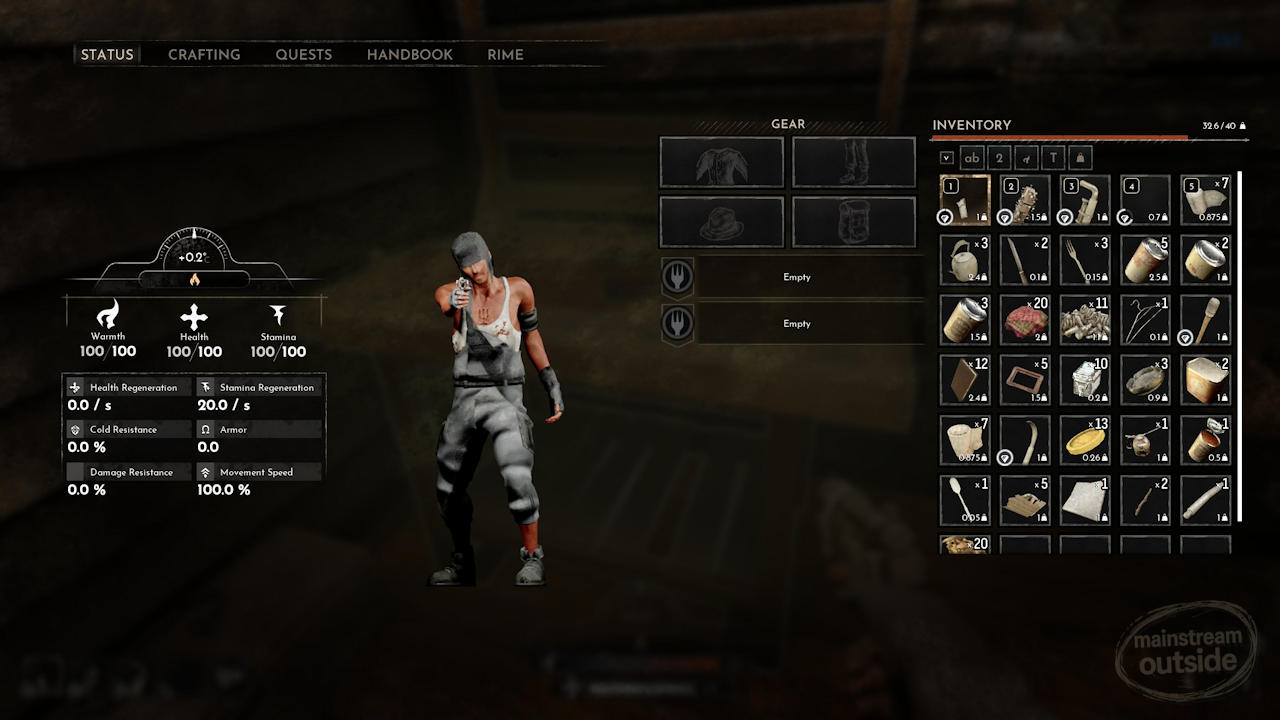
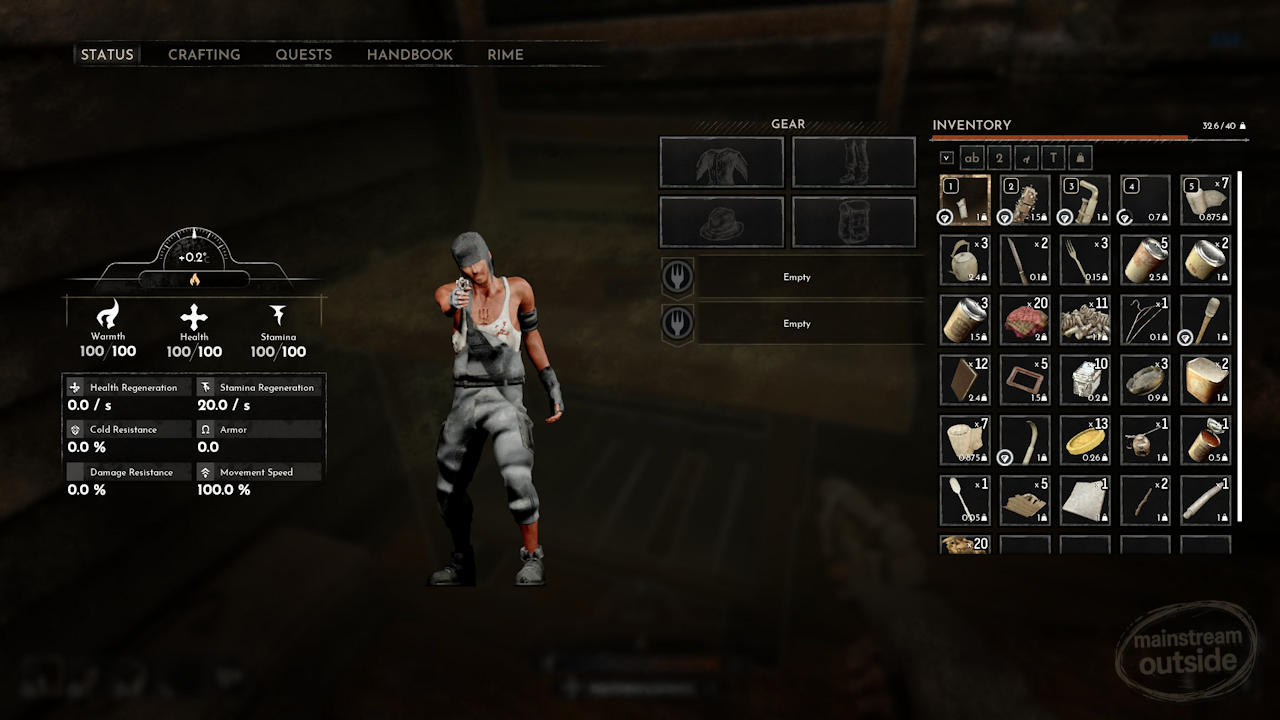
A look at the player status screen and inventory. The "Crafting" tab lets you put together the most basic survival supplies.
The playtest only shows you slivers of the world
I'd actually hoped to get a much better sense of the world beyond the train as well. Unfortunately, the lengthy tutorial section and a few apparent bugs got in the way. Yes, there is life beyond the train in the playtest build—as long as you're a good little scavenger and stay close to it.
Whenever I tried venturing deeper into the snowy woods, the cold practically froze my nose off and I respawned back on the train. The same thing happened if I explored the tracks more than about 50 meters in either direction—sorry, too cold, respawn. To be fair, this may simply be a restriction built into the tutorial. It becomes a bit of a problem, though, when your current objective is to eliminate every enemy in an area and those enemies never actually show up.
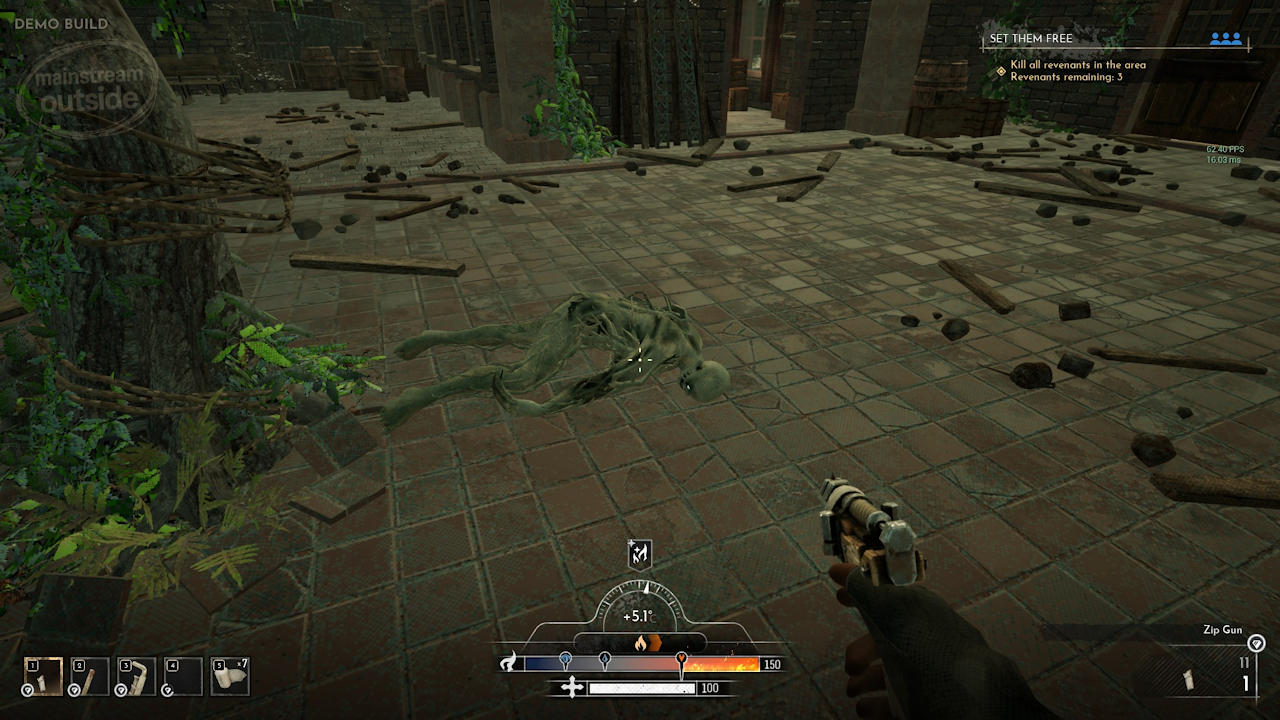
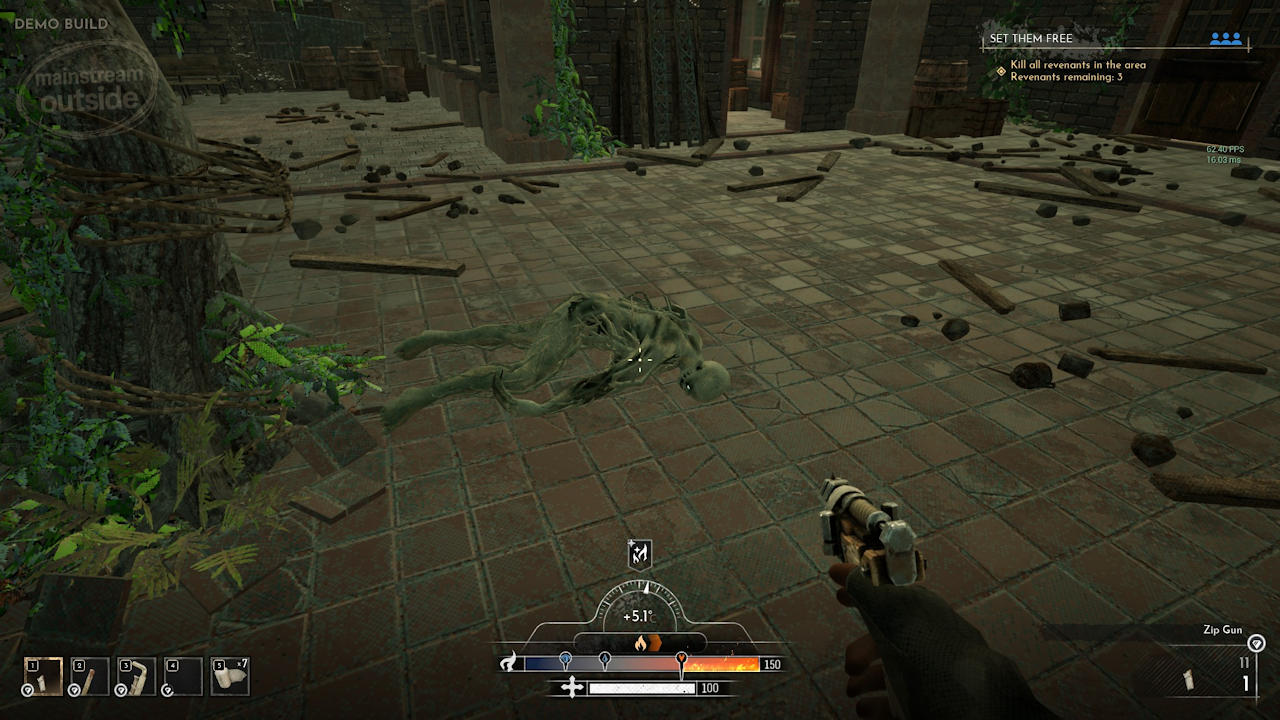
Revenants look like a cross between plants and zombies—and they're Frostrail's first enemies.
I did at least get to try out a little of the combat. I care a lot about impact in games like this; I want to clearly feel and hear it when I smack an enemy over the head with a nail-studded club. Or perform some reverse cosmetic surgery on their face with a makeshift pistol. Well, the sound effects are certainly loud, but they also have that unmistakable stock-library quality that makes them feel a bit cheap. Side note: the music, by contrast, is wonderfully atmospheric and sounds every bit as icy as the world around you.
Since the few human Revenants—the first enemies you encounter—were practically served up to me on a platter, I can't really judge the combat AI. Beating the snot out of them did feel ... well, solid again from a technical standpoint. Still, my gut tells me the "proper" fights may feel very Early Access at first: functional, but not quite fully cooked. Given how limited the playtest was, though, that's no more than a cautious first impression.
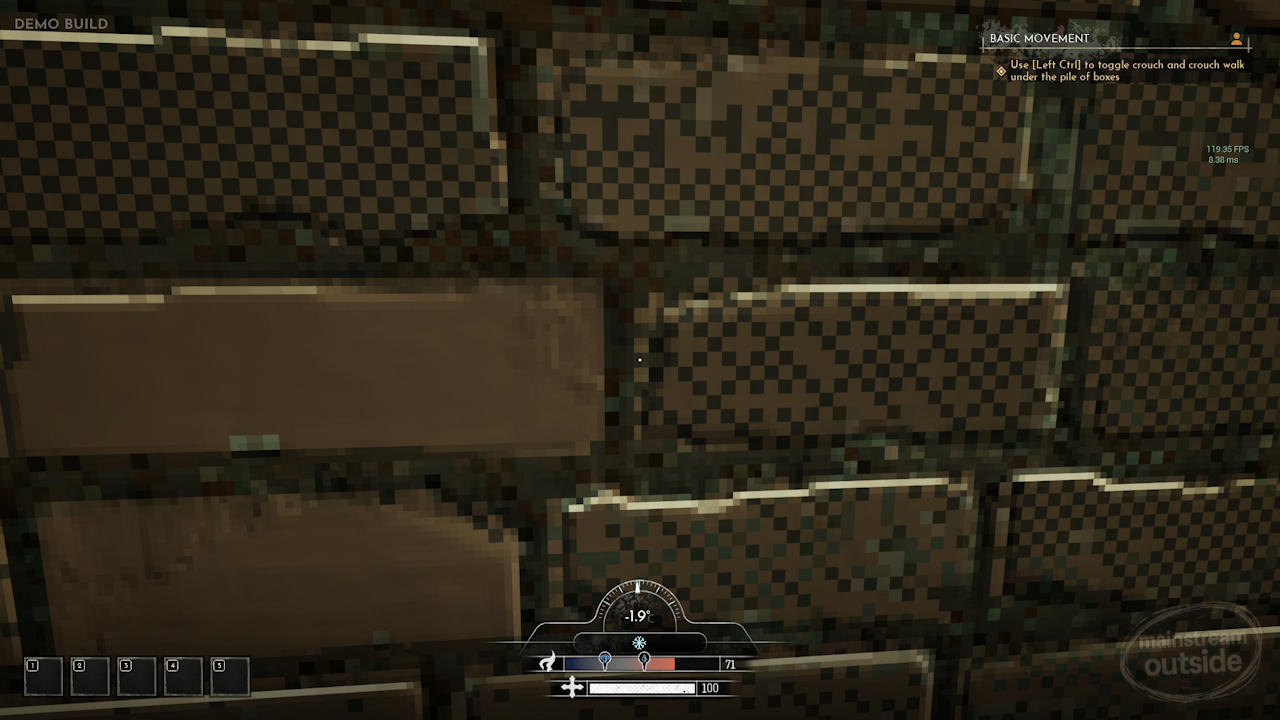
Frostrail looks pretty good—as long as you don't get too close to anything.
The last human on earth
So what else does the playtest world have to offer? Short version: snow, rocks, trees, a signal box and a few small stations. That's it. Feel free to take me literally. You won't see a single animal or NPC out in the tundra; just a handful of undead patiently waiting for someone to knock some sense into them.
Sure, a station in a frozen wasteland like this can be deserted. No argument there. But when even the signal box is unmanned, you start to suspect that the players themselves are expected to provide most of the life in this world.
Of course, tutorials tend to introduce things slowly so new players don't get overwhelmed. But I also expect a playtest to make me hungry for more—to dangle a few tasty morsels in front of me. Frostrail didn't give me many.
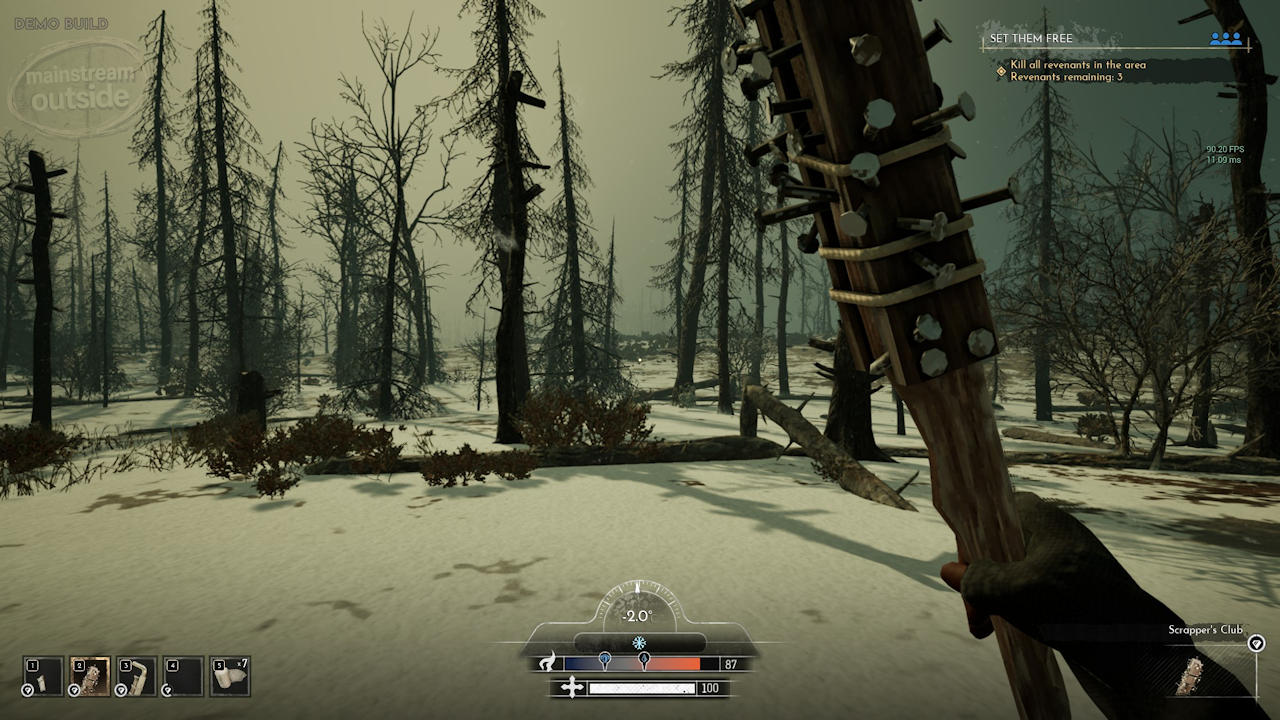
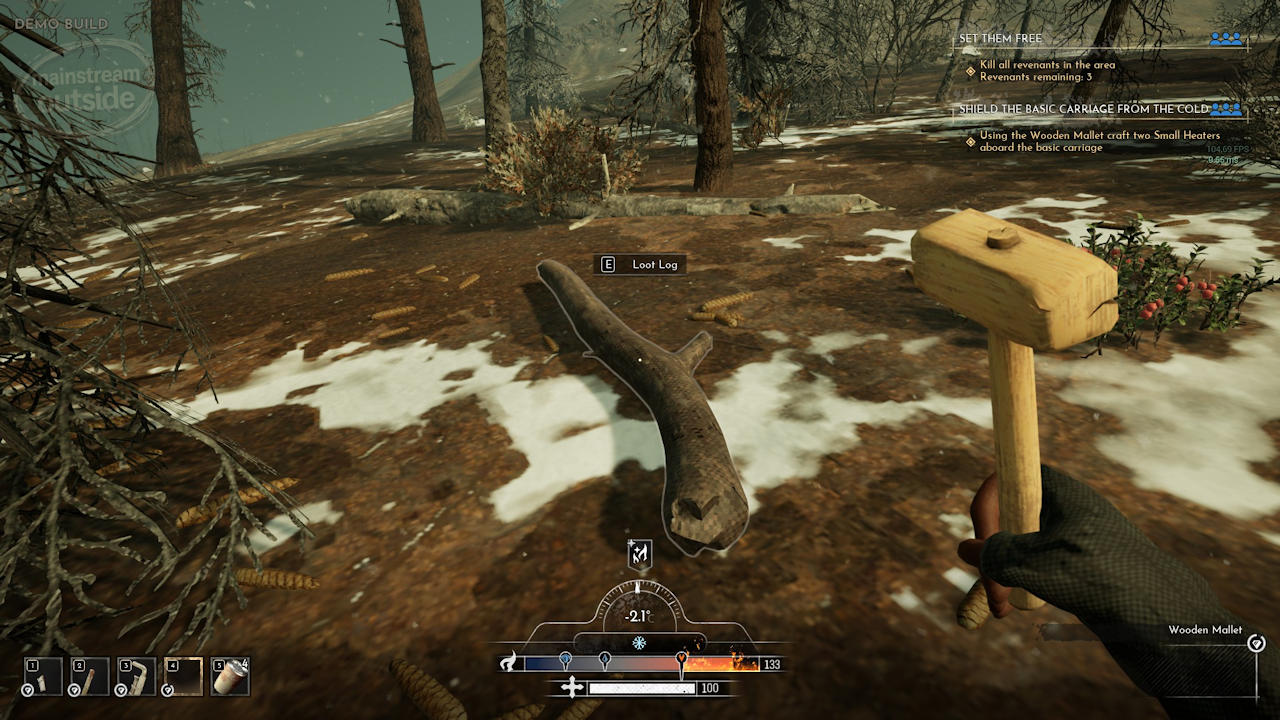
Left: Hunting for enemies with the nail-studded club. Right: Branches are just lying around—the playtest doesn't let you chop down trees.
Verdict: The playtest doesn't show enough
It's a shame: my time with the Frostrail playtest wasn't exactly smooth, especially when it came to combat. Enemies were either practically tied up and served to me on a platter or didn't appear at all—and that happened precisely when beating them up was required to make progress.
The game world came across as a completely deserted but atmospheric frozen wasteland. The foundations are there; whether Frostrail can build on them with enough interesting encounters and discoveries over the course of Early Access remains to be seen.
Frostrail is further along in other areas, particularly crafting and base building. Looting buildings also worked without a hitch during my session, although it wasn't especially rewarding. That's what happens when nobody's around to guard the "treasures."
The trailer below gives me much more hope on that front. It does a pretty good job of showing what Frostrail ultimately wants to become, and that could absolutely work for solo players too. The playtest itself just couldn't prove it to me yet.

Read next:
Comments