

Gaming without battle passes.
Takes without paywalls.
And stories without reposts.

Routine Review (PC): A Big Fat “No” to Hand-Holding
The sci-fi horror adventure Routine is a straight-up rejection of hand-holding. So if endless tutorials make you want to flip the bird, and you’re also not afraid of “2001: A Space Odyssey,” you might’ve just found your new favorite game.
What is Routine about?
Sorry for pulling out an ancient PS2 relic here, but does the name Echo Night Beyond ring a bell? No? It’s an absolutely brilliant atmospheric horror adventure from 2004, and Routine now steps right into its footprints.
Because just like that From Software joint (yeah, those guys used to do more than the eternal Dark Souls/Bloodborne/Elden Ring grind 🙂), Routine shoots you to the Moon and lets you wander a deserted base. The core gameplay revolves around versatile multi-tool puzzles; on top of that, stompy nightmare robots—and a bizarre human-alien hybrid—hunt you through the place.
While the stealth bits and most puzzles pump plenty of dopamine straight into your brain, Routine’s real centerpiece is its story. It honestly works as a novel pitch, and it’ll even make seasoned philosophers pause for a second. Sound like your thing? Then let’s put this potential sci-fi banger under the microscope.
The story: Philosophy instead of IT
Routine deliberately keeps it vague who exactly the guy is that you’re playing. Judging by the gear, he’s some tight-lipped maintenance/security grunt, sent in to check the moon base systems after an anomaly is detected. Just routine work... right?
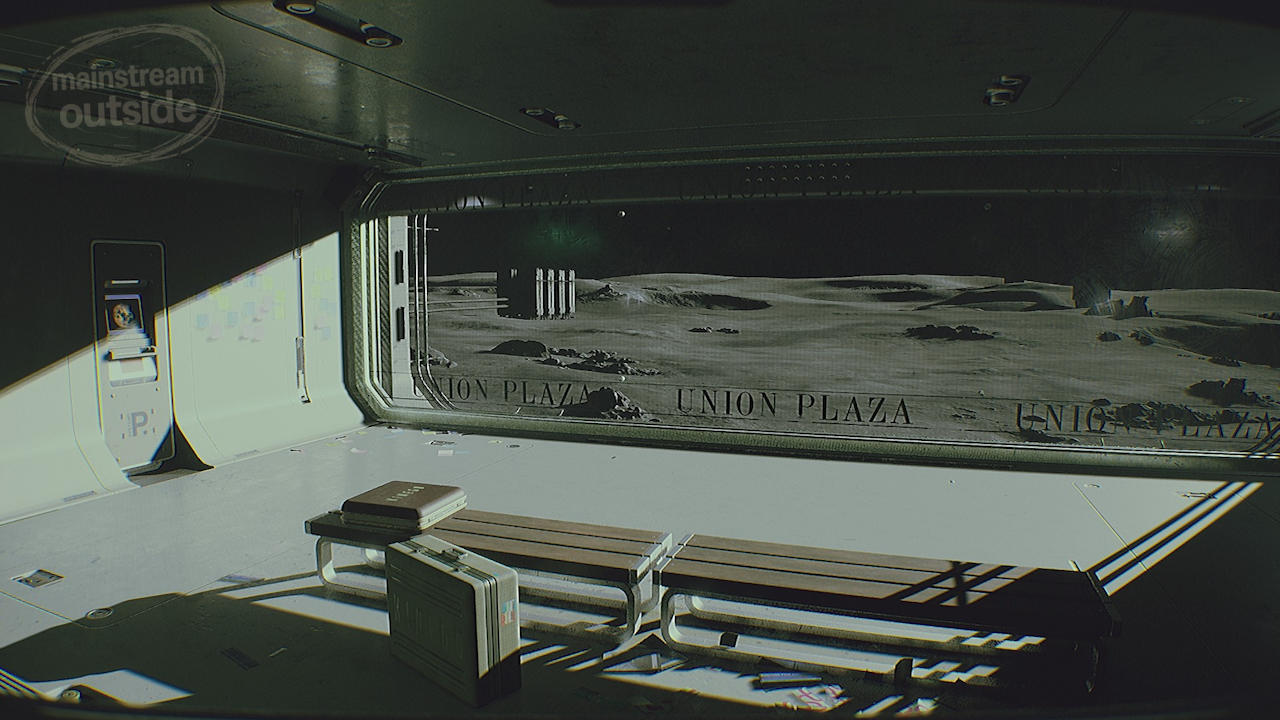
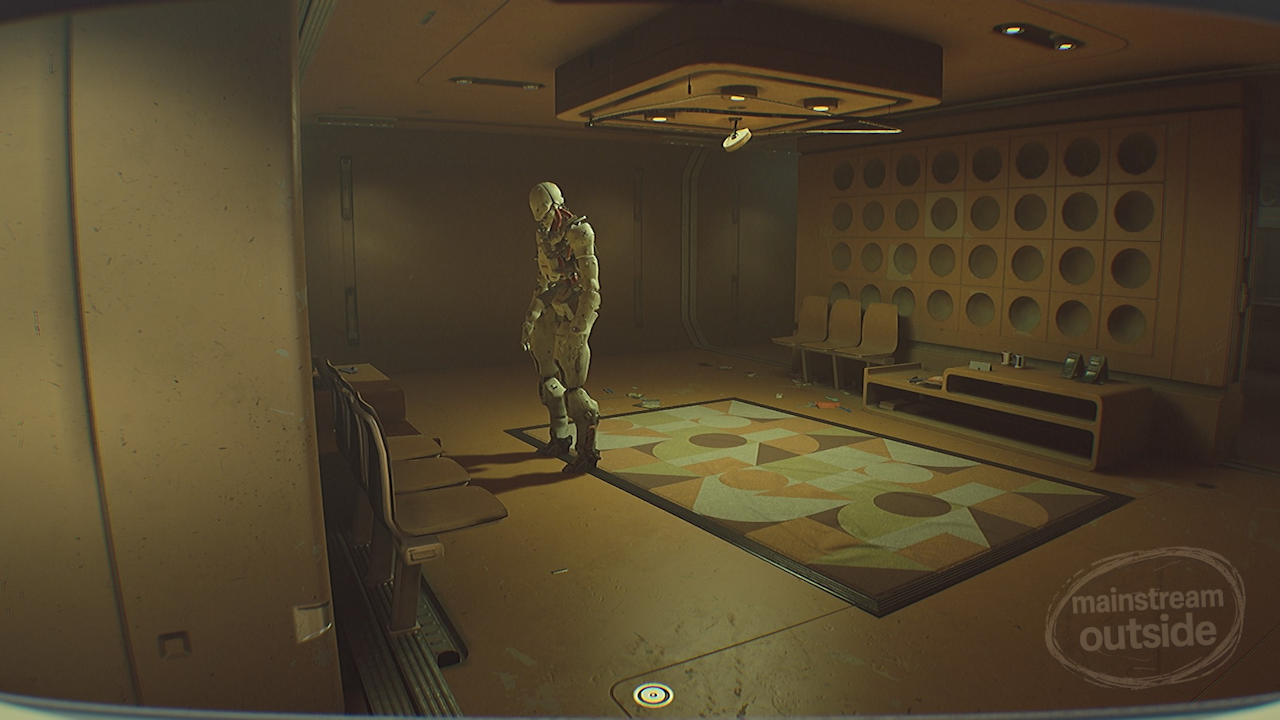
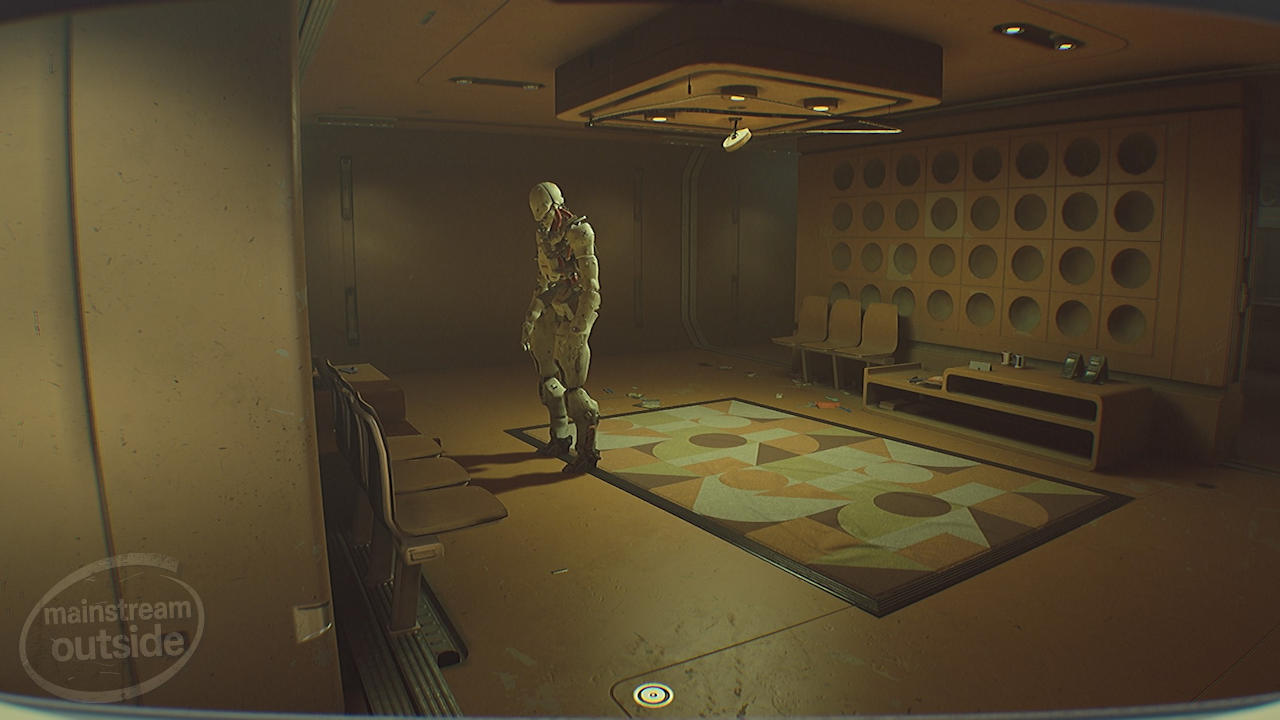
This part of the moon base is the first thing you’ll see in Routine. For now, everything is quiet…
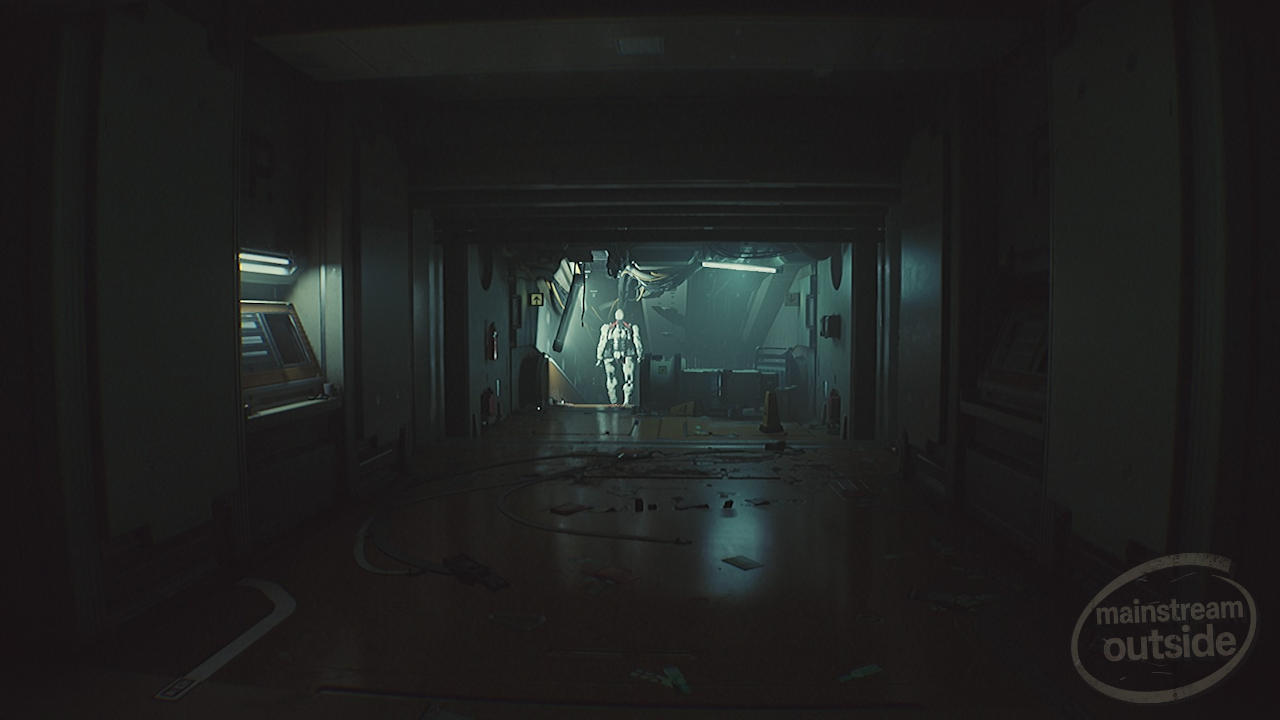
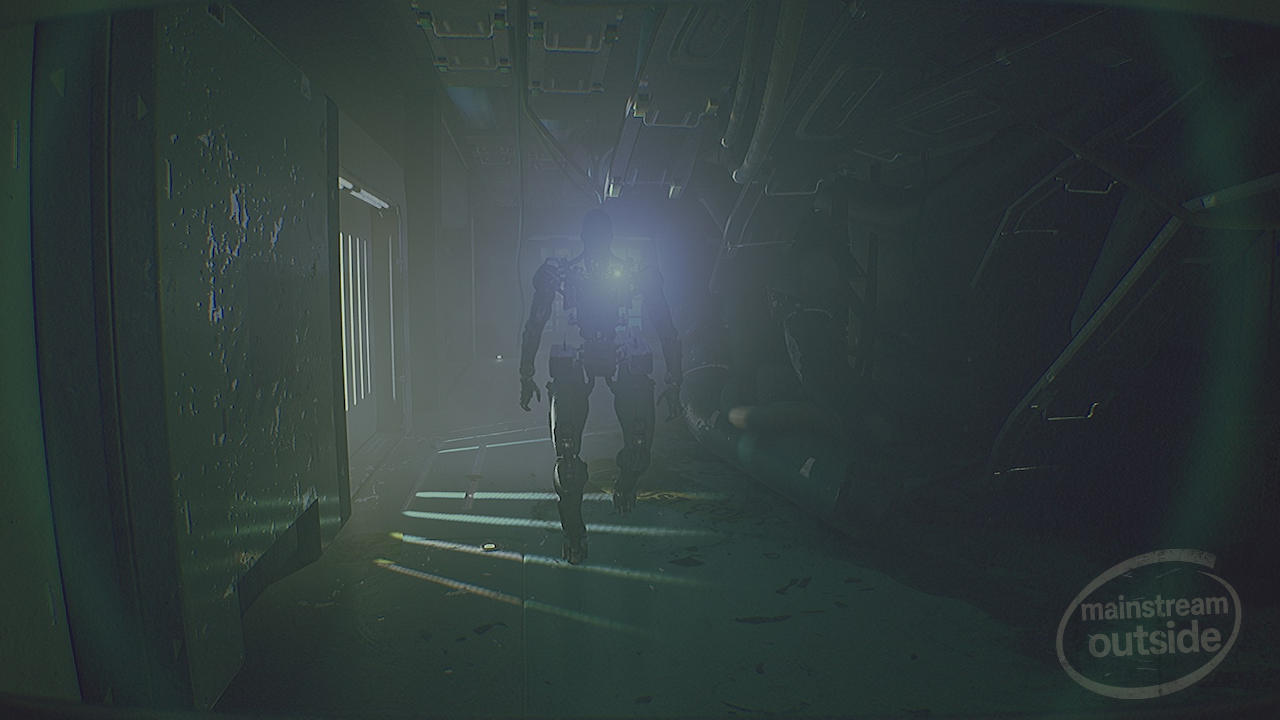
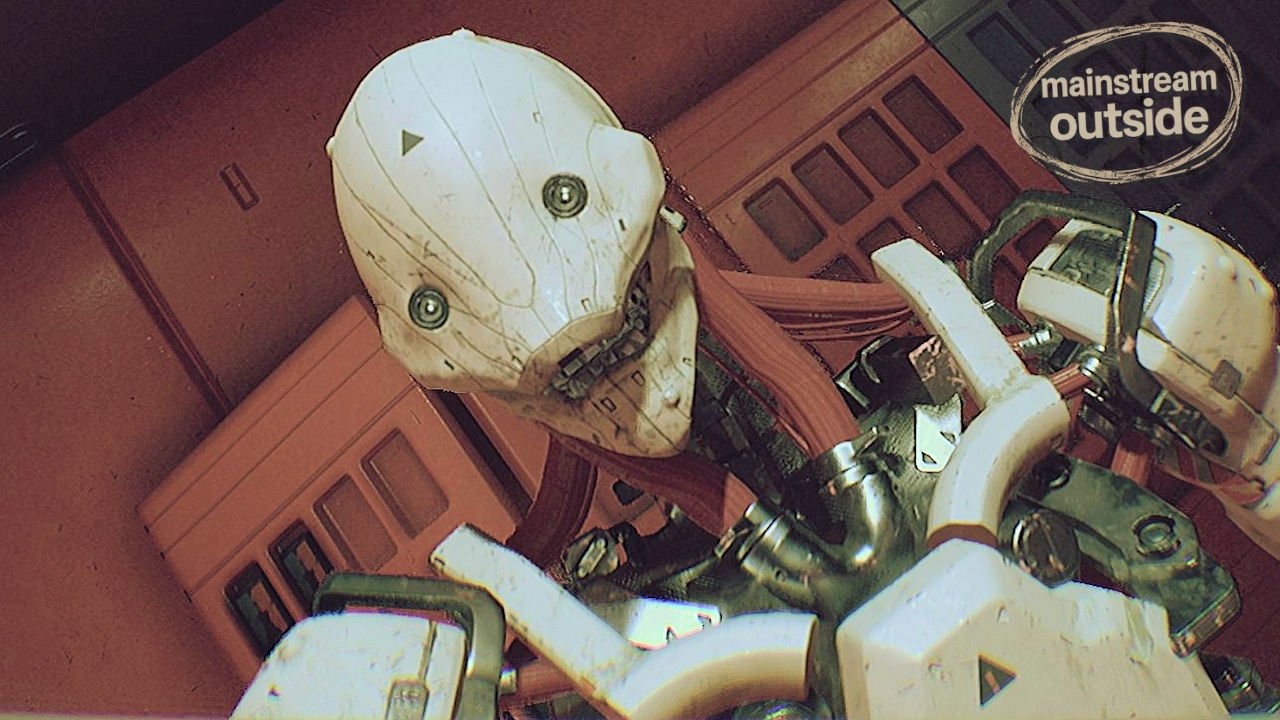
Well, no. Not quite. After your alter ego wakes up from a nightmare in his quarters on the station, it becomes obvious pretty quickly that something is seriously off. The base, styled as retrofuturist 70s/80s sci-fi, seems abandoned; the only “locals” are a few aggressive robots—sporting skeletal bicycle helmets as heads—patrolling the corridors.
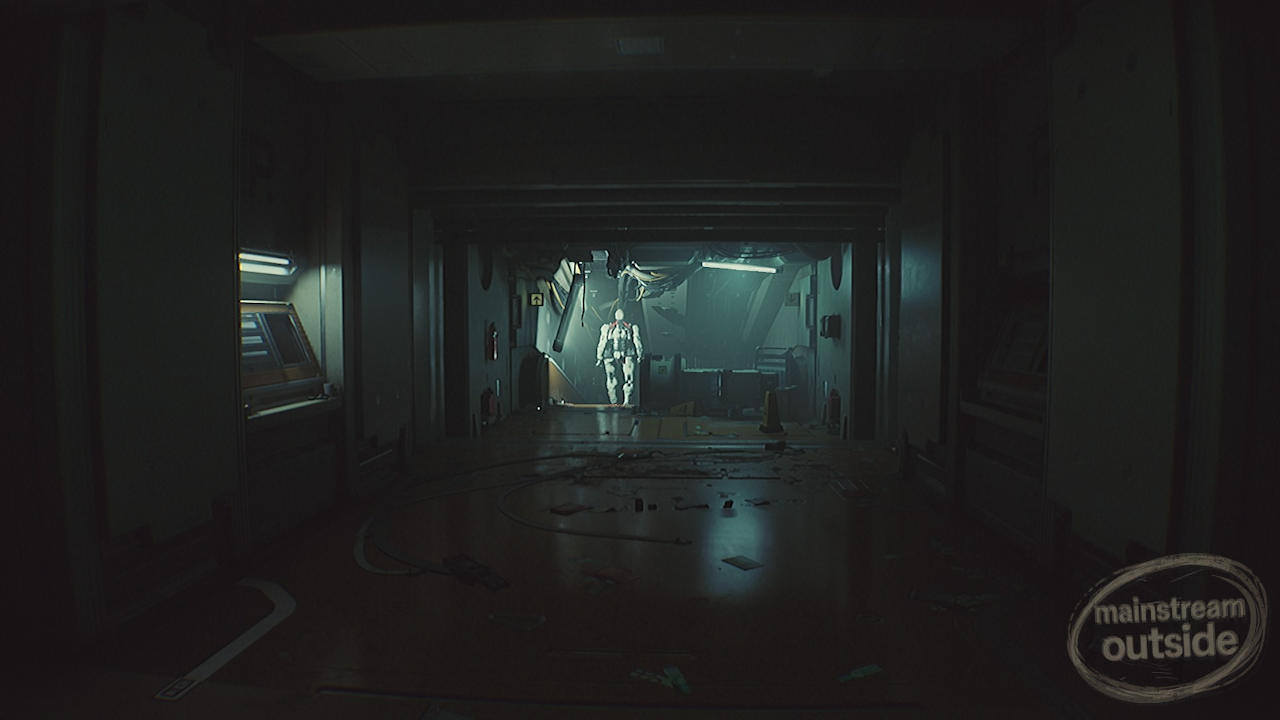
The moon base robots are defending the facility against intruders ...
At first, all of this sounds like your standard space disaster setup, and Routine initially does hang around that well-worn lane a bit too comfortably. So you read yet another pile of emails, watch a handful of videos, or listen to crackling tape recordings to learn more about the weird incident in the base.
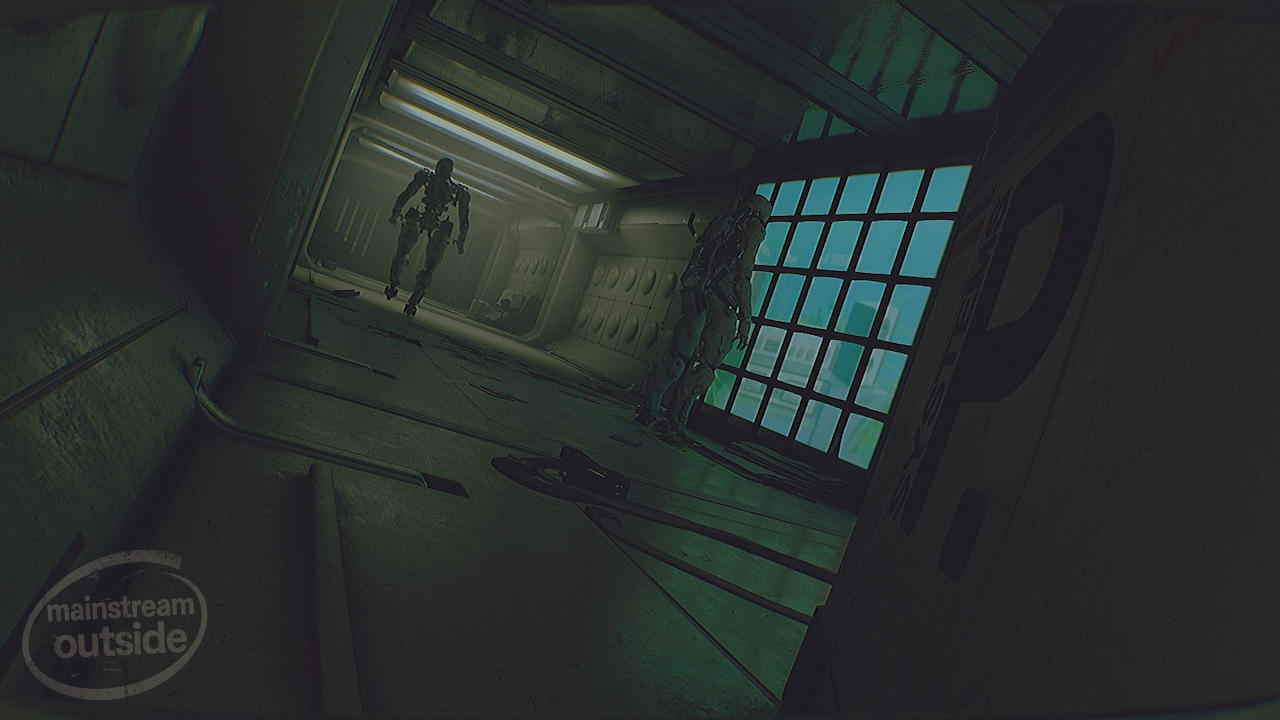
There are only a few cutscenes, and you don’t meet any other people during your exploration tour. The only things crossing your path are a couple of empty, wired-up hazmat suits—though those don’t talk to you either. 😉
... Too bad they consider you one.
Still, if you’re into deep sci-fi, you should absolutely give Routine a shot. What begins as interchangeable mystery horror grows into a full-on epic across its 7–8 hour runtime. An epic that puts identity, perception, and the horror of reality suddenly feeling like a broken system front and center. And it presents these themes with a similar kind of mastery as the aforementioned “2001: A Space Odyssey,” even if it’s missing that film’s striking visual metaphors.
You’ll also have to be cool with a lack of explanations. When the credits roll, you won’t know for sure whether you read the complex story correctly. Bad? In my opinion, the opposite. Aren’t the best existential sci-fi stories exactly the ones that leave room to interpret? Exactly.
The gameplay: Puzzle, sneak, panic
Routine’s strongest element is its story, but it also manages to keep you hooked on a mechanical level for most of the ride. For three reasons:
- Many puzzles revolve around the innovative CAT tool—a sort of multi-tool.
- Chases and hide-and-seek sequences are pretty intense and sometimes require tactical play.
- The later human-alien hybrid throws previously valid stealth rules into a blender (more on that in a second).
Puzzle
The CAT tool looks like a laser pistol and comes with several modes, meaning functions that unlock over time:
- Near large wall displays, the tool can log into the base’s computer system. That system serves as journal, optional tutorial, and save point. Free saving is banned, but I didn’t find that annoying in the test, since checkpoints were always placed fairly.
To open this shutter gate, you fire a burst of electricity from the CAT tool into the nearest fuse box.
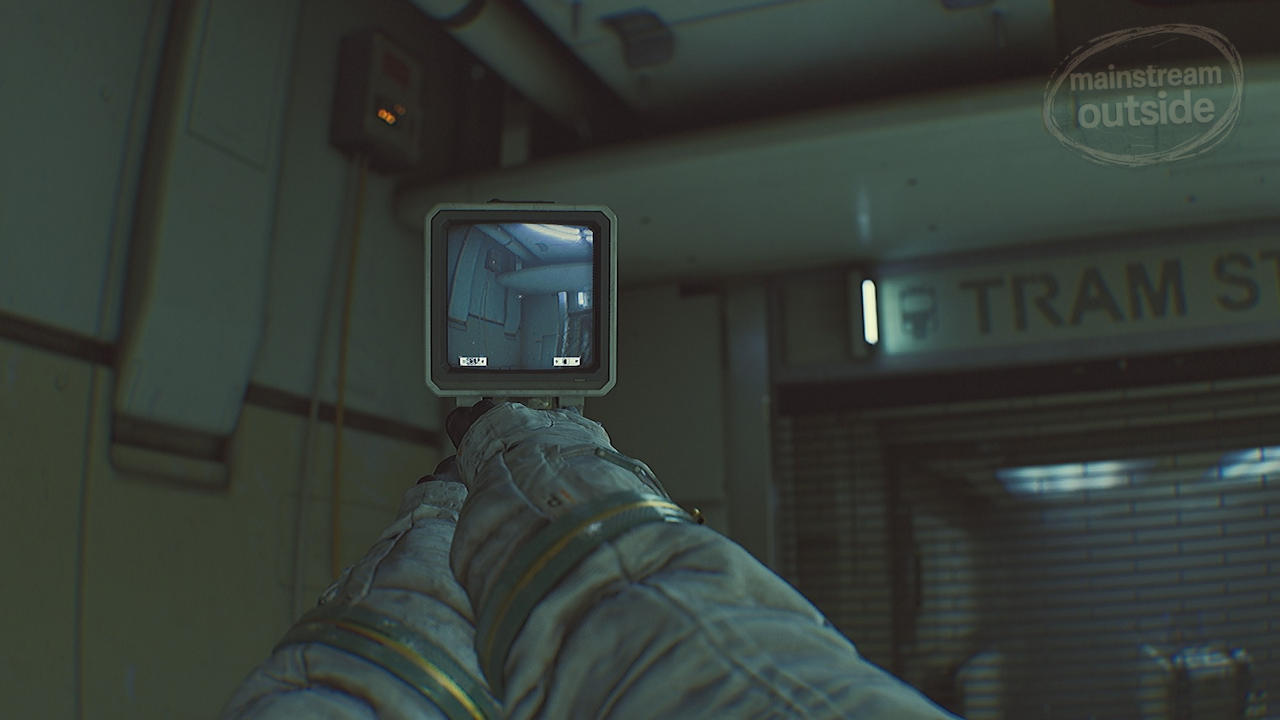
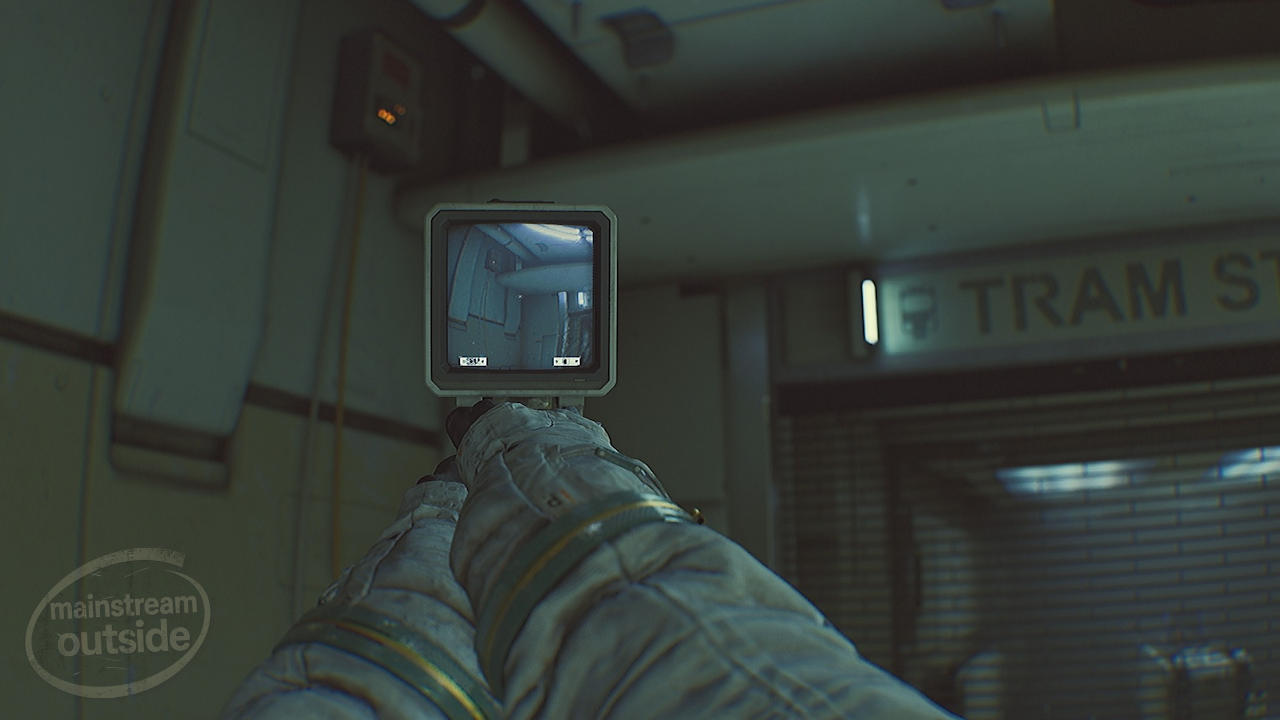
- The built-in mini CRT screen lets you zoom in on the environment and aim precisely when firing energy charges. Mind you, your maintenance guy can’t exactly put robots in their place! Instead, the charges are used to short-circuit power lines (opening shutter gates) or provide energy. You can, for example, bring dead consoles back to life and unlock certain doors that way.
- In its third mode, the CAT creates a kind of thermal view that really benefits the puzzle design. The heat cam makes things like footprints or messages scribbled on walls visible—clues that push you forward.
Even outside the “CAT puzzles,” Routine mostly pelts you with fresh brain-teasers. They’re varied, ranging from keycode puzzles to controlling CCTV cameras to small chemistry experiments (though without the final “boom” if you mess up). Keycodes are rarely written down anywhere; you usually have to derive them through abstraction puzzles.
All in all, I only found two puzzles a bit too tough, especially a later keypad one where I had to decipher a pretty cryptic note. However, I didn’t run into anything absurd or borderline impossible during my test run; the balance is largely on point, and so is the fun. It always felt like the puzzling was there to entertain, not to pad playtime. Nice.
Sneak
At first, I found the constant presence of those “bike-helmet bots” pretty annoying. I mean, try interacting with keycode terminals while—thanks to nasty patrol timing—some mech keeps clomping right into your personal space.
If one of those things catches you, it lifts you up and tosses you like a banana peel into the next corner. That at least gives you a chance to escape. Anyway, if the bot grabs you again, you’ll get slapped so hard you’ll immediately wake up at the last save point.
Either way: after about half an hour of robot terror, I realized the faster pace actually suits Routine and boosts the challenge in a welcome way. You know, in an age of “story difficulty” modes and “movies” with gameplay interruptions, you have to look for real friction with a magnifying glass.
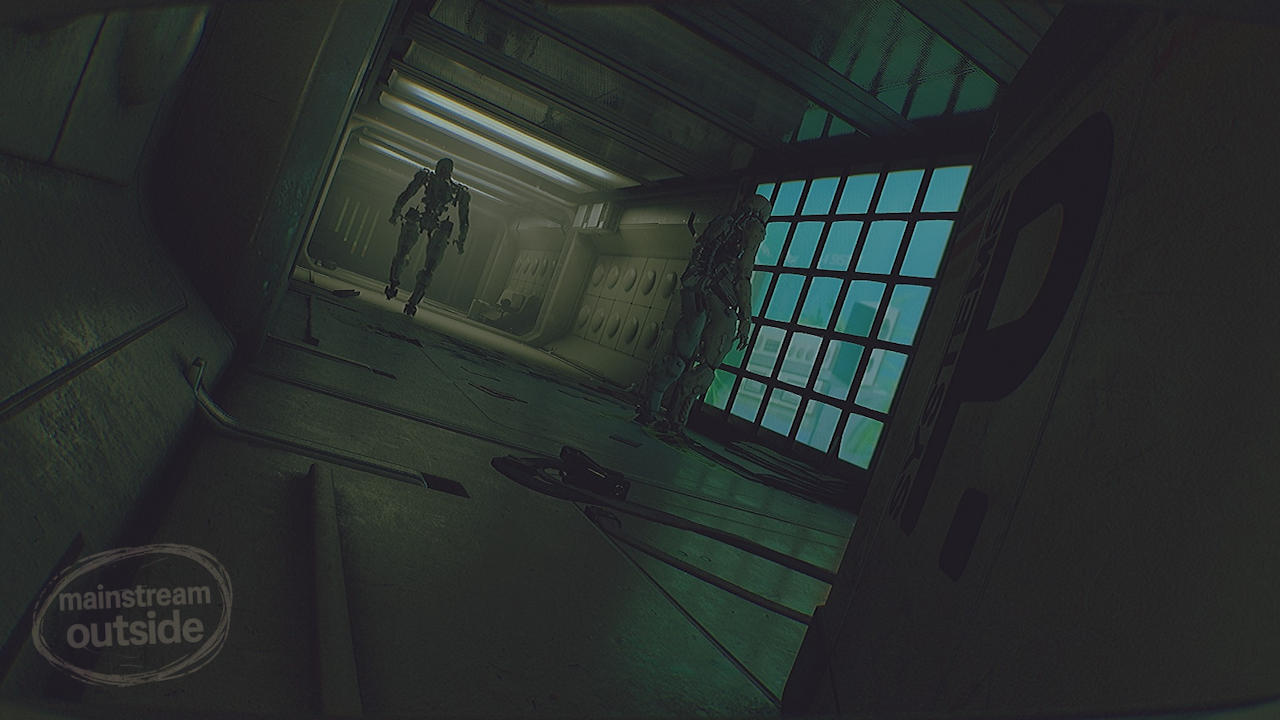
Thankfully (and necessarily), Routine lets you peek around corners.
Our maintenance clown isn’t completely helpless either. He can try sneaking past them while crouched (video game protagonists just have strong legs!), hide under tables, or lean out from behind crates and walls. Notably, the guy can even rise up onto his tiptoes, and go the other way by flattening himself against the floor.
So, does that mean you’re getting a deep stealth system like Thief? Sadly, no: the mission design largely ignores these extra options. If you do bother standing tall or going prone, you’ll only occasionally get rewarded with a handful of optional, mildly interesting (story) objects.
Still, the stealth side is fairly strong because it’s not forced into a rigid shape. Some extra dynamism comes from the grumpy bots needing to recharge regularly, sometimes even mid-chase. Not so with the later, infantile human-alien hybrid, which occasionally just goes invisible, making its search routes almost impossible to read.
So the thing forces you to prick up your ears and improvise, because you never quite know where it’ll come pestering you next. Luckily, you can slam doors in a pursuer’s face (briefly slowing them down), escape through air vents, hide in hard-to-see corners of living quarters, and more. Thanks to these options, Routine never gets too punishing—only the beginning asks you to first get a feel for the enemies.
Panic
Routine wears “Horror” next to “Sci-Fi” on the label, but how creepy is the base, really? One thing’s clear: this isn’t a shocker in the vein of Outlast or Layers of Fear. It’s not “BOO!” horror or a jump-scare loop, but low-key cosmic horror without Lovecraft tentacles.
It works because it doesn’t constantly shove the threat in your face—it builds it through sound and space. Especially effective: the heavy stomping of unstoppable robots, unknown metallic noises in the distance, and the buzzing—no, the cold thunder—of scanner lasers when a mech is searching the room for you. Retro sci-fi terror at its best.
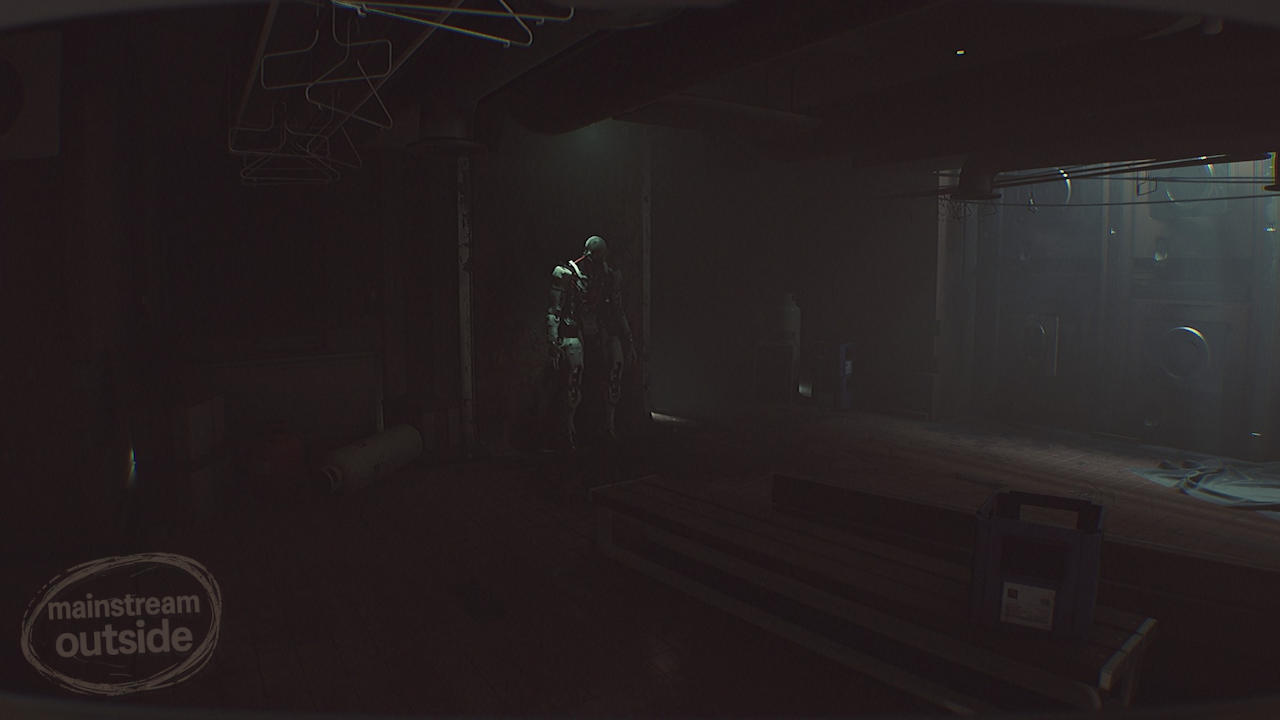
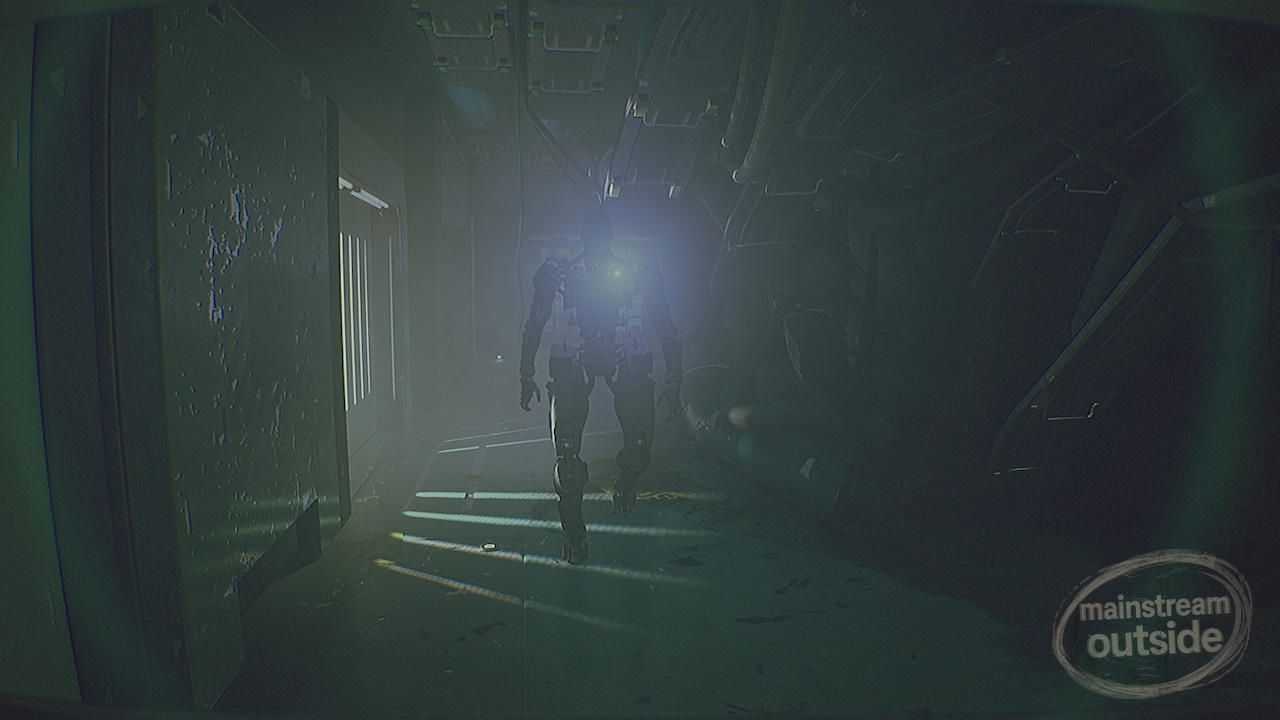
Also not exactly pleasant: I had to squeeze past this supposedly inactive bot.
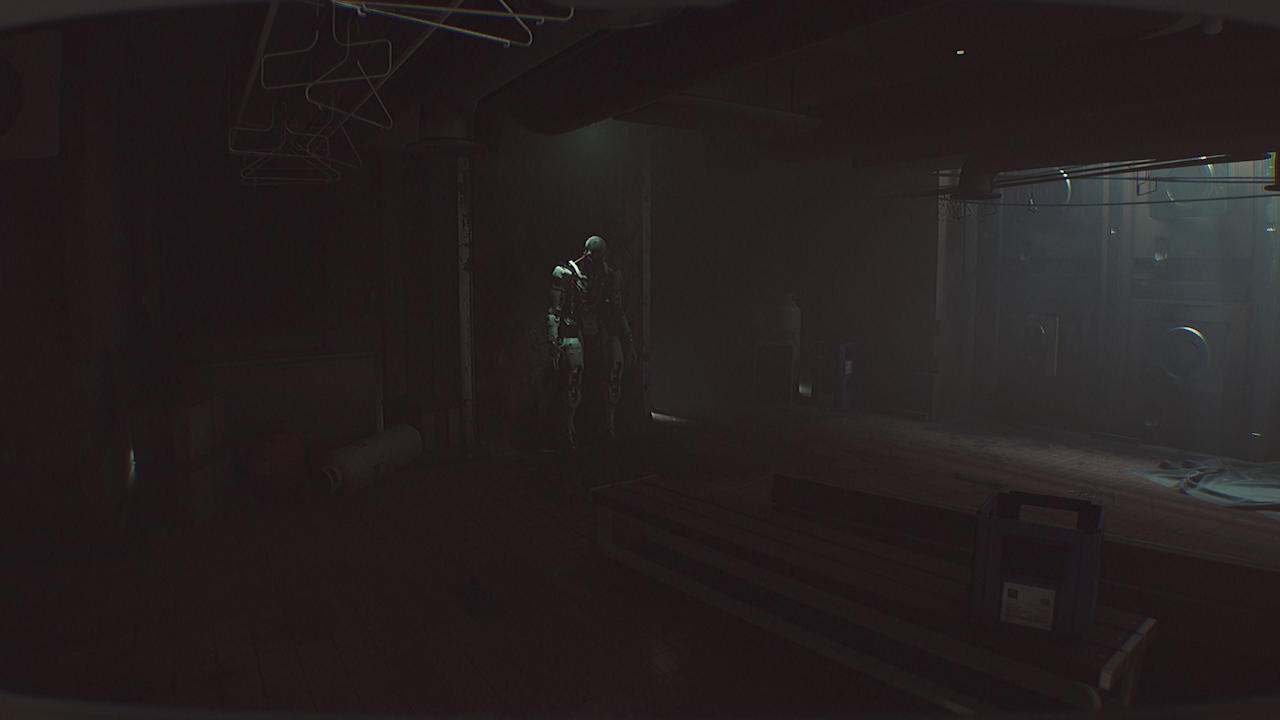
And then there’s more: the organic hunter (that bizarrely human-looking human-alien hybrid) makes it crystal clear you’re in deep trouble. If there’s such a thing as frightening infantilism, this guy has it—and his deeply unsettling behavior raises uncomfortable questions about your own identity, and even reality itself.
At that point, I didn’t doubt for a second anymore that Routine is a horror game that actually means it. Real fear is often not the product of jump-out-of-your-seat tricks, but of an existential threat that’s invisible, yet unmistakably there in the background.
The lunar base: Between email and musty 70s wallpaper
Okay, but what does the moon base actually look like, and what does it offer? Style-wise, the word “retrofuturism” has already been mentioned. Unlike Fallout, though, Routine doesn’t mash the future up with greasy quiffs and blaring rock ’n’ roll. It rather goes for psychedelic bell-bottoms and preppy shoulder pads.
Thanks to that 70s/80s vibe, the setting feels like a kind of (IT) museum: big CRT monitors and chunky terminals embedded into the beat-up coziness of 70s carpets and wallpapers. That contrast (cold steel vs. warm design) is probably the biggest visual highlight. Wanna see it? Check the screenshots below.
Routine serves retro high-tech ’70s/’80s sci-fi, yet sometimes it feels like Grandma Ethel’s place.
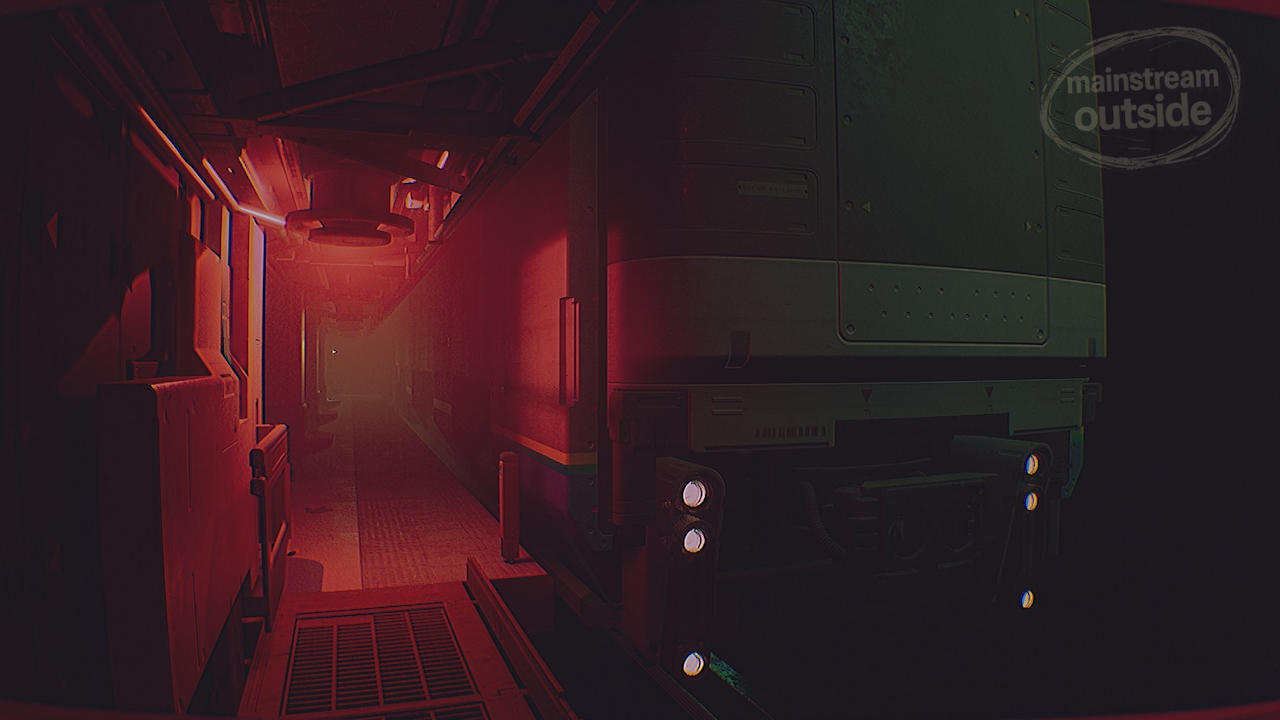
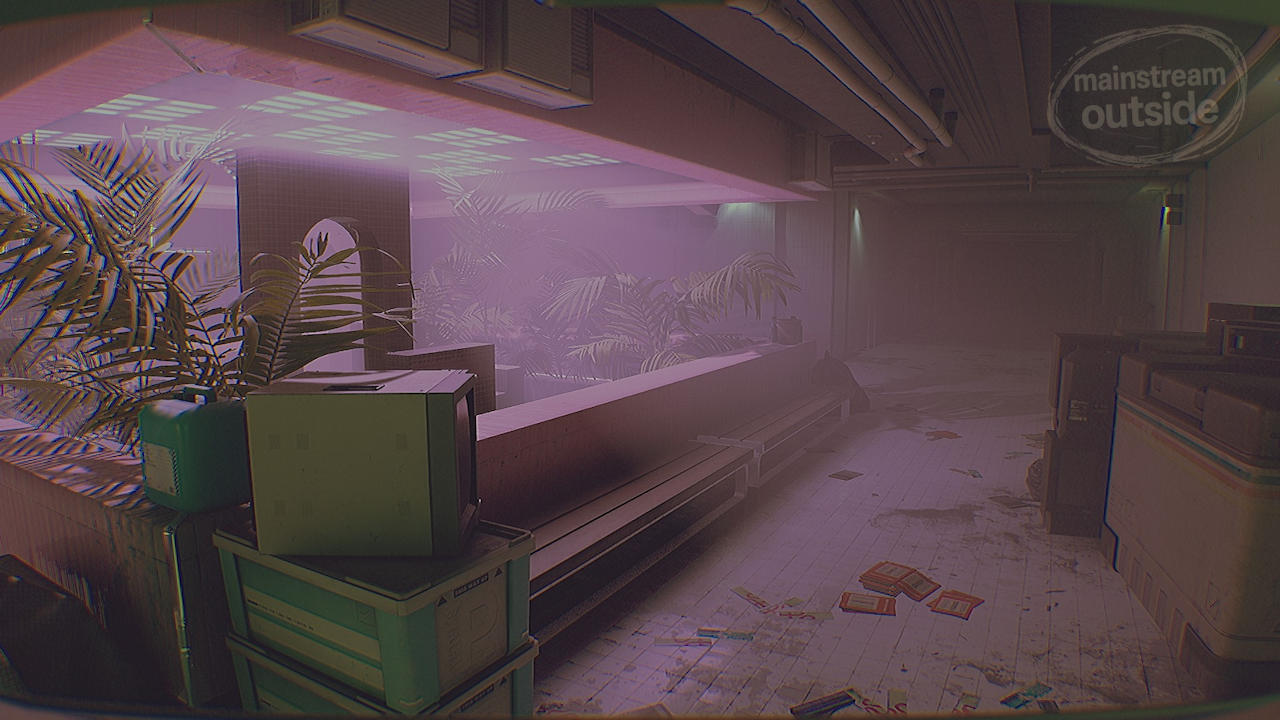
The base is both eerie and surprisingly nice to look at.
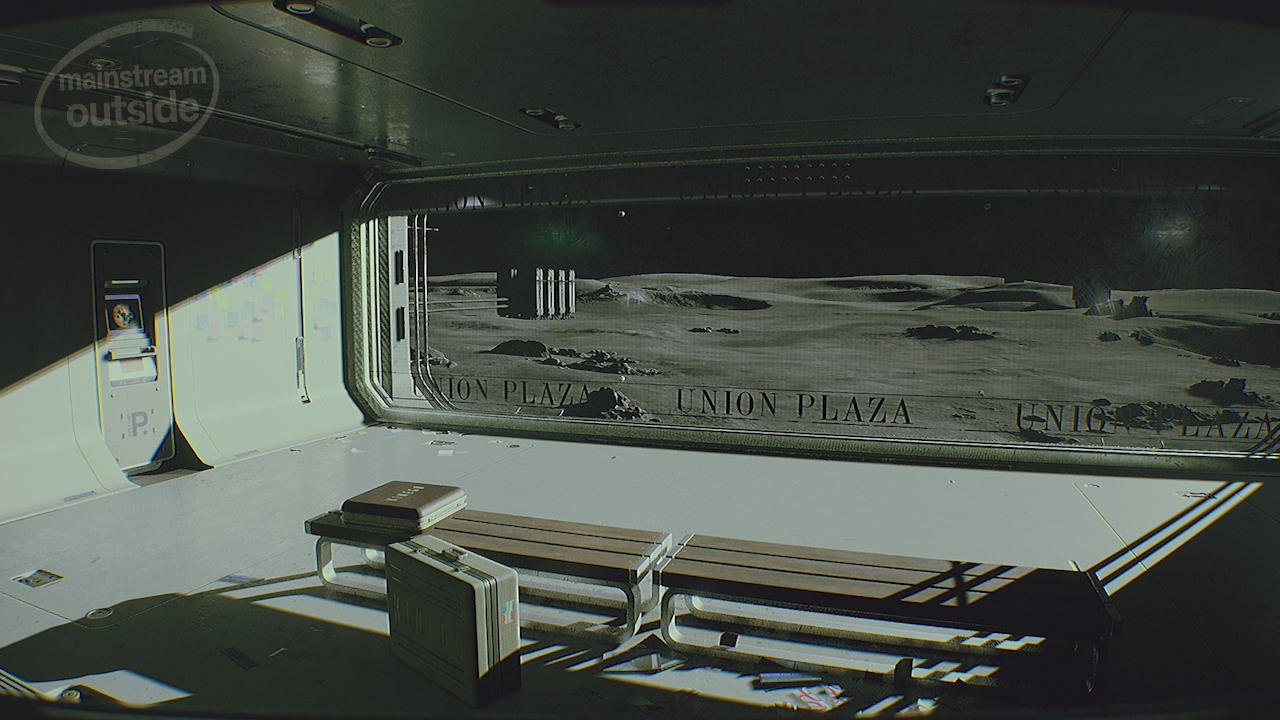
Most of the time, Routine takes place in interior areas connected by a shuttle train; only briefly does the homebody routine get interrupted by linear “moonwalks” outside. Those few outdoor sections mainly serve as contrast, an atmosphere boost, and a reminder of how isolated this place is. You’ll still find variety indoors too, especially in the “Megazone.” It’s a run-down “arcade oasis” where dusty cabinets flicker two functional minigames across their screens.
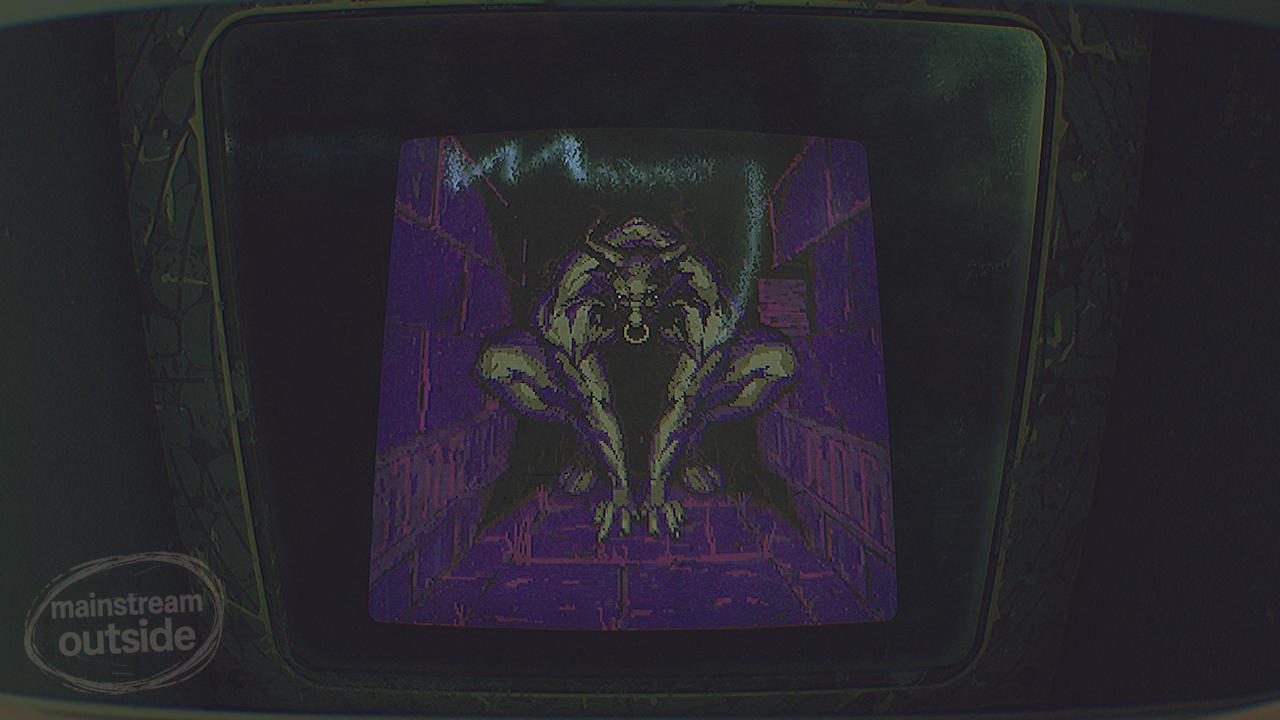
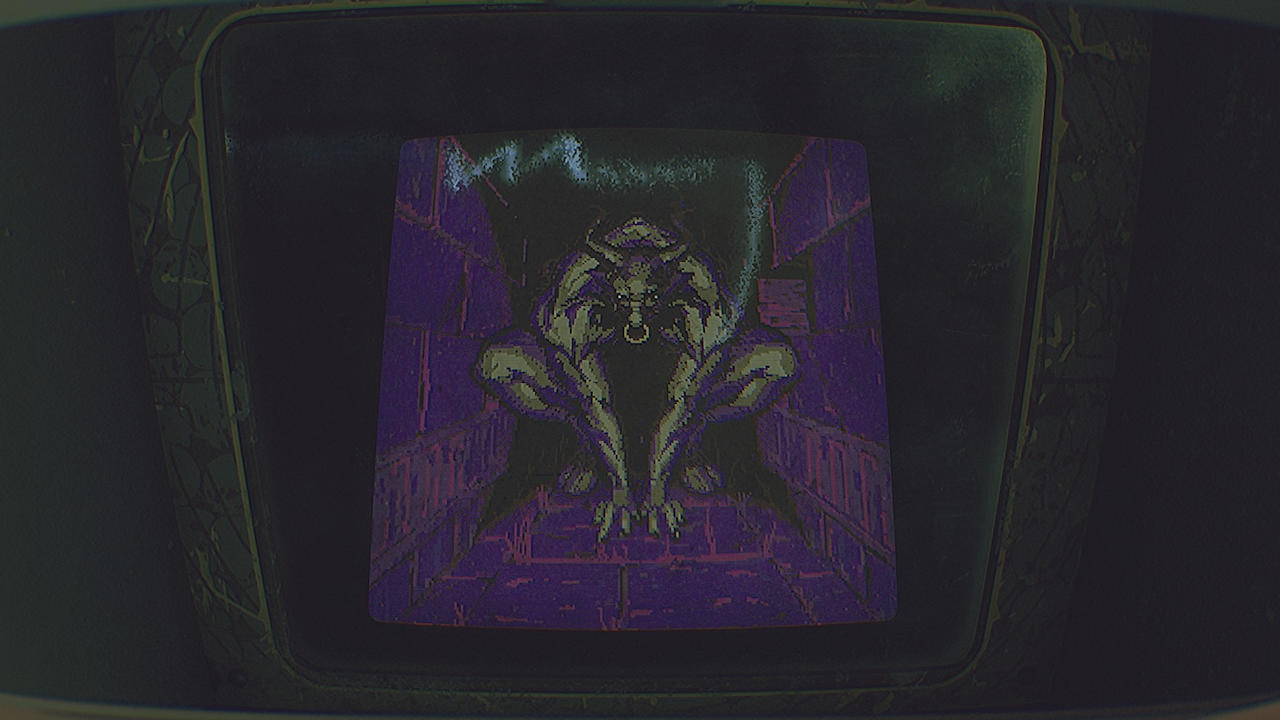
Game number one, a 16-bit dungeon crawler, tasks you with finding the exit of a dark dungeon before a nose-ringed demon smacks you around. To do it, you memorize the direction sequence that pops up at the start, then fire it off Simon-style. Game number two—a kind of bodybuilding competition—also has you mimic button sequences, but in real time.
If you see this face in the dungeon minigame, your day (and your run) is over.
Considering what just three developers pull off here in terms of world-building within the horror genre, I tip my hat (and yes, in summer I actually do wear one—a nice straw hat). All in all, it’s more than I’ve seen in this segment in many years. Shh: I would’ve liked the dungeon crawler to be a bit more complex, sure, but I don’t want to get too cheeky now. Especially not for 25 bucks.
The tech: Nothing major, but...
My review system handled Routine without breaking a sweat; everything ran pleasantly clean and smooth. More details on my setup, settings, and results are in the “Review system” box. While I played at Full HD, even reviewers running absurd resolutions reported surprisingly high frame rates, and they mostly talk about occasional traversal stutter rather than actual performance problems.
So it’s not too surprising that Routine also seems very playable on a down-to-earth rig with an i7-7700HQ and GTX 1070—helped by the fact the setting isn’t exactly vast. That said, there are definitely more demanding sections with particle crowd scenes and complex light-and-shadow shenanigans that drag the frame rate down quite a bit.
And what about bugs? I didn’t run into any noteworthy issues during my test runs. It’s still worth mentioning that the devs moved quickly after launch. They fixed cases where players could get stuck in shutter gates, plus a few UI/save topics. A toggle option for sprint, crouch, and lean was also patched in later.
Verdict: Anything but routine
Routine is a terrifying old-school ride with no handrails. No waypoints, no comfort orgy—just thick atmosphere, fresh (multi-tool) puzzles, and a moon base whose retrofuturism sticks with you long after the credits.
Yes: delivering the story via terminals, emails, and logs is deliberately abrasive; and if you expect neat explanations at the end, you shouldn’t even start. The stealth design can also be annoying sometimes, because the patrol bots love to stress you out precisely when you just want to puzzle in peace. But that friction is exactly what makes Routine so wonderfully, stubbornly old-school: you’re on a horror moon station, not at a wellness hotel.
For me, Routine is a strong sci-fi horror adventure with rough edges and genuinely great “Space Odyssey” DNA. So if you, like me, appreciate intentional anti-comfort and complex stories, throw it straight into your Steam cart. Sadly, there’s currently no DRM-free version.


Read next:

Comments