

Gaming without battle passes.
Takes without paywalls.
And stories without reposts.

The Séance of Blake Manor Review (PC) — Whodunit Dun Right
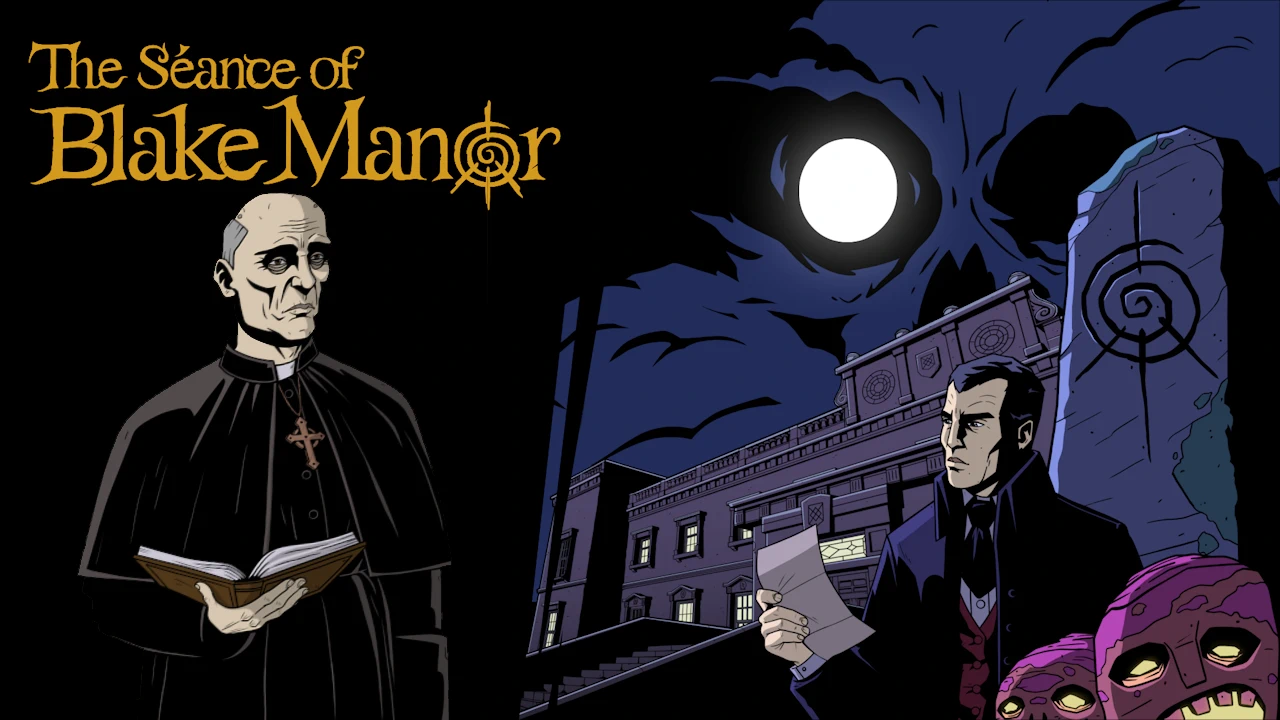
The Séance of Blake Manor revives the classic manor-house whodunit, but it doesn’t stop at nostalgia. In this review, I’ll break down where this supernatural detective adventure shines—and where it stumbles.
"Bela Lugosi's dead... undead, undead, undead." Recognize it? It’s a line from Bauhaus, the gothic rock pioneers—and for The Séance of Blake Manor, it couldn’t be more fitting.
Just look at the creepy guy in the top-right corner of the image. Doesn’t he look suspiciously like the Dracula star from the 1930s? Exactly. And this time, he’s even the player character, which I got a real kick out of. So what’s "Bela" doing in Blake Manor? He’s poking around a Victorian estate, trying to solve a missing-person case.
Sounds pretty traditional so far—but that impression doesn’t last long once you meet the bizarre NPCs and take in the comic-book-style 2.5D cel-shaded art. Spooky Doorway’s game also sets itself apart from other genre entries in a few smart ways, though not every mechanic will leave PC sleuths grinning. So let’s dig into this whodunit properly.
Story: A house full of magic, ghosts, and oddballs
The Séance of Blake Manor takes place in 1897, right in crime fiction’s golden age—and in Ireland, no less. You play private detective Declan Ward, called to Blake Manor to investigate the disappearance of a woman named Evelyn Deane.
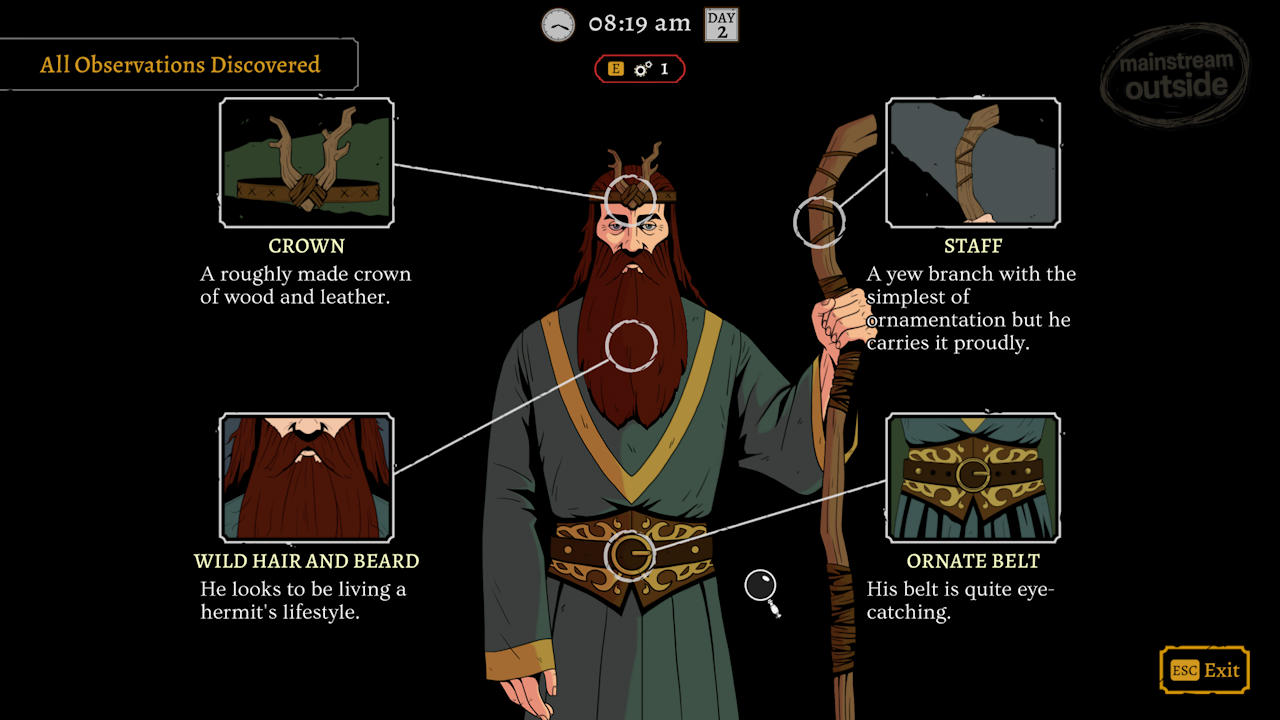
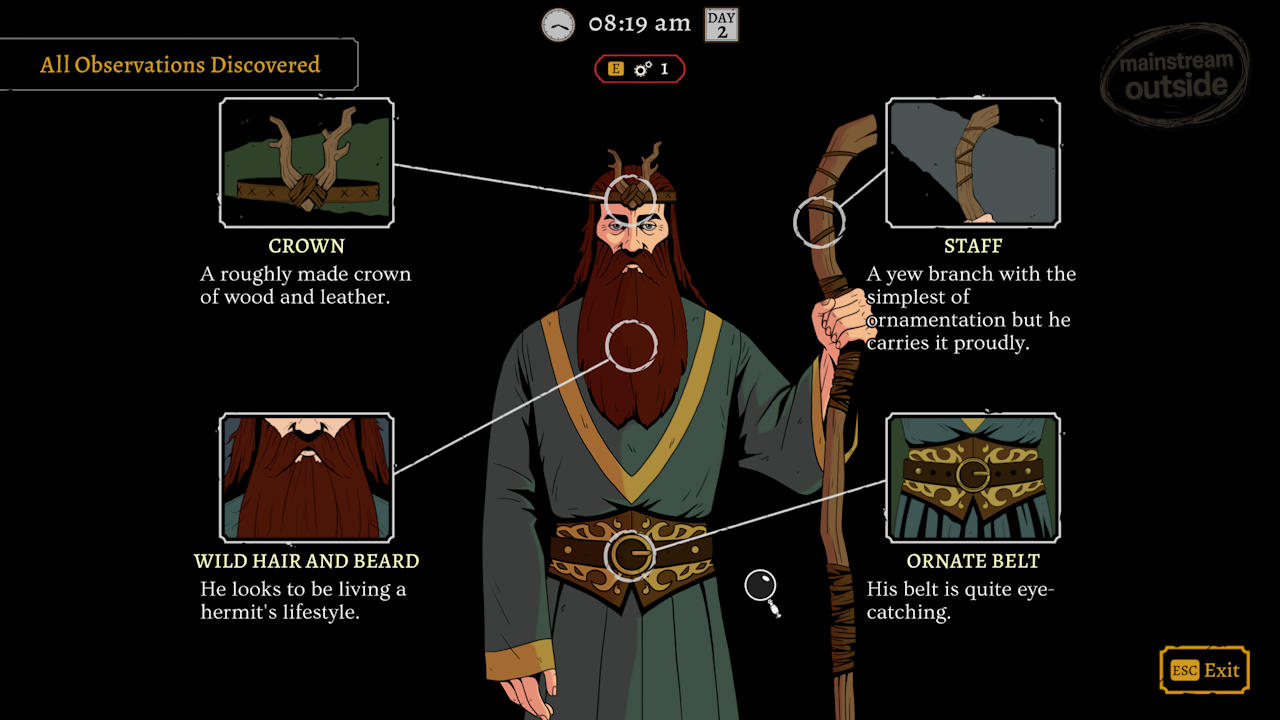
The grand estate (which also happens to operate as a hotel) is packed with people who may as well have "secret" and "liar" stamped across their foreheads. Some of them look shady from the jump: Domhnall Ó Finn is leaning hard into the druid routine, Arwa Hisham looks like she walked straight out of 1300 BC Egypt, and Hazel Erickson is the manor’s resident medium cliché.
A few of the guests staying at the stylishly appointed Blake Manor.
And yes, speaking of mediums: naturally, there’s a séance in the mix, which pushes Ward’s investigation even closer to the edge. Because although the veteran detective starts out as a skeptic, the haunting at Blake Manor soon feels a little too real to shrug off.
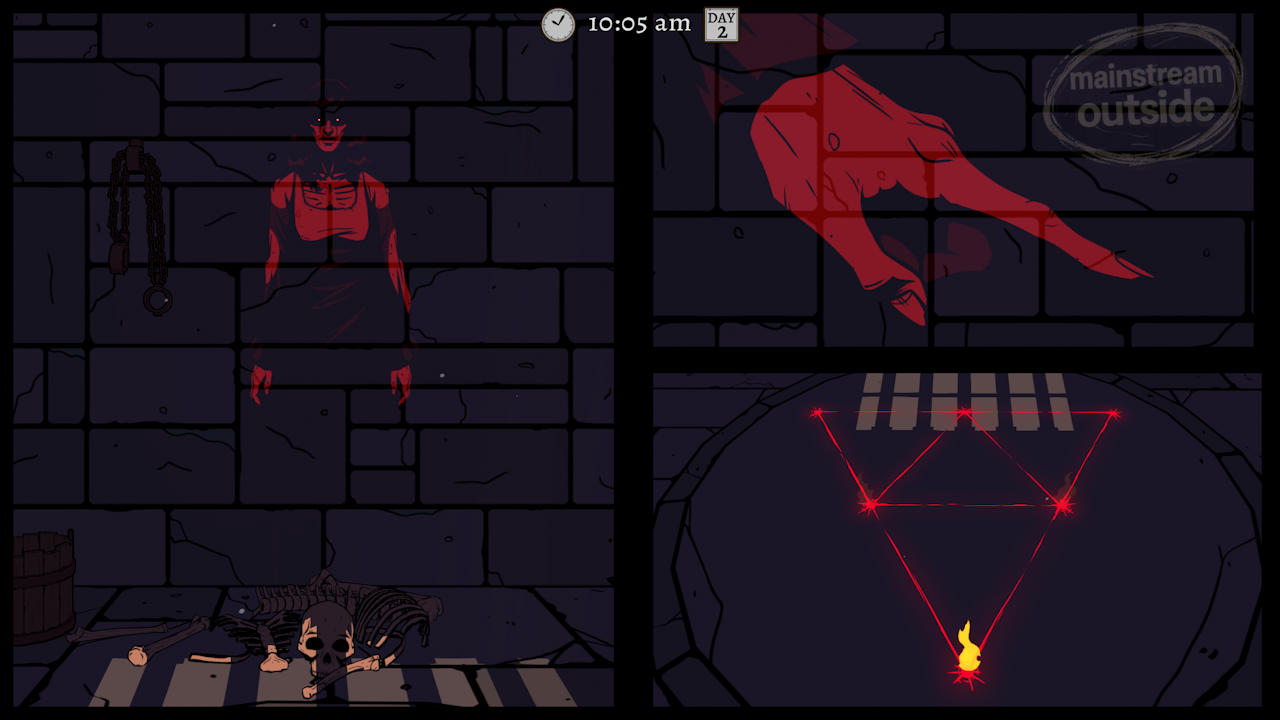
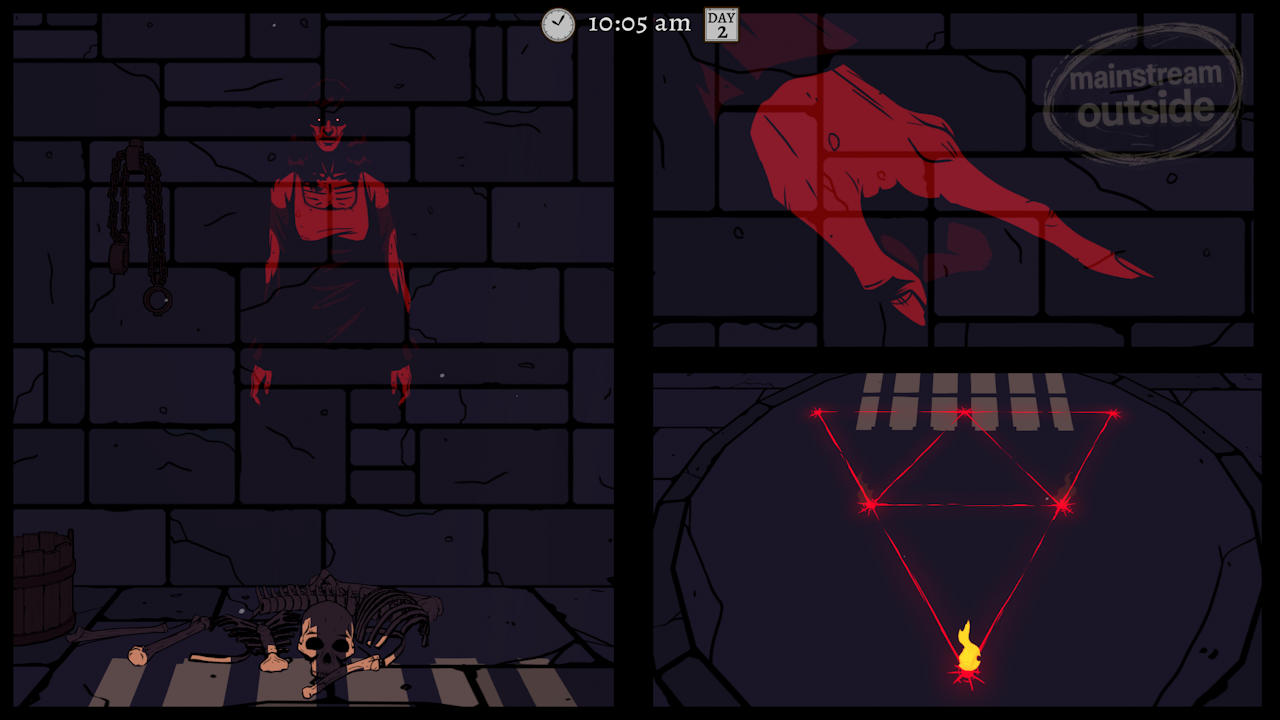
Part of that takes the form of brief, morbid nightmares in which Ward is dragged through a demonic version of the manor. You know the vibe: red infernal light pouring through towering windows, ritual candles everywhere, ghosts making dramatic entrances. That last part bleeds into reality too—for instance in a secret room hidden in the basement of one of the towers, which you can’t access at first.
What I liked most about the story is how quickly it builds a larger mystery that hangs over every room and corridor in the estate. That’s partly because nearly every NPC line feels like a warning—and even the gloomy soundtrack seems to be hiding something.
Sadly, there’s no procedural twist to boost replay value of this roughly 18-hour adventure. That said, the detective work unfolds in a fairly "realistic" way, meaning you can investigate whoever you want, whenever you want. There are limits, though—but I’ll get to those in a moment.
Gameplay: Wonderfully varied—but it loves complexity a bit too much
At its core, The Séance of Blake Manor feels like a noir adventure running on a dressed-up id Tech 1 engine. You could call it "Talky Doom." And yes, there’s a lot of talking. A lot. So you’ll need to be ready to read through substantial chunks of text. Then again, that’s hardly unusual for a whodunit adventure.
Characters aren’t just there to talk to—they’re also worth inspecting. Most of the details, though, are pretty obvious.
Naturally, you experience "Talky Doom" from a first-person perspective: you wander the estate, gather clues, connect observations, question the séance guests, and solve puzzles. Most of those puzzles are built around understanding context. You’ll crack codes, uncover hidden mechanisms, and piece together combinatorial solutions.
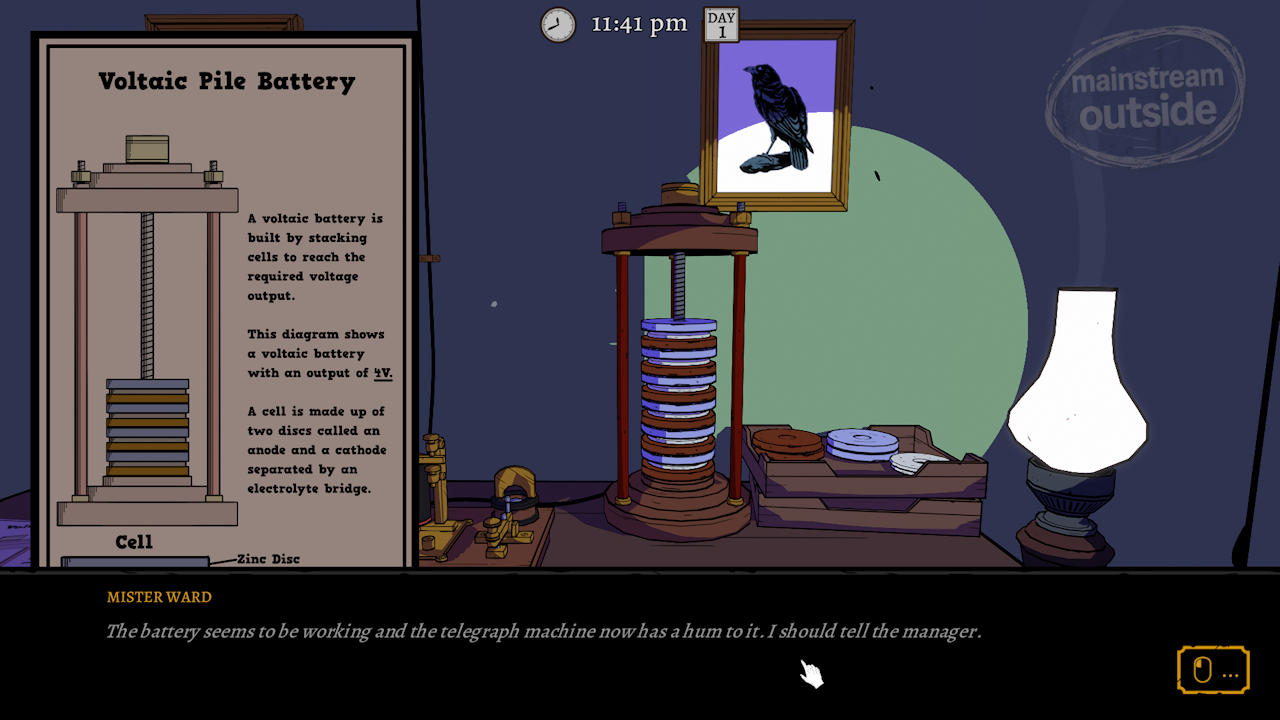
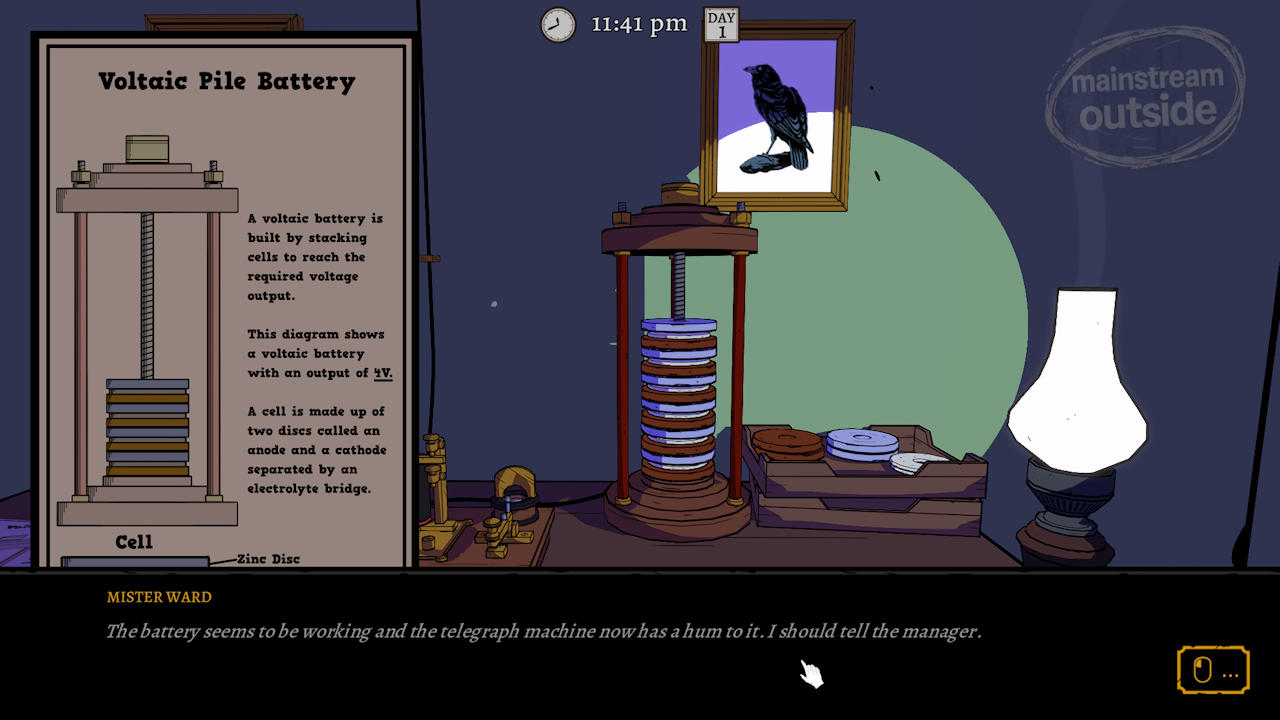
A good example is the telegram machine, which has to be powered using a voltaic pile. What’s that? Basically an "ancient" stacked battery that generates voltage through layers of zinc and copper discs. More discs means more voltage—but how much voltage does a telegram machine actually need? To figure that out, you read a nearby note and stack the discs accordingly. Once you hit the right voltage, you test it for a moment—and just like that, the machine is up and running.
An instruction note shows the pattern in which the battery’s metal discs need to be stacked.
Not every puzzle is as clever as the stacked battery, but there’s no obvious filler here either. That means prior adventure-game experience will only get you so far in The Séance of Blake Manor—so it helps if you enjoy thinking through puzzles that don’t feel like they’ve been solved a hundred times already.
The deduction system: Endless branches of clues
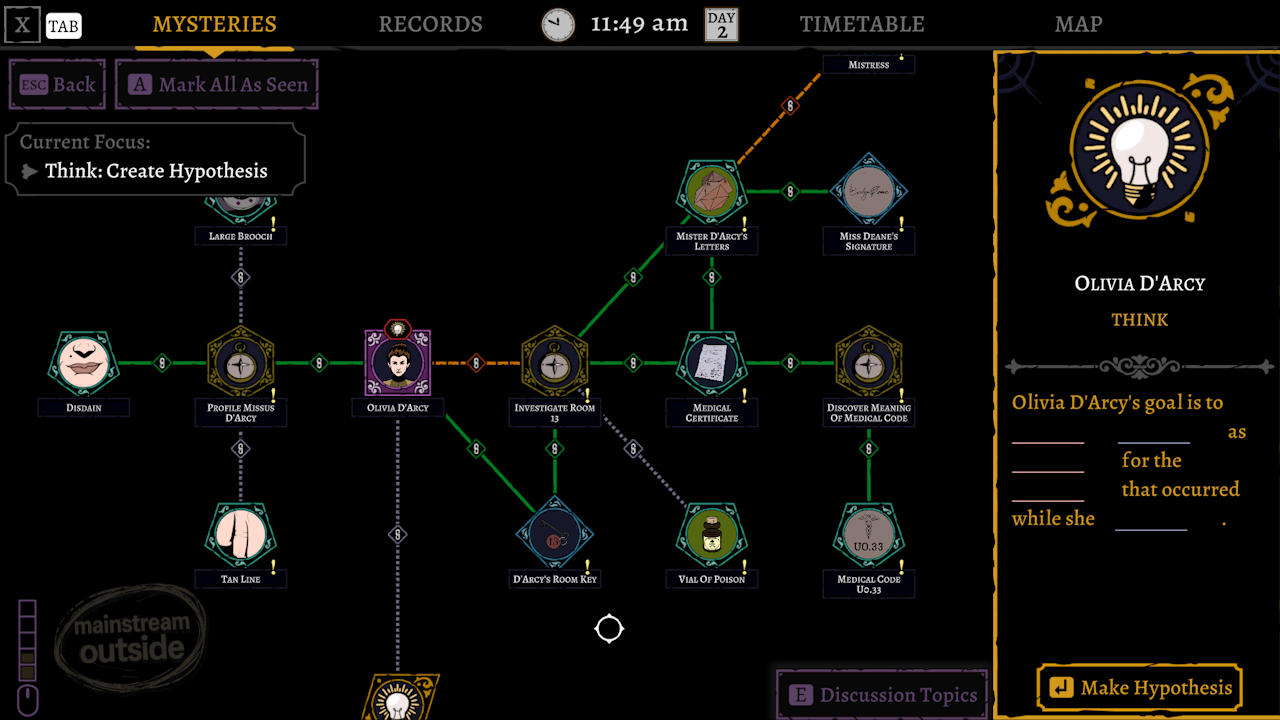
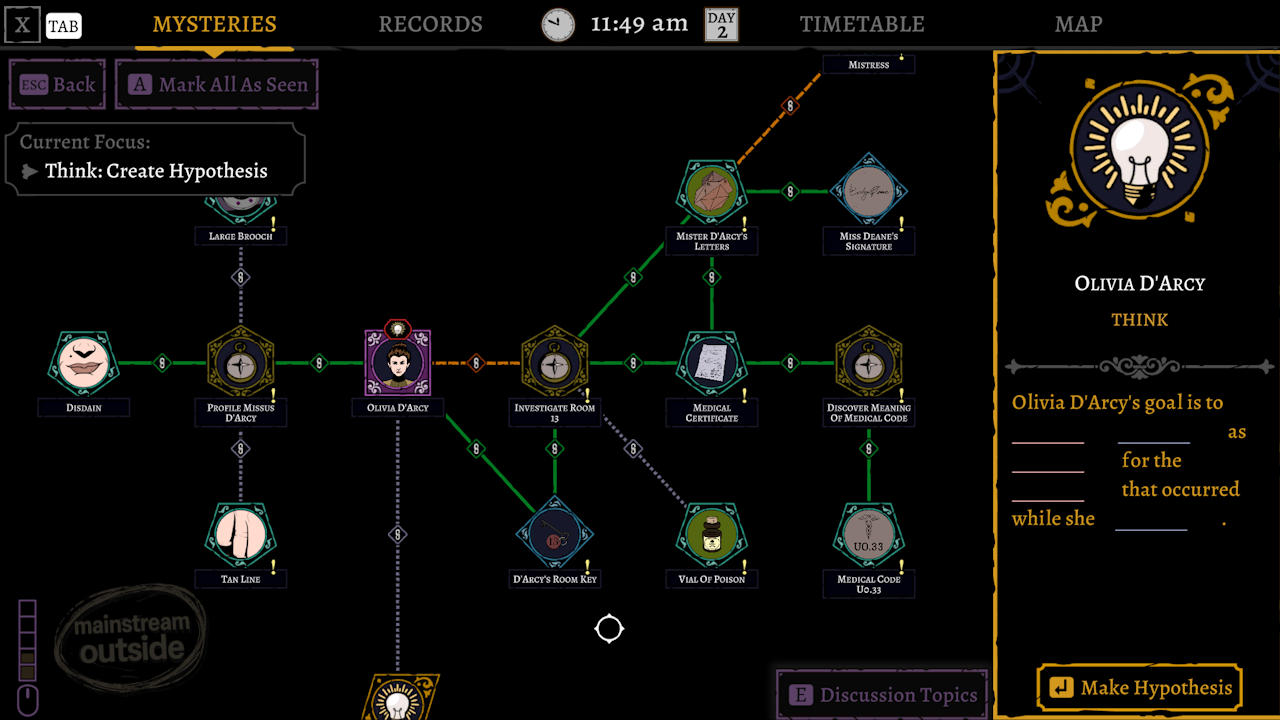
Another major mechanic is the deduction system. Every character and every mystery gets its own "mind map" showing what you already know, including clues, open questions, and connections between them. Sounds messy? You can raise a glass of ectoplasm to that.
But these mind maps aren’t just there to bury you in information. They also determine whether you’re actually "allowed" to voice a deduction. Until you’ve collected every clue tied to a mystery, you can’t confront an NPC about it. And before you can do even that, you have to turn those clues into a hypothesis by filling in sentence blanks with matching terms from a list. Successful confrontations then unlock new chains of context—and they just keep going. 😉
The more clues you collect, the more tangled the clue trees become. "Sadly," the clue count ramps up fast.
To be honest, I avoided the mind maps whenever I could. I didn’t enjoy digging through branch after branch while also keeping track of the color-coded node connections (gray: unknown, orange: partially known or possible explanation, green = complete). A leaner system would’ve gone a long way, especially since The Séance of Blake Manor doesn’t really need deduction to be this overengineered. Elsewhere, it has systems that are both more inventive and more exciting.
Time Mechanics: Planning instead of wandering
The time mechanic is where the game really stands out. Yes, you’re investigating on a clock—but it’s not just some arbitrary timer ticking away in the background. Rather than simply shepherding you through the manor, the game pushes you to plan your next move. Here’s how it works:
- Actions, investigations (for example of objects), and conversations advance time
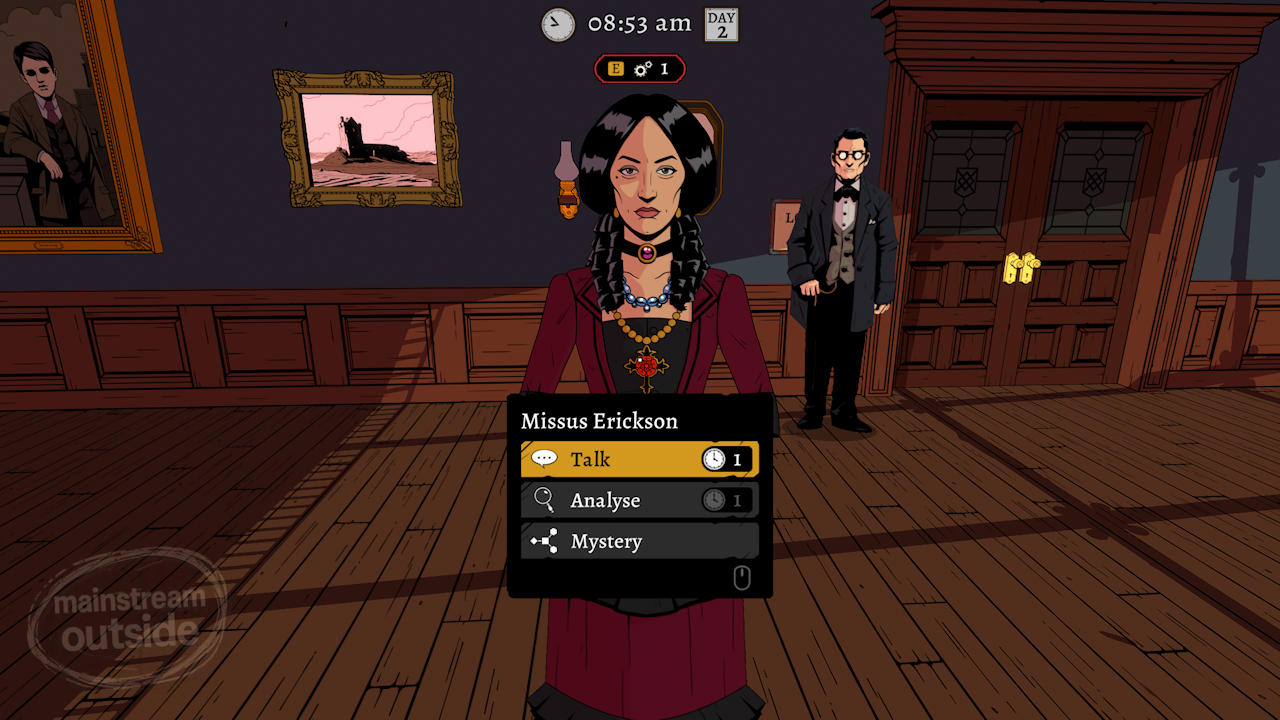
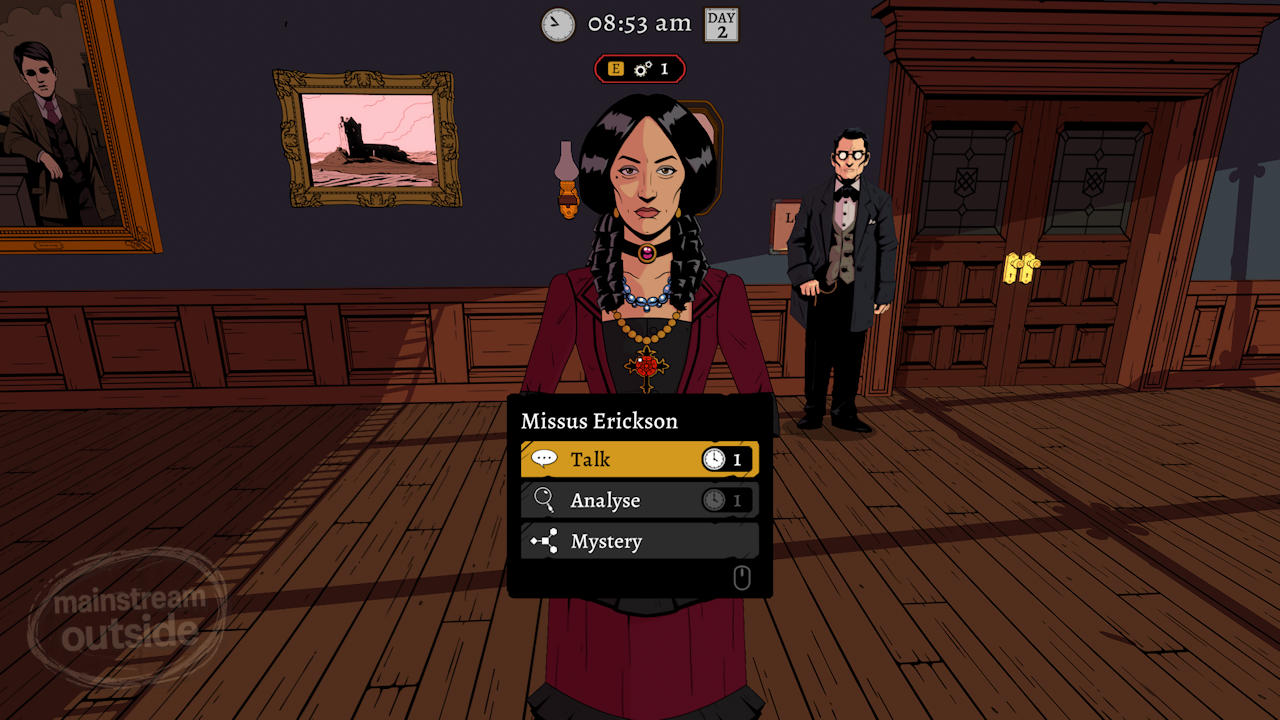
- Every guest at Blake Manor follows a daily schedule, so NPCs change location depending on the hour
- Each day also features new "events" that happen at fixed times (like readings or—naturally—the séance)
So if you don’t want to miss anything important, you need to think carefully about what to do next.
Mrs. Erickson (the medium) is in the main hall between 8 and 9 a.m. on the morning of the first day.
That leaves one big question: is The Séance of Blake Manor still fun despite its bloated deduction system? Yes—because it’s usually enough to focus on the most important nodes in the mind maps and handle some of the legwork in your own head. On top of that, the atmosphere and, especially, the thrill of exploring the manor make up for quite a bit. By the end, I was able to fully sink into the detective work without letting those flaws bother me too much.
World design: Paradise for manor explorers
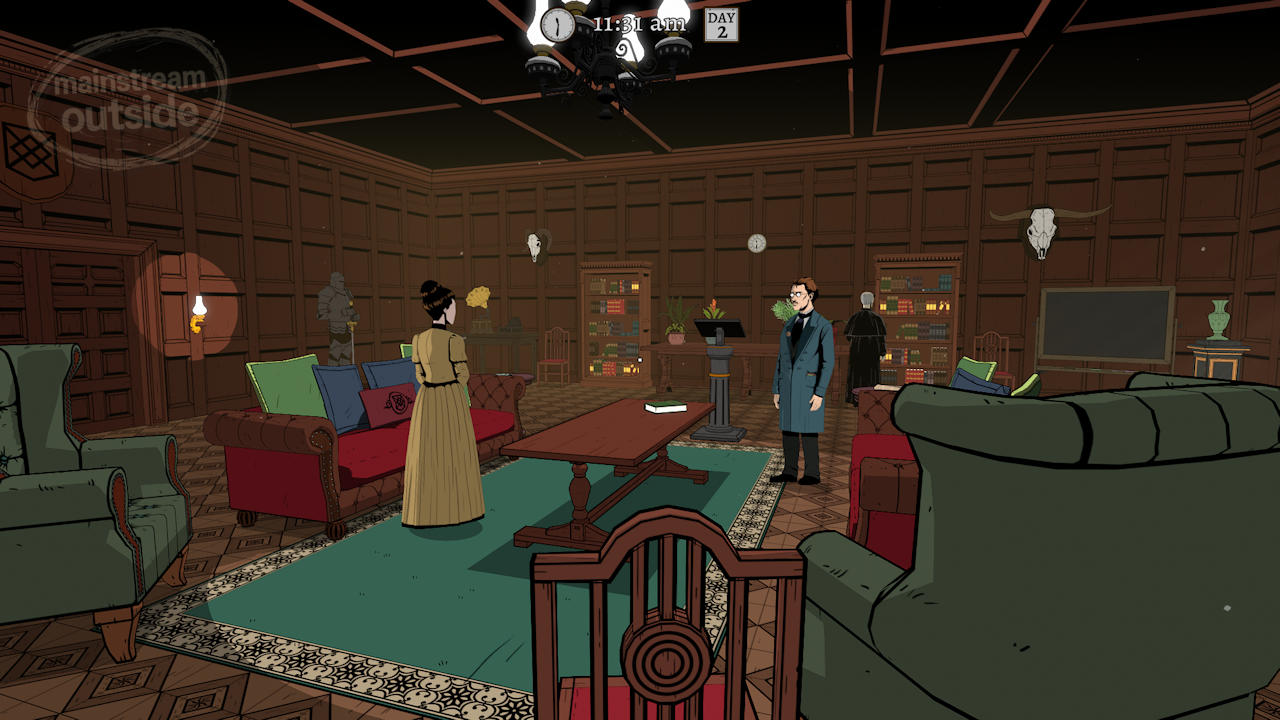
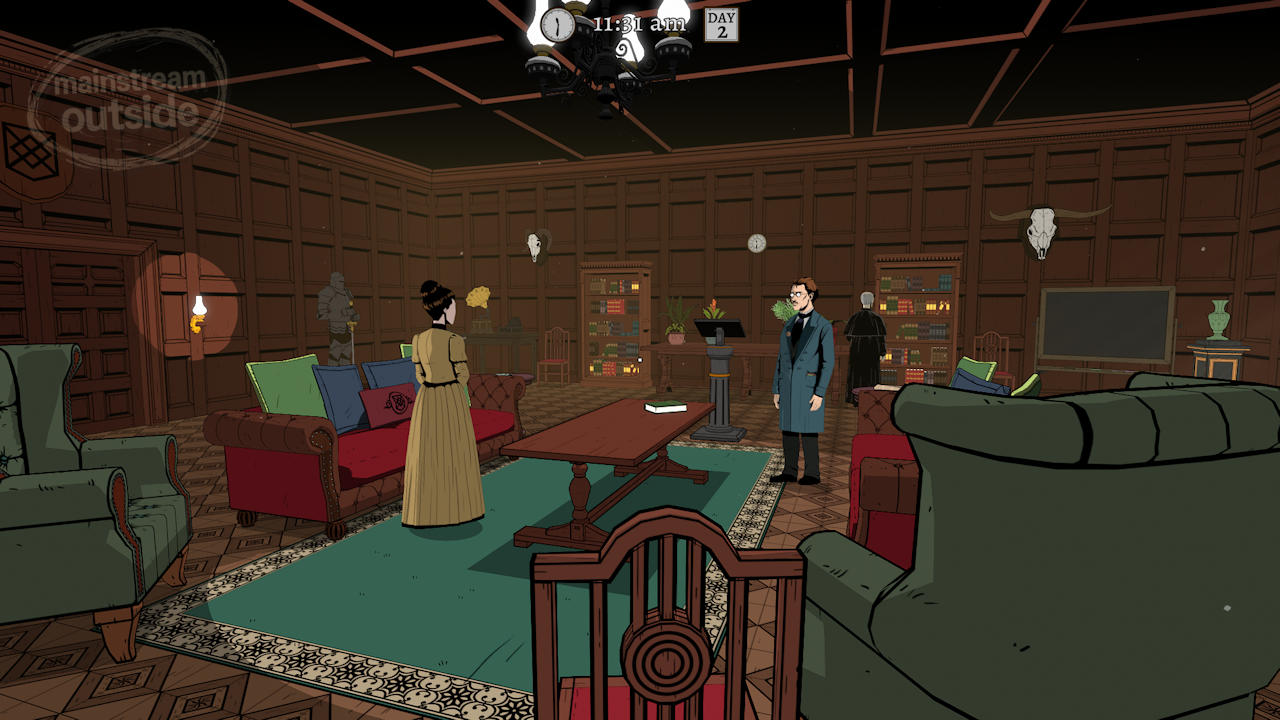
What I haven’t touched on yet is the manor itself. Blake Manor is a sprawling, labyrinthine estate with all the classics you’d want from a proper manor-house mystery: long corridors, warm-looking parlors, rustic guest rooms, and the occasional practical workspace. But it also has those spots that practically scream "do not enter", especially the deeper you go into the lower levels.
There are outdoor areas too. One standout is a misty, overgrown courtyard with a fountain and a faintly morbid statue of a woman. This is where The Séance of Blake Manor really flexes its atmospheric muscle, because the courtyard creates an oppressive sense of complete desolation. The effect is capped off by a ghost encounter that slots perfectly into the game’s bleak overall mood.
Ghostly scenes like this one really fired up my urge to explore.
That said, there is one small but noticeable atmosphere killer: the two-dimensional NPCs. The problem isn’t necessarily that they all look like they’ve been flattened by a steamroller. Whether that cardboard-cutout style works for you is ultimately a matter of taste. What’s more of an issue is that the guests behave like cardboard cutouts too. They mostly stand around, blink now and then, maybe loop through a tiny animation—but there’s barely any sense that they move through the space in a believable way.
Then there are the faces, which really do the game no favors. Across the board, they looked like Spooky Doorway had hired outside artists, and then only paid half the invoice. Most of them felt oddly mirrored down the middle, and not even the occasional beauty mark or scar could really disguise that.
Tech: Fairly undemanding
On my review system, The Séance of Blake Manor ran mostly stable. My numbers (see the "Review system" box) came in at 60.0 FPS average / 55.4 FPS 1% low at 1080p, Max (labeled "Normal"), DX12, with a frametime p95 of 17.6 ms and a very modest VRAM peak of 2.49 GB in a busy run through the main hall. Put simply: this is not a game that looks like it’s trying to cook your hardware.
The bigger technical footnote is that the game seems to be hard-capped at 60 FPS, and—at least in the version I played—there’s no VSync toggle in the options. That doesn’t seem to be a one-off menu glitch, either: there are community reports from players trying to troubleshoot stutter who ran into the same issue because they couldn’t disable VSync in-game.
As for the kinds of hitches you’re actually likely to notice, other impressions line up with the idea that the game is more prone to smaller technical hiccups than to sustained poor performance. One review-thread summary explicitly mentions "the occasional technical hiccup" without treating it as a serious performance problem.
And if you’re playing on handheld: at least one Steam Deck user noted that area transitions and loading between zones can start to feel sluggish over time—especially in a game that asks you to do a lot of backtracking.
The good news is that the developers clearly kept patching after launch, and not just for obscure edge cases. Patch notes mention fixes and improvements for things like mind-map scrolling, evidence unlocks, various progress blockers or lockouts, and save/load issues. So if you’re reading this well after release, there’s a good chance you’re getting a smoother experience than early adopters did.
Verdict: A welcome addition to the whodunit genre
The Séance of Blake Manor doesn’t just serve up classic whodunit material with a supernatural twist—it also expands the formula with a compelling strategic layer. Most actions, conversations, and investigations need to be planned around the clock, or you risk missing key events and important characters.
The game stands out thanks to its richly atmospheric manor-house setting and a cast of deeply suspicious, sometimes delightfully exaggerated characters. Even so, I can’t recommend this inventive missing-person mystery without a few caveats. The old-school 2.5D comic-book presentation definitely won’t click with everyone, and those sprawling, overcomplicated mind maps demand real patience.
Your best bet is to try before you buy, which is easy enough here. On Steam, there’s a free, playable demo available permanently.


Read next:

Comments