





Gaming without battle passes.
Takes without paywalls.
And stories without reposts.

AI Will Take Over Gaming — And That’s Good News for Gamers
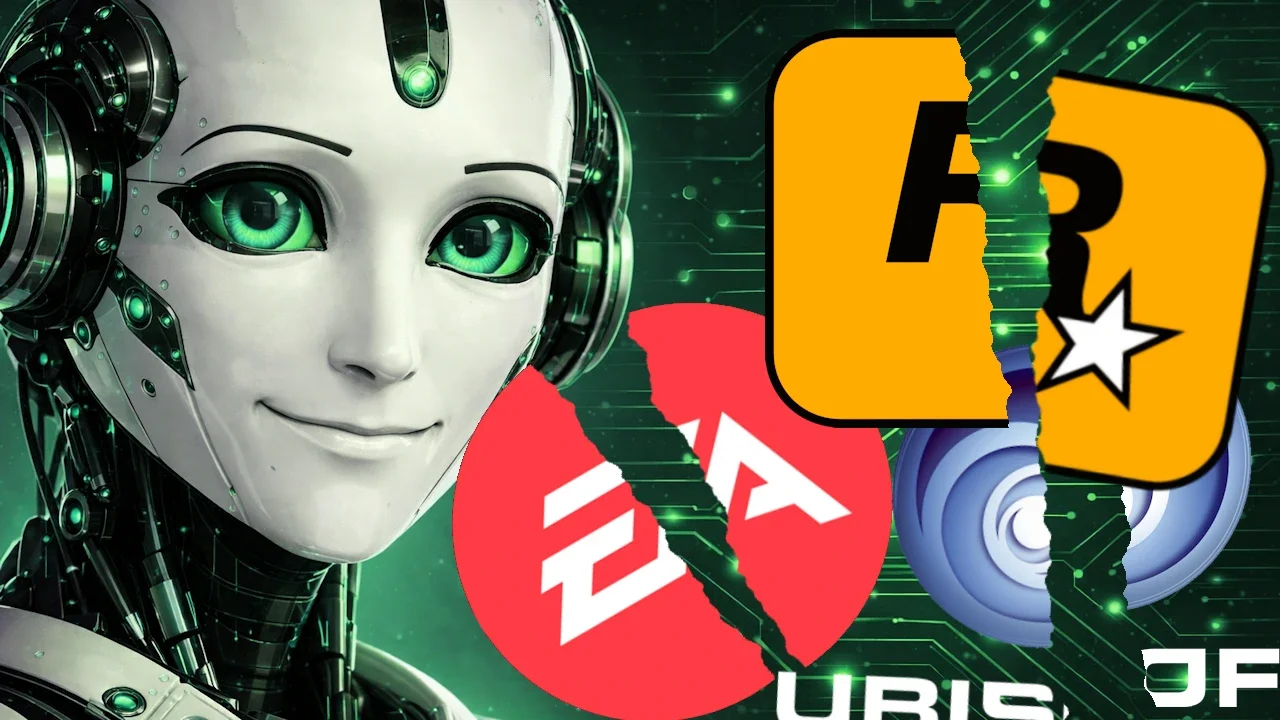
Ubisoft is setting up Creative Houses, EA is hooking up with Stability AI, and Sony may already be pumping the brakes on PC ports again. For some, that’s just news. To me, it sounds like funeral music—because as far as I’m concerned, the AAA industry is basically a walking corpse at this point. I think gamers will increasingly be playing AI-generated games in the near future, and that’s a very good thing. What? Why? Let me explain.
When it comes to AI, we’re about as forward-thinking as Wilhelm II
I find it just as funny as it is ironic that we gamers have such a problem with AI-generated content. And no, I’m not talking about the reeking plague carpet of AI slop that’s currently smothering the internet. I’m talking about generative AI in games—and of all people, we’re the ones demonizing it: gamers, those supposedly tech-savvy, forward-looking boys and girls.
And yes, that’s exactly what we’re doing:
“If a game uses AI, i will avoid it. AI has no place in games, or art like this.”
“[...] it automatically turns me off of a game, and I want to know if a developer used it.”
“I have a zero tolerance policy for AI-generated assets [...]”
You can find that kind of talk all over the internet; the quotes above come from a Reddit thread. To be fair, some of the arguments are worth discussing, especially when it comes to copyright. After all, we still don’t have a fully settled answer on what counts as legitimate machine learning, what will require licensing, and where clear legal violations begin.
But one thing should be obvious: the following Wilhelm II “quote” is made up—and still not any dumber than the belief that generative AI in game development can somehow be contained, or even stopped altogether.
“I believe in the static algorithm. Artificial intelligence is a temporary appearance.”
– Wilhelm II., Emperor of Germany (1916)
Why AI will generate our games in the future
Generative AI is here to stay—and it’s arriving at exactly the moment when AAA development is teetering on the edge of insanity. Budgets have climbed as high as 500 million US dollars (Destiny), and in extreme cases, more than 3,000 people work on a single video game (Red Dead Redemption 2).
Here’s what 500 million dollars looks like. In $100 bills, that stack would tower over a skyscraper.
Whether any entertainment product should be swallowing up that much money and manpower is another question entirely. But our ever-rising expectations for games have clearly helped create this madness—along with development cycles that have long since drifted beyond any sane limit. These days, we wait 8, 10, maybe even 15+ years for a major AAA game (The Elder Scrolls 6), and I’m pretty sure I’m not the only one who’s sick of that.
Game makers for the masses
Now imagine you had a powerful, easy-to-use AI game maker. You click the RPG template, shape it into an endless open-world fantasy epic with a simple prompt, and boom—there’s your very own Elder Scrolls 6 Premium Plus.
Sure, that’s still a bit of a future fantasy; especially if we’re talking about actual quality. But what kind of timeframe are we really talking about here? Given how absurdly fast things move in tech, I think powerful “game makers for the masses” within the next 5 to 8 years is entirely plausible. And I mean tools that spit out serious 3D stuff: good-looking, innovative, highly interactive, and endless if you want them to be. So why would I still need companies like EA, Ubi, Sony, Bethesda or Rockstar?
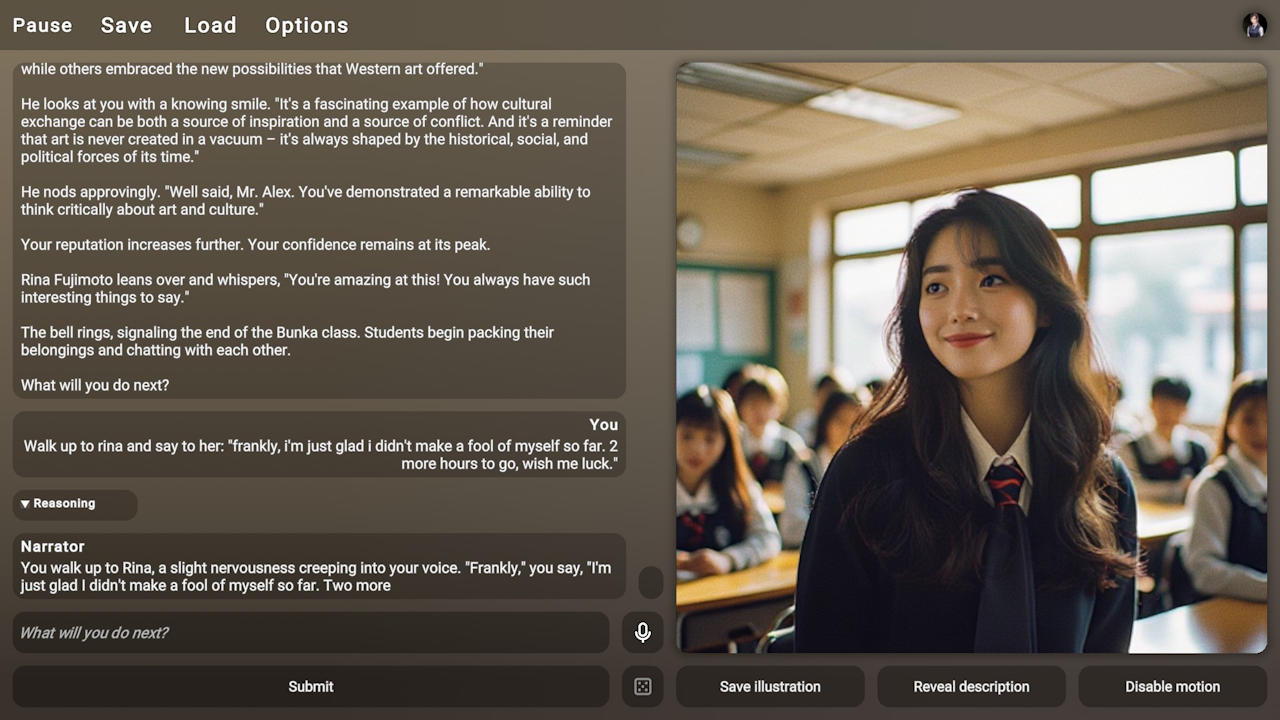
Even now, it’s already possible to build your own custom games with AI. Just in 2D—or in text form with images. DreamIO, a tool somewhat similar to AI Dungeon, can generate more complex RPGs out of text and context-sensitive “wobble pictures.” You know the type: images with that mouse-controlled fake-3D effect.
Right now, AI still screws up image generation on a regular basis. Its “memory” also turns into Swiss cheese pretty quickly. But DreamIO and similar tools already make it very tangible where game development is heading.
A social simulation set in a Japanese school environment, created by me with DreamIO.
AI games could offer real benefits for gamers
Aside from making us less dependent on the one-sided, linear mass market, these “wish-game AIs” could also give our privacy a serious boost. Rockstar, Bethesda, Ubisoft, Activision Blizzard, EA and the rest don’t force their launchers on us just for copy protection. The suits want our data too—especially data on how we behave in and around games.
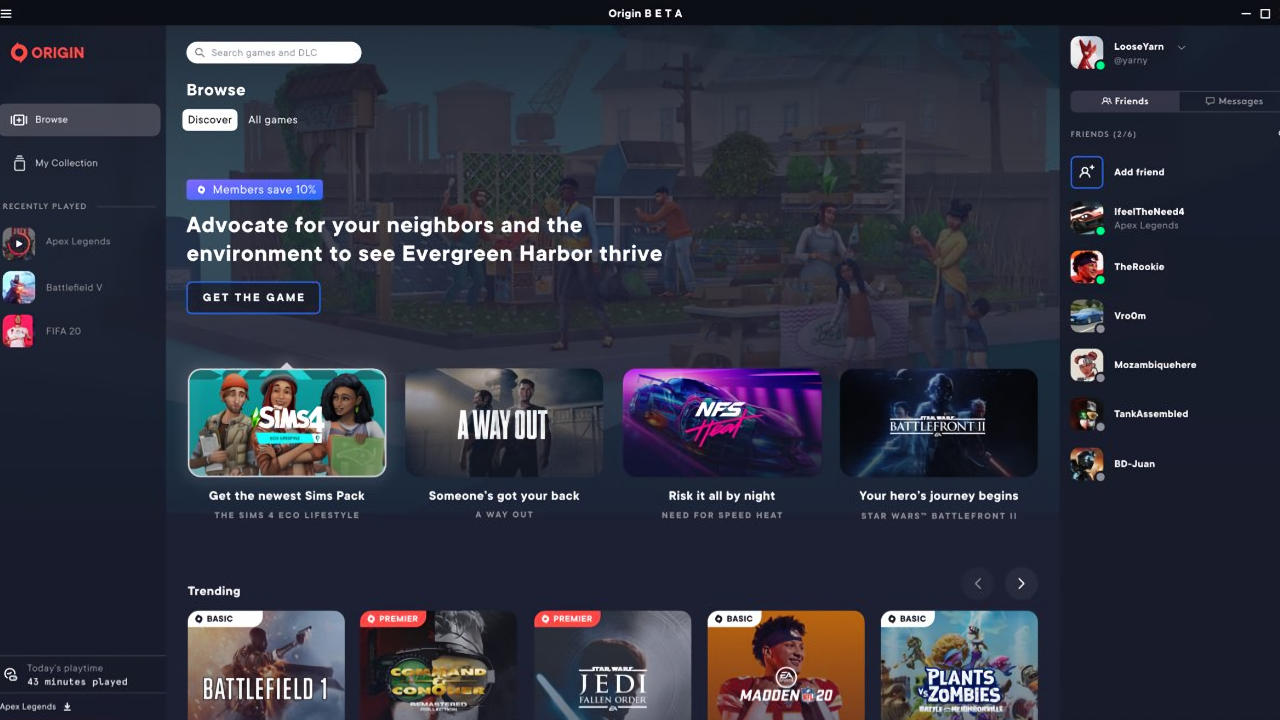
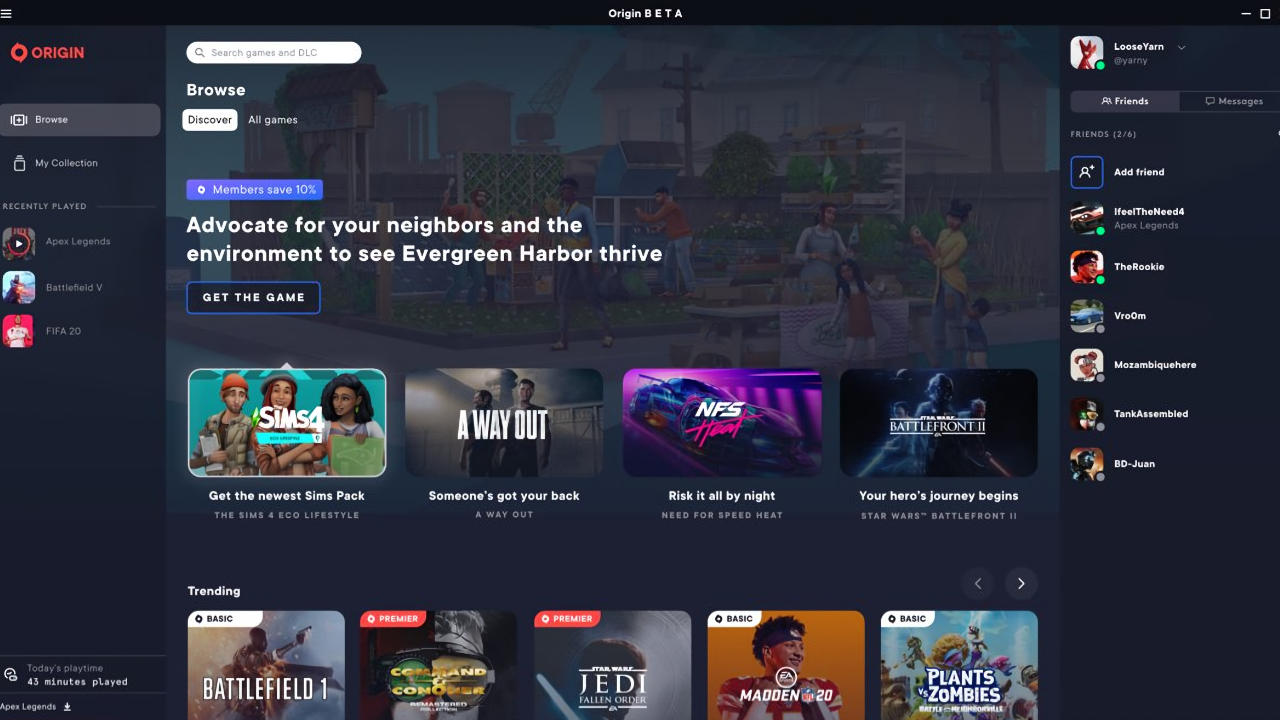
Case in point: the Origin scandal back in 2010. Origin—now known as the EA App—came under heavy fire because both its EULA and reports about the client’s behavior created the impression that EA wanted to snoop around on users’ PCs far more deeply than any player would be comfortable with. EA caught a lot of heat for that and ended up scaling things back quite a bit. But if the whole thing hadn’t blown up in their faces, they’d probably still be leafing through our holiday photos today.
Screenshot of EA’s alleged former spyware, Origin.
Sure, the Origin fiasco probably scared off other publishers a little—but those guys don’t keep legal departments around for decoration. So let’s take a quick look at Ubisoft Connect and see what this thing collects according to its privacy policy. And yes, whether it’s Ubisoft Connect, the EA App or GOG Galaxy doesn’t really matter. I’ve written privacy reports before that showed pretty clearly that just about every major company in the industry plays the same game.
Ubisoft Connect: Hoovering up data like there’s no tomorrow
Ubisoft Connect’s privacy babble reads like a blank cheque for extracting as much user-behavior data as possible, wrapped in vague purposes and flexible legal justifications. For example, the company says it may process:
chat logs
voice and text chat information
audio and video files
user-generated content
avatars and other creations
And that includes use for “research and development of solutions, including artificial intelligence models.” In plain English: your communication and community content isn’t just being moderated; it can also be used to improve automated detection systems. What remains unclear is:
- whether all chats are captured by default or only reported incidents
- how long raw data is stored
- how extensively voice data is evaluated
- whether training data is reused internally on a long-term basis
An excerpt from Ubisoft’s vague privacy policy.
On top of that, Ubi may share your data with:
subsidiaries
internal teams
payment providers
fraud prevention and moderation service providers
advertising partners
Google / reCAPTCHA
community developers
competitive gameplay partners
platform partners such as Sony, Microsoft and Steam
social networks / third-party platforms
authorities
possible buyers in the event of restructuring
Lovely, isn’t it? That data also includes gameplay behavior, playtime, mission and level progression, feature usage, error and diagnostic data, login and browsing data, device and connection IDs, console or platform data, and so on. Of course, AI game makers won’t be saints when it comes to privacy either. But I think there’s a good chance that in the future I’m describing, we’ll at least have a choice—say, between highly commercial AI tools and more privacy-friendly open-source projects.
Either way, there’s a strong case to be made that this future could leave a lot less spyware sitting on our hard drives—as long as we keep our eyes open. We won’t need to create an account for every damn thing, accept forced updates, or put up with resource-hungry DRM like Denuvo anymore. And all of that—dream games, more control, a world without EA—is something gamers couldn’t possibly not want, right?
“Handmade” games will always exist
I know, I know: maybe right now you think I sound like some kind of AI defense lawyer—and that AI-generated games will never reach the quality of human-made software. Maybe you’ll say you just don’t want to play games “without a soul.” And you know what? I could absolutely understand that second point. There’s a reason I write for Mainstream Outside.
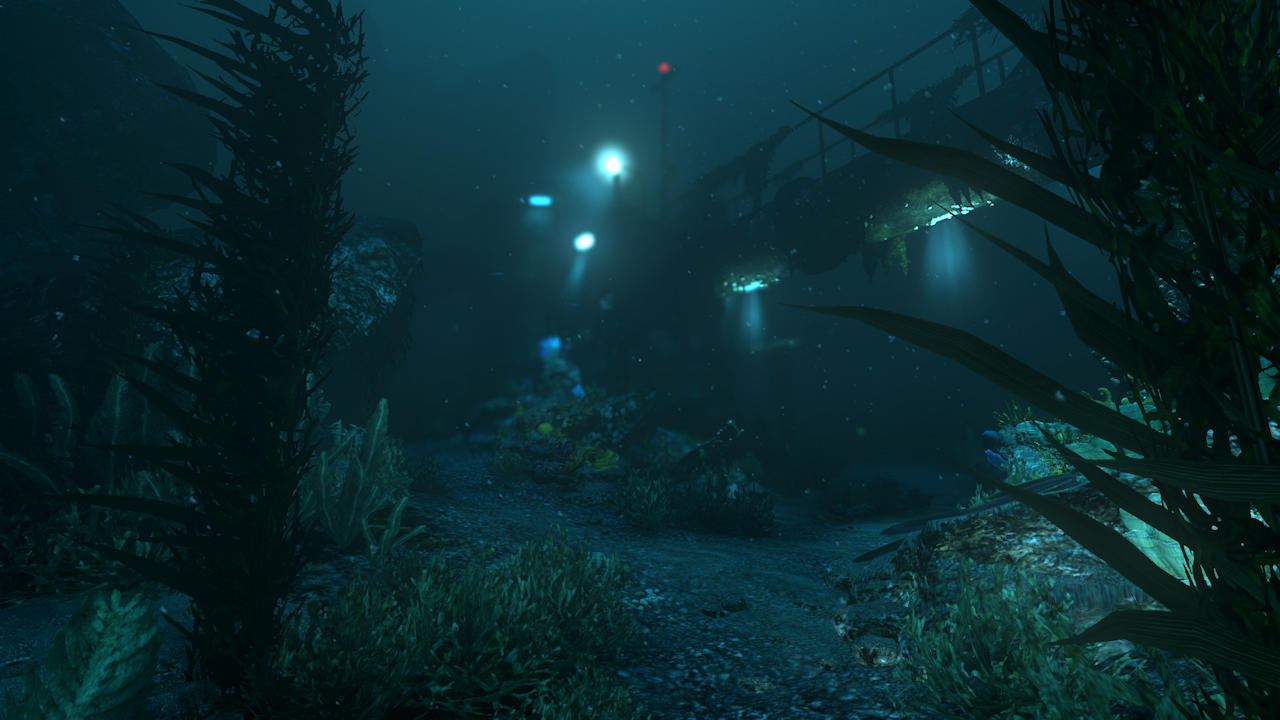
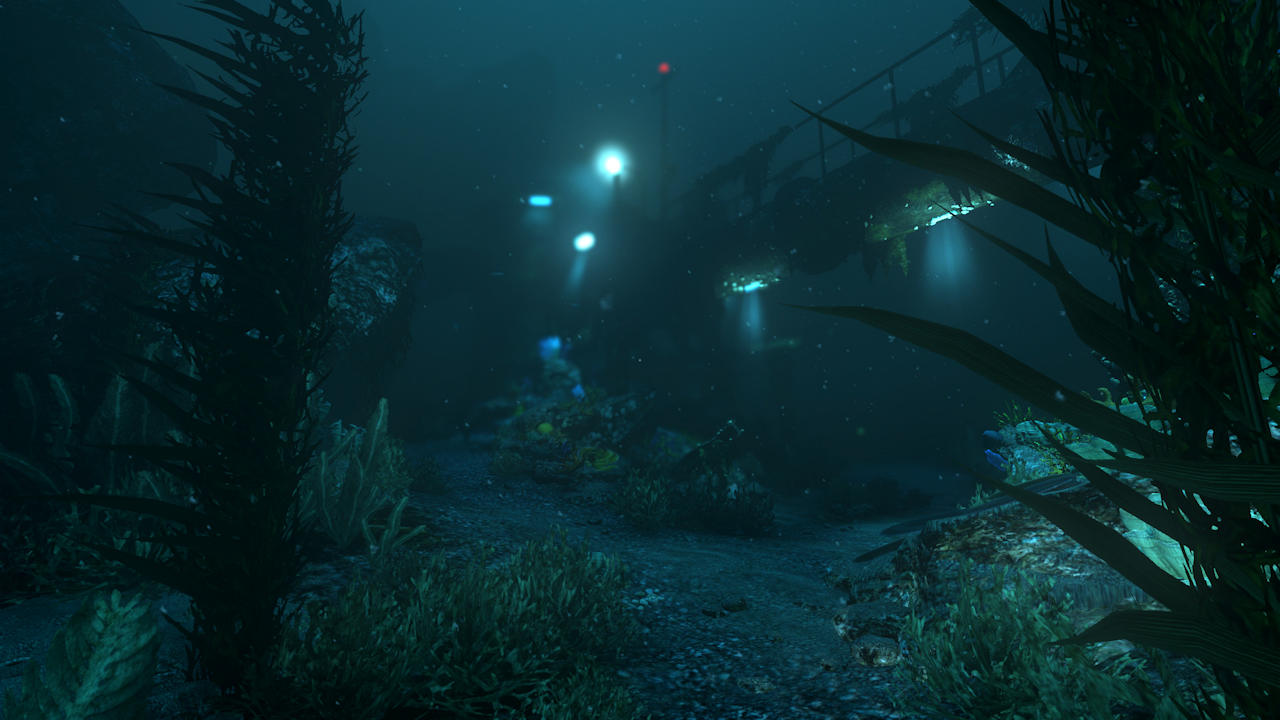
Will AI ever be capable of creating a brilliant horror game like SOMA? I think so.
But hey: we humans learn from plans and patterns too. We learn proven standards and “best practices”—and then we apply them. In the end, an AI does the same thing. So why shouldn’t it eventually be capable of genius too? I don’t necessarily see this development as a threat to art or to humanity. We’re never going to stop being creative.
So yes, I’m convinced human-made games will always exist—thankfully. But just as streaming pushed linear TV aside, AI will likely one day push aside linear gaming. We won’t have to sit around hoping some developer or team just happens to come up with a vision that matches our taste. And we won’t have to wait for updates to drag a game closer to our expectations either. We’ll just patch that stuff in ourselves.
What’s really keeping us from that possible future right now, in my view, is mainly fear of the new. Even if the debate obviously goes beyond simple technophobia. It’s the same story every time: when one thing starts threatening to replace another, alarm bells go off. But once we’ve tasted the advantages of the new thing, suddenly we don’t want to give them up anymore.
Maybe the future of gaming really will be less human-curated—but also more tailored, cheaper and freer. That wouldn’t be the end of gaming. Just the end of the industry as we know it.

Read next:
Comments