
Gaming without battle passes.
Takes without paywalls.
And stories without reposts.

Bakudo Preview: A Sci-Fi Ball Game with Dark Souls Ambitions

Bakudo is about to give the small sci-fi sports niche an intriguing new entry. During my several-hour hands-on session, this anime ball game didn’t just pelt me with futuristic projectiles—it also unleashed a difficulty level straight out of Dark Souls hell. Good!
Yeah, sci-fi sports games—I love these things. Throw some fictional future tech at the laws of physics and you often end up with wonderfully entertaining ideas. Early experiments such as the “astronaut basketball” game Hypaball and the hard-hitting handball-football hybrid Speedball taught me that decades ago.
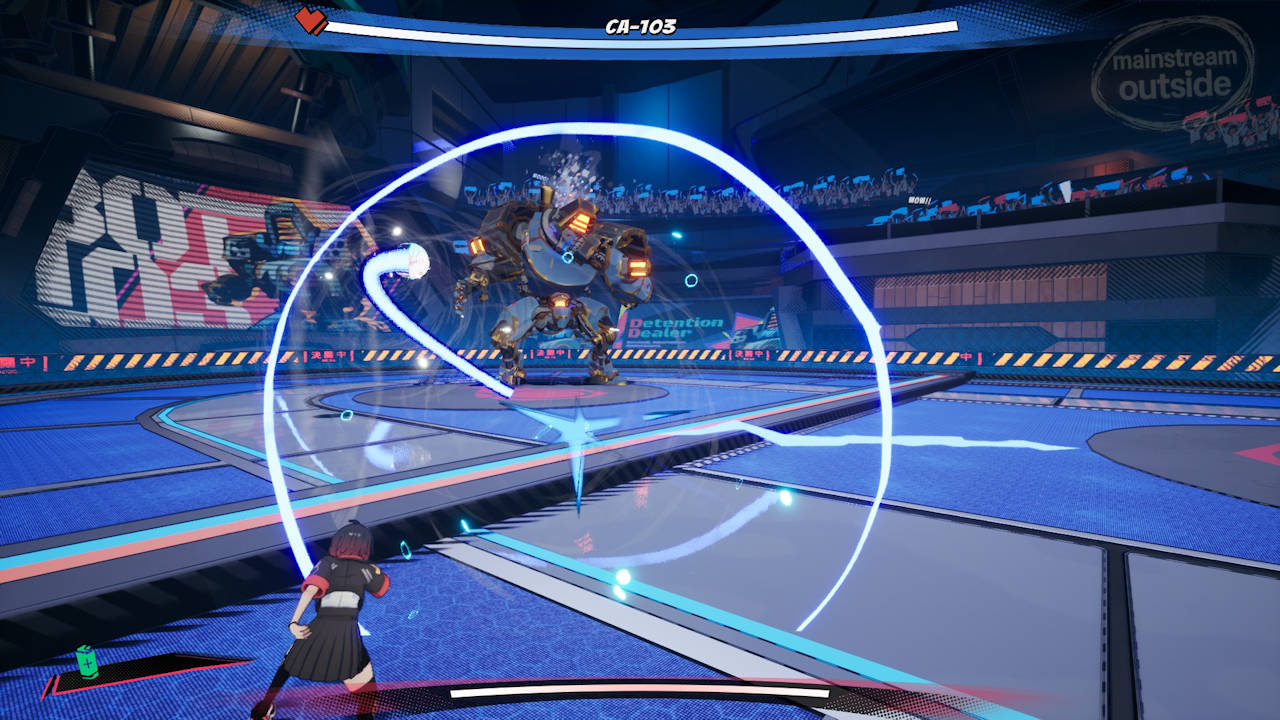
Bakudo follows a similarly rough-and-tumble spirit, blending elements of dodgeball, volleyball, and J-RPG boss fights. This isn’t a team sport, then, but a one-on-one ball battle fought inside a high-tech arena.
You could also call it a boss-rush game, since it doesn’t bother pitting you against beginners or even advanced players. Nope, you’ll face nothing but so-called Pro Corestrikers—true masters of the sport who often, quite literally, look down on you from high above.
Most of what I know comes from the Boss Rush Demo, which is currently available for free on Steam. Below, you’ll find my first impressions of Bakudo and my take on whether this ballistic brawler might be worth buying—and who, besides me, might enjoy it.
Welcome to Bakudo’s elite academy, noob!
You don’t even know the basics of Bakudo when the game drops you straight into an elite academy devoted to the sport. That doesn’t have to be a problem in a video game. After all, you’ve already played world-champion boxers, footballers, and Formula One drivers countless times. At the Bakudo Academy, though, you genuinely feel like a noob—even after you’ve already taught a few opponents to fear the ball.
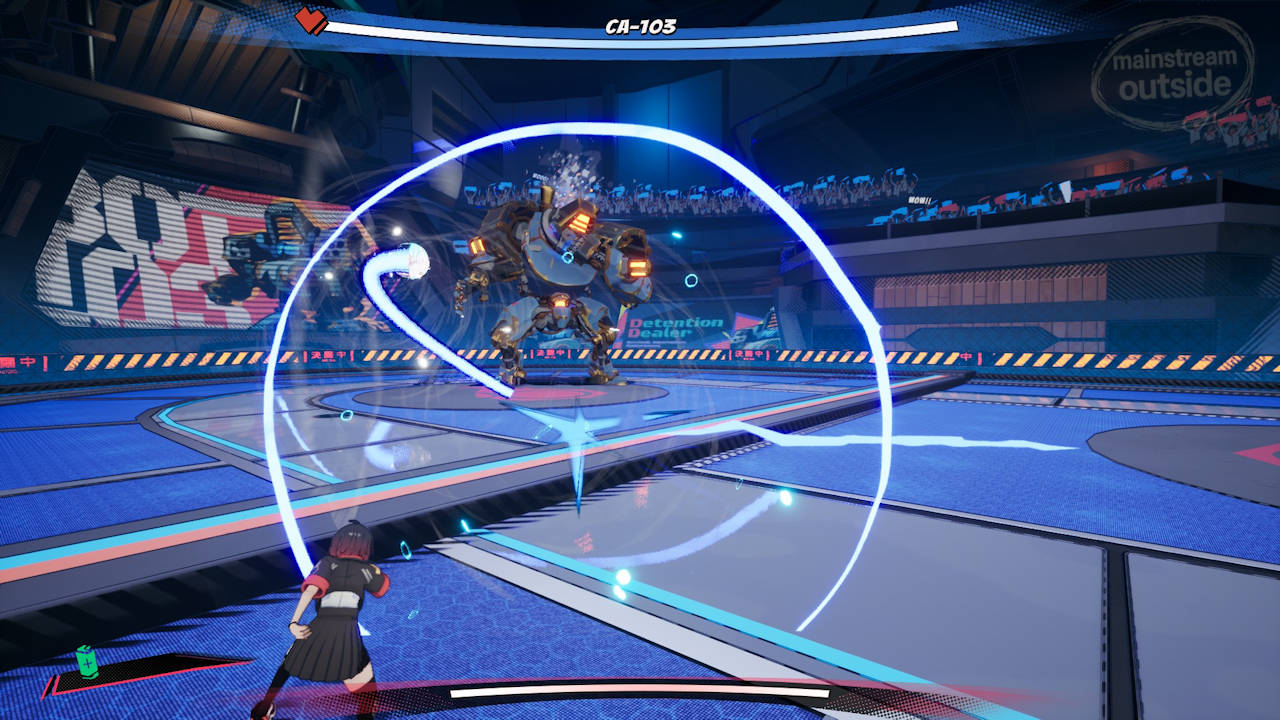
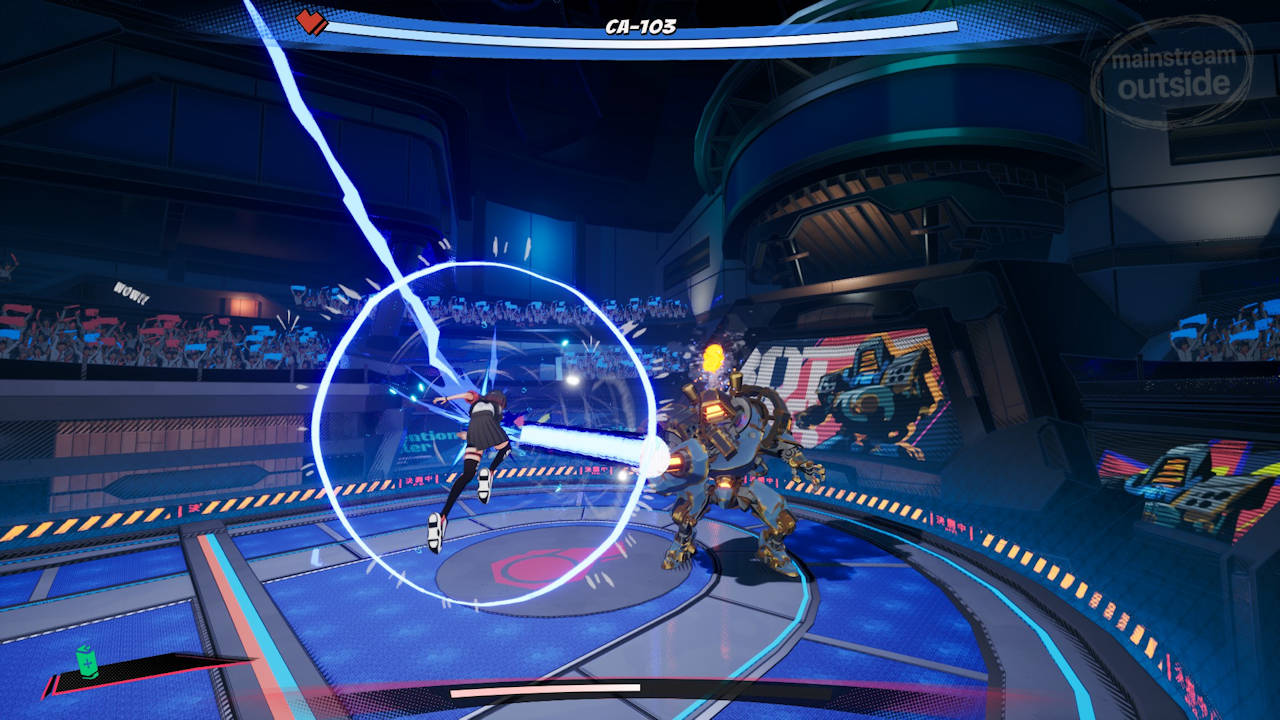
This is Bakudo in action. Here, the protagonist is throwing a curveball at her opponent’s weak point.
The demo I played focuses entirely on Bakudo itself, but the full game will also serve up what appears to be an emotional story. Here’s the setup: heroine Yuria enrolls at the academy to search for her missing father. Yes, a ball-sports academy where strength and athletic performance also determine your social status.
During her time there, Yuria forms relationships with other students and eventually uncovers a secret buried within the institution—one that could, oh dear, threaten the survival of the entire world. Nothing more specific has been revealed yet, but my money’s on good old Atlas deciding to play Bakudo with planet Earth. We’ll see.
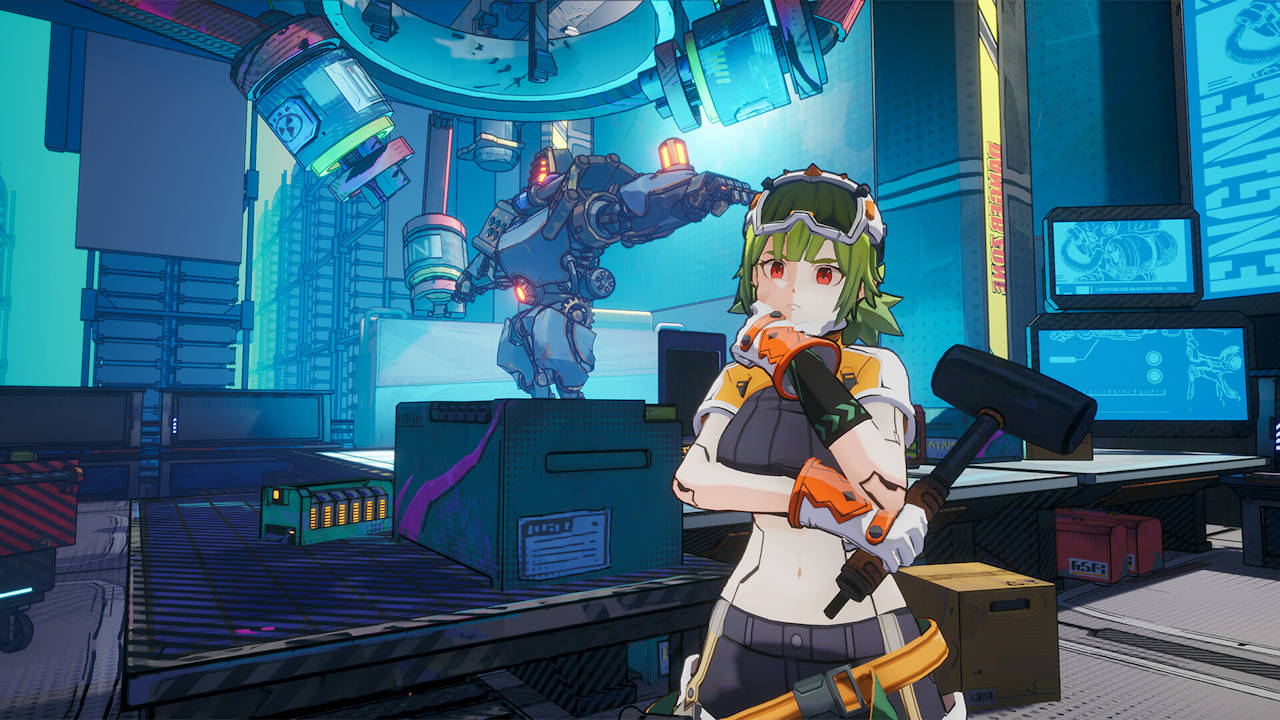
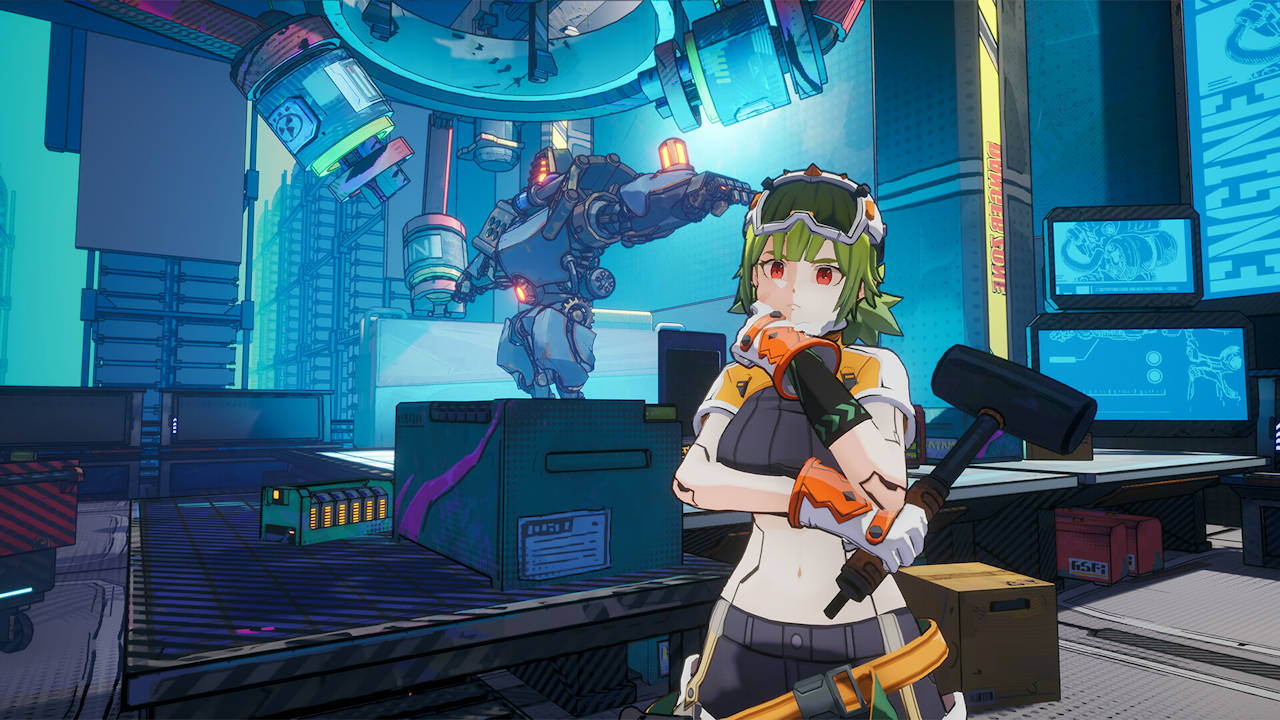
One of Yuria’s most important allies is Evie, an outgoing inventor who specializes in Bakudo equipment. Visually, she’s unfortunately the standard-issue anime tinkerer queen: green hair, welding goggles, and a not-so-tiny hammer. Still, let’s wait and see what the character writing does with her.
Meet Evie, the resourceful inventor. She’ll probably make Bakudo a little easier for you.
Naturally, Yuria has rivals too: the so-called Eight Stars, eight powerful elite fighters at the Bakudo Academy, each with their own fighting style and attack patterns. That isn’t a huge number for an entire game. Still, I’m fairly sure the steep difficulty will stop you from simply blazing through those bosses. More on that in a moment.
How Bakudo works
Let’s get to the heart of it: Bakudo’s action-packed matches. You learn the game through a multi-stage tutorial that explains all the basic techniques before letting you try them for yourself. The court is divided into two halves, and neither player is allowed (or even able) to enter the opponent’s side.
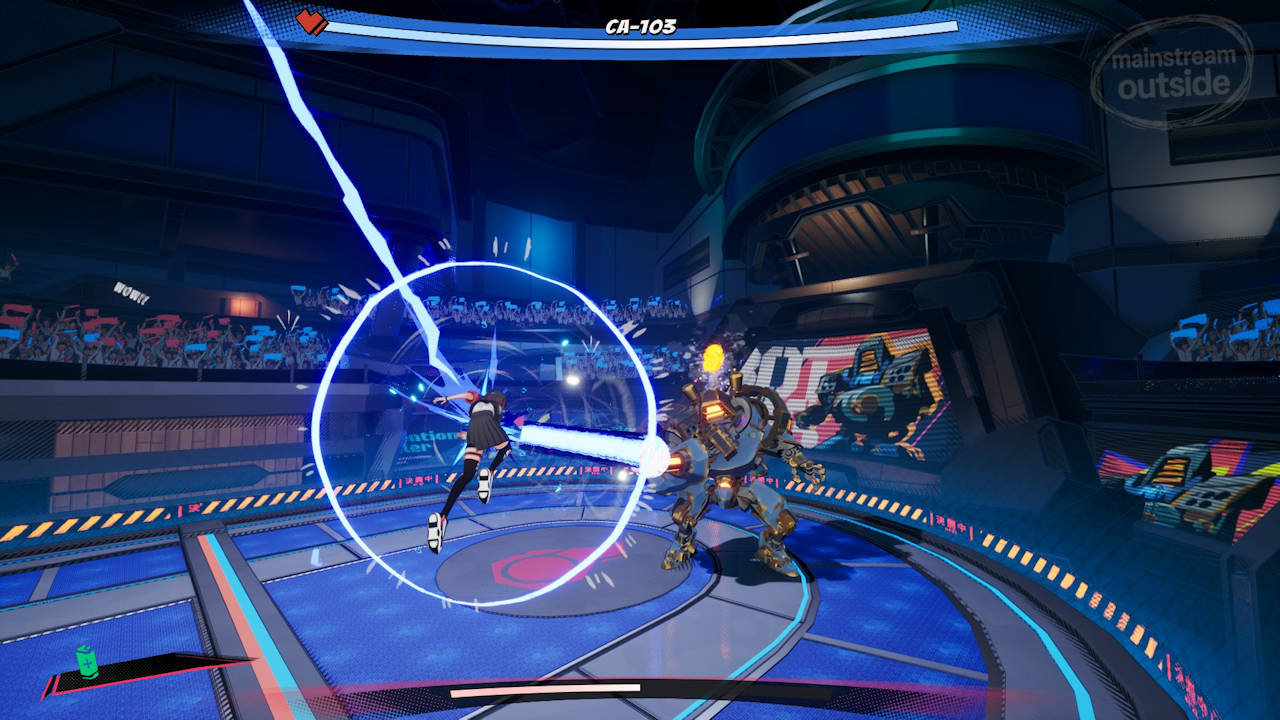
The “ball”—which looks like a cross between an antique diving helmet and, judging by the impact, a naval mine—is thrown back and forth across the court. Preferably not into your opponent’s hands. The goal is to keep smashing them with the thing until their energy bar is completely drained. To do that, you aim for a clearly visible weak point that they’ll naturally try to protect.
The CA-103 robot’s yellow-glowing weak point sits in the center of its body. The ball is about to hit it.
Thankfully, they do try to protect it. At first, I suspected I might not have to move Yuria around the court at all, leaving the game to become a mindless exchange of throws. Not so. Yuria is constantly on the move, whether you’re lining her up with an opponent’s weak point or dodging one of their occasionally brutal attacks.
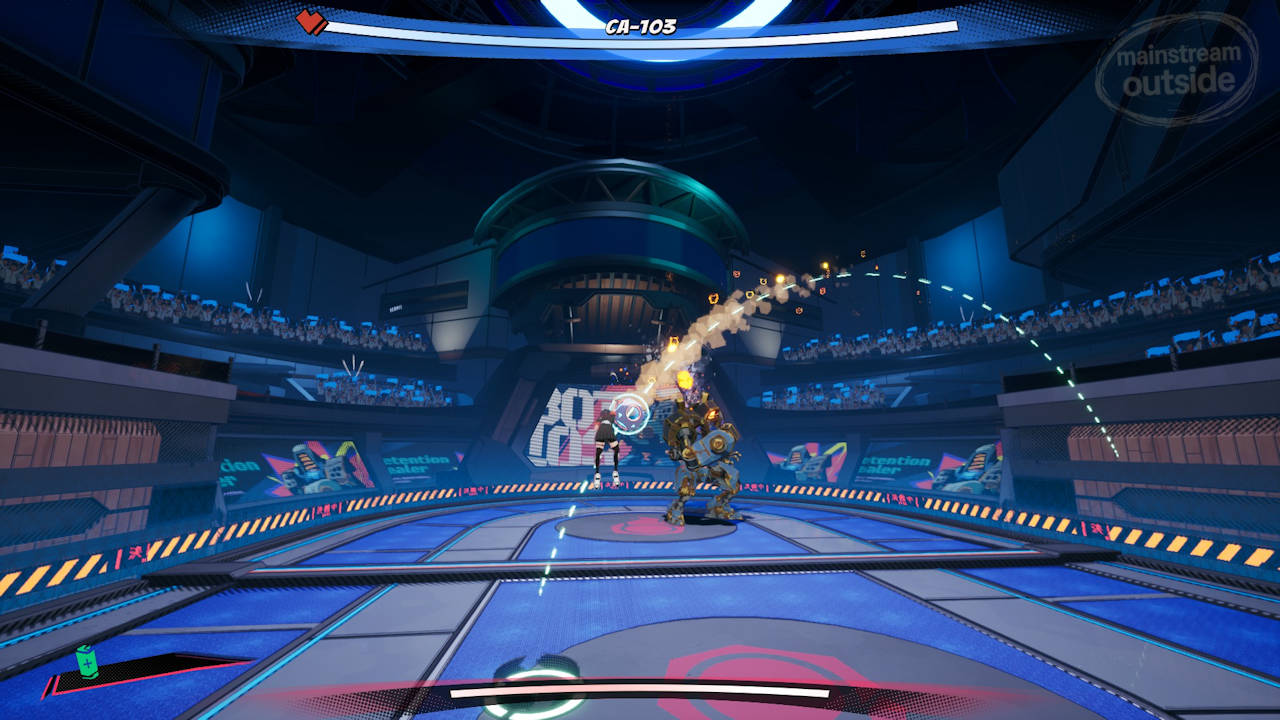
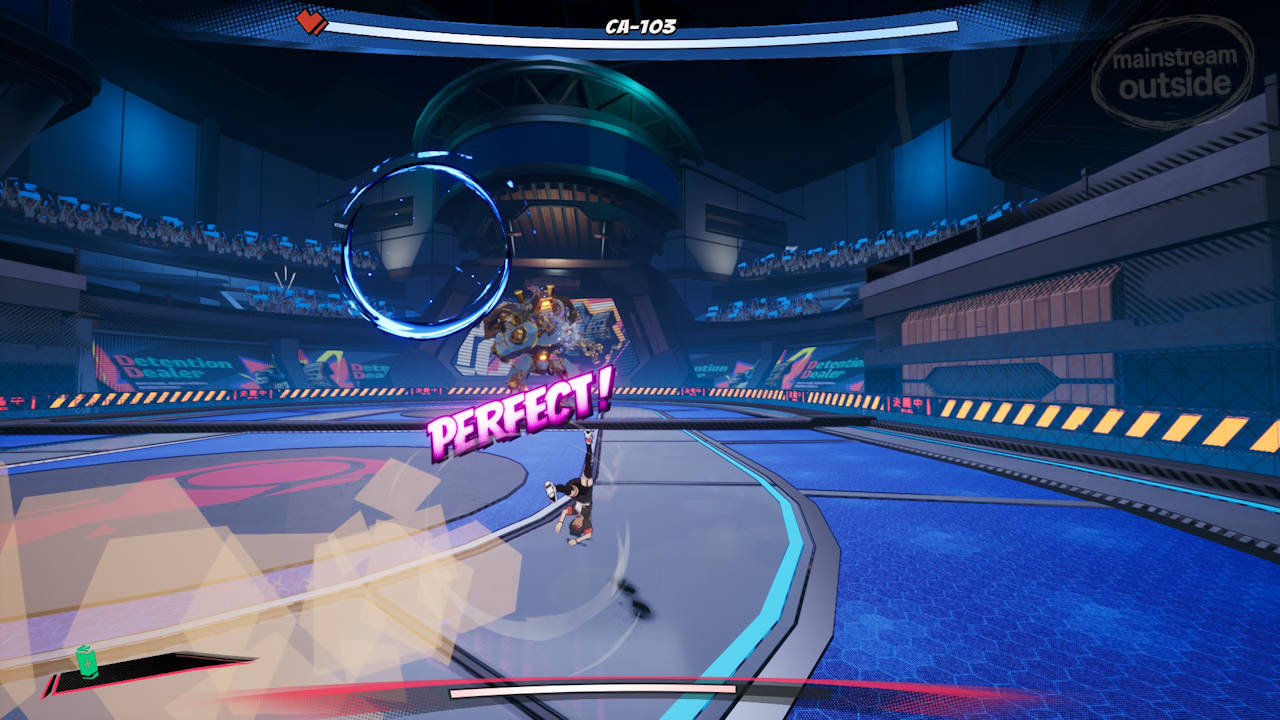
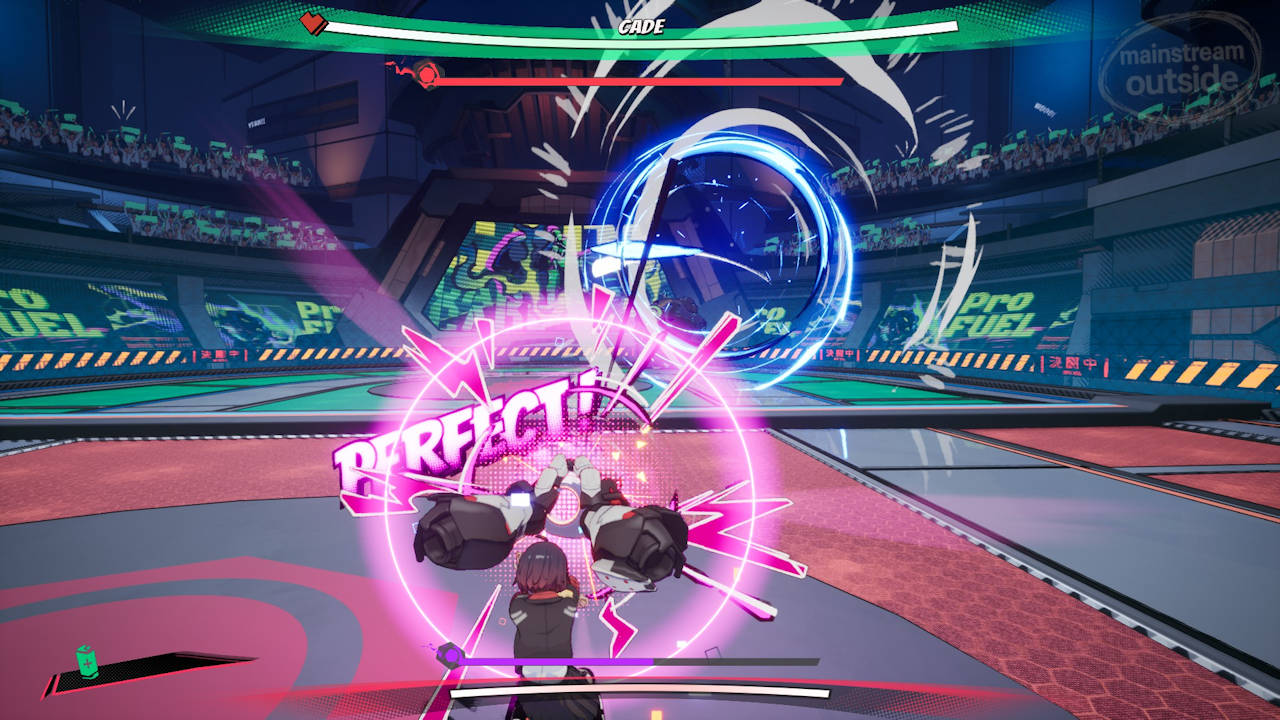
Left: The ball is being served. Right: Yuria pulls off a perfect dodge.
That dash demands extremely precise timing, especially since the projectile comes screaming toward you at ridiculous speed. Catching it isn’t exactly easy either: miss the ideal moment and you’ll take damage, although considerably less than you would from a direct hit.
Timing is pretty much everything in Bakudo. Nail the timing on a serve and you can turn it into an especially powerful strike. The same applies when your opponent crashes to the floor after a heavy hit and the ball flies back into your half. In that respect, Bakudo works a lot like volleyball, meaning you can even leap into the air and “spike” the ball. There are also phases where your opponent fires off volleys, forcing you to react in a flash.
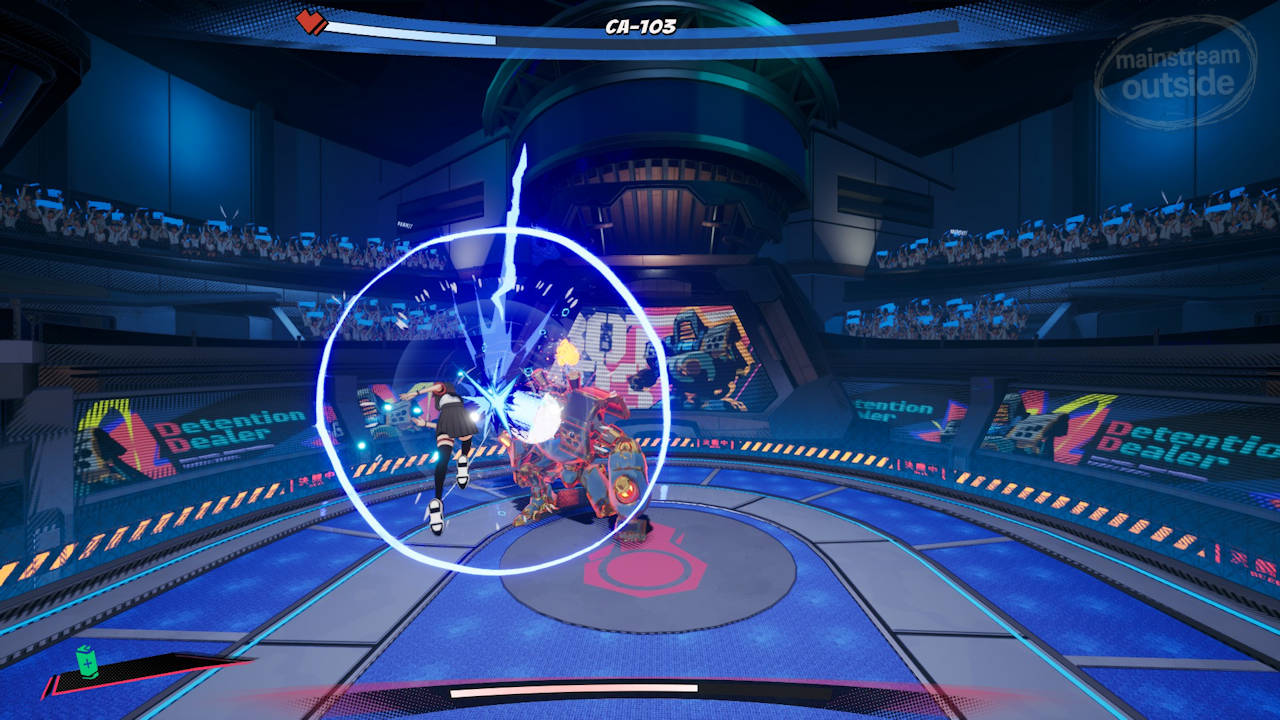
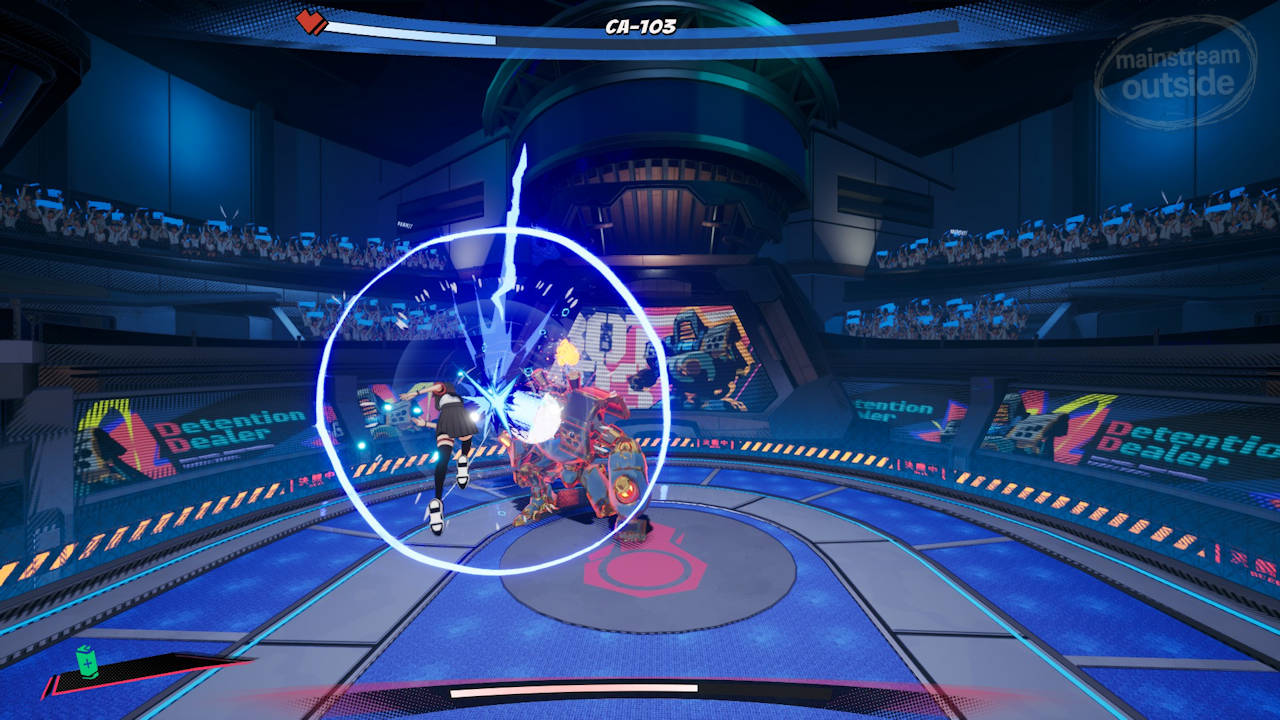
CA-103 is down on one knee after taking a heavy hit. If Yuria lands another shot now, it’ll hurt the bot even more.
Those damn special moves
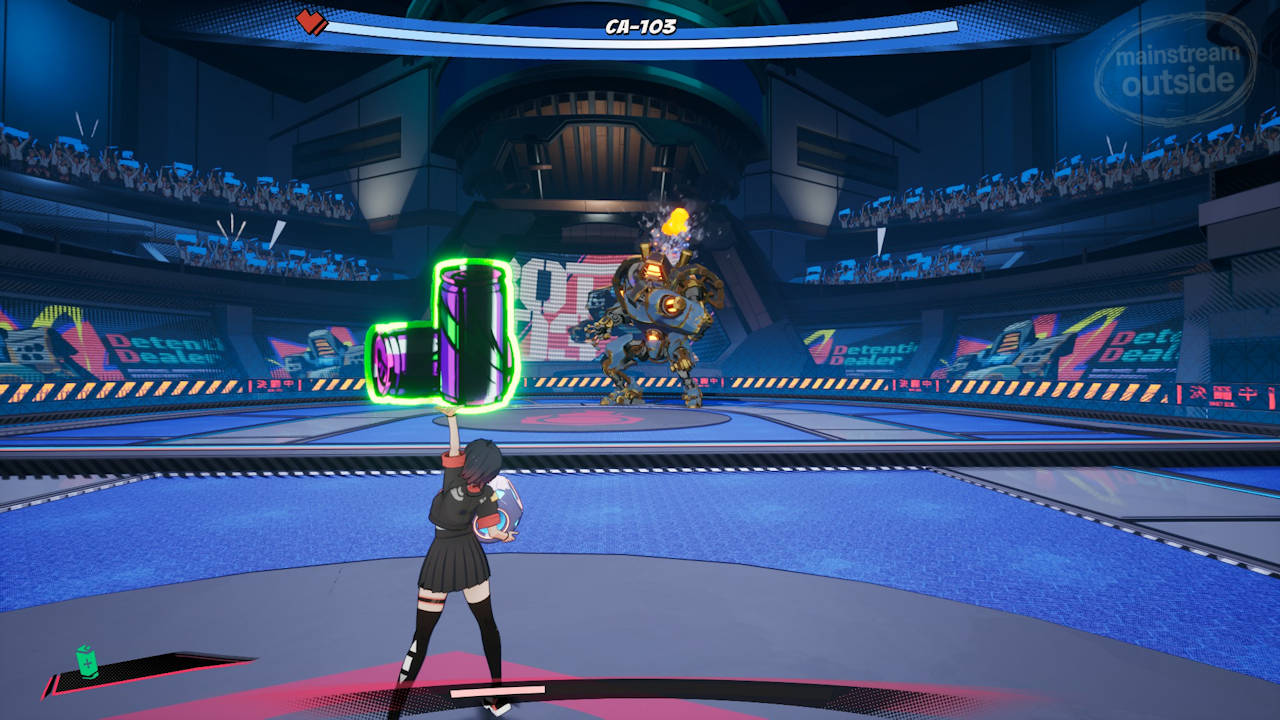
As the game progresses, you’ll gain extras such as two enormous tech gloves that extend your reach and unlock nastier throws. As you’d expect, though, Yuria starts with nothing more than straight shots and curveballs. The dirtiest throws and moves belong to your opponents, which isn’t exactly surprising.
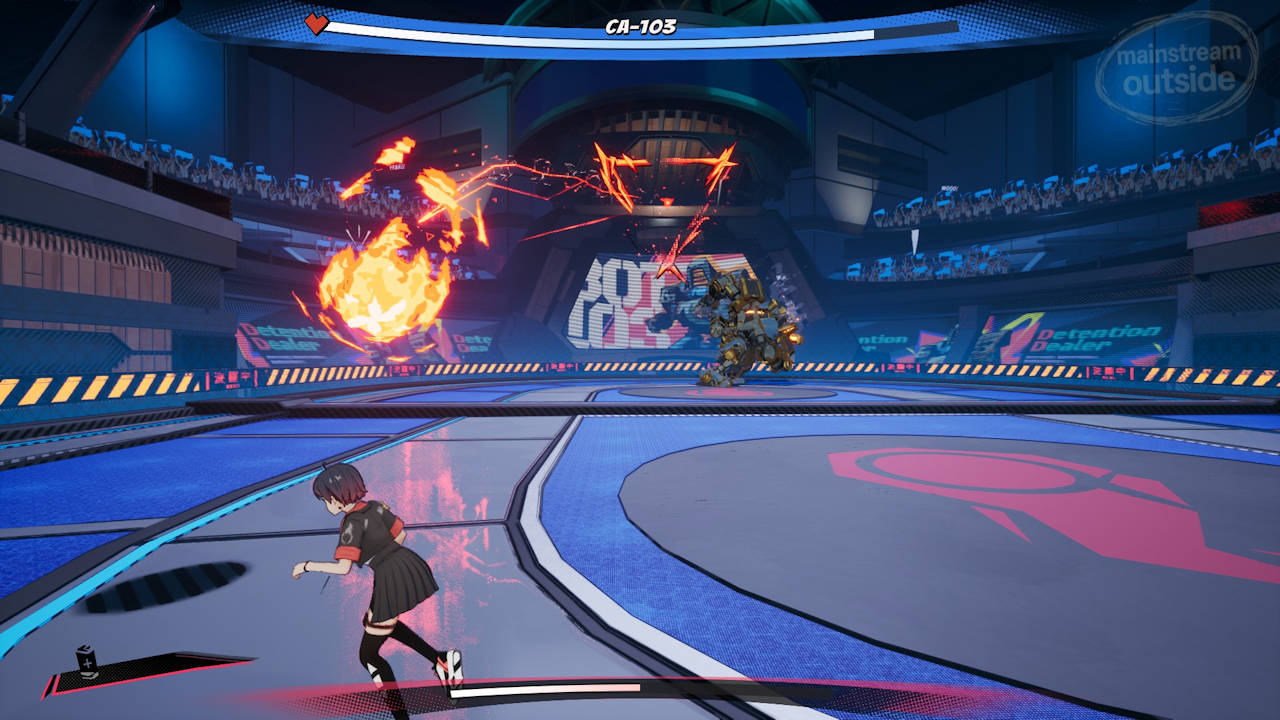
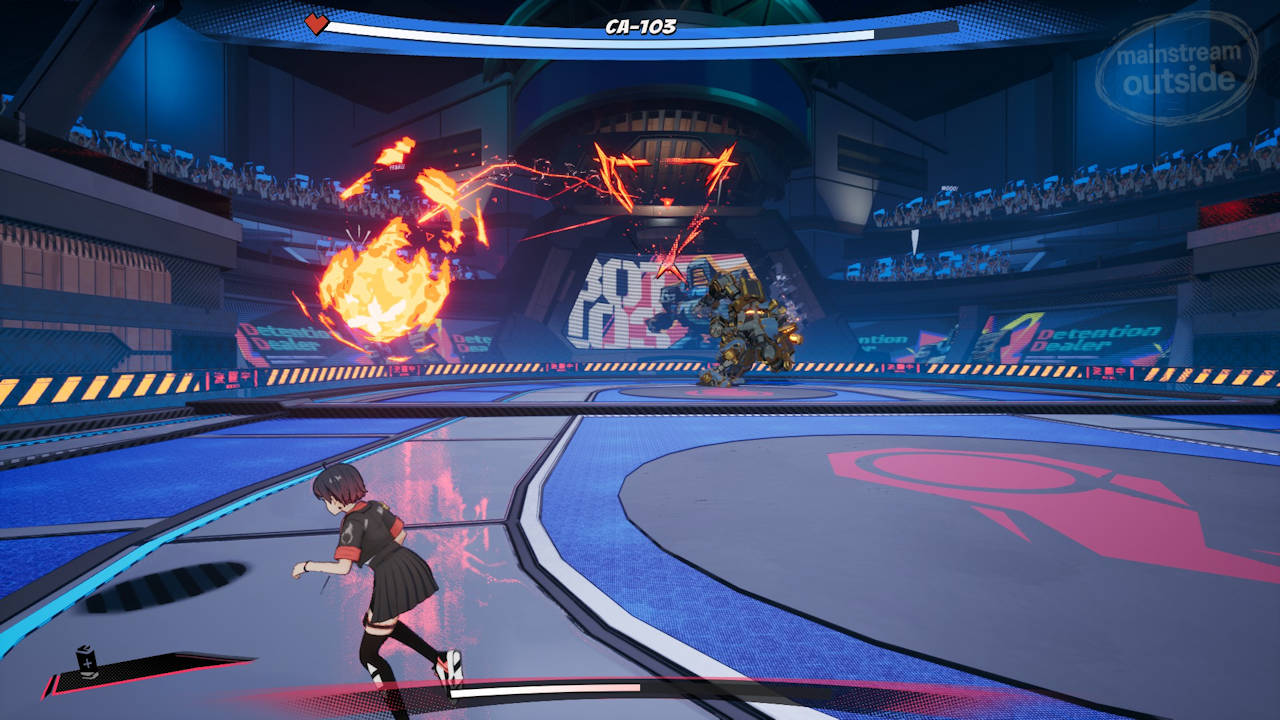
The CA-103 robot—which also lets you batter its steel shell during the tutorial—harasses you with a fireball, for example. This special move starts by launching an extremely fast flaming projectile from one side, curving toward you in a semicircle. Immediately afterward, an even faster regular ball comes flying in from the opposite direction. You need to read the warning signs here, although CA-103 does at least provide a visual cue shortly before firing.
Here it comes from the left: that thoroughly vicious fireball.
I probably don’t need to mention that special attacks deal extra damage. The fireball technique can even win the match outright for your opponent if you’ve already taken a few regular hits.
Other Corestrikers can use this special move too, but depending on their skill level, they may have even more tricks up their sleeves. The amusingly self-assured “Superstar Cade”—your second opponent in the demo—also occasionally unleashes a rapidly expanding shockwave that’s very easy to trip over. Thankfully, you can heal Yuria once the healing icon in the bottom-left corner of the screen has been charged by landing enough hits.
Incidentally, Cade’s weak point isn’t part of his body. This bot loves basking in the crowd’s applause so much that he occasionally stops to strike a smug pose. Whenever he does, he drops his guard and leaves himself wide open.
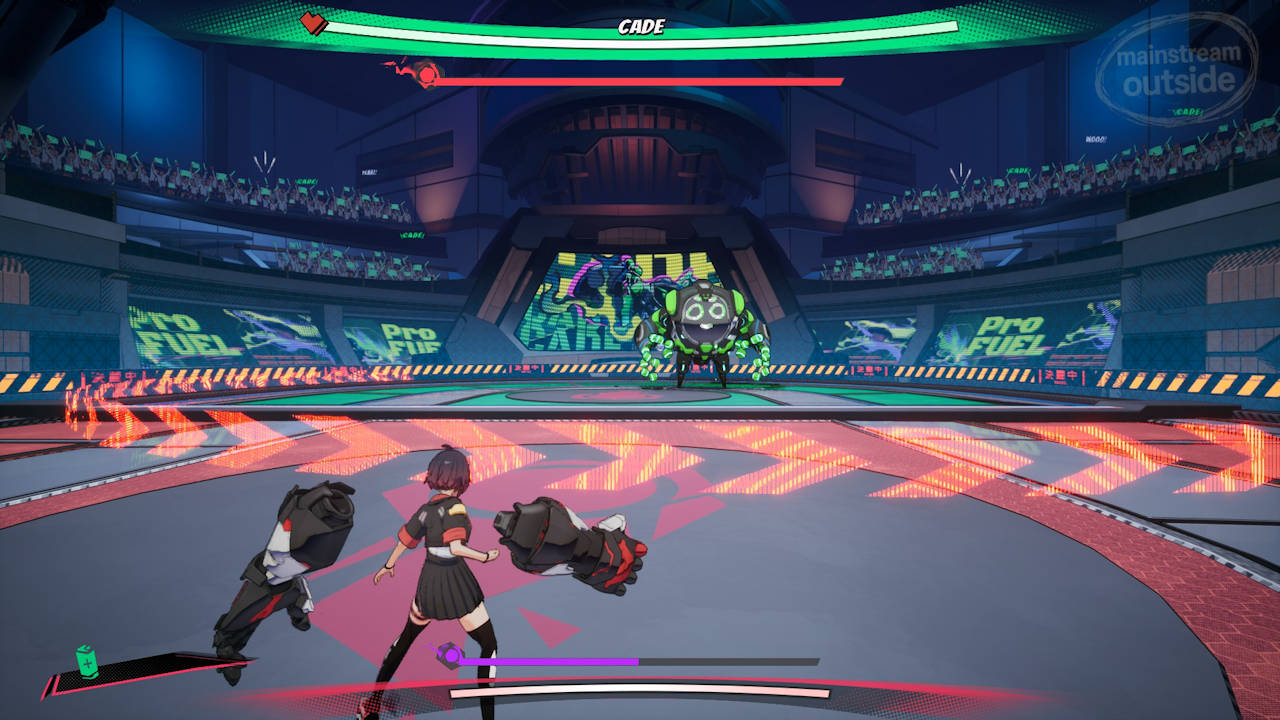
Look, Yuria heals herself. Right: Superstar Cade sends a shockwave racing into your half of the court.
Brain-bending, but brilliant fun
Publisher Shueisha Games hasn’t even announced a release window for Bakudo yet, but the demo already feels remarkably polished. Both the controls and the general feel of the game seemed practically flawless, allowing me to focus entirely on the action itself. That’s exactly how it should be.
You may already be wondering what makes Bakudo so difficult that I’d invoke the name “Dark Souls.” Well, Bakudo moves at such a high speed that you have to choose the right response to each enemy action within a fraction of a second. As a result, you’ll make plenty of instinctive mistakes, especially during the opening stages of a match.
Just picture it: serve, volley, catch the ball, hit a weak point with a curveball, dodge a fireball (first left, then right), jump shot, shockwave, heal, dash, and so on. That’s why you can’t simply stroll in and knock a Corestriker off the court. Bakudo takes practice, and each match may require plenty of attempts. Once it clicks, though, the game develops a fantastic rhythm.
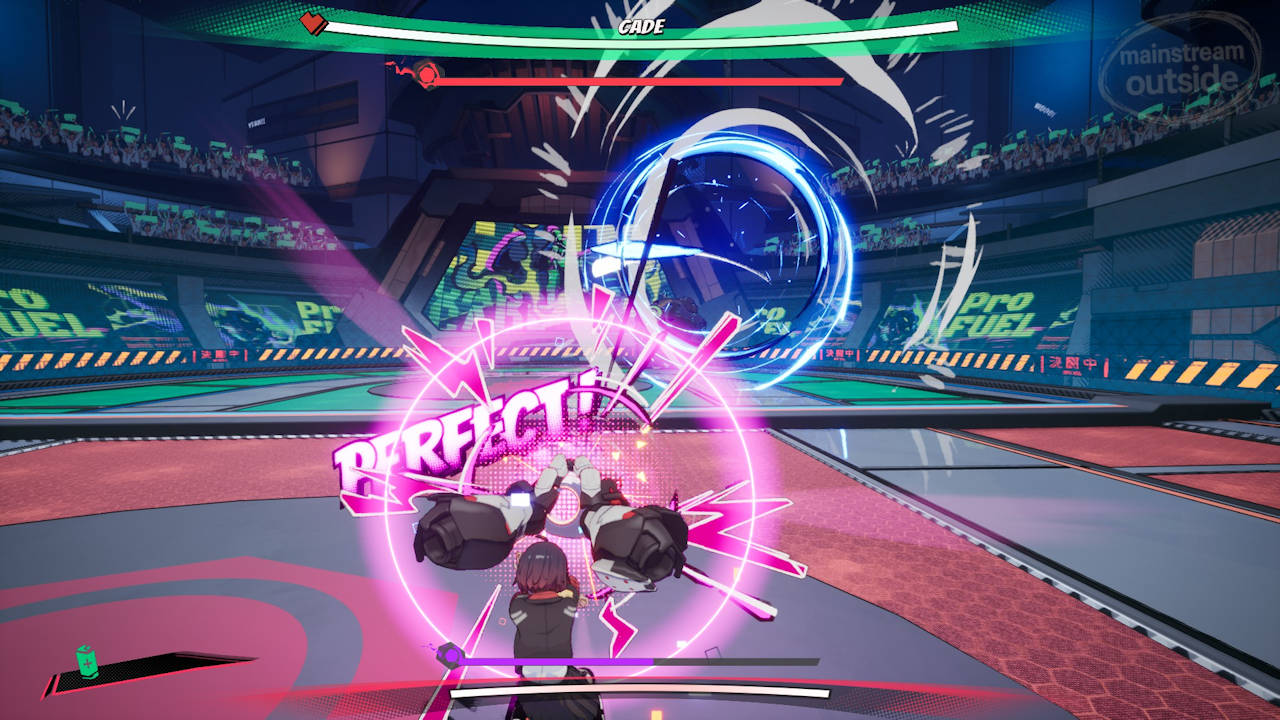
Got it! A perfect catch with the tech gloves.
To my mind, Bakudo absolutely has what it takes to become the next standout in sci-fi sports. How brightly it shines will depend partly on its story. Narrative normally isn’t all that important in a sports game, of course. But the boss-rush structure pushes Bakudo closer to J-RPG territory, so it could use a little storytelling magic to match.
I’ll definitely be keeping an eye on Bakudo and reporting on any news about the game. A full review of this brutal ball sport here on Mainstream Outside also seems likely.

Read next:

Comments