

Gaming without battle passes.
Takes without paywalls.
And stories without reposts.

Security 51 Preview: Papers, Please, but in Area 51
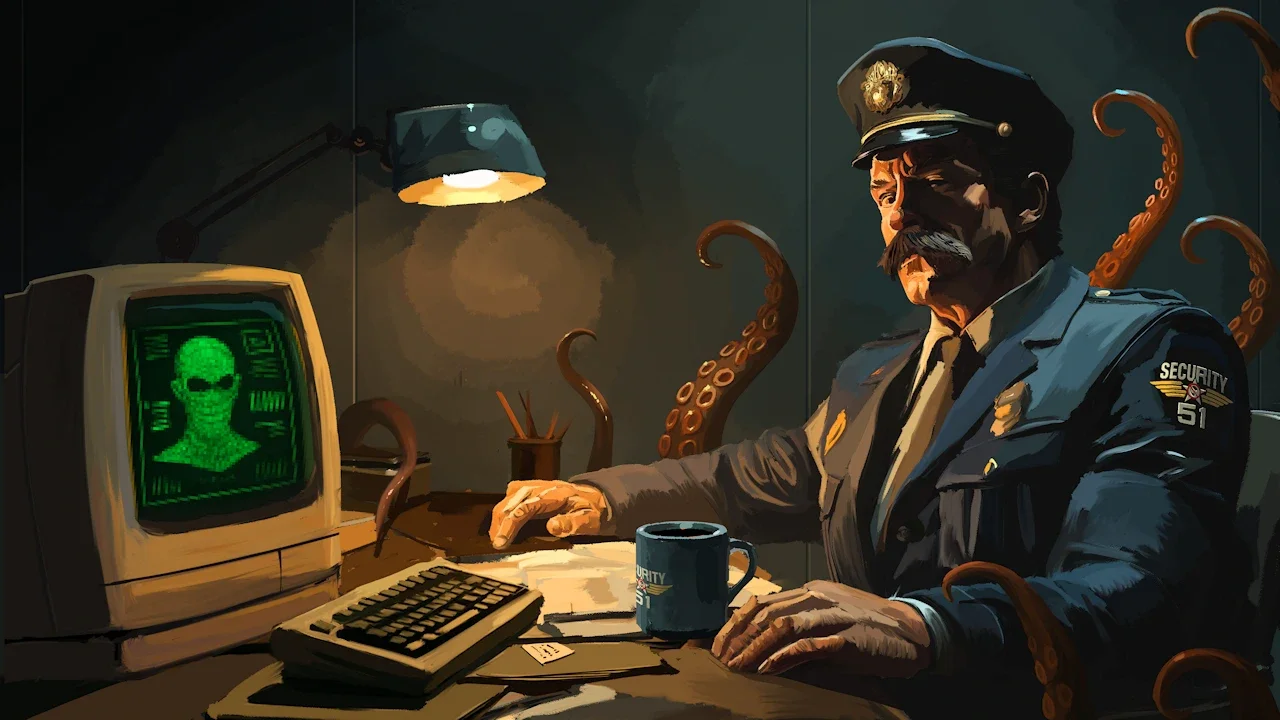
Preview: Ever wondered what really goes on inside Area 51? Then slip into the role of a security officer in Security 51. Armed with retrofuturistic tech, you sit behind a desk and decide who gets in, who gets out—and who never leaves the bunker again.
We humans love power—especially when it lets us decide other people’s fate. In Security 51, you can finally let your inner Queen of Hearts run wild. Only this time, you’re not dealing with anthropomorphic playing cards, but chunky pixel people. Most of the time, anyway. As a guard in Area 51’s underground bunker facility, you’ll occasionally meet... less conventional "customers."
Security 51 openly takes inspiration from Papers, Please and the "paranoia of SCP." So yes, you do your work at a desk—but this one has a bit more going on than pencils, erasers, and sharpeners. How about thermal scanners, bone scanners, and devices that reveal anomalies hiding under the skin?
So the job goes way beyond checking faces, matching IDs, and taking fingerprints. I played Security 51 ahead of release to find out whether this bureaucratic guard sim deserves a spot on your radar.
In or out? Your call
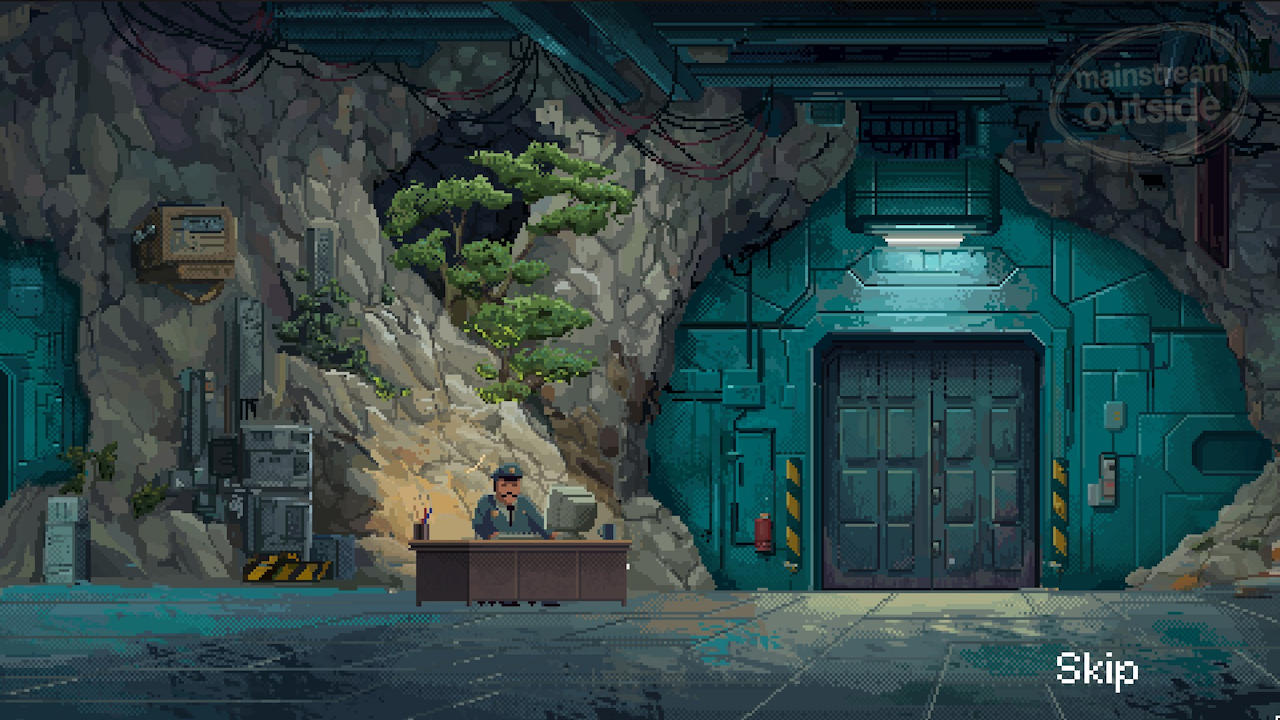
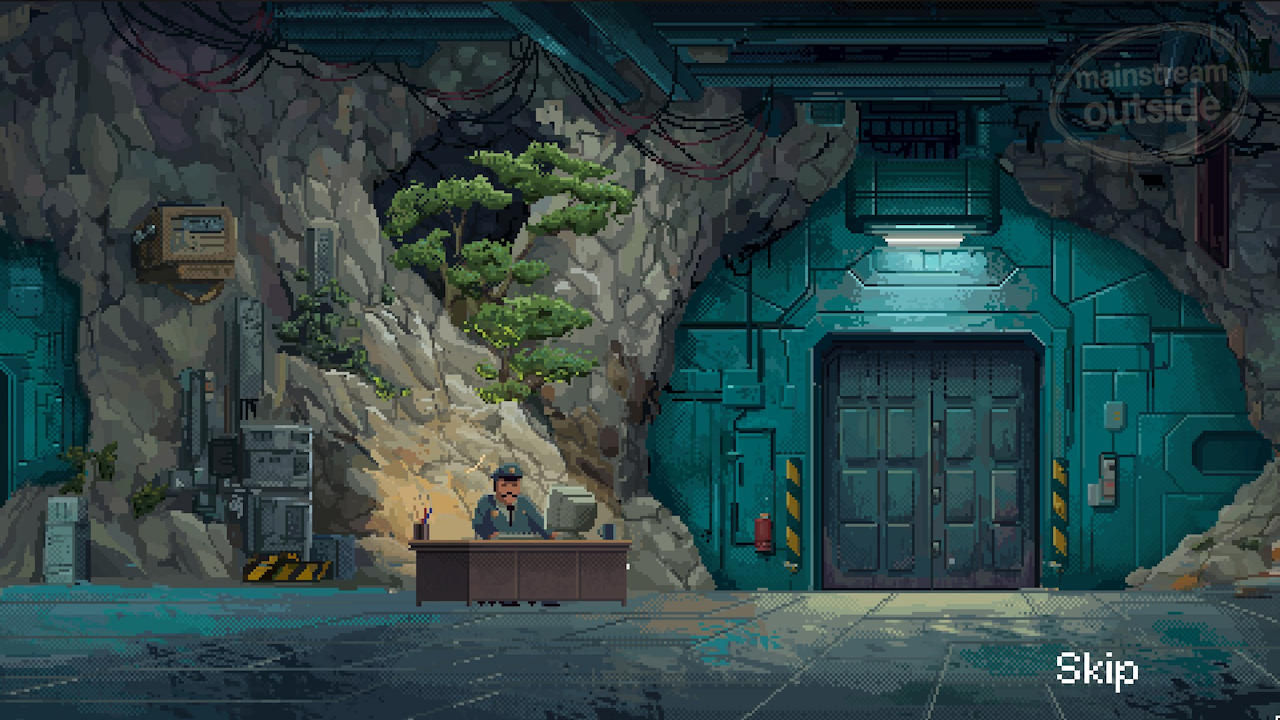
Alawar’s game gets straight to it. The camera rockets a few hundred meters underground and comes to a stop inside the Area 51 bunker complex. There, you briefly watch your alter ego fool around—adjusting the computer monitor, spinning in the chair—and then it’s time to work.
There it is up top: your workplace. Variations of this scene play at the start of every workday.
In Papers 51... sorry, Security 51, your job is split into workdays. Each day either adds something new to your desk or remixes mechanics you already know. During the first few days, a tutorial walks you through the basics. Thankfully, it gets to the point and stops hovering pretty quickly.
Papers, please
As a security officer, your main job is deciding whether Area 51 personnel get in or out. Every few moments, a blocky little figure steps up to your desk, drops off their papers, and waits for your verdict. Your orders change from level to level, though. On day one, you might have to reject people with skin abnormalities. On day two, you might be told to let them all in.
Either way, every inspection starts with the paperwork and a face check. After that, you pick a scan mode and move the mouse over the person to uncover any anomalies. There’s a nice range of them: a heart made of stone, for example (brilliant!), an alien head where the brain should be, or a distillery instead of a liver. However, some anomalies only show up in photos you take with a classic instant camera, as seen in the screenshot below.
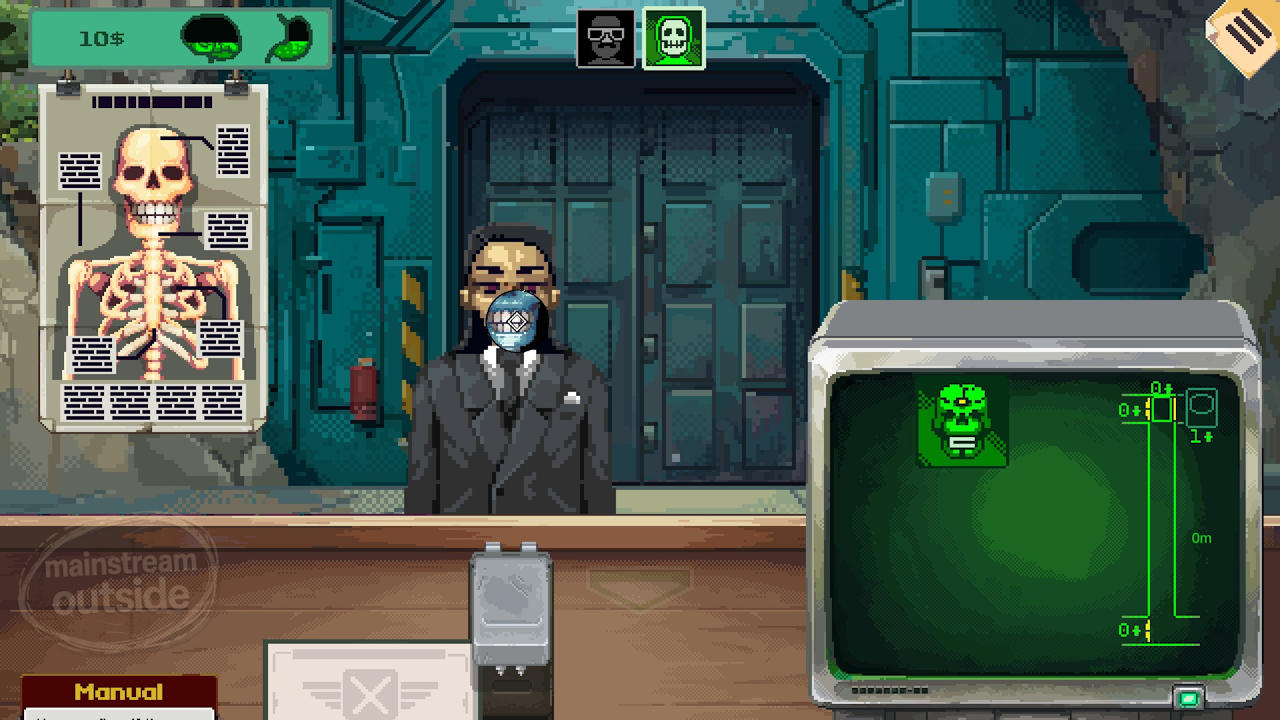
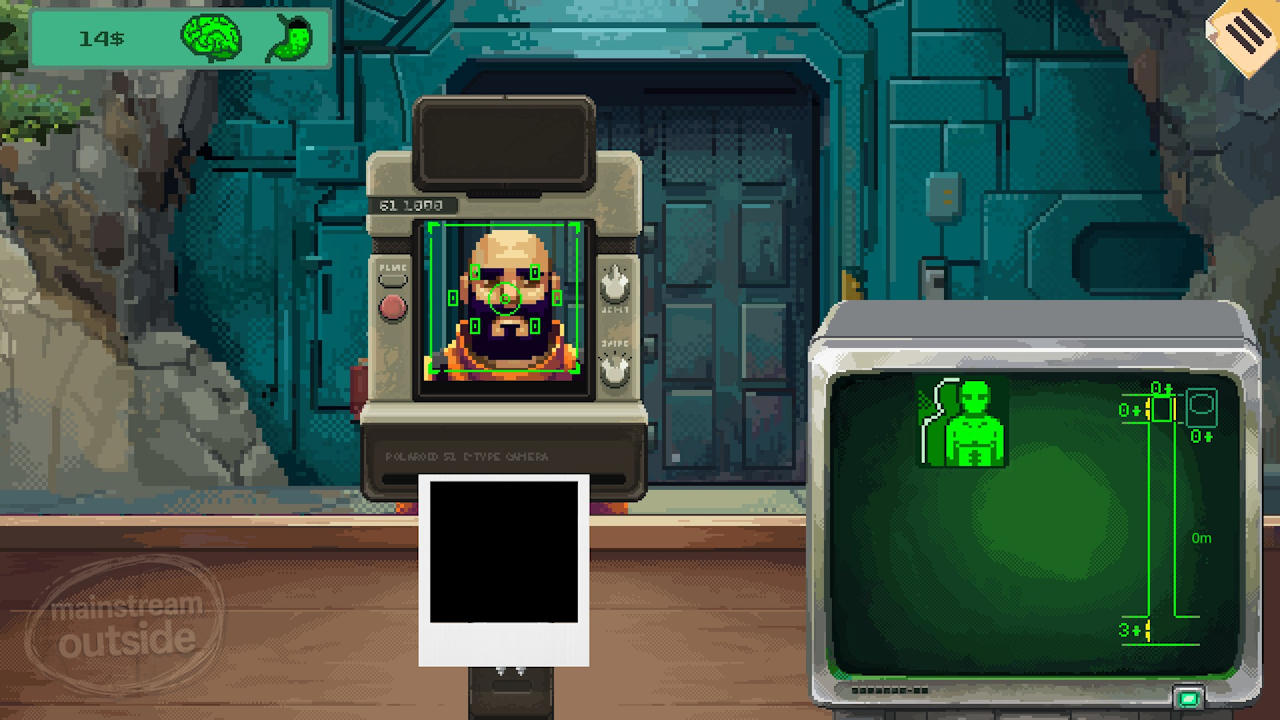
Left: the desk, complete with computer, hole punch, and active bone scanner. Right: Say cheese!
Checked everything? Then feed a pass into the punch-card device. Punch the green area and they’re cleared to pass; punch the red one and the "applicant" stays outside. As long as you’ve mostly followed your instructions, the level counts as cleared and the next day begins. The more bad calls you make, though, the smaller your paycheck gets.
Most of the time, several orders are active at once, which can be confusing early on. Some of them felt contradictory to me, or I simply didn’t get what they wanted. Example: what exactly does "hypothermal" mean in this context? So yes, I sometimes only got through by trial and error. In my view, Alawar should tighten this up a little if the game wants to get off to a smooth start. Once it clicked, though, I had a good time with the core mechanics.
It’s not just paperwork
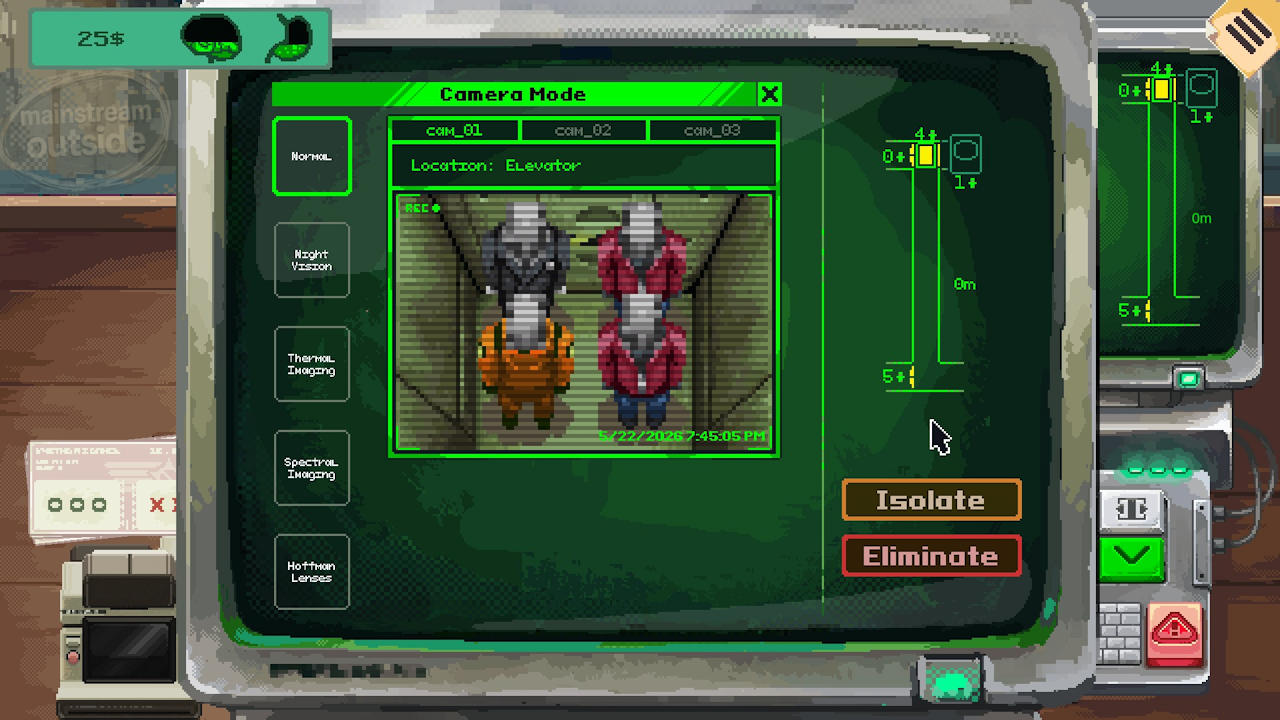
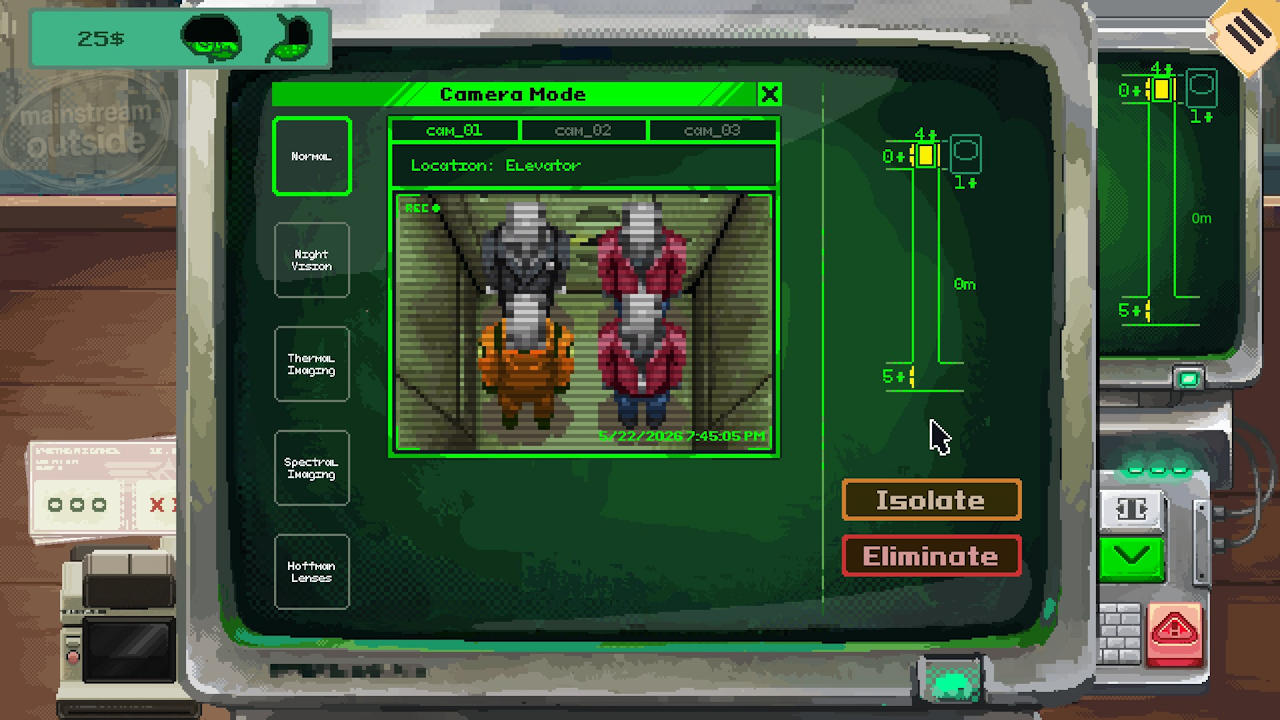
Alongside inspecting pixel people, you also have to keep an eye on an elevator. It takes approved staff further down, or brings them back up again. Once four employees are hanging around inside, you press a button on the computer to send it down. When it reaches its destination, you’re also the one opening the doors. Same goes for the lift’s return trip.
Sounds simple, but that camera inside the elevator isn’t there for decoration. Every now and then, more people mysteriously ride up or down than you actually let through. So you need to check the elevator cabin from time to time and take action if needed, like isolating a stowaway.
A view through the elevator camera. The characters’ heads are deliberately pixelated into oblivion.
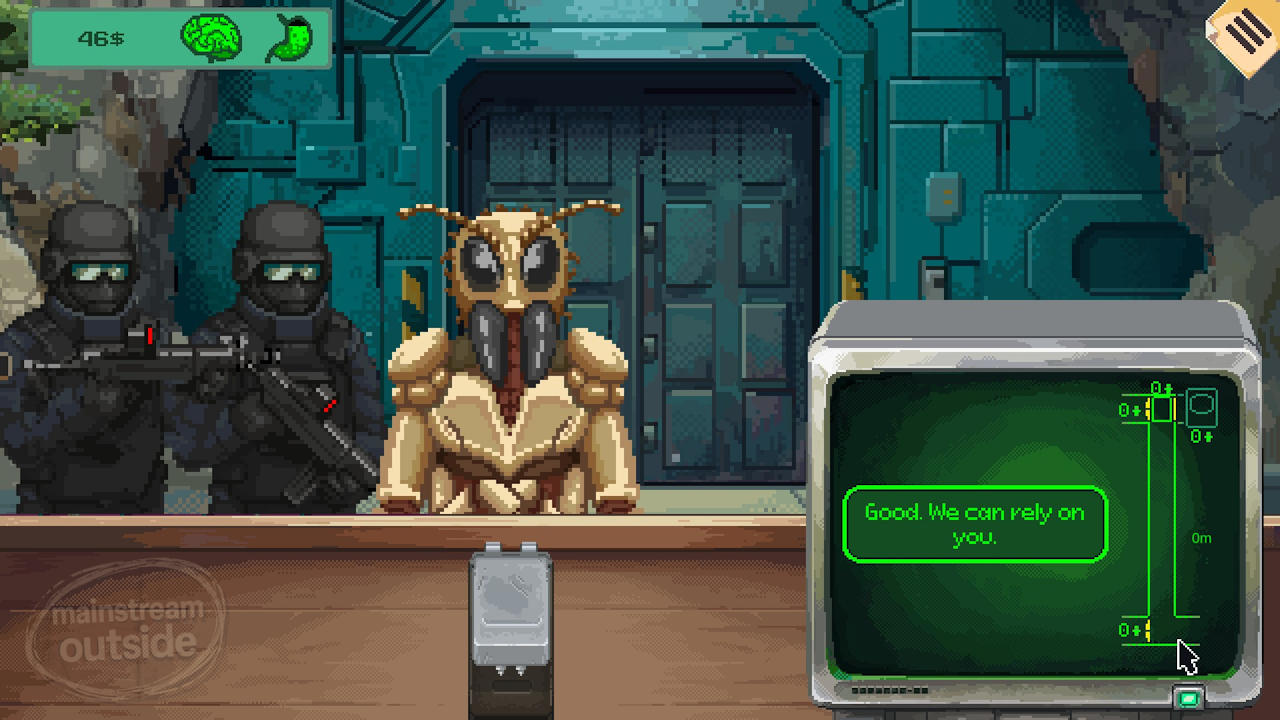
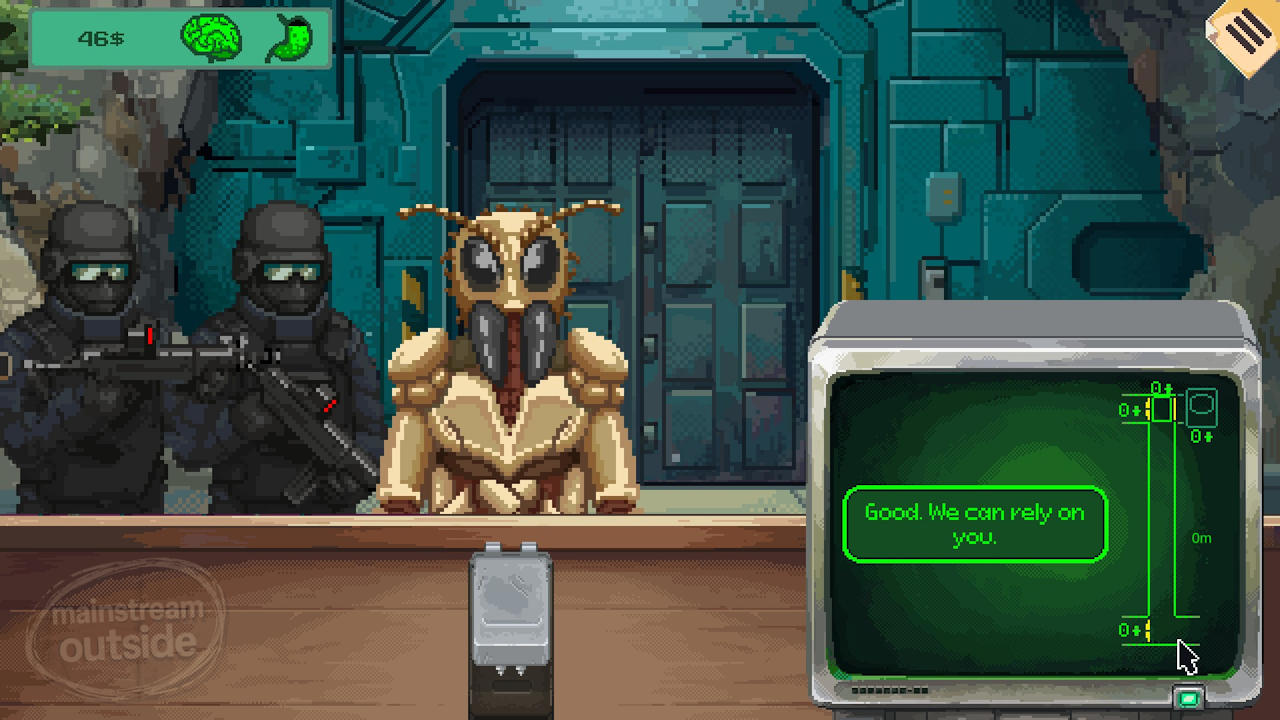
Speaking of which: sometimes you have to get ruthless at the desk, too. Say the person you’re inspecting suddenly mutates into a horrible insect (maybe It Came From The Desert sends its regards). In cases like that, you hit a big red button, and heavily armed security staff storm in. The boys drag the troublemaker away and—rat-a-tat-tat. By the way, you can press that button at any time. You really shouldn’t, though.
This insectoid gentleman is not getting through. He—or it—is about to be taken out by the other men in black.
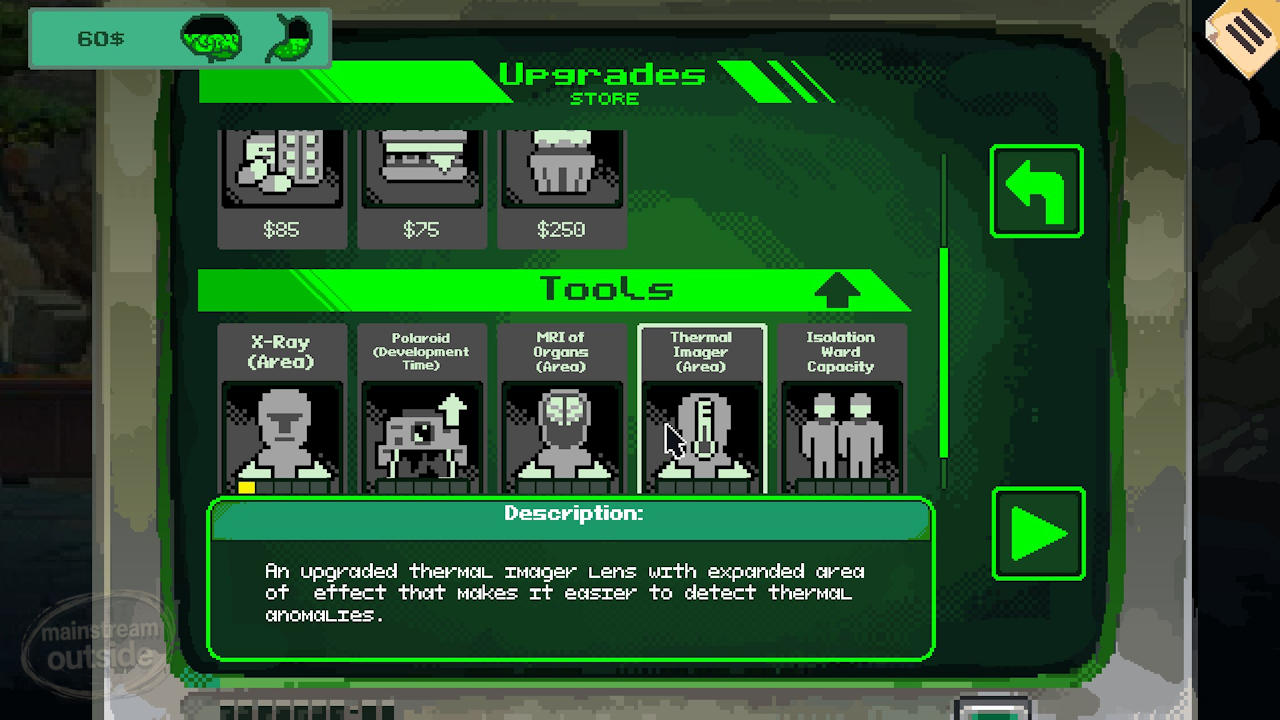
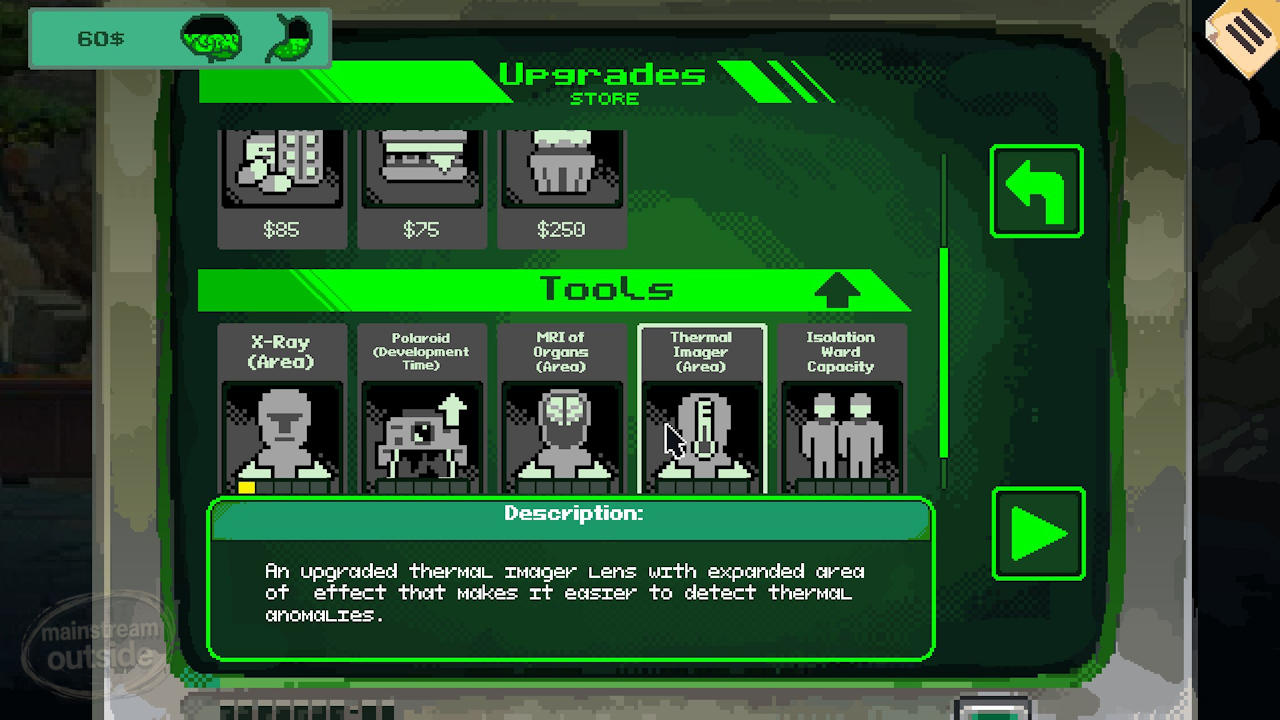
Your security officer has a sanity meter, and every wrong decision chips away at it. Once it’s empty, the game ends. Hunger can kill him too, which is why you can visit an upgrade shop at the end of the day. There, you can stuff yourself with sandwiches or pop sedatives, among other things—and maybe buy pricey upgrades like a wider thermal scanner range or extra murderous guards. The challenge lies in the fairly steep prices, so you need to think about what you buy. It’s not brutally difficult, though.
Need food or upgrades? The shop’s inventory expands bit by bit.
Security 51 clearly aims for a funny tone, and apparently that includes the odd absurd bloodbath. One employee might suddenly lose his head in an attack, while another starts melting on the spot and turns into a pile of sludge. Well, you know: gotta make sure a few kids buy the game too. 🙂
Not every side task lands
To keep Security 51 from taking place entirely at the desk, the game throws in a few secondary jobs. These tie into an alien-origin epidemic raging outside Area 51. Some people with the right anomalies on or inside their bodies get sent to quarantine; you can also use the computer to send agents out for intel.
Sounds good on paper, but both actions take exactly one click. In the quarantine zone, which also doubles as an experiment area, all you can really do is place a rubber duck in front of the test subjects. Yes, yes: it’s an experiment whose effects aren’t immediately visible. Sending agents into the city didn’t make any noticeable difference to me either. So I hope both mechanics get more depth in the final version.
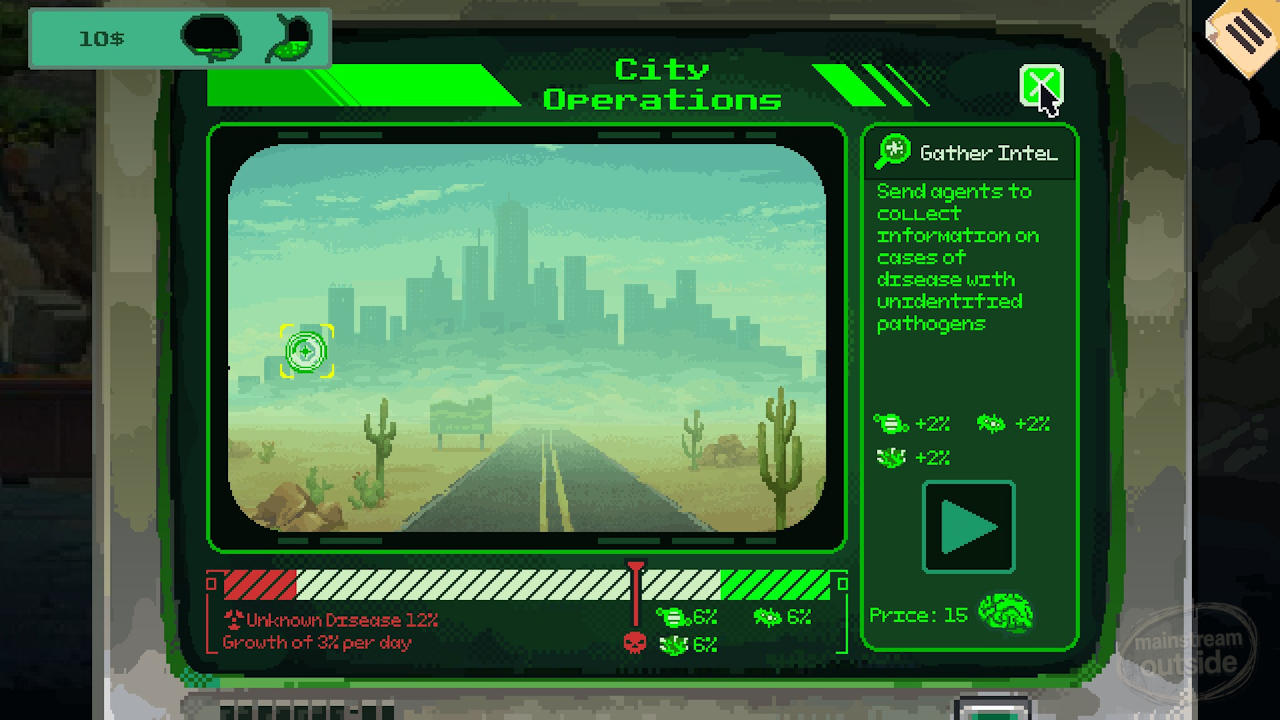
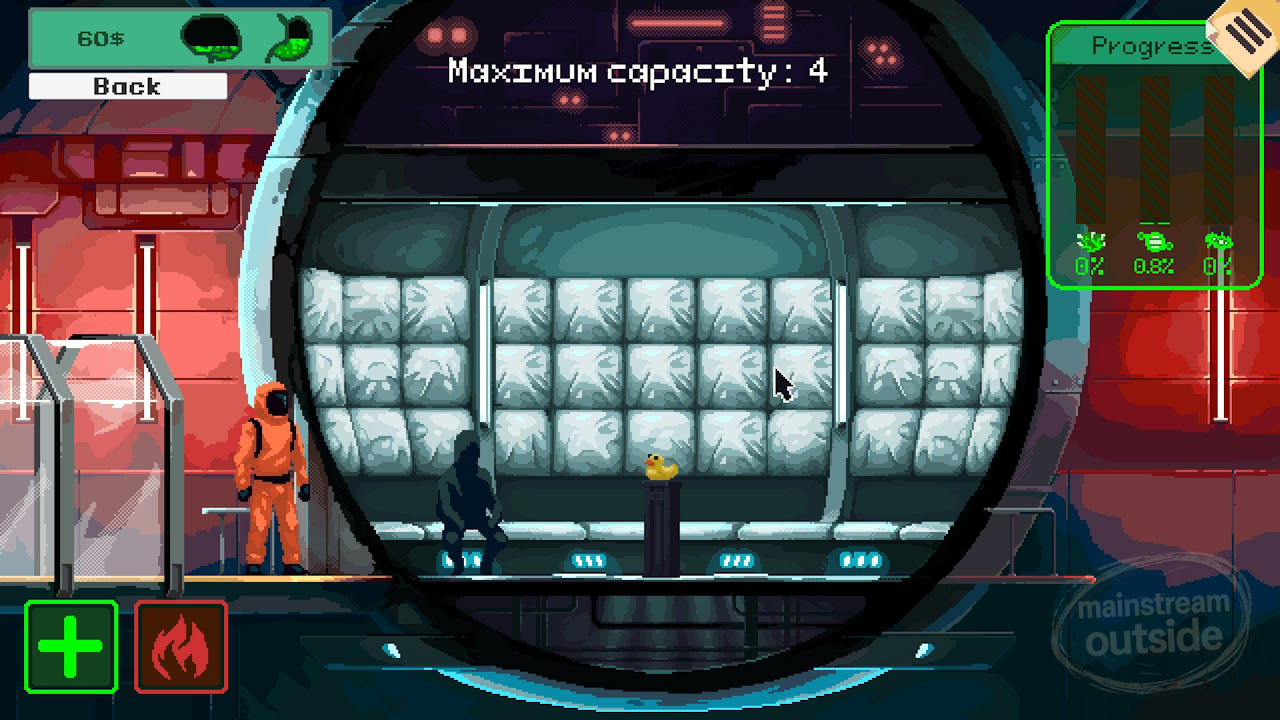
Experiments and city missions are a nice idea, but they’re not especially well executed—at least not yet.
Verdict: Fun, at least for a while
The playtest build I tried showed plenty of promise. I especially liked the grotesque humor—what even is "respect for life," anyway? 😀—and the desk work. The instant camera stood out, along with the follow-up search for anomalies in photos. And those slightly... indiscreet body scans worked for me too. In a comedic sense.
If Alawar gives the side activities more depth, Security 51 could become a very entertaining security guard sim. Those side tasks matter because the core mechanics alone can only carry the game for so long. Personally, I started feeling the first signs of fatigue around workday 12.
So far, Security 51 only has a release window (2026), so plenty can still change. Alawar plans to take player feedback from the Playtest into account, so let’s see where it lands. I’m curious either way. The playtest started on May 21; it’s currently unclear when it will end.

Read next:

Comments