Gaming without battle passes.
Takes without paywalls.
And stories without reposts.
Black Jacket Review: Betting Your Way Out of Hell
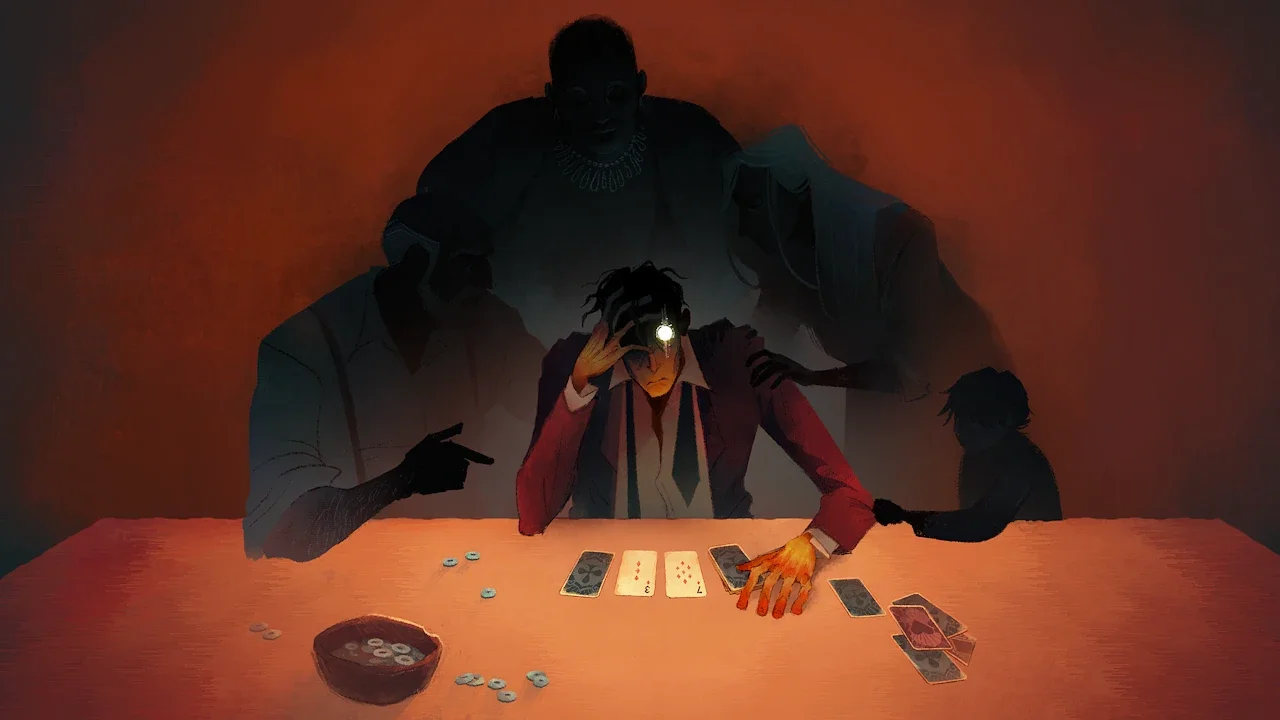
In Black Jacket, you’ve got a problem: your soul has ended up in Hell. To claw your way out of the inferno, you’ll have to beat cursed souls at cards. The game turns blackjack into a deckbuilder—and my review checks whether that idea actually works.
Digital deckbuilders have been riding a serious wave of popularity at least since Slay the Spire (2017). So much so, in fact, that Steam now runs an entire "Deckbuilders Fest." I’ve still never had much of a thing for them, even though I’m absolutely into RPGs and a few card games. My card-game favorites: poker (no stripping—where is your mind going again? 😉) and blackjack.
Then Black Jacket recently landed in front of me, a hybrid of blackjack and deckbuilder. You’re probably thinking: "Ah, he grabbed it because of the blackjack bit." Strangely enough, no. I mean, I can play blackjack in Red Dead Redemption 2, for example (yeah, I voluntarily toss five dollars into the traitor jar), and it’s pretty authentic there. What really hooked me was the setting.
Because playing your way out of Hell with blackjack? That’s a cool idea precisely because it’s a little silly. Black Jacket isn’t quite that silly, though, because it walks a line between humor and atmospheric seriousness. It also tries to give a 176-year-old card game a thematic twist. Let’s see what came out of that in detail.
The Story: Wait... what?
Yes, really. Black Jacket tells little stories, but don’t worry—it doesn’t talk your ear off. Sometimes the story slips in casually at the card table, sometimes it takes center stage in short slideshows. It all begins, as mentioned, with you washing up in Satan’s shadow realm. There, a supposed higher soul named Reed takes you under her wing to explain the situation. Some of it, anyway.
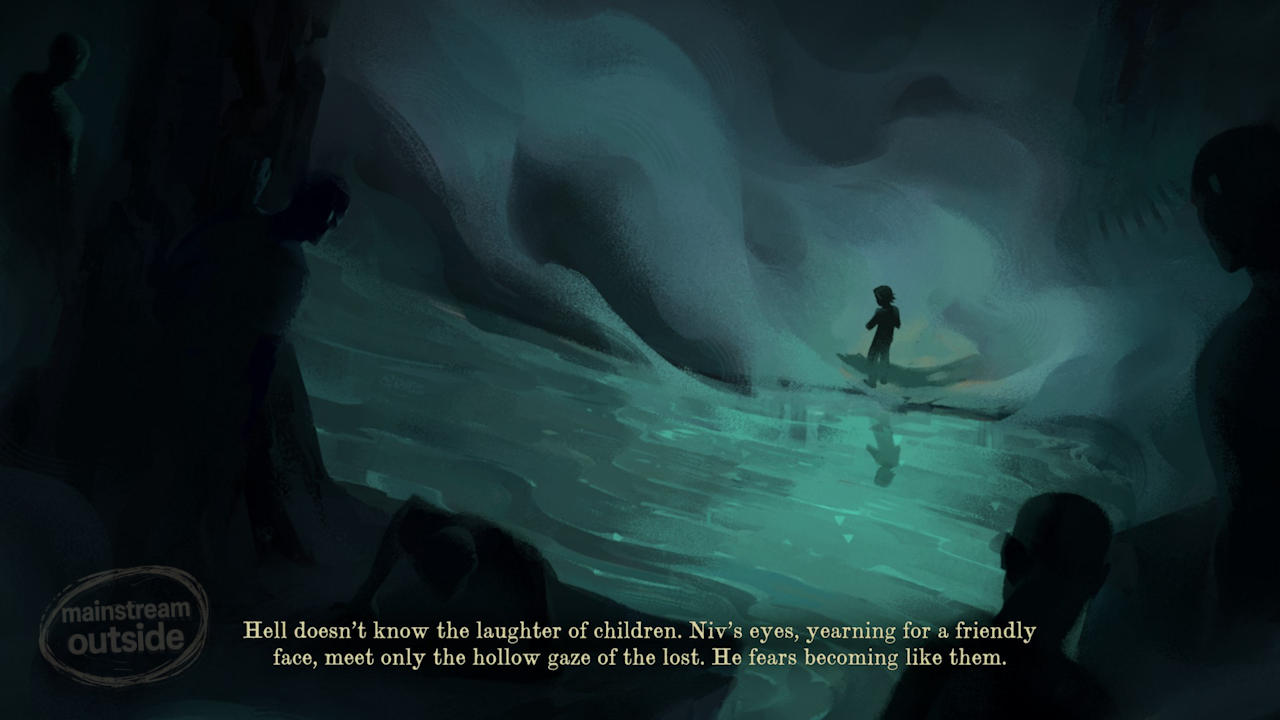
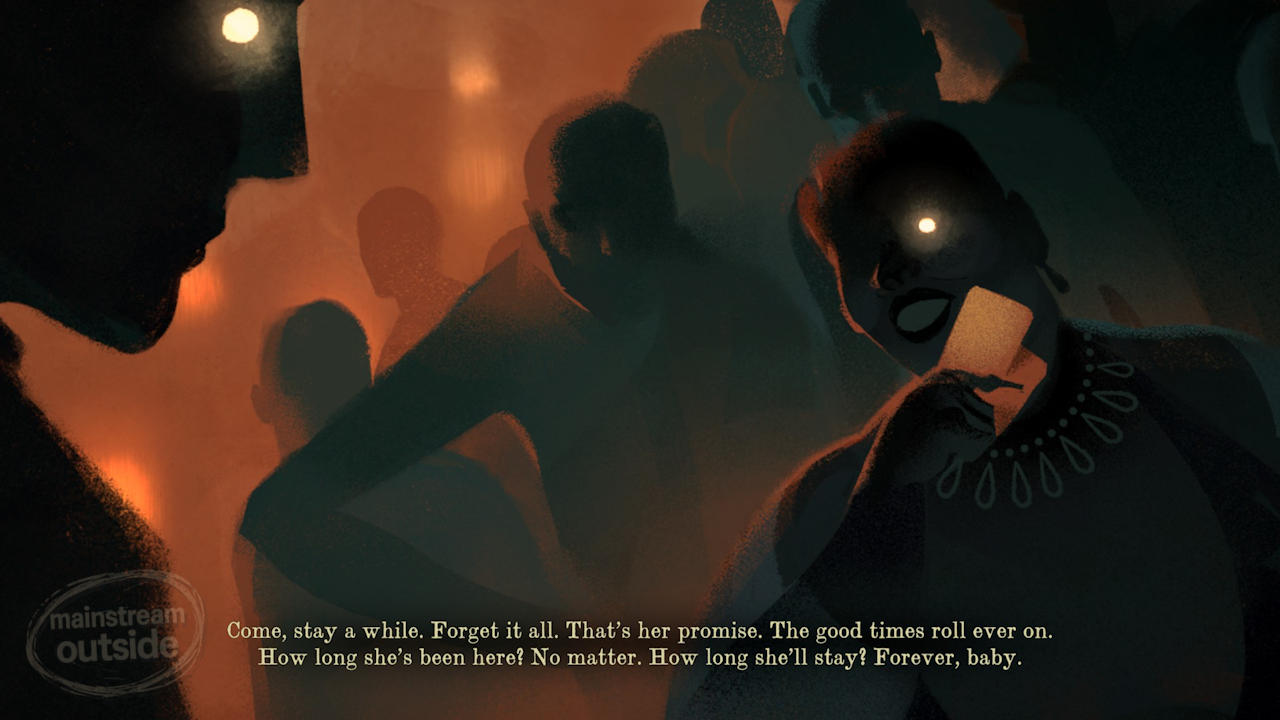
In Black Jacket, the "cutscenes" are slideshows made up of intensely gloomy artwork.
What you don’t learn right away is who you are or why you’re roasting in Hell. Reed does tell you, however, that you’re basically doomed to play blackjack if you want to leave your new home any time soon. The only way back runs through the infamous ferryman Charon—and he doesn’t come cheap. So it’s time to play cards and keep winning.
The story doesn’t focus only on you, though, but also on some of the souls you face at the table. Thankfully, these aren’t the Hitlers or Mansons you might expect to bump into in Hell, but fictional, mostly tragic souls. Their backstories are delivered by haunting voice actors, who, together with the lonely, drifting soundscape, create a thick atmosphere. There’s never any doubt that you’re stuck in Hell.
As a storytelling element, I would have liked a bit more than these almost static slideshows, but I can’t say they hurt the atmosphere. They fit neatly into the overall presentation, which I’ll get to shortly. Taken as a whole, the stories aren’t really what push you into one new run after another (because yes, Black Jacket is run-based). Still, the narrative side stays interesting and effective across the roughly 4-to-6-hour playtime.
The gameplay: The road out of hell is rough
Black Jacket doesn’t immediately shove you up against its jagged card tables; this is, after all, about your way out of Hell. That path leads through several individual areas—basically game boards—which you cross tile by tile without any dice-rolling business. Most tiles are:
- Positive and negative trait tiles, such as pocketing 7 coins (the game’s currency) or being forced to burn a card from your deck
- Shops where you buy new cards for your deck or table extras, such as an additional discard slot for cards
- Encounter tiles where you have to beat other souls at blackjack
- Cursed souls inflict handicaps such as lowering your cards’ values or shuffling harmful cards into your deck
- A "boss fight" at the end of an area, with special enemy abilities and bigger handicaps for you
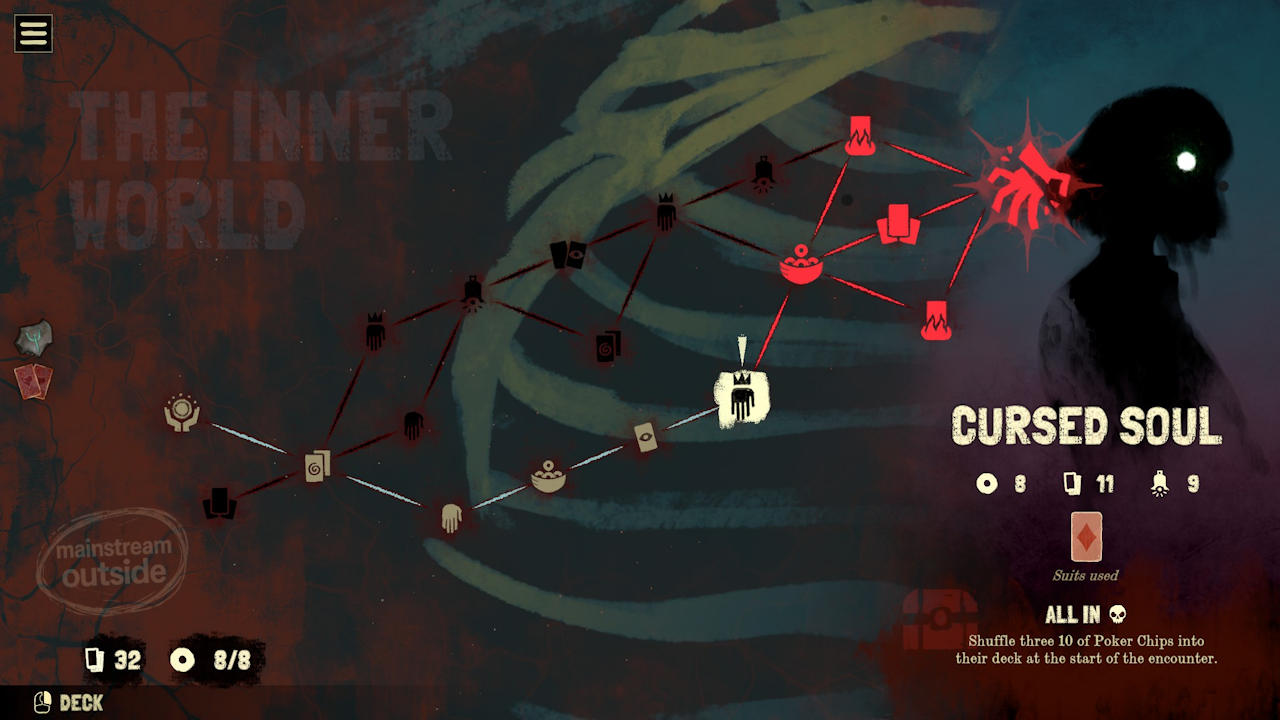
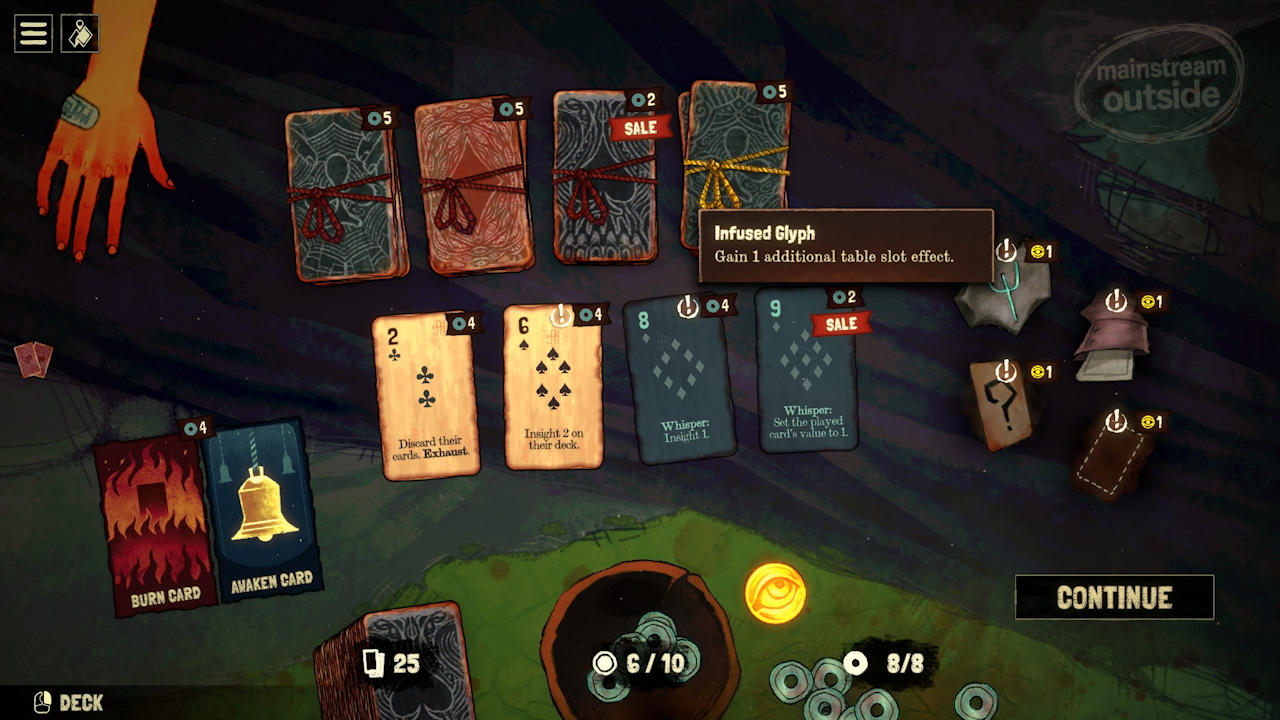
Left: This is the game board you move across on your way to the area boss. Right: A shop with useful cards for your deck.
In shops, you can also attach one effect each to cards that don’t have one yet. For coins, of course. Black Jacket calls this activating a card. There’s always a larger pool of effects to choose from, including dissolving an enemy card, lowering or raising its value by 1, or peeking at a card in your opponent’s deck and shuffling in a new one. Nice, right? The catch is that your opponents’ hands include the same effects as yours—and often quite a few more.
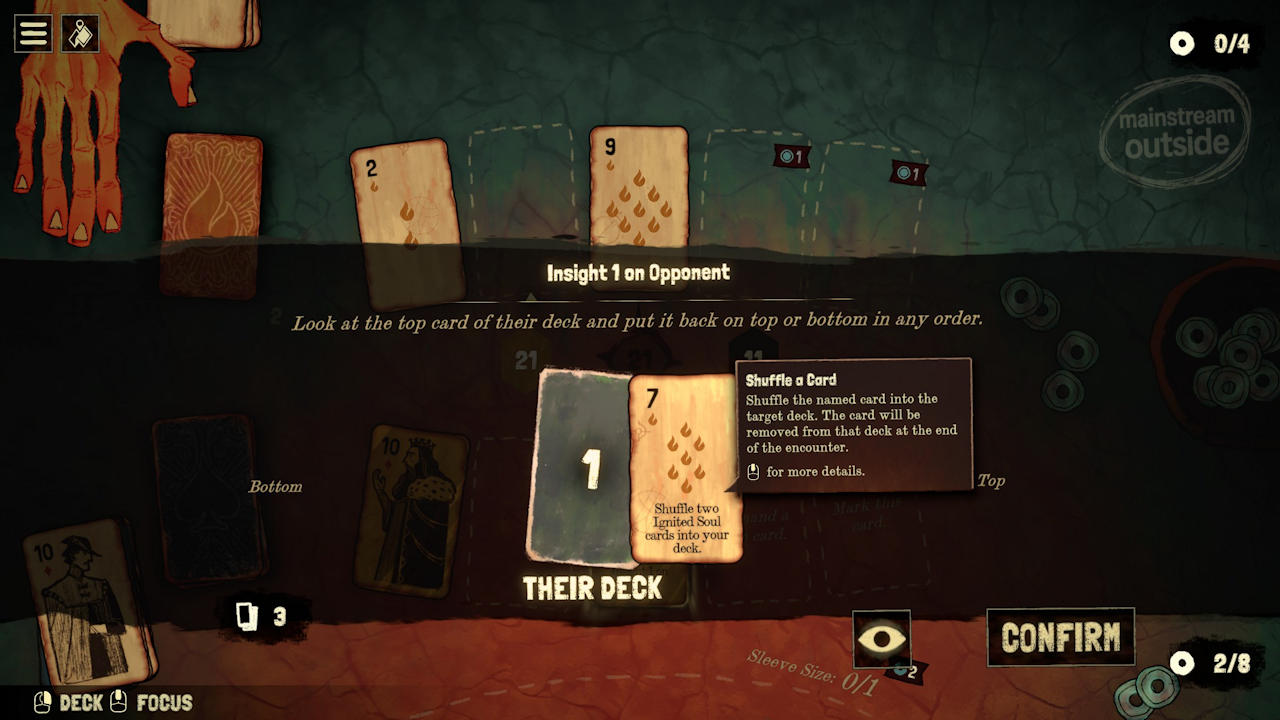
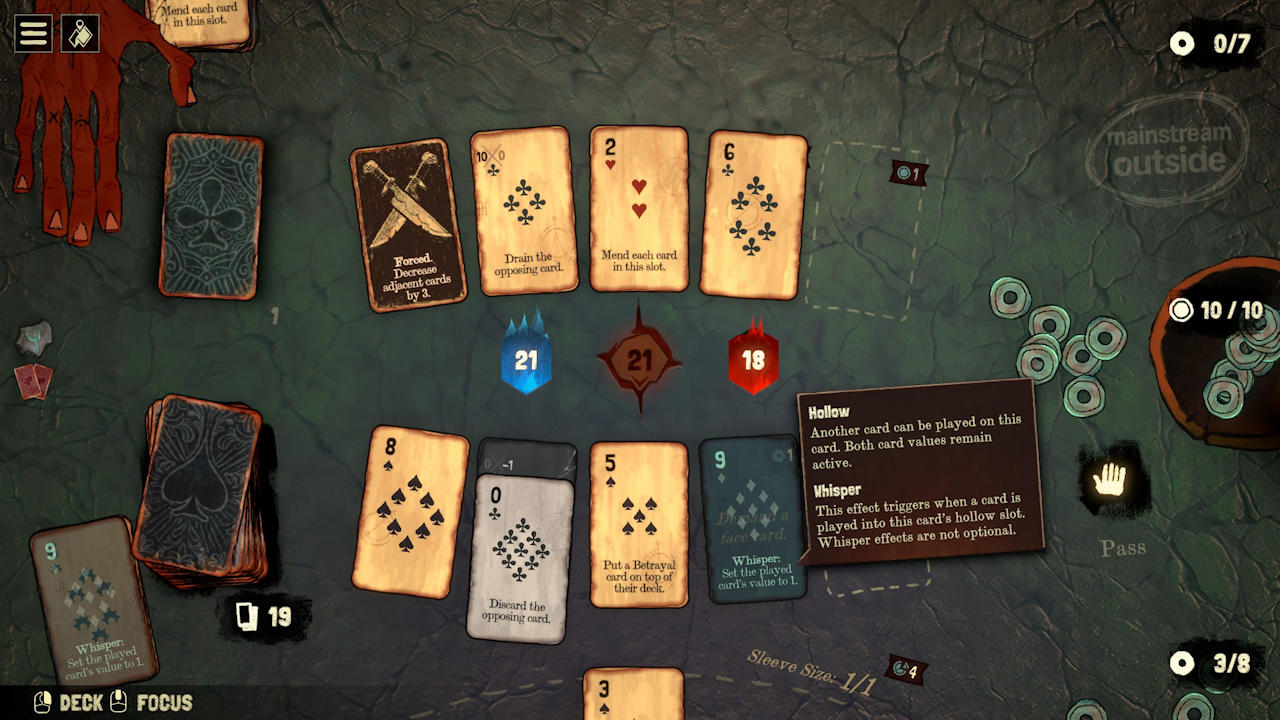
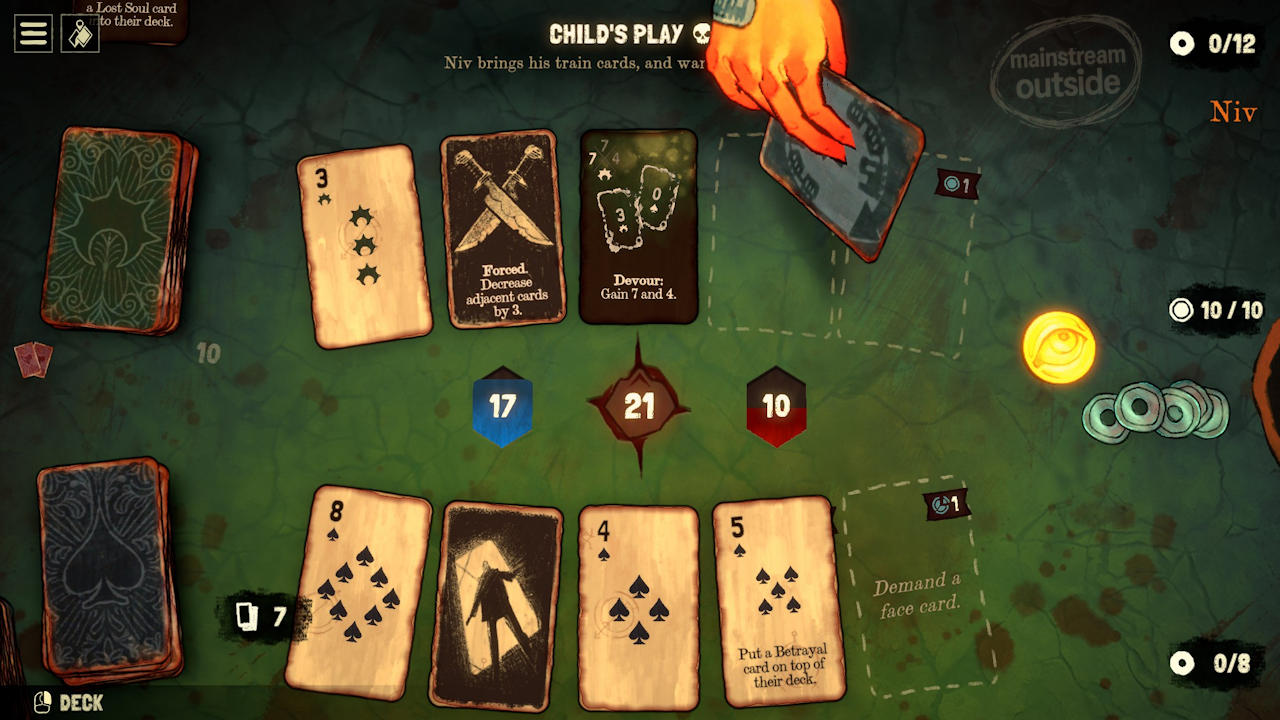
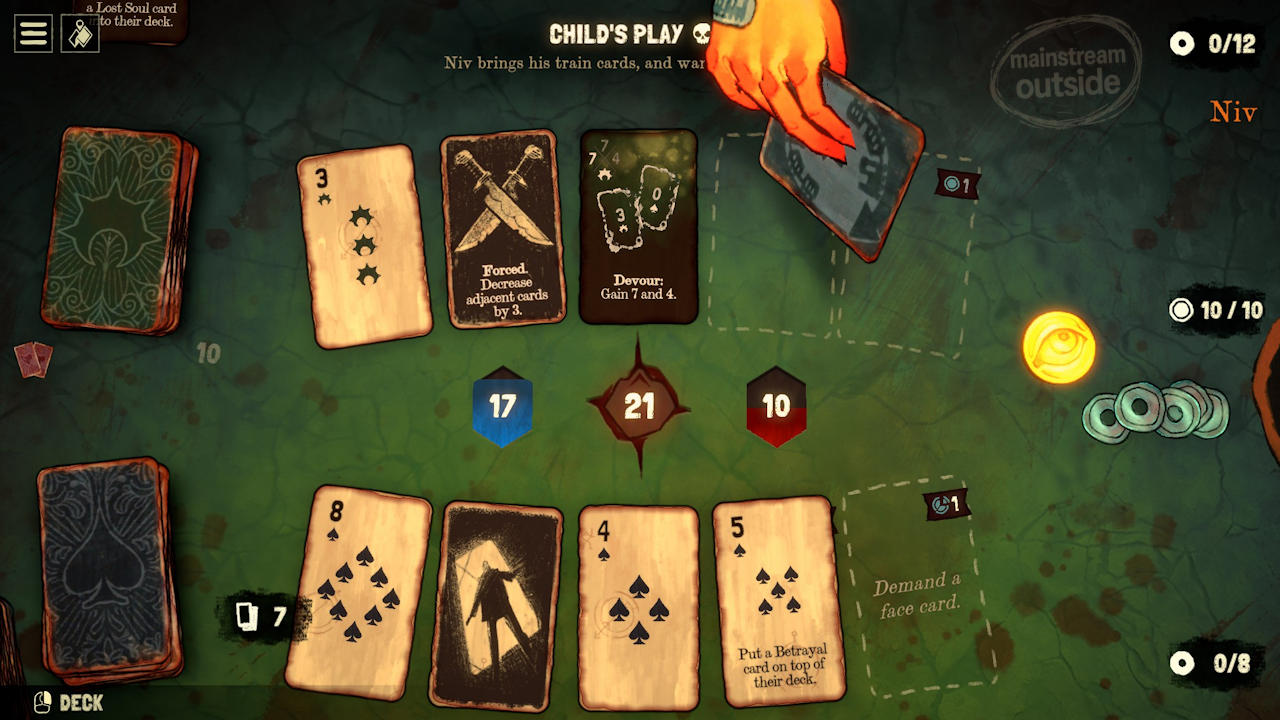
The screenshots above show some of the card effects.
Blackjack, but more strategic
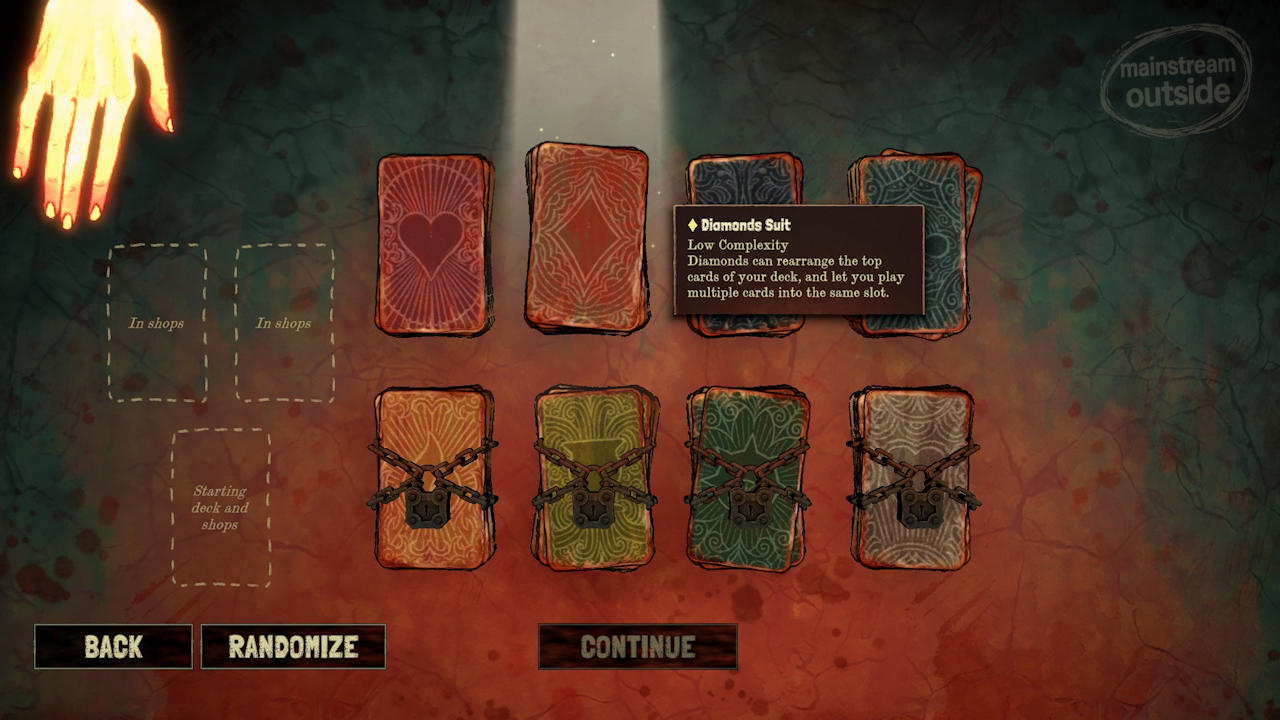
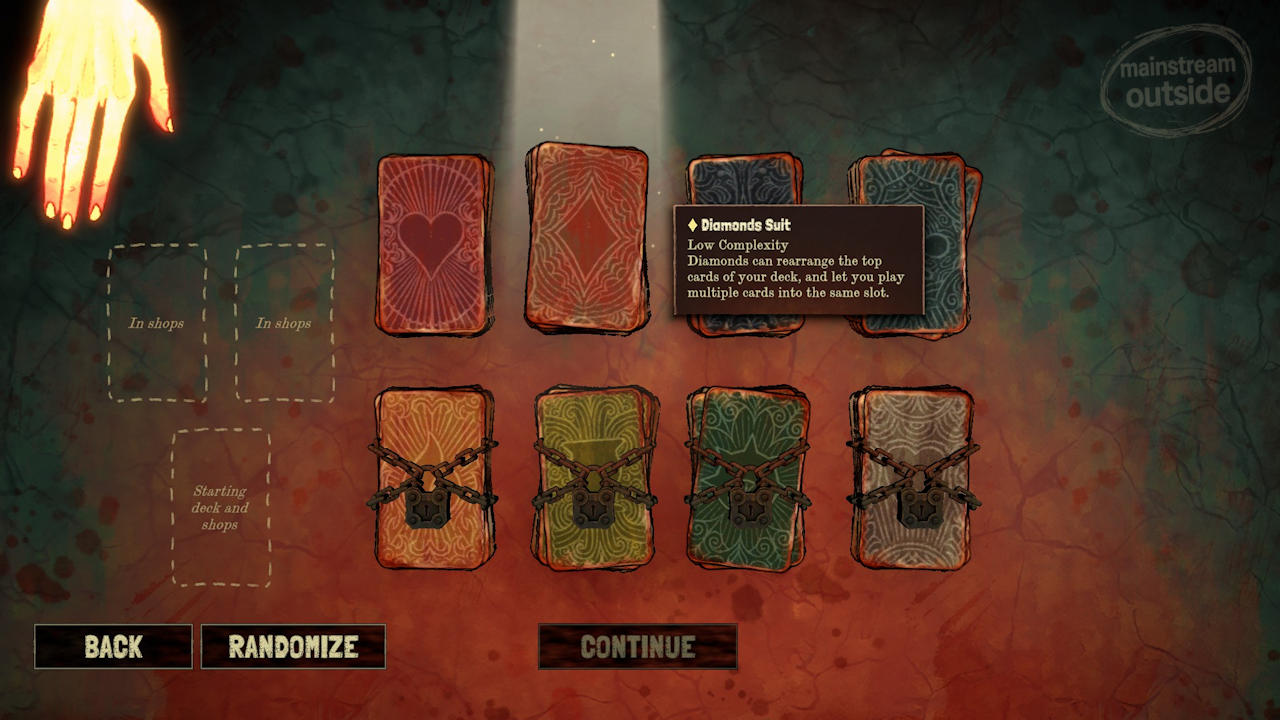
So the core of Black Jacket is blackjack, but as the card effects already suggest, matches play out a little differently. The first difference, naturally, is that you play from a deck assembled at the start of an area from three suits—small bundles of cards from the same suit.
Since every suit has its own traits, your selection more or less sets the baseline strategy for that area. A diamond suit, for example, includes cards that other cards can be played onto. A club suit, by contrast, tends to include cards that reduce the value of an enemy card or kick it out of the match entirely. So the first step is always figuring out which combination works especially well for the area ahead.
At the start of the game, you build your deck from three suits with different traits.
The card table of a thousand possibilities
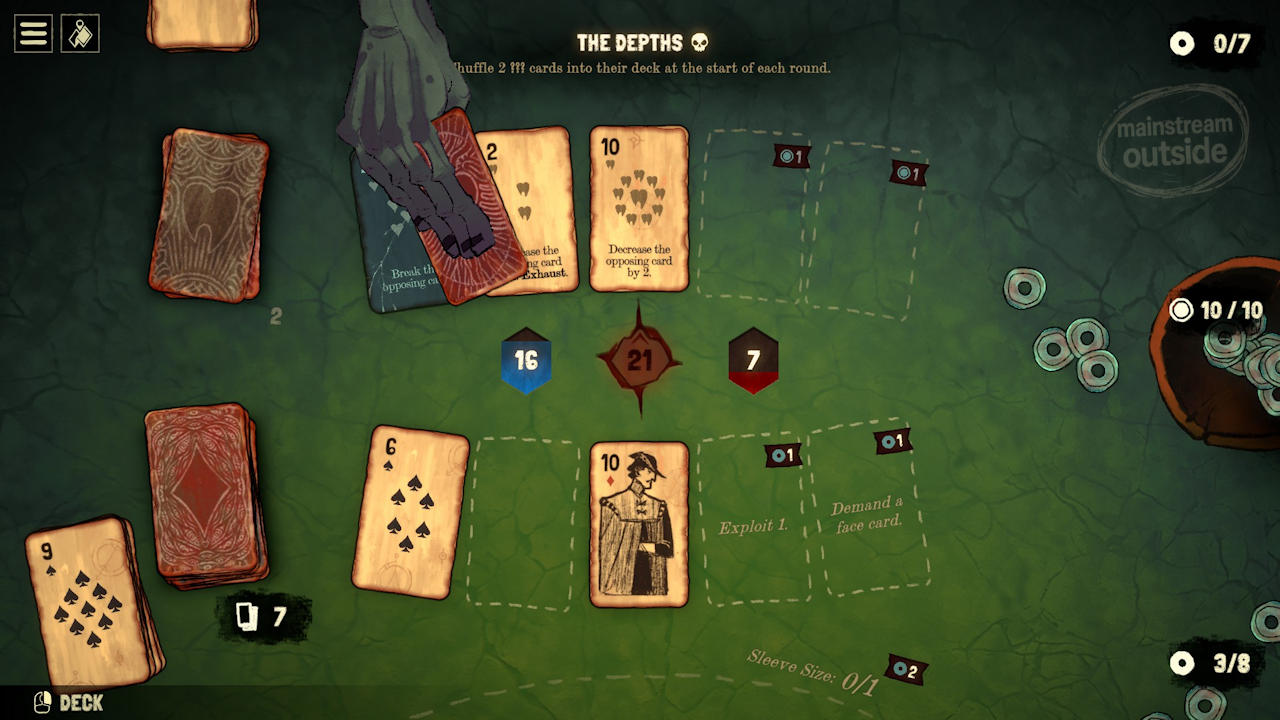
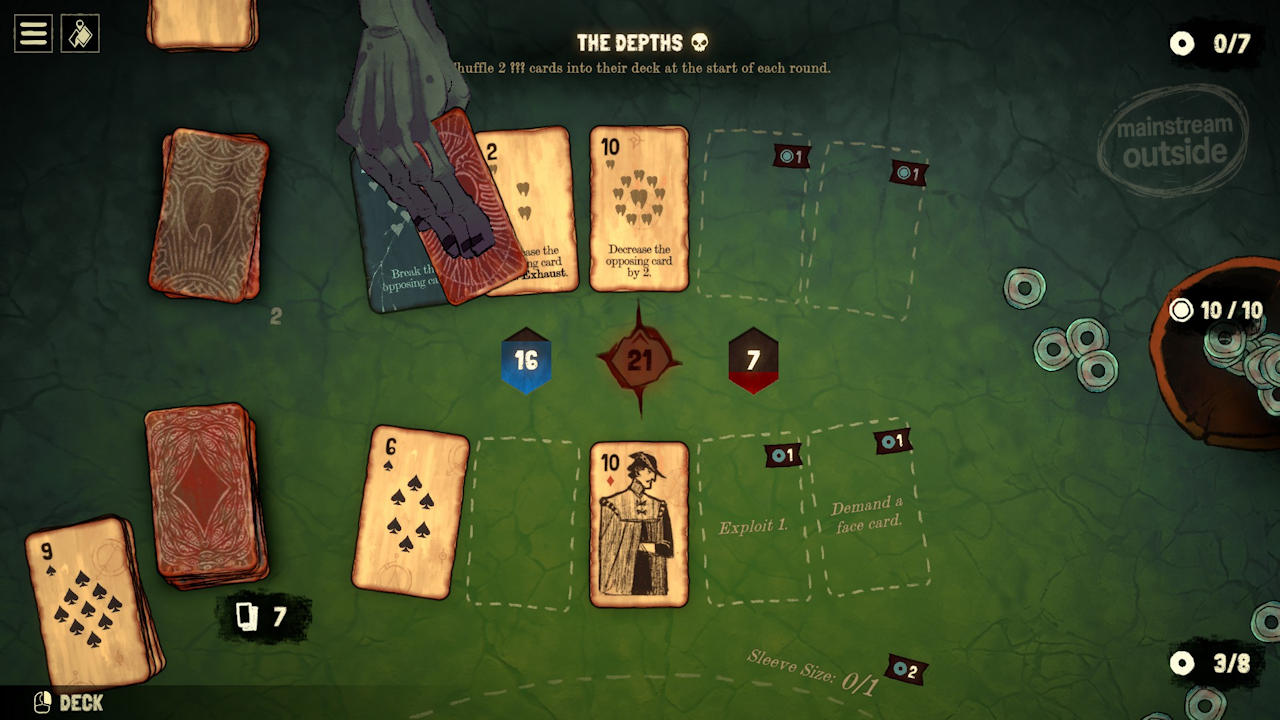
Your deck does half the work, then, but if you don’t play your cards with some actual strategy, you’ll probably burn in Hell forever. 🙂 To make that strategy possible, Black Jacket’s card tables have two blocks with five slots each. That means you can’t play more than five cards per round. Also, the final two slots have strategically useful effects, just like cards do—for example, forcing your opponent’s bet to rise by 1 coin or more.
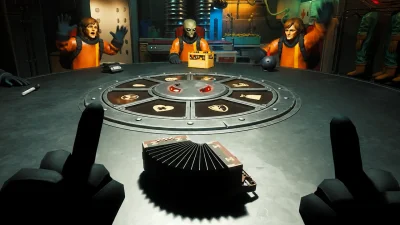
A blackjack match against a cursed soul. The handicap it causes is explained at the very top of the image.
Cards placed directly opposite one another compete with each other. In other words, many effects only hit the card sitting across from them. Bosses in particular, however, have special effects that let them rotate the positions of all cards on the table by one or more slots, for example.
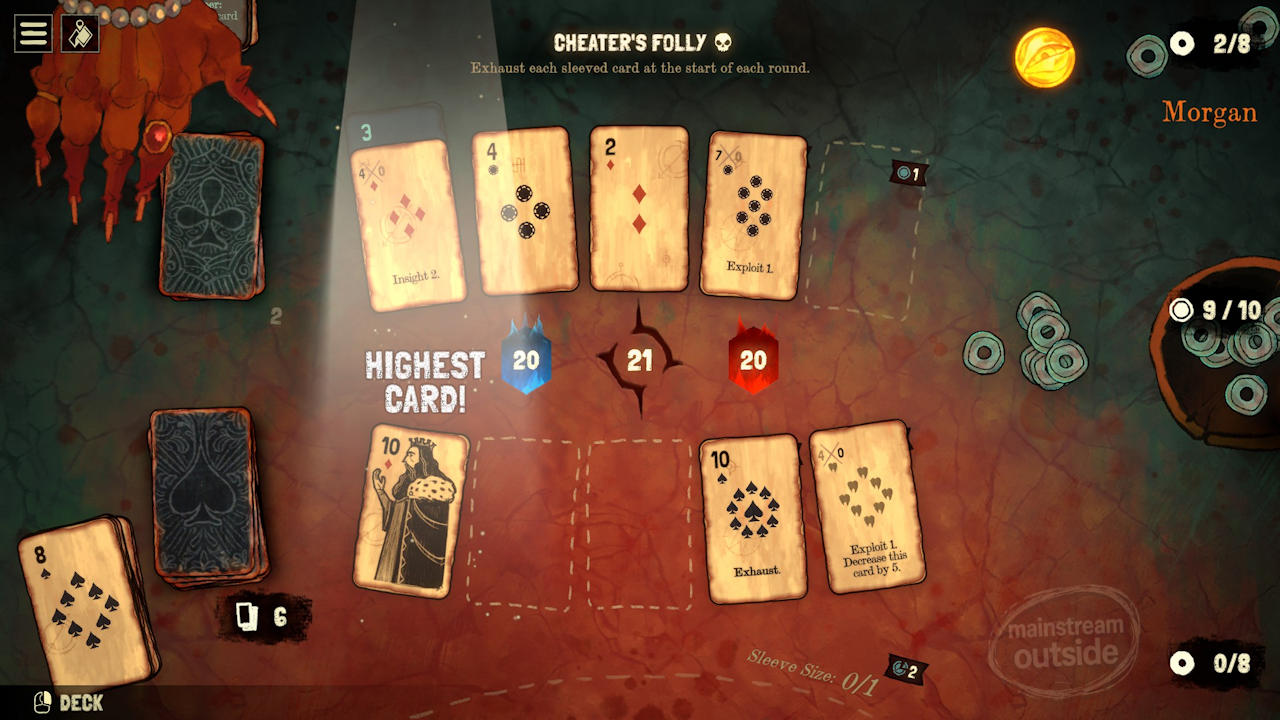
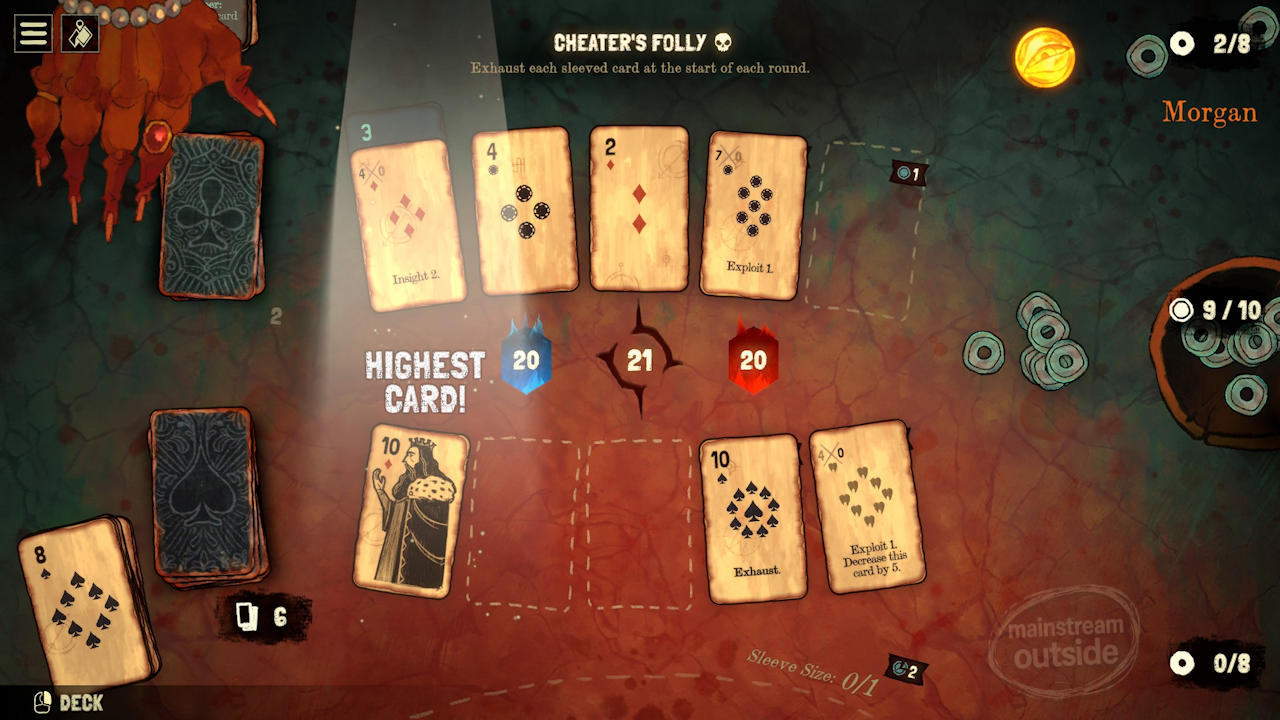
Say you have blackjack or 21 points. A certain boss could snap their fingers and—poof—your hand belongs to them. Even ordinary souls don’t necessarily have to fold against a killer hand if they’ve got cards up their sleeve that lower the value of one of your cards or dissolve it outright.
Here I was playing against the first boss, a strange lady named Morgan.
Speaking of sleeves: both you and your opponents actually do have one, starting with a single slot. You can tuck a card into it at any time, then play it later when the timing is right. Looked at that way, blackjack really has been turned into something fit for Hell. And I definitely enjoyed playing blackjack like this.
Black Jacket even gives deckbuilder newcomers like me a fair shot. At first, I found the swirl of rules, suits, and effects a little overwhelming. By my second run, though, I had the hang of it and managed to fight my way into the fourth area. However, the difficulty ramped up noticeably there, which makes me think deckbuilder pros will also get their money’s worth here—just a little later than I did.
The tech: If chips could get bored...
... they probably would while running Black Jacket. The reason is simple, and you can see it in the screenshots too: the visuals consist of two-dimensional artwork plus three-dimensional hand and card models.
Every now and then, a few visual effects pop in—and that’s it. Exactly: outside of slideshows, all you ever see are your opponents’ charmingly naive painted hands. Nothing more.
So I almost could have skipped the tech test, but for the sake of doing things properly, I ran one anyway. You’ll find the results, as usual, in the tech box on the right. The most obvious bit is that the frame rate is capped at 60 FPS. Then again, I couldn’t tell you why I’d need 120 FPS or more in a card game.
Bottom line: Black Jacket ran very smoothly on my test system, though it wasn’t entirely bug-free. After I lost a match against a boss, the game froze completely on the "Game Over" screen. I had to close it via Task Manager and restart.
In this specific case, that wasn’t too painful, since Game Over really does mean Game Over here. By design, the game allows nothing beyond "Save & Quit." The bug has apparently been fixed by now, so I won’t deduct a point in the tech category.
In Black Jacket, your opponents really are just hands.
Verdict: Blackjack is even more fun with a deck
Black Jacket does an excellent job of crossing blackjack with a deckbuilder. None of its additions felt useless or out of place to me—quite the opposite. Mi'pu'mi Games has basically squeezed even more out of the classic card game, then seasoned it with a Hell setting that sounds funny on paper but works surprisingly well in practice.
I do have to admit that I would have liked an even weirder version of Hell. The basic idea just screams for wilder humor, at least to me. Still, the team nails the atmosphere so well that the more serious take worked for me too. Black Jacket is a standout, and I can wholeheartedly recommend it to fans of card games and deckbuilders.

Read next:
Comments