
Gaming without battle passes.
Takes without paywalls.
And stories without reposts.

Retro Rewind Preview: Cool Video Store Sim with an Atmosphere Problem
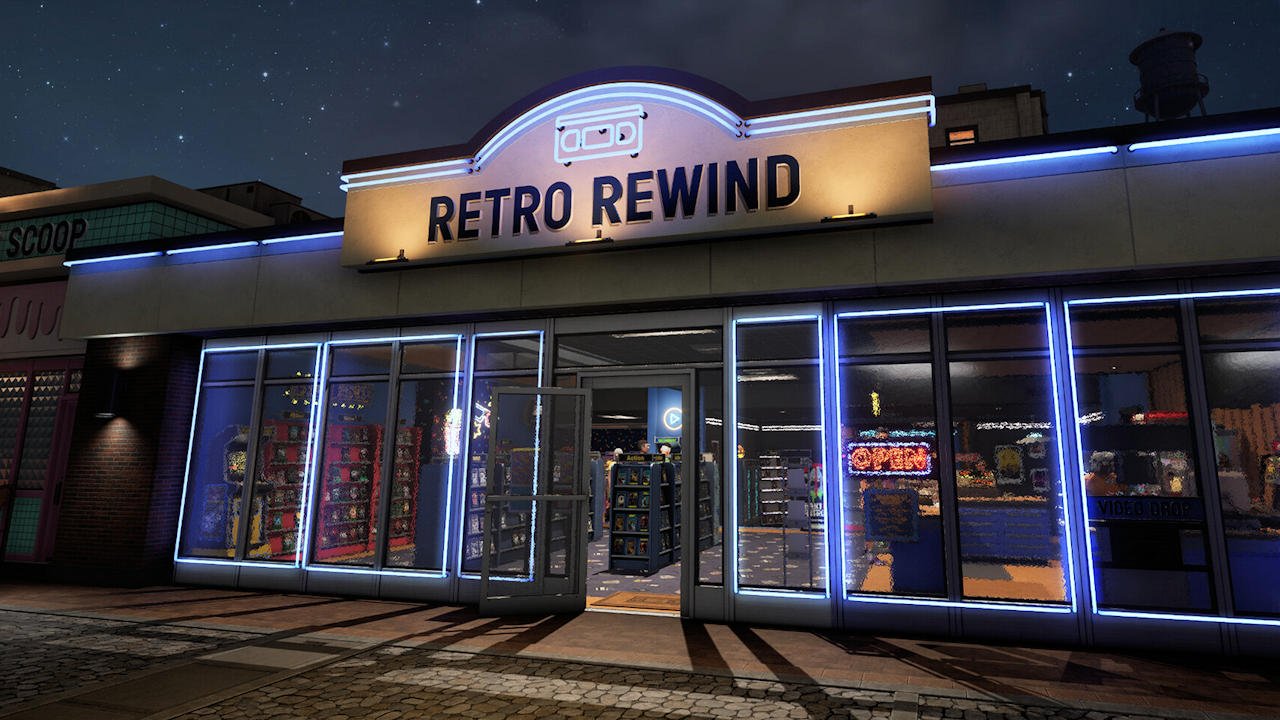
Do you know what a video store is—or rather, was? What, you actually set foot in one back in the ’90s? Nice! Then Retro Rewind - Video Store Simulator might be for you, because it lets you run your own authentic ’90s video store. If only the customers didn’t all feel like B-movie extras ...
A lot of journos would probably be tempted to open this with some misty-eyed "Ah yes, video stores! Ah yes, the ’90s!" nostalgia bait. That’d be the easy way out. Since I rarely do things the easy way, let’s strike a few different notes instead 🙂:
Video stores were expensive, only the big branches downtown had a decent selection, and I had to drag whatever junk I’d rented back through rain, wind, and miserable weather—or pay a fine. That wasn’t the only annoyance, either: the hit rate was awful. Like everyone else, I had to go by flashy cover art and wheezy promo copy designed to sell me a dream.
Thankfully, Retro Rewind isn’t an "rent stuff out and return it" sim. You play the store manager—and a very hands-on one at that. Which means you do everything yourself, from ordering shelves and running the register to rewinding tapes; later on, you can hire employees as well. Here are my impressions from my hands-on session with the demo.
Brushes and paint jobs
Right up front: if you’re here for story, Retro Rewind - Video Store Simulator is obviously the wrong game, because there isn’t any narrative to speak of. You don’t inherit the store from your grandfather, and it wasn’t built on some haunted burial ground, either. Nope—the game dumps you outside your store without ceremony and immediately starts handing out tasks.
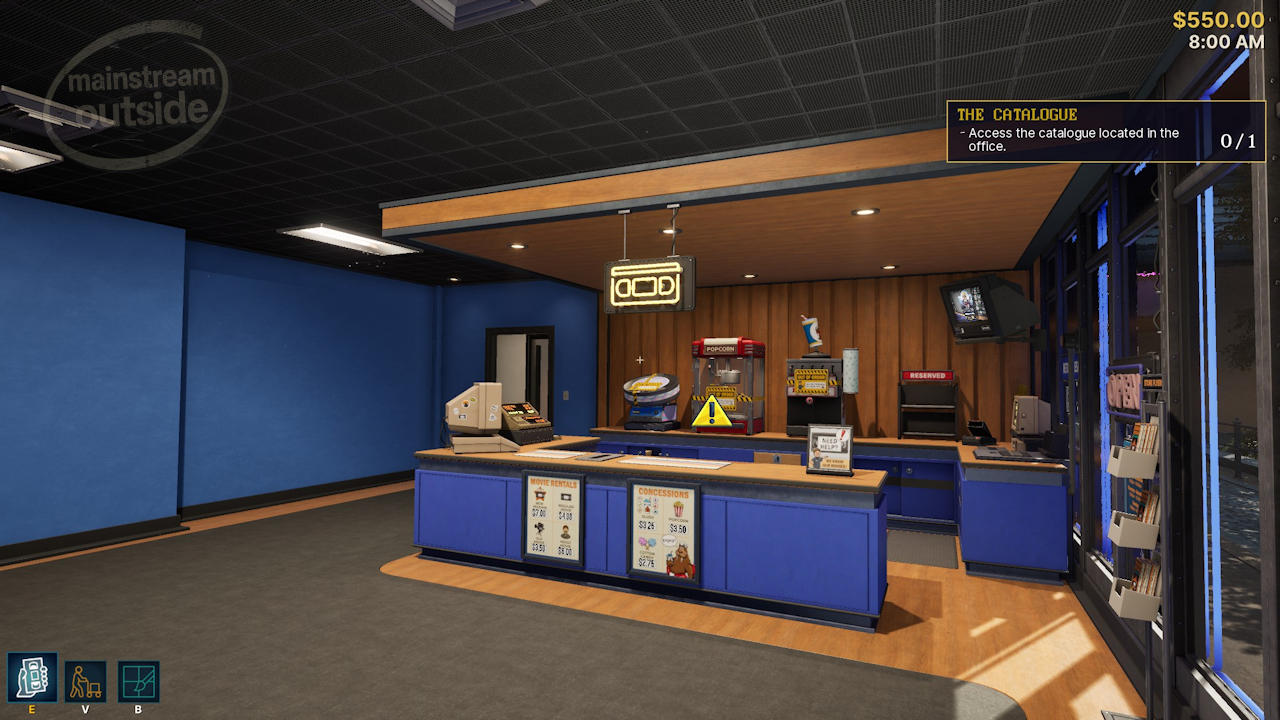
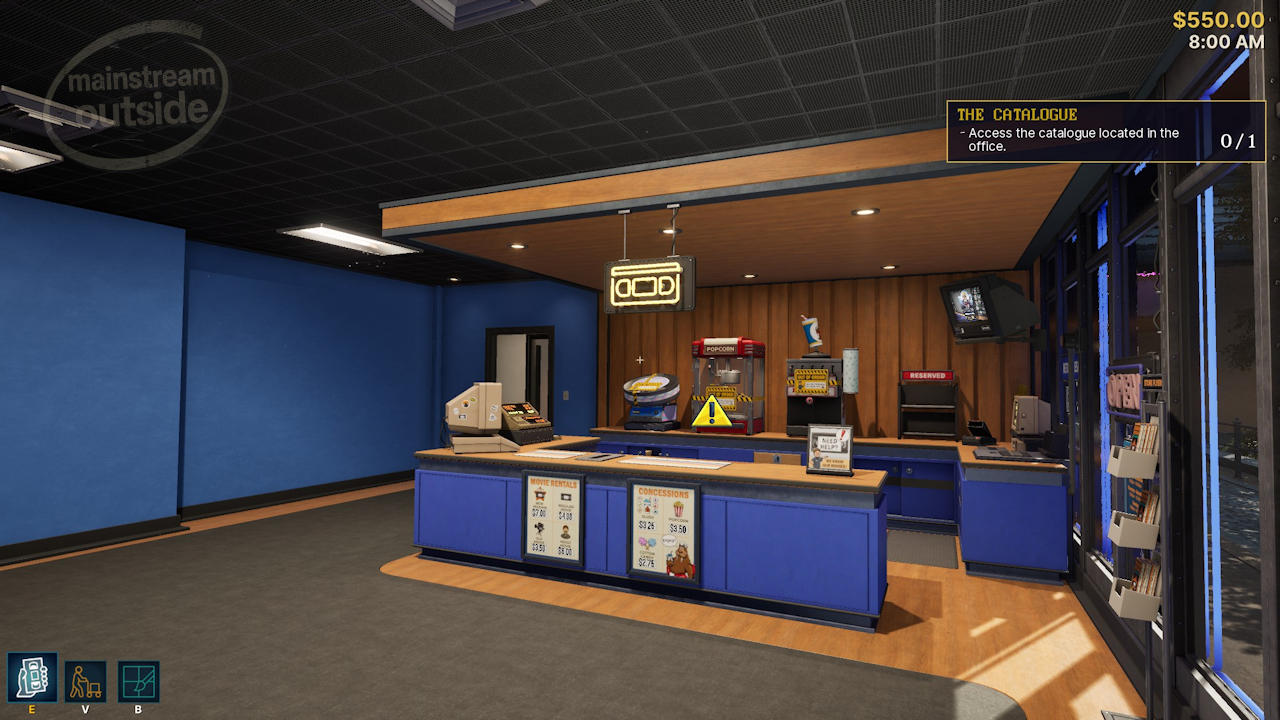
This is what the video store looks like at the very start. Aside from the service area, it’s completely empty.
That starts with ordering the most basic furnishings, because aside from a service counter with a register and a few broken machines (for popcorn, soft drinks, cotton candy, and so on), the place is bare. So your first stop is the PC in the back room, where you order three shelves and three bundles of movies to get some early revenue going. Then again... hang on. The place still looks rough. Are there renovation tools, by any chance?
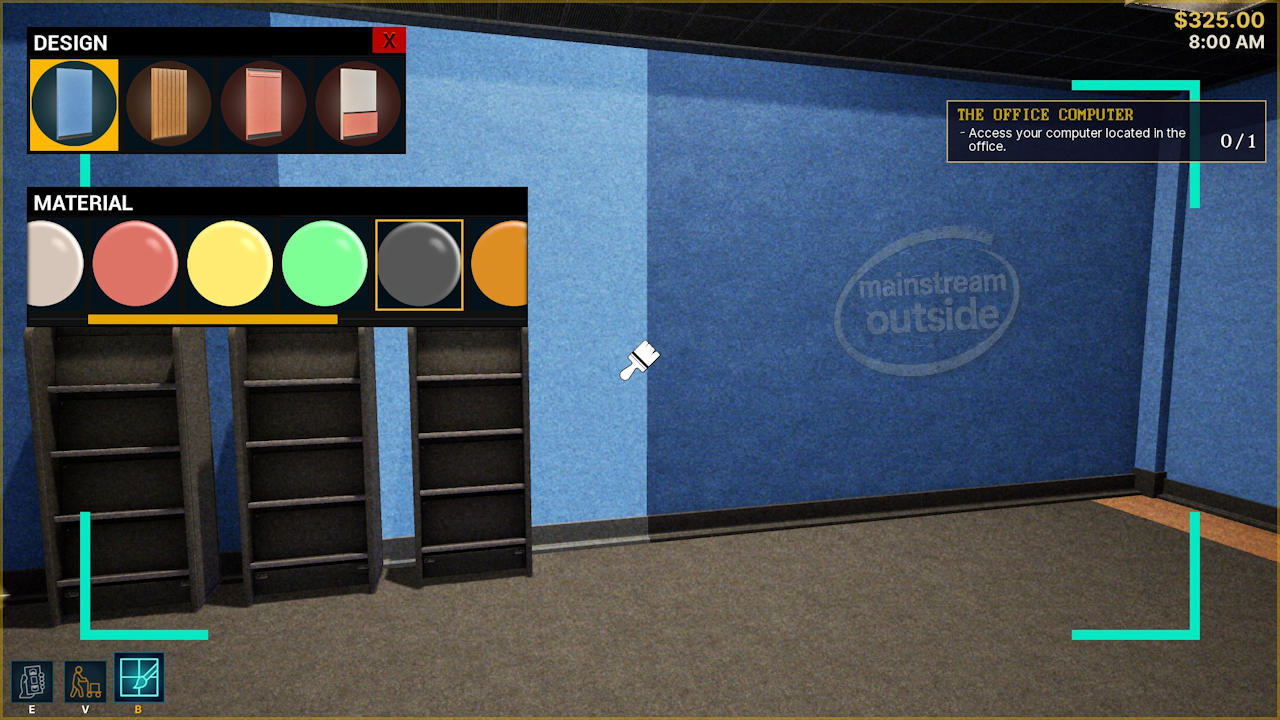
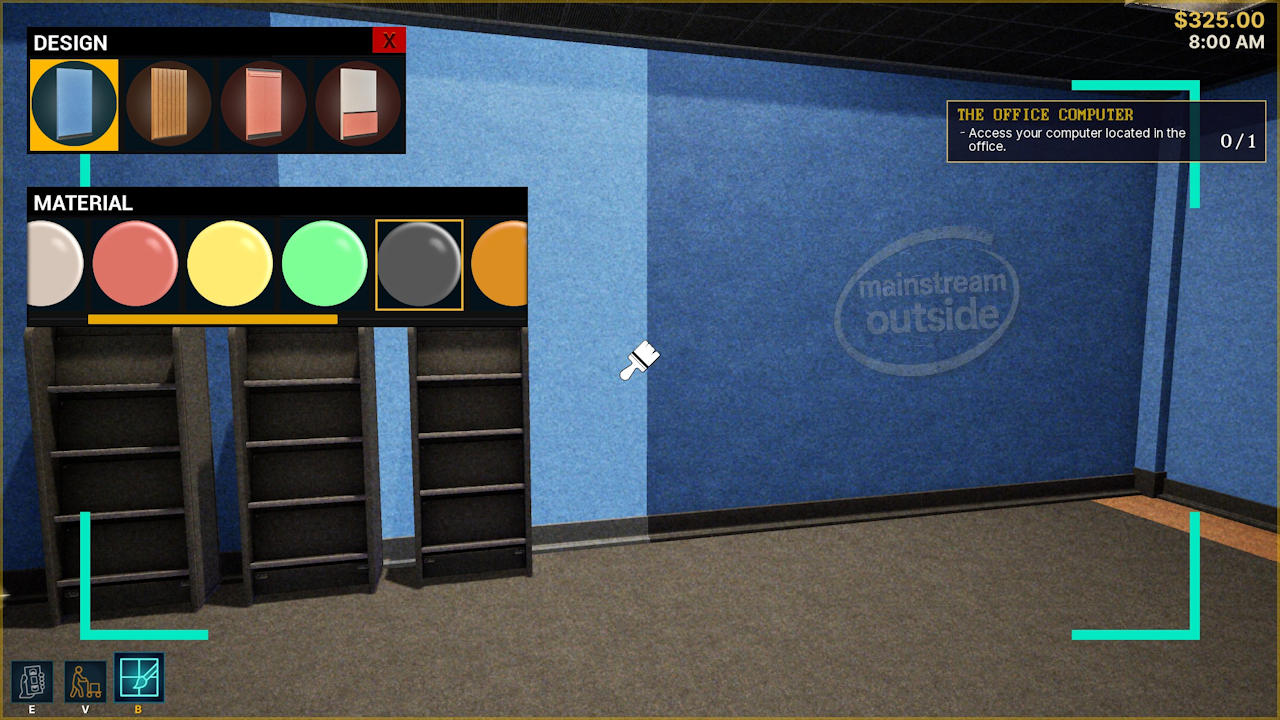
Yep. Retro Rewind’s customization options are pretty modest at first (several wall colors and three different wooden wall styles) but you unlock more over time. Carpets, movie standees, balloons, a model of Johnny 5—later on, there’s plenty you can use to spruce the place up. The "build tools" are intuitive and easy to use, by the way: you can place objects almost anywhere, rotate them in steps, and move them around later if you change your mind.
Naturally, the video store walls start out light blue. Thankfully, you’re allowed to paint over them.
Classic store-sim stuff: easy at first, chaos later
Once you’ve set up your first shelves and stocked them with videotapes, you switch on the illuminated "Open" sign to lure in your first customers. If business is slow, you can grab a few flyers from a stand and hand them out to people passing by. Not everyone bites, but stick with it and you’ll win over new customers that way.
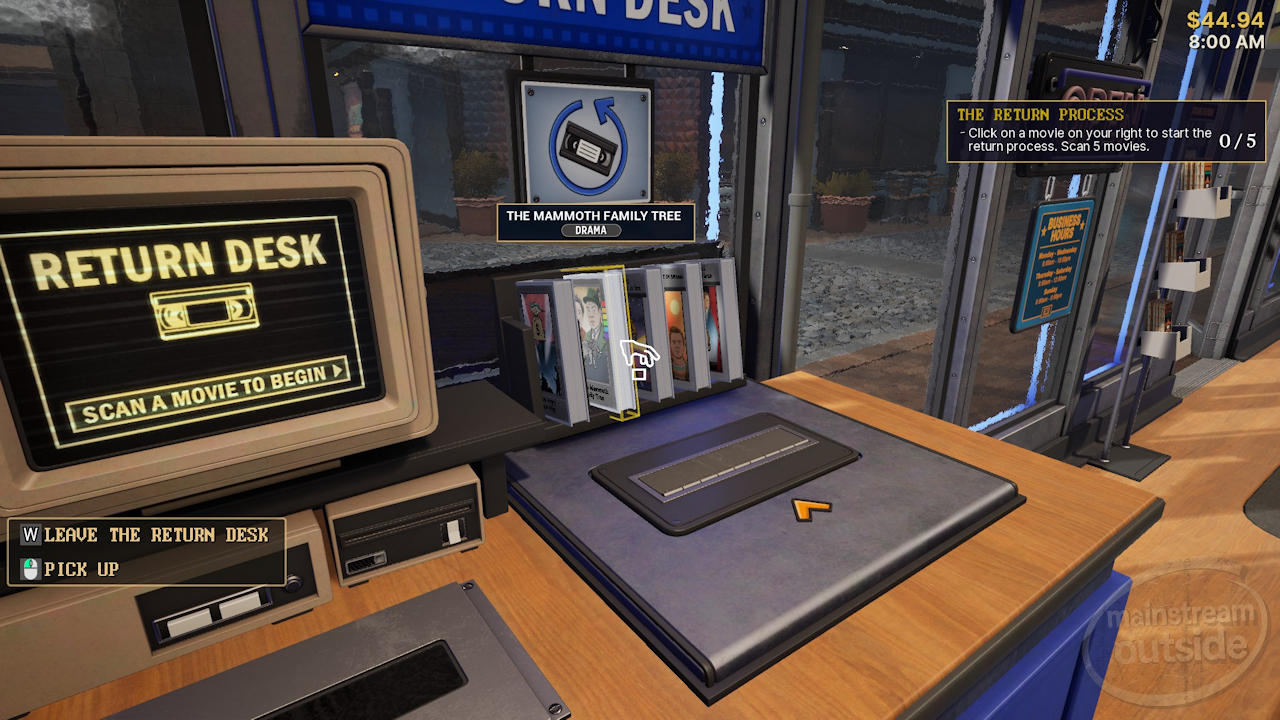
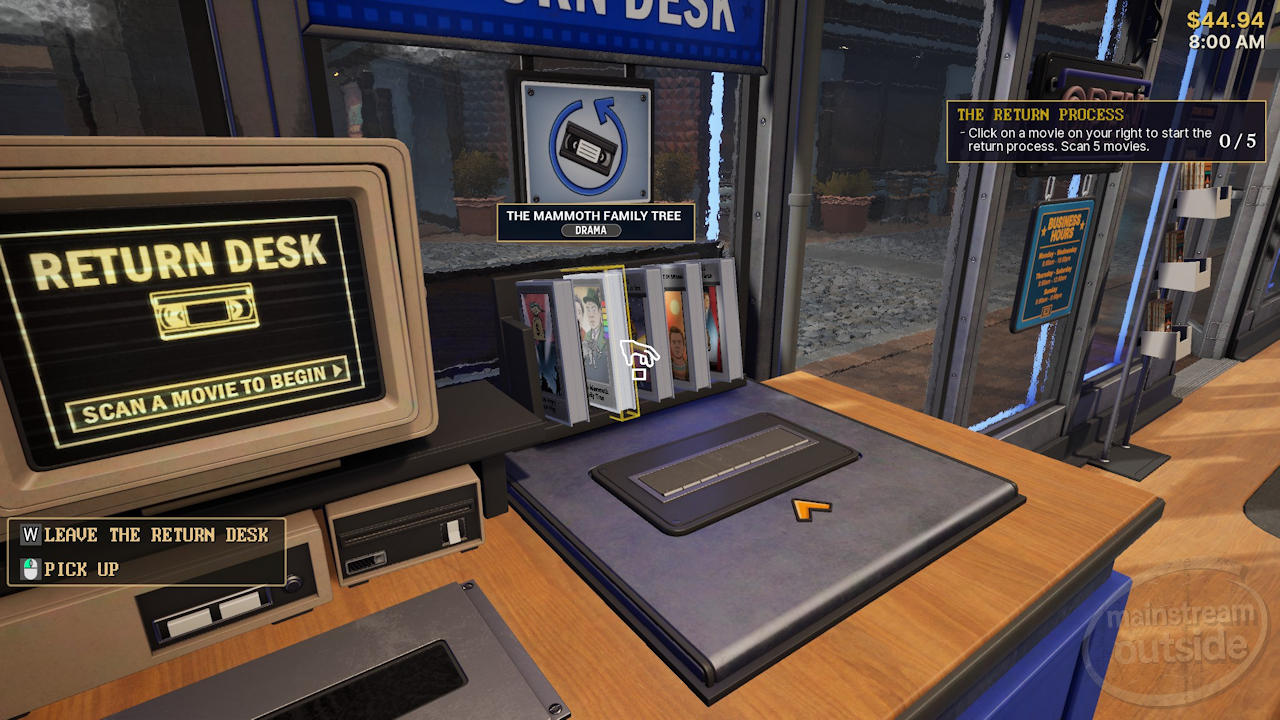
So what does a typical workday actually look like? First, you deal with returns, which magically spawn on the return shelf every morning. Every returned tape has to be scanned, and some absent-minded professors or lazy slobs have forgotten to rewind theirs. That’s where the rewinder next to the scanner comes in: select it, the tape flies in automatically, then close it with a directional movement. The rest happens by itself, though it still takes a little time.
You’ll also come across reserved tapes at the return desk. Yes: reservations aren’t made over the phone or in person, but effectively at the moment of return. Reserved tapes end up on a separate shelf and get requested later by customers.
Your store’s return area. The tapes are on the shelf to the right, with the scanner just beside it.
Next, you check the calendar in the back room. It tells you about new movie releases and upcoming events that might affect the flow of the day. Makes sense: if Halloween’s around the corner, you’ll want to stock up on horror. Ideally, you order new releases straight away—and then display them on a dedicated new releases shelf. Don’t have one yet? Then order it from the catalog on the desk. Deliveries always arrive instantly and can be collected from the storage area next to the back room.
Cha-ching!
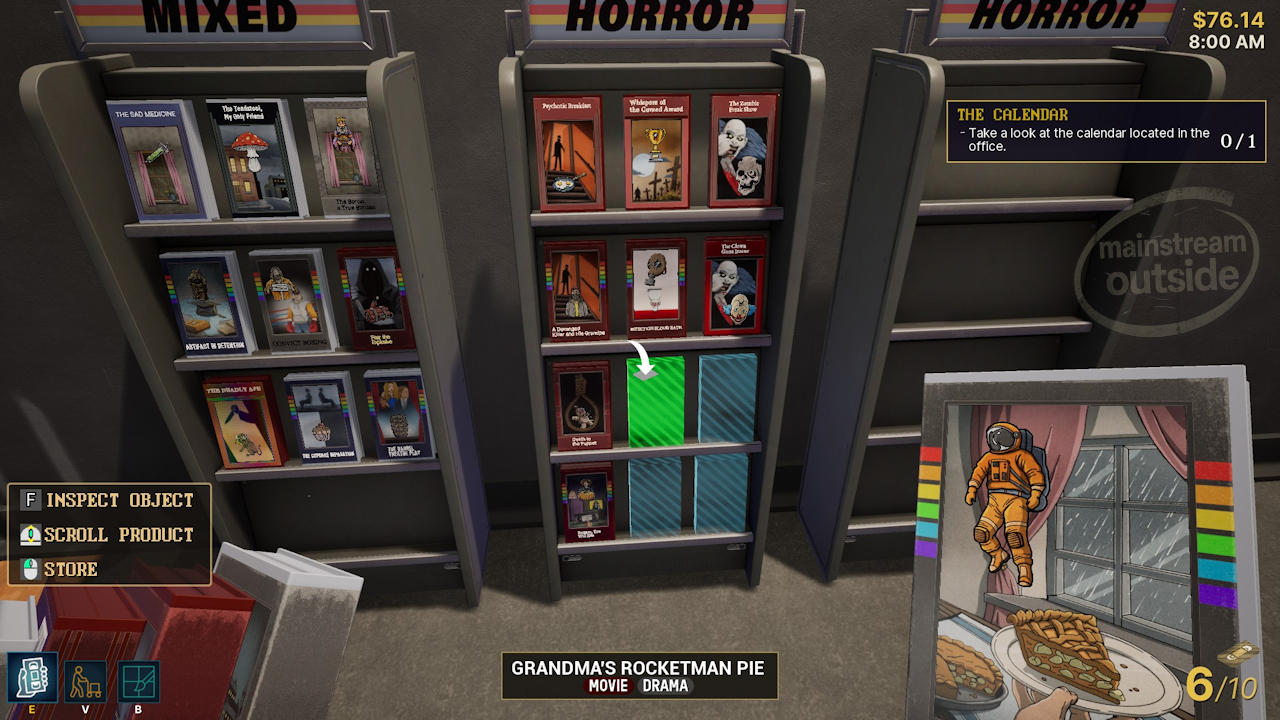
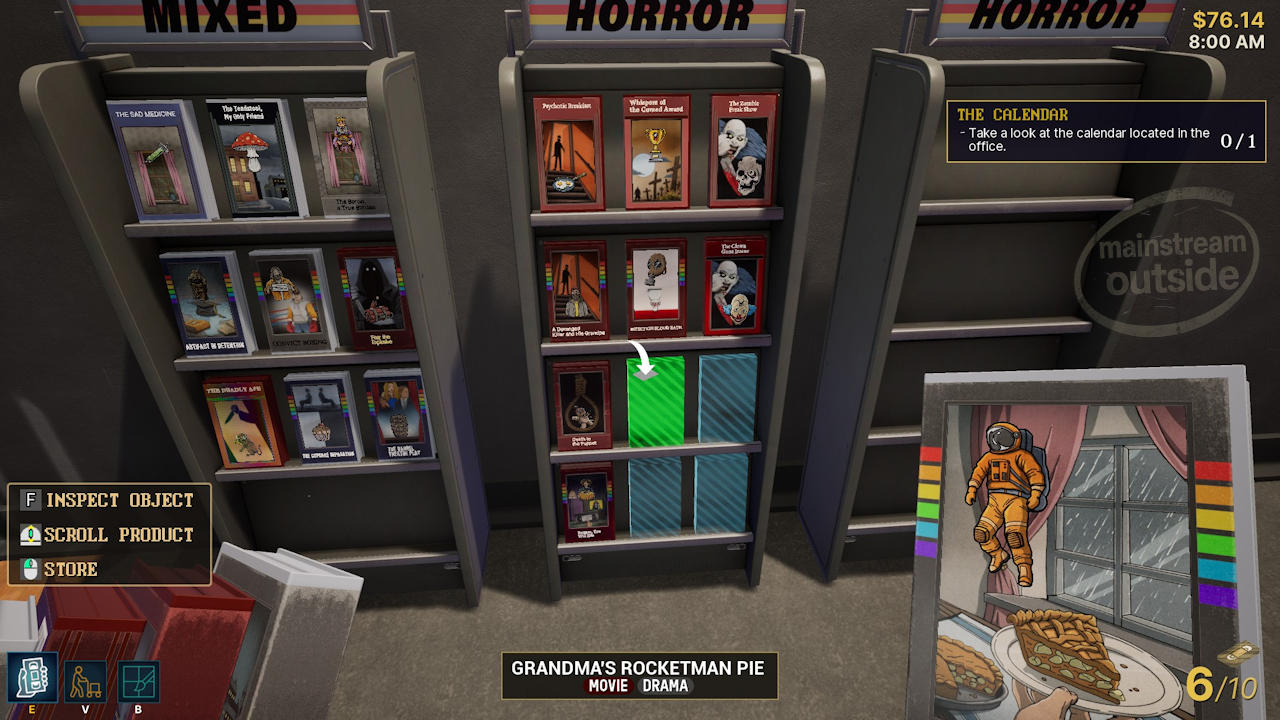
Naturally, you spend most of the day serving customers. Some of them have special requests: one has a movie reserved, another is after something with a very specific vibe. Don’t know your catalog of fictional movies all that well yet? No prob, because shelves label themselves automatically based on what’s on them—if they only hold dramas, they’ll say "Drama"; if it’s a mixed bag, they’ll say "Mixed." On top of that, a tooltip tells you what each movie is about.
Most customers just rent movies, though, and the routine is always the same: take the tapes, run them over the scanner, grab the money out of the customer’s mitts, give change if needed—repeat. It can settle into a genuinely satisfying rhythm, partly because the register mechanics are technically very well done. Taking payment feels good, which applies to pretty much everything in the game.
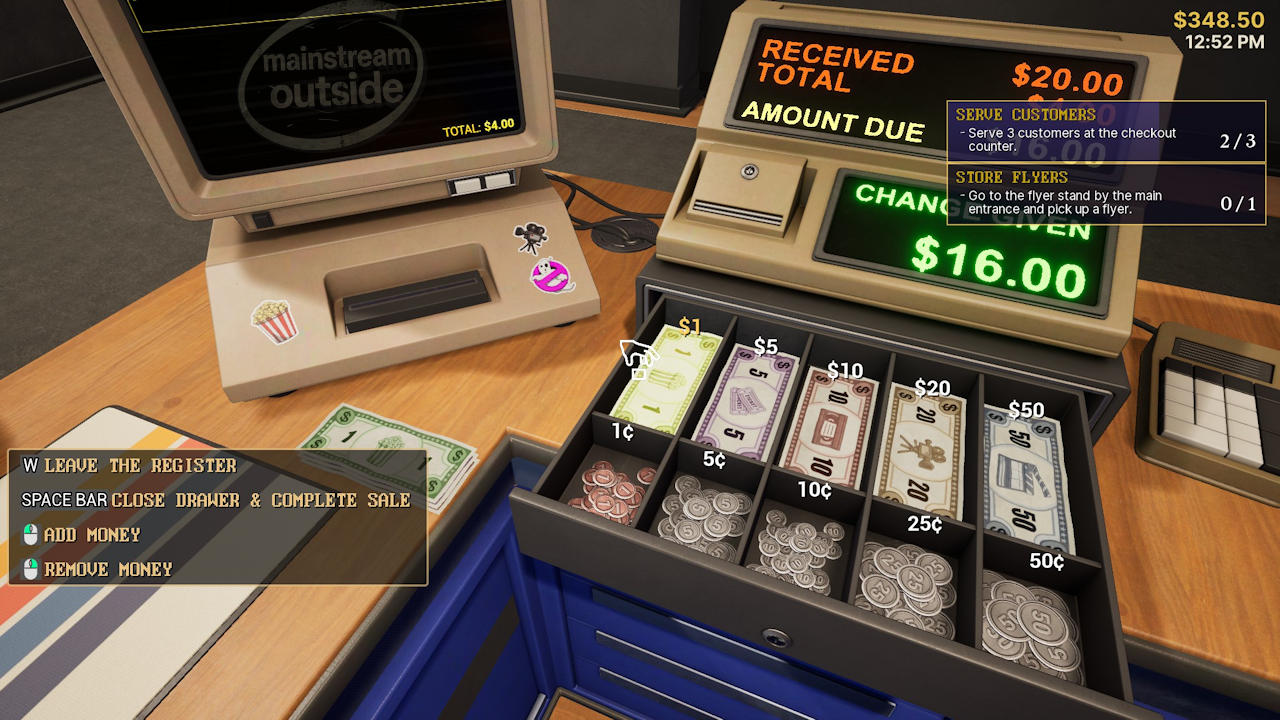
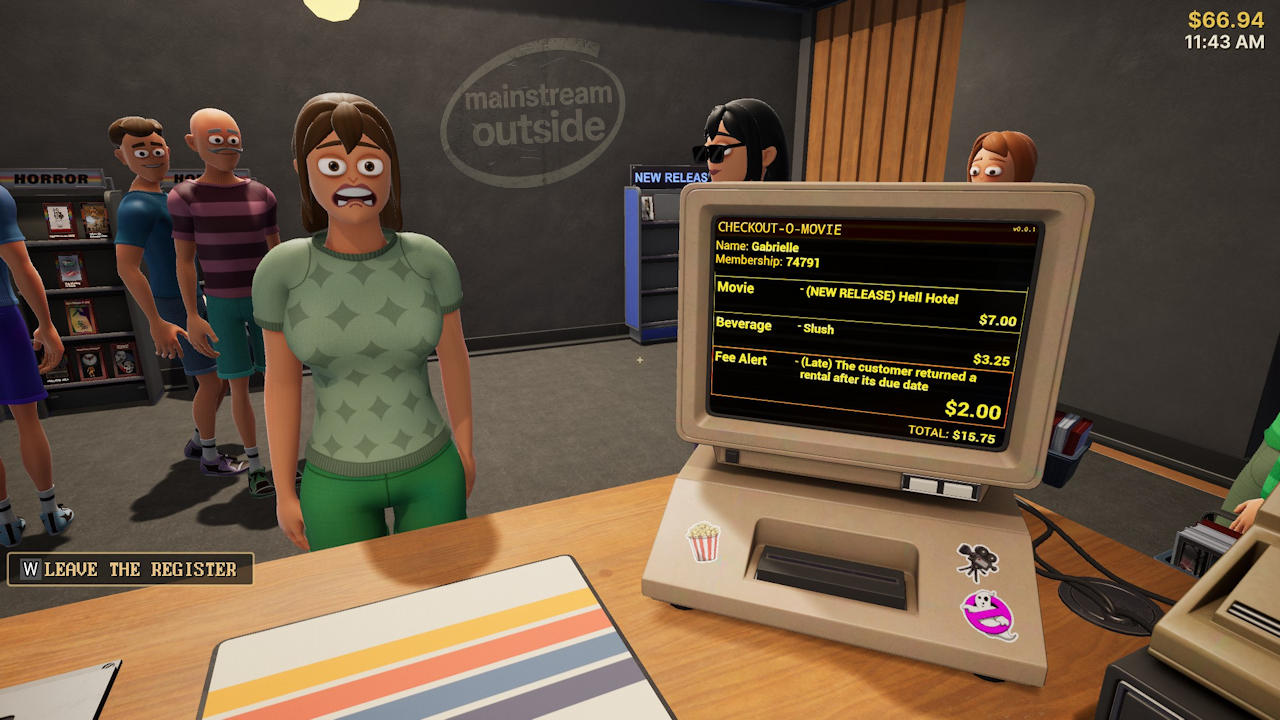
Left: The register is always bursting with cash. Right: Somebody forgot to return their tape on time. Nice face!
But that’s not all. Every rented movie obviously leaves a gap on the shelf, so you constantly have to restock. That means you’re often running back and forth between the register, the PC, and the movie shelves, which gives the whole thing a nice sense of pace. With a bit of practice, though, you can refill an entire shelf in 10 to 15 seconds, helped along by a smart pre-selection system.
Putting movies back on the shelves is quick and painless, because your alter ego automatically pre-sorts the tapes in hand by genre.
"Hey, you!"—"Who, me?"—"Pssst!"
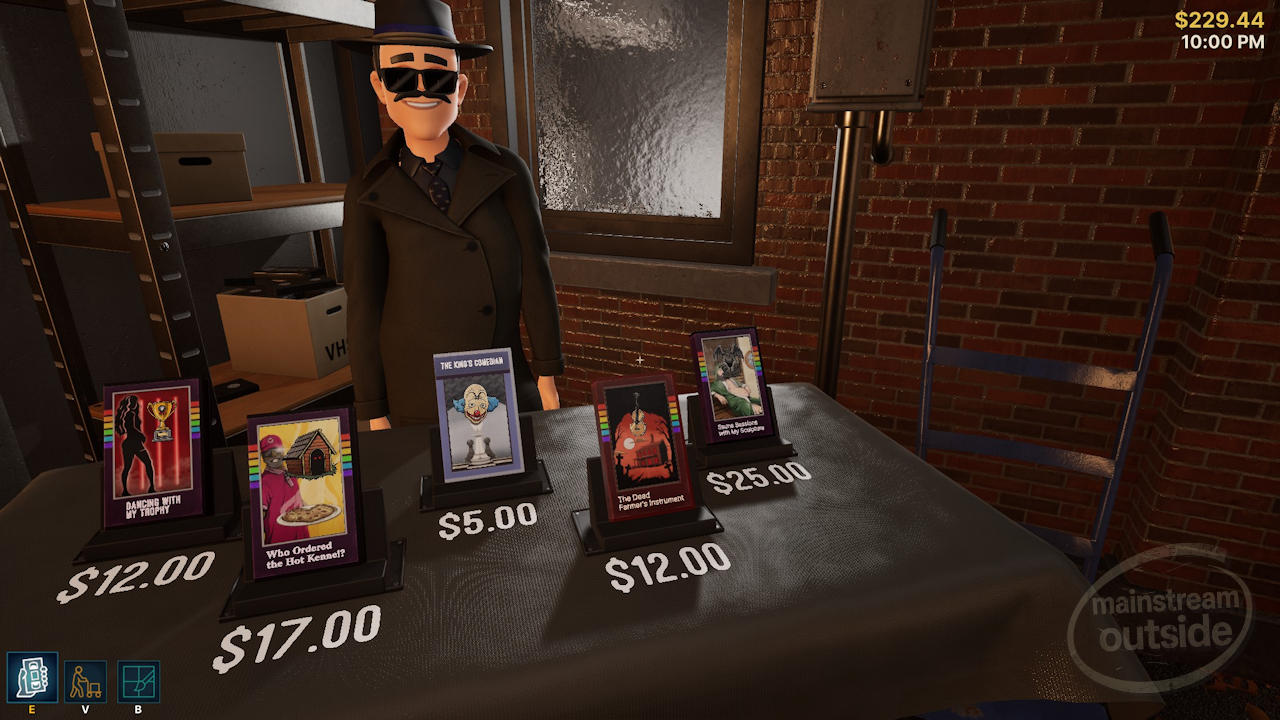
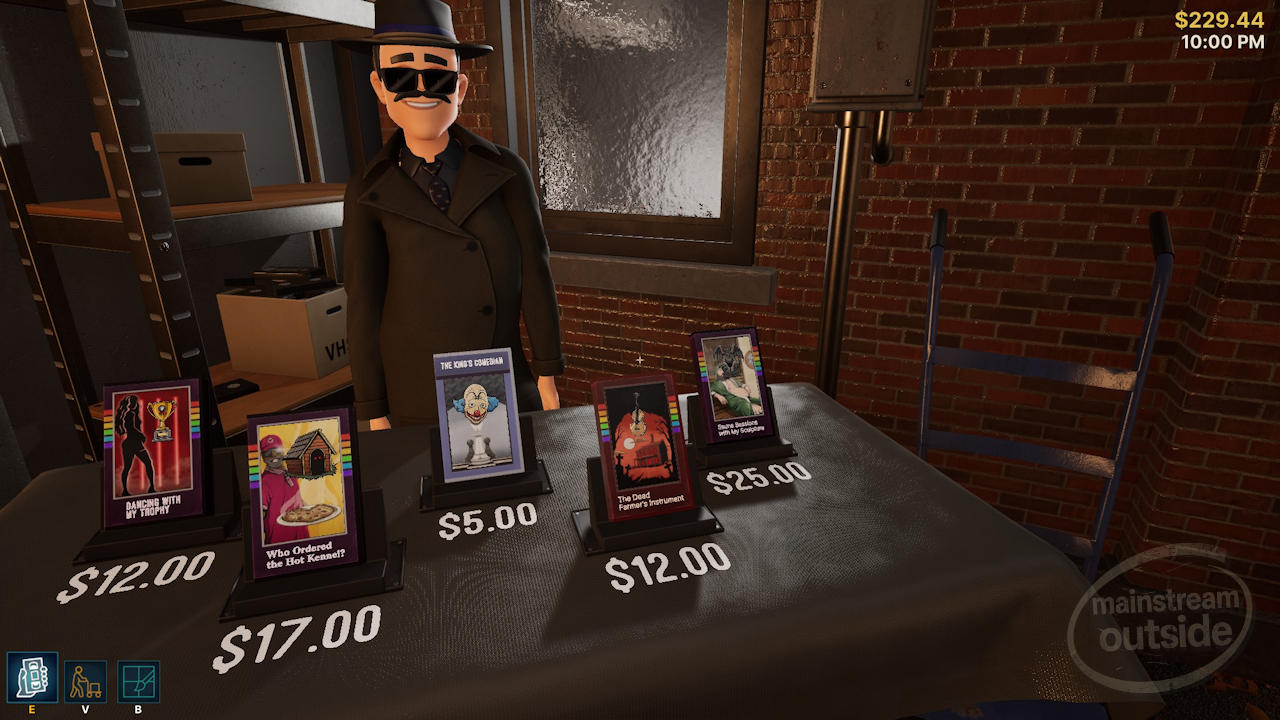
You can also buy movies without using the computer on Tuesdays and Thursdays. That’s when a shady dealer shows up in the back alley in full classic creep mode: floppy hat, long coat, sunglasses. The guy doesn’t just look suspicious, either: he also sells illegal bootlegs and dirty movies. The former are cheaper than regular stock, while the latter are, naturally, a bit more expensive.
Would you buy anything from this guy? In Retro Rewind, you absolutely should.
Popcorn and soft drinks with your movie
The thing that really throws day-to-day store life into chaos, though, is the broken machines mentioned earlier. Once you’ve progressed far enough, you can repair them—and as soon as the cotton candy, popcorn, and soft drink machines are up and running again, customers start wanting that stuff too.
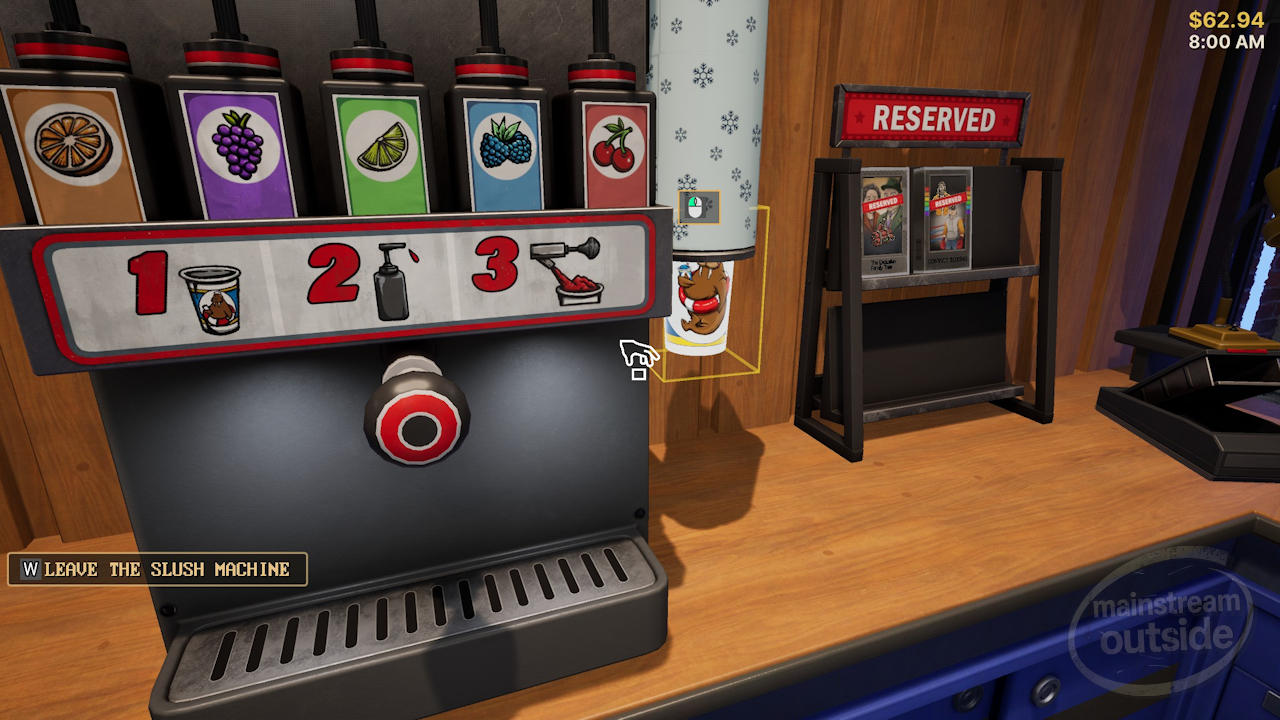
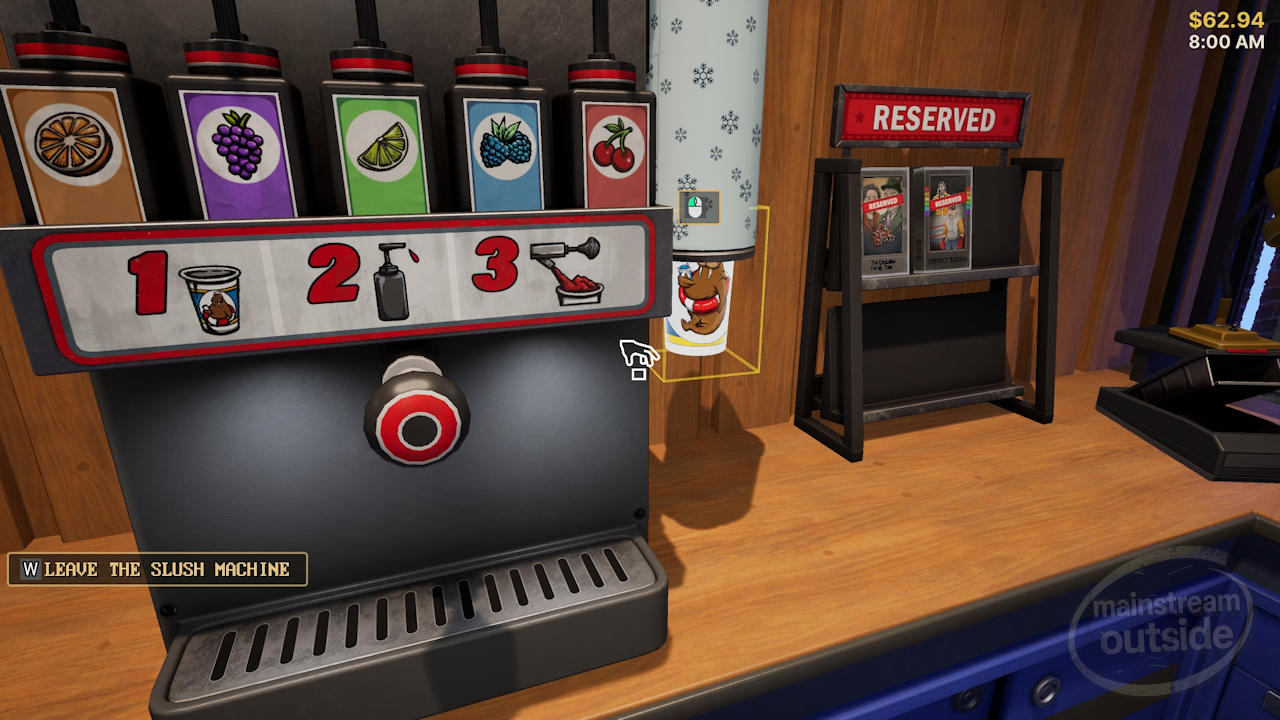
The problem is that one button press doesn’t cut it here. To pour a soft drink, for example, you first have to pull a paper cup out of the machine with the right mouse movement. Then you pick the customer’s drink from five different flavors and turn the machine on. Meanwhile, the queue at the register keeps getting longer. During my session, though, nobody got annoyed enough to walk out.
This is what the repaired soft drink machine looks like. Next to it, you can see the shelf for reserved movies.
The day-based progression system is a bit of smoke and mirrors: unless you play like a complete idiot, unlocking machines, decorations, and mechanics is basically unavoidable. Still, I had a lot of fun running the store, because the systems are all easy to pick up and clearly built around maintaining a good flow. It didn’t take long before I was juggling all the little tasks with ease—and that, to me, is exactly what makes a good shop sim tick.
"Ah!"—"Oh!"—"Wow!"—"Hmmm..."
That said, Retro Rewind - Video Store Simulator also has one major weakness in my eyes: the atmosphere. To be fair, the game does feed you some fitting tunes, and they’ve got plenty of retro charm; some of them even dabble in an ’80s chiptune flavor. But that music mostly stays in the background, while front and center there’s barely any life at all.
That’s because both passers-by and customers are about as talkative as Lurch from The Addams Family—they mostly just grunt out odd little noises. I caught "Ah," "Oh," "Wow," and "Hmmm," with "Hmmm" apparently translating to "I’d like cotton candy / popcorn / a soft drink." Crystal clear, right? 😉 These snotty brats don’t even say hi or bye, which makes them feel more like props than actual people. And that’s a shame, because even the occasional bit of register banter could have done a lot to sell the atmosphere.
It’s probably also a matter of taste whether these button-eyed squish-faces come across as creepy or funny. That said, I do think the developers made the right call with the cartoony art style. With "realistic" character models, Retro Rewind would’ve looked a lot more generic, and Blood Pact Studios was surely aware of that.
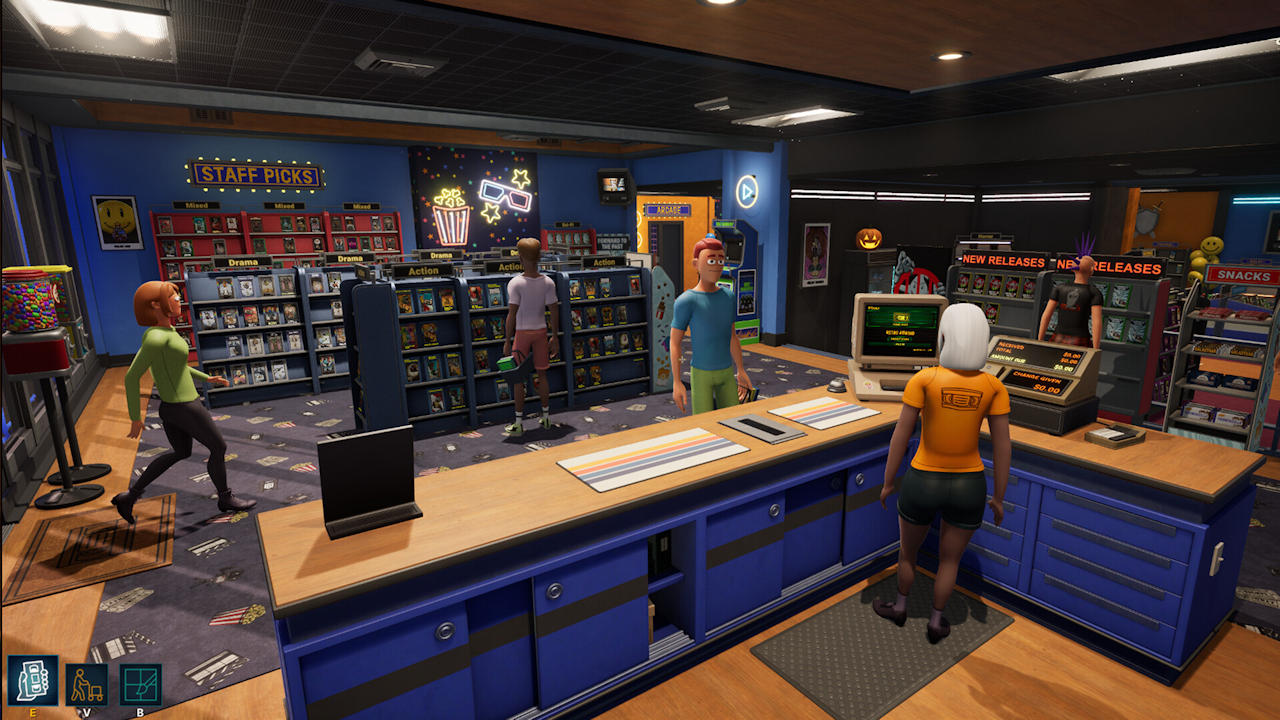
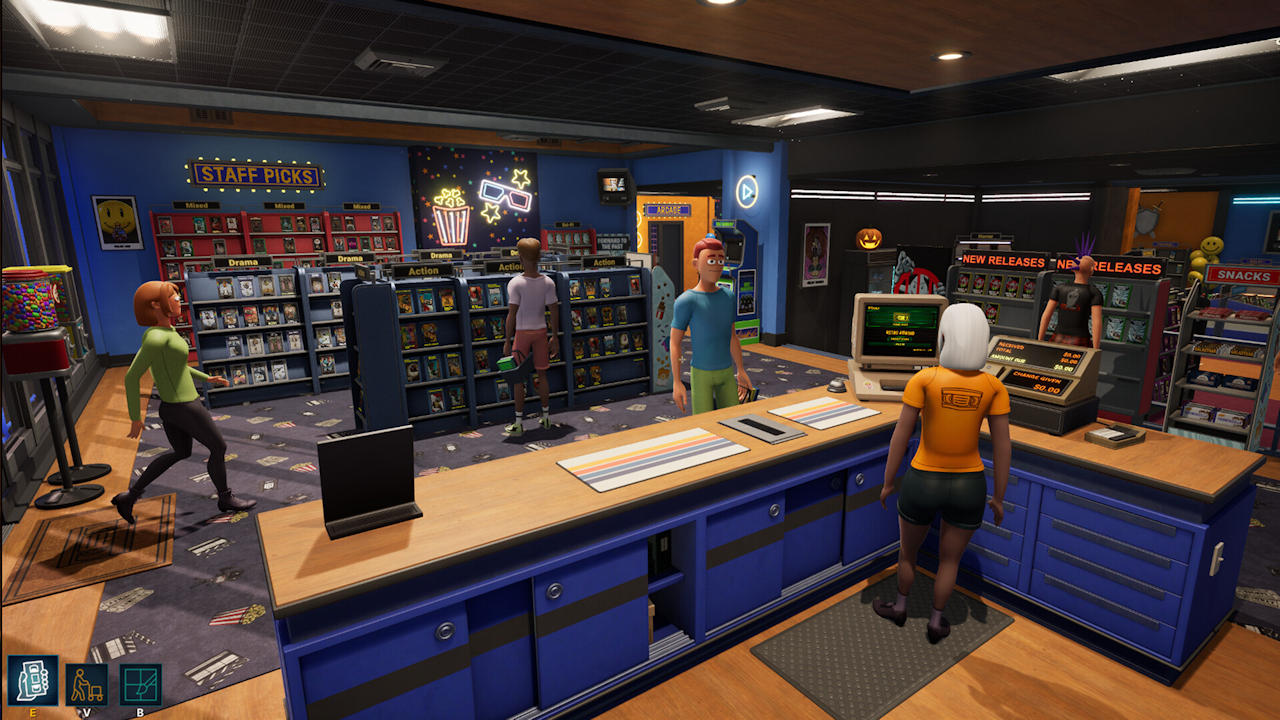
Best saved for last: this is what a properly upgraded video store looks like in Retro Rewind.
Verdict: More than just a nostalgia trip
In 2026, you don’t get many chances to see the inside of a video store anymore—let alone run one. Gamers old enough to peek over the toilet bowl in the early ’90s will probably warm to Retro Rewind’s whole setup right away.
But fans of shop sims that aren’t built entirely on nostalgia could still find plenty to like here, because the tech, the humor, and the core fun are absolutely on point. The somewhat half-hearted treatment of the customers—which leaves them almost completely mute—remains the one real sour note. For me, that’s genuinely enough reason not to pick up the full version.

Read next:

Comments