
Gaming without battle passes.
Takes without paywalls.
And stories without reposts.
I Used to Think My Digital Purchases Were Mine — How Cute
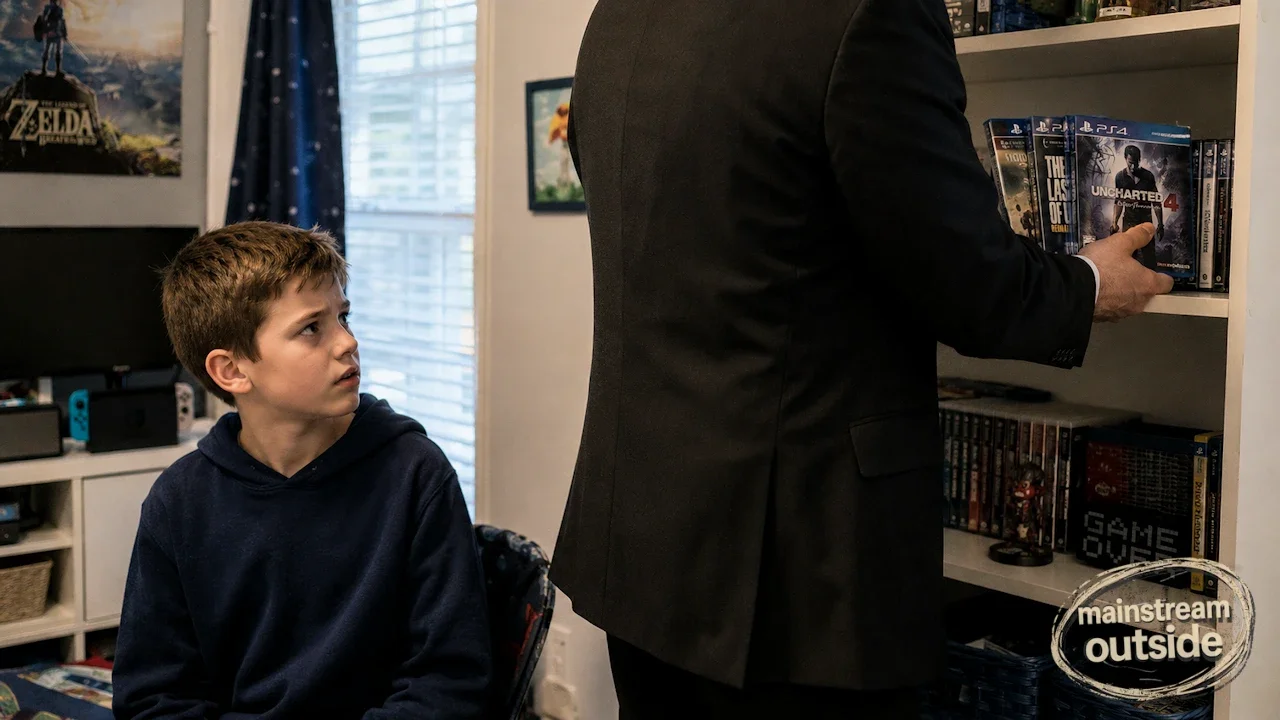
Yes, really: I used to buy games on Steam or movies on Amazon Prime Video and assume I had secured permanent access. The current PlayStation and StudioCanal case shows just how naive I was—but companies like Sony should be careful not to undermine one of the few good arguments they still have for buying legally.
Anyone who has only recently realized that Valve doesn’t actually sell them digital games, but merely licenses to access and use them, wasn’t necessarily stupid before—just a little naive. Before I became a journalist, I was pretty naive about this too. Possibly stupid as well, given my choice of career. But that belongs on the Wall of Career Regrets, should anyone ever build one.
What Sony, Valve, Amazon & Co. mostly owe us is fine print
My mistake was thinking Steam, Amazon, Ubisoft, and the rest owed me something. I mean, come on. I had bought games or movies from these guys, which to me meant unrestricted access. If Steam ever went offline—say because “China’s Steam,” WeGame, had steamrolled the West—I figured I could at least download my library and back it up somewhere. Or so I thought. Good luck with today’s file sizes, by the way.
Yeah, no. If Steam disappeared into the digital afterlife tomorrow, my library of hundreds of games wouldn’t suddenly become my property, ready for me to frantically download and squirrel away. It would be tied to a system that no longer exists. Gone? Quite possibly, in plenty of cases. Legally tidy? Not exactly. In Steam’s terms and conditions, aka its Subscriber Agreement, Valve defines games, software, and in-game content as “Content and Services.” Steam calls the rights to access them subscriptions—so we’re not talking about software we own, but about access and usage rights.
So far, so familiar. But Amazon works the same way. There, “purchased” means access to on-demand playback for an indefinite period, but still only under a limited license—see section 4 of the terms. Put simply: If Amazon Prime Video vanished tomorrow, my purchased movie collection, again, wouldn’t simply be my property, waiting for me to pick it up somewhere. It’s the same story with:
- Ubisoft (Connect)
- Epic Games Store
- Nintendo Switch
- Google Play / YouTube / Google TV
- Microsoft Movies & TV
- Apple TV / iTunes
- Fandango at Home / Vudu
- and so on.
Oh—and PlayStation, of course. The StudioCanal case simply shows what can happen when the licenses Sony bought from rights holders expire. In concrete terms, starting September 1, 2026, 551 purchased movies and TV shows in the UK are set to become unavailable for download or playback. Now be honest: How many of the terms linked above have you read, either just now or at any point before? Two? One? None? Exactly. And I’m pretty sure the providers are perfectly fine with that.
Walls of text make excellent hiding places
Sure, companies have to protect themselves legally. The next furious customer or lawsuit-happy plaintiff might have hired a lawyer who has actually read the law instead of just watching courtroom dramas. So companies have to cover every eventuality in their terms and land every clause with legal precision. That inevitably makes for long documents—but I also think big corporations deliberately choose the wordiest possible phrasing and then dump another shovel of filler on top.
They know perfectly well that nobody wants to wade through endless legal explanations. To me, these walls of text are burial grounds for the uglier parts of a business model: everything is mentioned, but almost nothing is actually seen. And that’s one reason naive customers might assume they own their digital purchases. The other reasons are rooted in history, so to speak, but they could still matter again in the future. So let’s take a quick glance in the rearview mirror.
No joke: Back in the day™, you actually owned something
Hold on, though: First, I want to make clear that even decades ago, buying a game or movie didn’t mean you owned the work itself. You didn’t own the game, the movie, the music, the screenplay, the characters, and certainly not the copyright. Go ahead and try buying the copyright to Baldur’s Gate 3 or—to keep it modest—the Marvel Universe. 😉
But before game install sizes started making Windows 11 look modest, bringing home a physical storage medium really did mean owning something. That thing, specifically: the floppy disk, cartridge, CD-ROM, DVD, or Blu-ray with the game data on it. Or movie data, depending on what you had bought.
Let’s stick with games, though. The advantage of physical media was—or, in rare cases, still is—that you could use or install the version stored on them whenever you wanted, as often as you wanted. Before publishers were “kind” enough to limit the number of simultaneous installations and tie software to user accounts, you could even lend out or sell those square or round slabs of data. Wild, right?
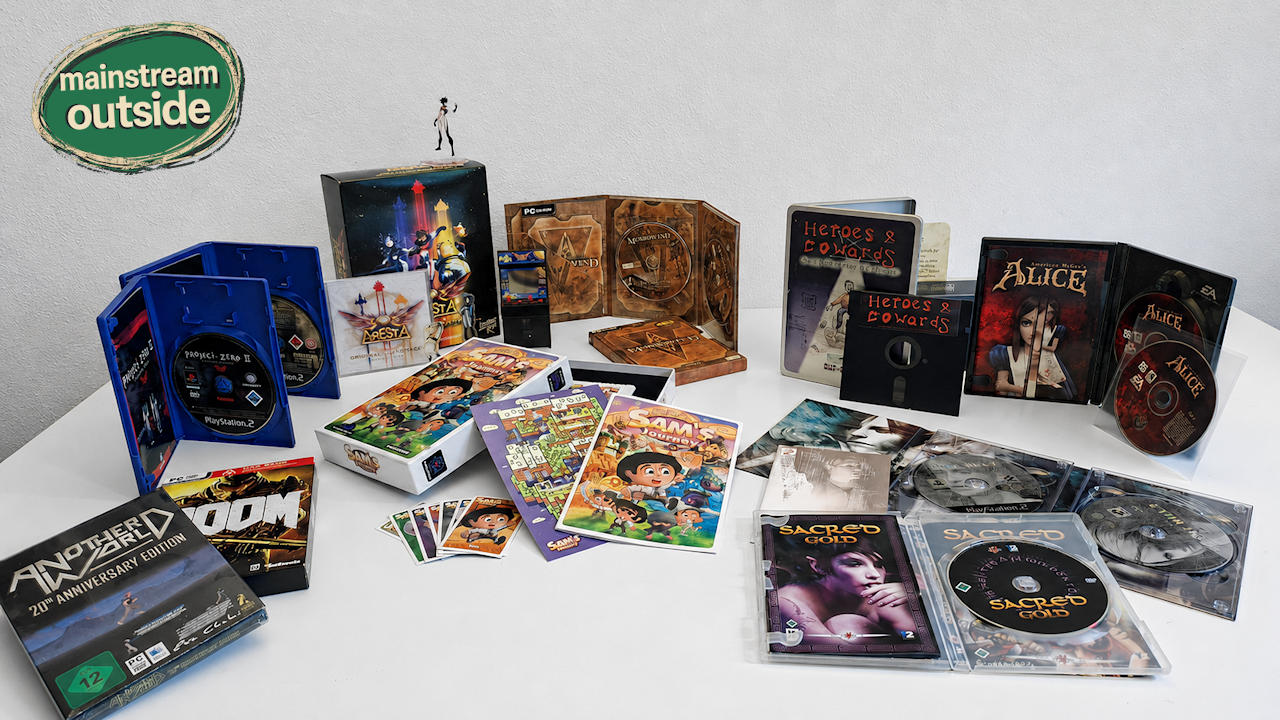
A small part of my physical games collection. Yes, there really is a cartridge and a 5.25-inch floppy disk in there.
Annoying for publishers, of course, because that meant—and still means—money slipping through their fingers. So they’ve been working hard to correct that mistake. Maybe the family purchase agreement is next. The idea: By buying a game, the buyer automatically enters into a contract requiring their relatives to buy it as well. After all, there’s always the risk that family members might look over the buyer’s shoulder while they’re playing and enjoy the content for free. But let’s not give the chief strategists any ideas.
Back to physical media?
Back to the actual point: In the comments under this Reddit thread about Sony removing StudioCanal content, you can see an immediate rallying cry for physical media, including games. That may seem absurd in an age of 100-plus-gigabyte monsters, but some gamers would happily accept a cartload of Blu-rays if it meant they could keep a game they had bought for good. Which I completely understand.
Let’s assume this renewed sensitivity around ownership—helpfully encouraged by Ubisoft (The Crew), Steam, and Sony—keeps spreading until a whole lot of customers have had enough. How realistic would it be for software companies to start producing more physical media again? One thing seems clear: the shift to digital plays straight into publishers’ hands. Manufacturing physical media costs extra money, and publishers would very much like to save that money.
Of course, customers ultimately vote with their wallets. Just as a dog runs after a stick, publishers obediently chase the cash. The catch is that digital games are convenient. We gamers no longer have to drive or trudge to the nearest game store to pick up the next game on our wish list. It’s a comfort we’ve grown used to, and most of us would be hard-pressed to give it up. Gamers are people too, after all—and people are lazy by nature.
Speaking of which, I don’t feel like writing anymore.
No, just kidding.
No value, no sale
So no, I don’t think the ongoing shift to digital will one day send us gamers storming the barricades as a united front. However, some people are already drawing their own conclusions, especially after Sony’s announcement that it plans to stop releasing new PlayStation games on disc from January 2028. I can absolutely see a counter-movement slowly taking shape. Over time, it might even grow large enough to become a real pain in publishers’ backsides.
Because we’re slowly reaching a point where buyers of temporary game licenses simply don’t get enough value in return. Older gamers in particular can hardly be blamed for feeling ripped off, because in the early days of computing, full-price games often came with genuinely nice extras.
Those extras made owners feel appreciated; they were basically a thank-you. Alongside a proper manual, we’re talking posters, stickers, maps of the game world, and other bits and pieces. Stuff that has long since been locked away inside expensive collector’s editions.
Where did the appreciation go?
As a gamer, I now find myself asking where that good feeling went—the feeling of having legally bought something. Sure, you still get it here and there today, for example when I support the game preservation folks at GOG with my purchases. They often include digital goodies with their digital games and skip DRM entirely. Sounds like an ad? Well, companies like Valve, EA, Ubisoft, and the rest only have themselves to blame if they look pretty lousy by comparison.
Anyone who hooks customers up to the milking machine, pesters them with restrictive DRM, and strips away every last trace of ownership will inevitably lose people. I’m tired of having to create an account after buying a license to play a game just so publishers can track my usage more closely and—in some cases—pass my data on to third parties.
I’m also tired of paying 60 or even 70 dollars for a game where the “product” consists of nothing but game data. Data that, in some cases, has also been sliced off into DLC or item shops. And I’m even less thrilled about Triple-A studios wanting to stuff “my” full-price games with ads in the future.
Maybe the biggest problem with digital purchases isn’t that they’re digital. It’s that the industry has spent decades profiting from the feeling of ownership while, legally speaking, it had already abolished ownership long ago.
Letting all of that sink in, I can really only end with this: Seriously?

Read next:
Comments