
Gaming without battle passes.
Takes without paywalls.
And stories without reposts.

While Xbox Talks Ads, AI Eyes the Whole Business
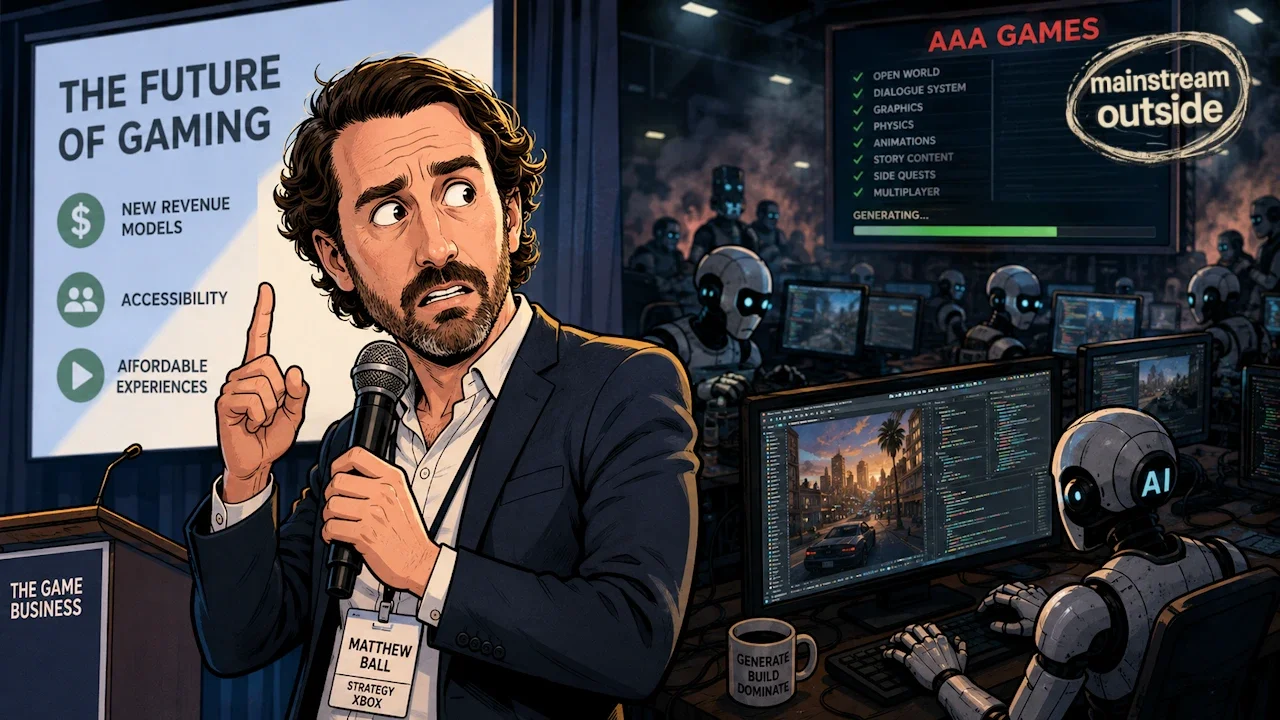
Opinion: Xbox chief strategy officer Matthew Ball is thinking out loud about cheaper, partly ad-funded access to games. But advertising rarely stops at being a discount model—and while AAA scrambles for new revenue streams, AI is already learning how to build entire game worlds.
For a while now, a faint whine has been drifting through the news feeds of online games media. The ones whining are the “big players” of the games industry—because the poor things can no longer afford AAA productions. Not like this. Not the way they’ve been doing it. Rising development and hardware costs are part of the problem, and players are becoming less willing to swallow higher prices. I wouldn’t consider many games worth 70 dollars either; maybe this brilliant fan remaster.
So what are Xbox, PlayStation and the rest supposed to do to avoid ending up in the poorhouse? A certain Mr. Matthew Ball—CSO at Xbox—has an idea. Speaking to The Game Business, the growth expert suggested that today’s monetization models being the only option for customers is “not good.” His example for something better came from streaming and TV: advertising.
His evidence was that, in the US, more than the entire net growth of certain streaming services has come from ad-supported tiers for years. Some digital outlets read Ball’s comments as an unofficial announcement of in-game ads and wrote their headlines accordingly.
“That’s wrong,” the CSO later clarified. What he actually had in mind, he said, was partly ad-funded access to games as a cheaper alternative to existing models. Experience, however, gives us plenty of reasons to worry—and is Ball’s idea really arriving at the right moment, when AI tools for everyone are gearing up to take a swing at the AAA industry?
What a corporate strategist means by “cheaper alternative”
A quick detour, since it fits the topic: In June 2017, Xbox Game Pass launched with more than 100 games. Price point: around 10 dollars a month. A large chunk of the paying herd still believed they were getting a good deal back then. But by 2019 at the latest, Microsoft had shown how quickly a simple subscription can turn into a pricing staircase. With the launch of Ultimate and PC Game Pass, the service began to split into segments, with the first price hikes following in 2023.
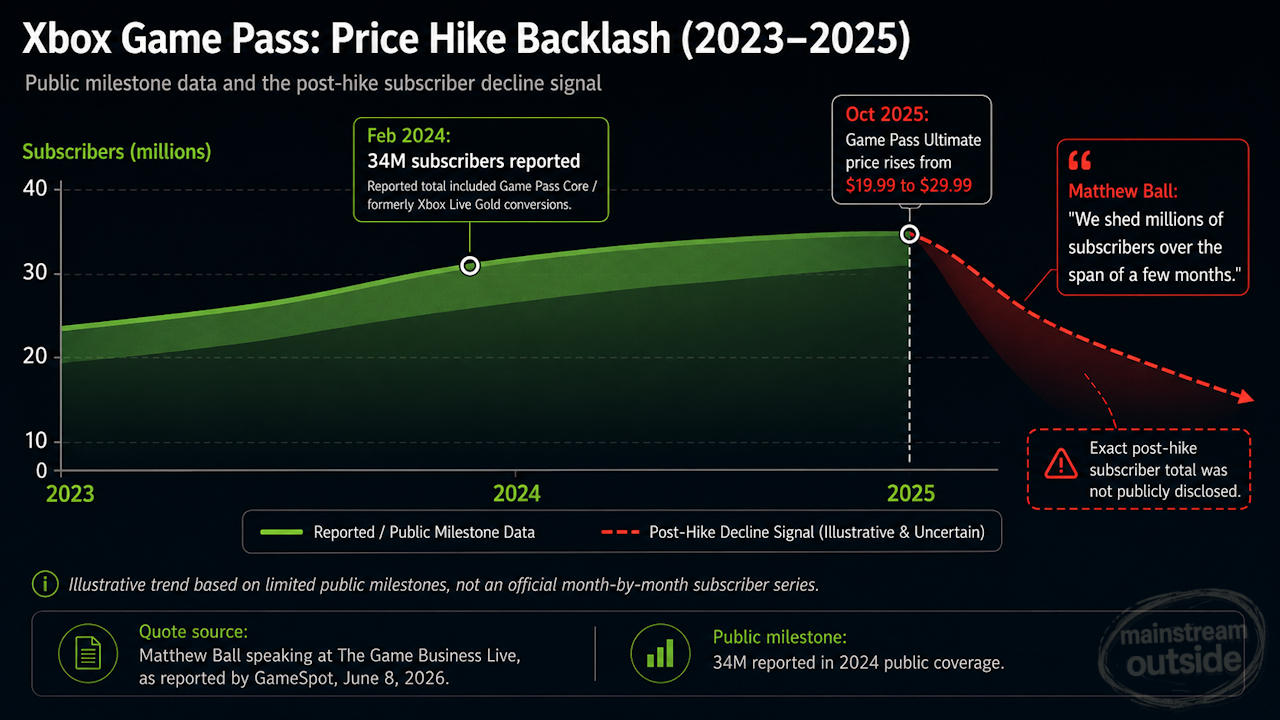
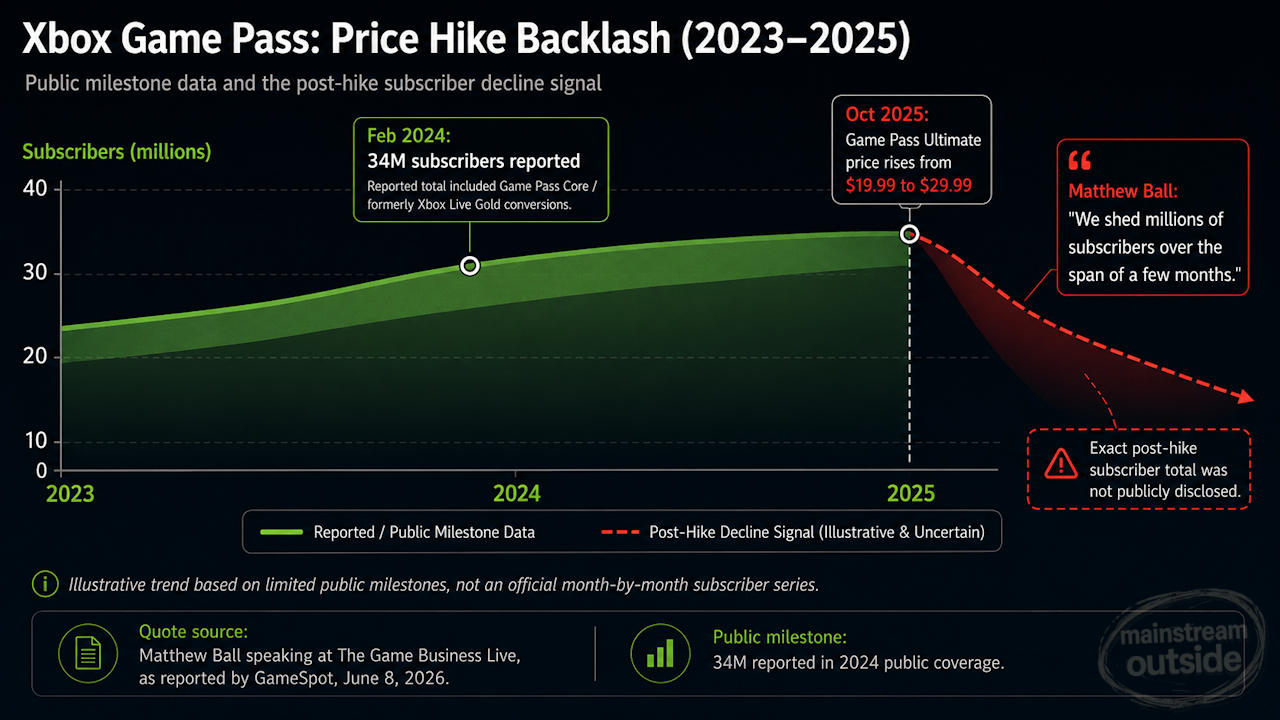
By September 2024, Game Pass Ultimate already cost 5 dollars more than it had at launch; by October 2025, it cost twice as much. On top of that came the Essential and Premium tiers—so anyone still paying just 10 dollars was now getting less than the original basic offer. After heavy criticism, Microsoft partially walked things back in April 2026. But what doesn’t work now ... ? Exactly, maybe it’ll work later.
Game Pass subscriber growth after the massive 2025 price hike for the Ultimate tier, according to Matthew Ball.
Why bring up Game Pass? Because it shows that every new monetization model comes with a carefully engineered strategy behind it. If Ball’s ad-tainted game access launched tomorrow, I’d probably have to call that a cheaper alternative too. After all, Game Pass also seemed great at first—at least for players. What the Spotify-ification of video games means for developers is another topic.
That’s why I think ad-funded game editions might not necessarily get more expensive over time, but they would absolutely get more stuffed with ads. Game development keeps getting pricier, after all—and who wants to see AAA developers waving food stamps around at the supermarket checkout? Irony off. If the masses swallowed partly ad-funded access to games whole, I could absolutely imagine advertising becoming the new normal in games. And I’m pretty sure that’s where the real corporate fantasy begins.
Does the streaming and TV model really work for games?
But we probably won’t get that far for now. I’m deliberately switching from “would” to “is” here, because the Xbox CSO has only floated one version of something others—such as everyone’s darling EA—are already putting into practice.
EA has reworked the Frostbite Engine to enable dynamic in-game ads in real time. The plan, at least initially, is to plaster digital ad boards, scoreboards and broadcast-style lower thirds in sports games with advertising. Even ad performance will be measurable. EA has given this sludge the highly imaginative name “EA Advertising.”
But back to Matthew Ball and the TV and streaming ad model. Can it really be transferred to games, as he suggested? I’d say: only up to a point. Because gamers like you and me, who—except on Mainstream Outside 😉—roam the web under the protection of ad blockers, probably won’t voluntarily reach for ad-riddled games. For one simple reason: ads are annoying. They’re annoying on TV, they’re annoying in streaming, they’re annoying on most websites. But nowhere are they as brutally annoying as they are in video games, because there they completely wreck immersion.
Says Alex Nitschke? Yes—but not just him.
Survey: 70 percent find ads annoying
According to a 2023 YouGov/Picnic survey, 70 percent of respondents said digital advertising was “annoying and unpleasant.” Another 72 percent said bad ad experiences negatively affected how they perceived a brand. Bain & Company’s Gaming Report 2025 also found that 64 percent of gamers felt advertising interrupted their play experience, and that number was rising.
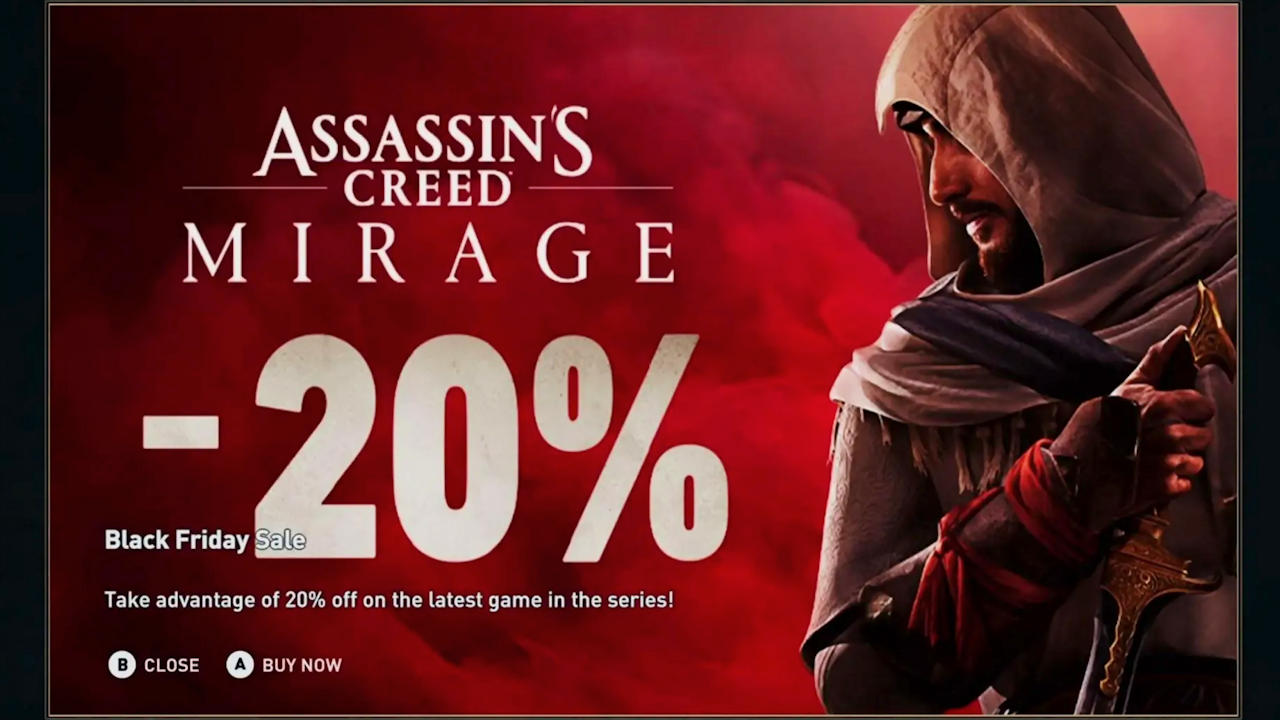
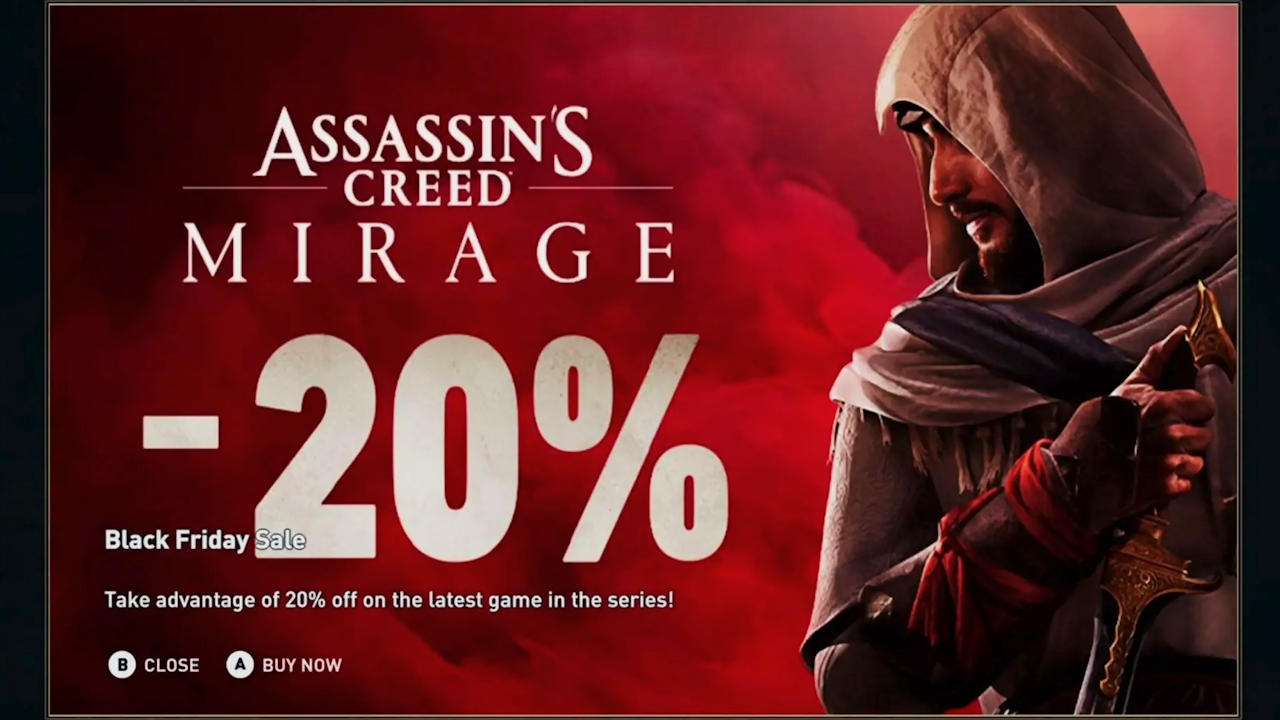
In-game ad for Assassin’s Creed Mirage (2023). According to Ubisoft, the pop-up was a technical error—I have my doubts.
Yes, I can already see you reaching for the counterargument: “That doesn’t apply to every genre. In sports games, for example, real ads on boards, cars and clothing actually make things feel more authentic.” That’s a fair point, but popular sports like football, Formula 1, tennis, baseball and American football have been commercialized to death. Every damn square inch of free space on athletes and sports equipment is now covered in advertising junk.
Entire stadiums and events carry brand names, coaches get drenched in sponsor products like mayo (Duke’s Mayo Bowl), NASCAR cars are billboards on wheels, and virtual pitch-side ads show personalized offers. To me, that’s already full-blown ad madness under stadium lights—and honestly, do you really want a virtual version of that too? Personally, I don’t need it.
As usual, it’s up to us whether we end up ankle-deep, knee-deep, waist-deep or fully submerged in advertising. Advertisers know they annoy the hell out of people. However, they also know what Bain & Company’s Gaming Report 2025 found about the effectiveness of ads.
After all, 46 percent of gamers said that in-game advertising had already prompted them to make purchases. Well then. Annoyed or not, advertising sometimes does hit its target. And that’s why promoters keep poking at our psychological weak spots until they get what they want. Only then do those leeches drop off.
Against AI-native games, advertising is an own goal
Business thinkers like Matthew Ball have another problem besides their target audience’s very limited tolerance for ads. I’m talking, of course, about a future competitor—or possibly even the new landlord of the AAA space: generative AI.
Okay: Someone like Matthew Ball obviously has quarterly targets, budgets and existing structures to protect. And people like him would never publicly admit weakness—not with share prices and investors watching—meaning they won’t openly spell out the looming competition from artificial intelligence. No, the Matthew Balls of this world know exactly what the near future has in store for their companies. But what makes these gentlemen think the way out of the crisis runs through large-scale in-game advertising?
Of course, partly ad-funded game access plays on many gamers’ absolute hunger to play specific titles. How much advertising would a GTA fan stomach just to play the looming industry monster that is GTA 6? The answer is probably as obvious as it is creepy. Away from GTA mania and other giant brands, however, tolerance drops, which turns the “right” dosage of advertising into a balancing act. Prominently placed ads in games also damage the image of publishers and developers.
Triple-A needs real arguments
Against that backdrop, AI-native games are lining up their attack. By that I also mean increasingly powerful engines that throw live AI-generated adventures onto the screen. I have very little doubt left that AI will soon cobble together a frighteningly large share of what currently keeps entire studio buildings humming. I go into that in more detail in this article. And a certain Xbox CSO is basically saying: we should pump games full of ads.
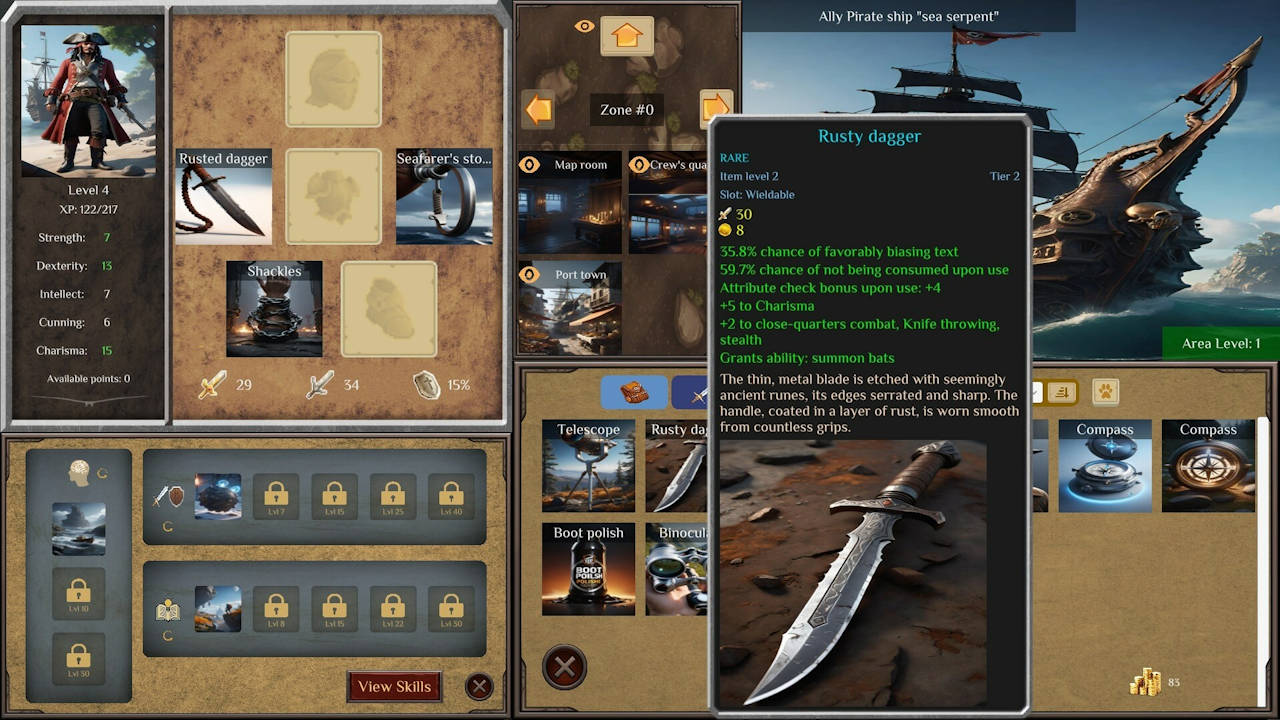
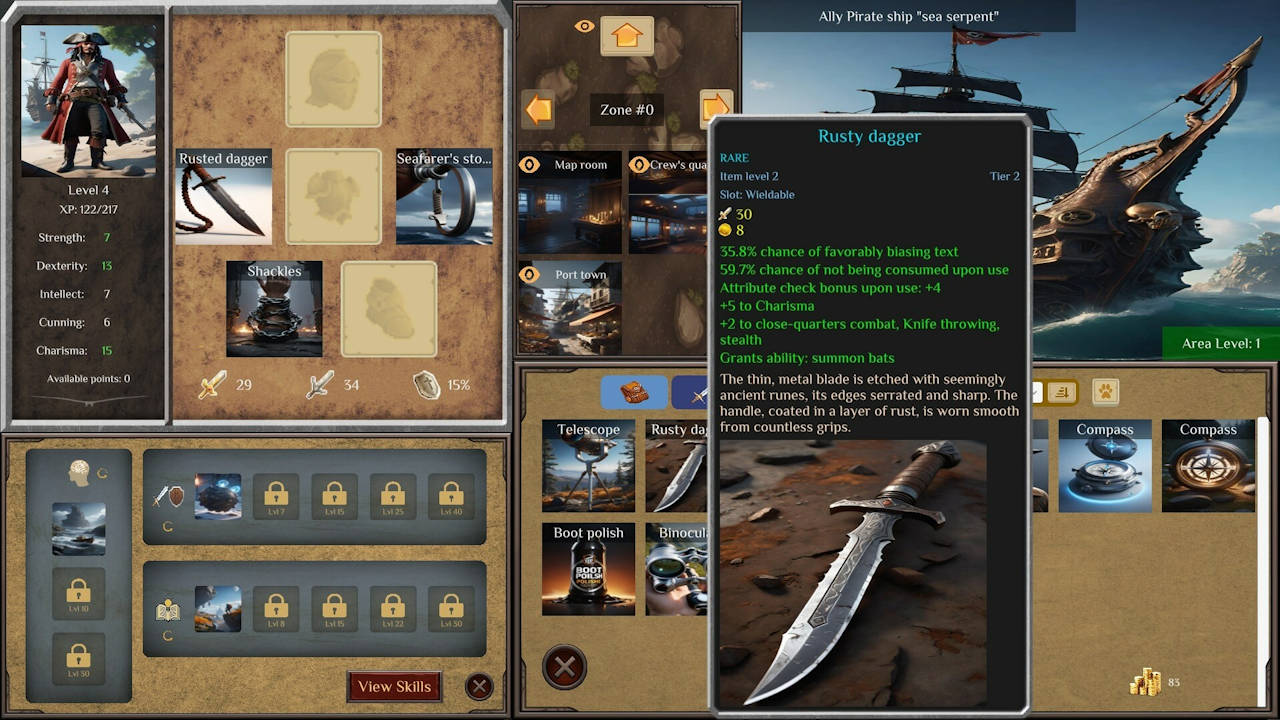
AI Roguelite already shows how AI can mash together text, images and game mechanics live into RPG-like adventures.
I think AAA studios need to offer good arguments if they want to survive the scenario I’ve sketched out. Triple-A is vulnerable to AI because so much of it has become formulaic; generative AI can churn out generic content with zero fuss. Artificial intelligence also massively lowers the barrier to entry for small teams—before long, even a few garage devs will, in principle, be able to build large and complex games.
The getting-used-to-it effect shouldn’t be underestimated either: players may soon prefer personalized, generated adventures over human-made ones. I’ve actually experienced a hint of that myself—already, right here in the present. So if the spreadsheet disciples can’t come up with anything better, I can see this next big in-game advertising offensive backfiring badly. At the latest, once AIs start spitting out solid 3D worlds with gripping stories. And I don’t think that’s very far away.
Advertising answers the question of how AAA can squeeze even more money out of players. AI asks the far more uncomfortable question: what do players still need AAA for?

Read next:

Comments