
Gaming without battle passes.
Takes without paywalls.
And stories without reposts.
Consoles Aren’t Dead — But Their Best Arguments Are Fading
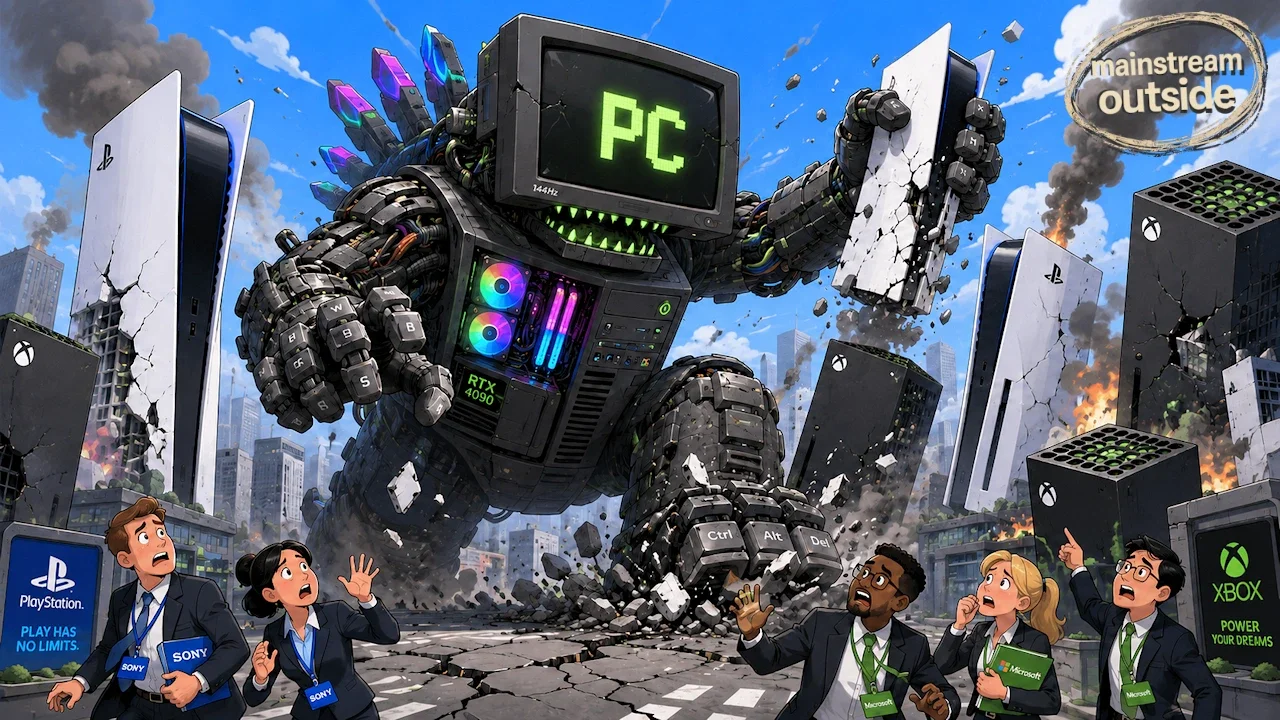
I always thought the “war” between console players and PC gamers was ridiculous, because for decades I felt perfectly at home on both sides. Now, though, the PC is about to win that battle — without even lifting a finger.
Not long ago, Sony announced that, starting September 1, 551 StudioCanal movies and series will no longer be playable or downloadable in the United Kingdom. That little piece of news immediately sent gamer tempers boiling over — and inspired me to write a longer article. But Sony didn’t stop there. A little later, the PlayStation maker also announced that, from January 2028, it no longer plans to produce physical discs for new PlayStation games. New titles will then be released digitally only — even at retail.
That is a pretty hefty blow, especially for PlayStation owners who see one of the machine’s biggest advantages in the ability to buy games physically. In other words: to own a disc whose data remains available for installation whenever they need it. Or simply to hold a nicely packaged Blu-ray in their hands, one they can put on a shelf, admire like a tiny shrine to consumer rights, or sell used later. Yes, a PlayStation did — and still does — have its advantages.
Now, however, it very much looks as if this era of gaming — the era of ownership — is slowly coming to an end. Because anyone who can count to two knows that Microsoft will very probably follow Sony’s example. And Nintendo? For a while, the Japanese company could present itself as the savior of physical media with its game cards.
In the light and shadow of ongoing digitalization, however, producing those game cards probably won’t get any cheaper in the future. At some point, even Nintendo may say: “Mate, these little card things are eating into our margins. Time to pull the plug.” So we might as well start preparing our nostalgic ownership stories now, ready for the armchair years when we’re surrounded by grandchildren who will never believe any of it.
My PS5 knows exactly one game
Against that backdrop, consoles — whether PlayStation 5, Xbox Series X/S or Switch 2 — no longer give me much of a reason to buy games for them. Logically, that also means I don’t feel much need to buy another console in the future. PS6, Switch 3? Sorry, Sony and Nintendo, but you can keep them. And Xboxes, well; to me, they have always existed somewhere out in the meaningless void of the Who-Cares Universe.
But hey: as a former hybrid creature made of both PC and console gaming, I find that sad. I find it sad that my PS5 only managed to convince me to buy one single game for it: Gran Turismo 7. Every other title that looked tasty ended up on my PC. Accordingly, the poor PlayStation has been switched on exactly once in the last nine months — because I accidentally touched a button on the DualSense controller. 🙂
My Switch library looks a little healthier than Sony’s bookend, but even Nintendo’s hybrid couldn’t talk me into buying a Switch 2. Basically, the thing is only sitting here because of Zelda: Breath of the Wild and Tears of the Kingdom. Switch owners know the phenomenon.
So why exactly do my consoles attract more dust than attention these days? There are several solid reasons, and one of them reaches all the way back to the era of aggressively loud mullets and even louder shoulder pads. You see, I am not a “native” PC player. My first gaming device was a console: the Magnavox Odyssey 2. If you don’t know it, imagine a shameless knockoff of Atari’s famous VCS 2600.
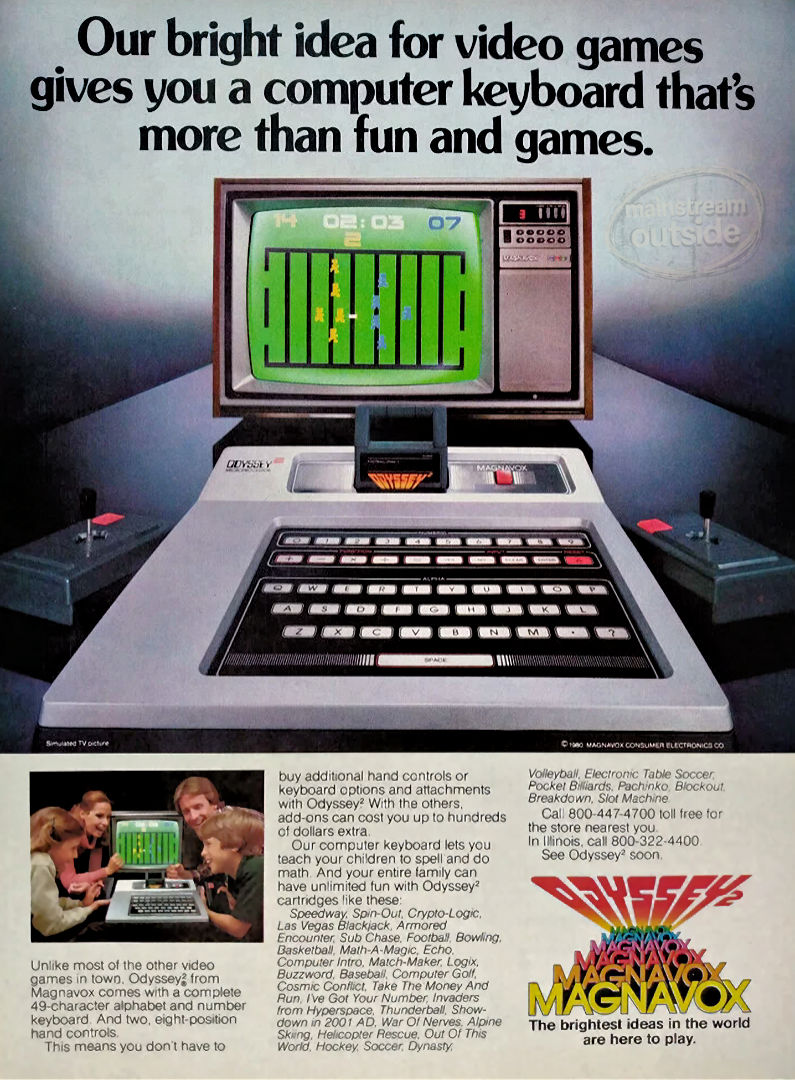
An old print ad for the Magnavox Odyssey 2.
But imitation or not: its often sub-4-kilobyte games were available only for that box. Of course, many of them were clones (K.C. Munchkin = Pac-Man, Blockout / Breakdown = Breakout, Alien Invaders = Space Invaders), but there were also good reinterpretations and originals. Either way, the Odyssey 2 reached a mighty 100 percent exclusivity rate — a mark that became increasingly rare afterwards.
Console exclusives today: Watson, fetch the magnifying glass
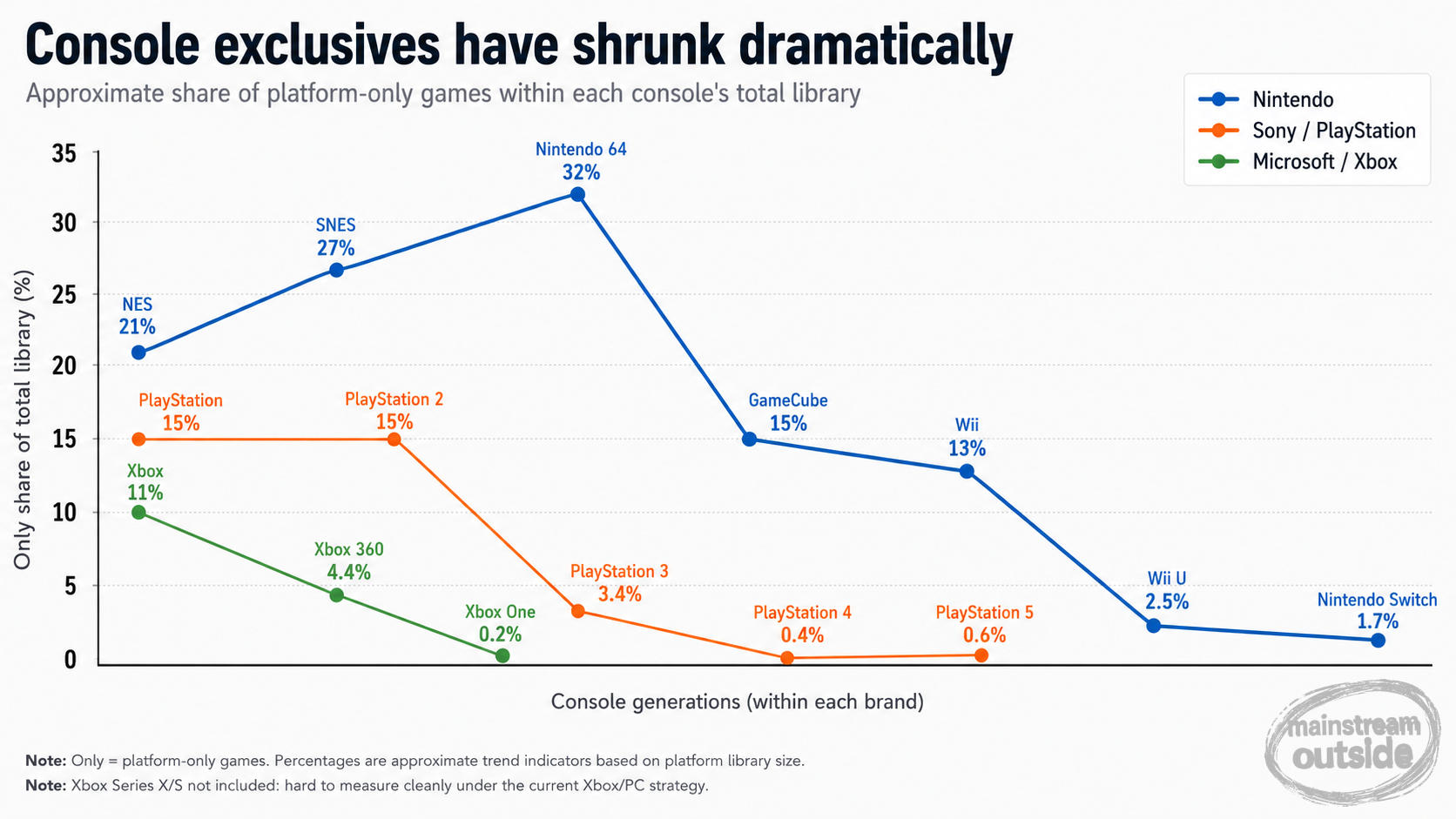
Being the curious little truffle pig that I am, I wanted to know how the ratio between exclusive and non-exclusive games on consoles has changed over the decades. I was at least able to dig up rough data — starting with the Nintendo Entertainment System, the PlayStation and the Xbox. I’ll let you look at the results first, without too much commentary. The following applies:
Only = exclusive game
Only share = share of the total library in %
Quantitative development of console exclusives at Sony, Nintendo and Microsoft across several decades.
Microsoft
- Xbox: Only 112, total 1,042, Only share approx. 11%
- Xbox 360: Only approx. 221, total 4,992, Only share approx. 4.4%
- Xbox One: Only 17, total 8,958, Only share approx. 0.2%
- Xbox Series X/S: Hard to measure cleanly
Nintendo
- NES: Only approx. 340, total approx. 1,622, Only share approx. 21%
- SNES: Only approx. 356, total approx. 1,300, Only share approx. 27%
- Nintendo 64: Only 124, total 389, Only share approx. 32%
- GameCube: Only 92, total 630, Only share approx. 15%
- Wii: Only approx. 332, total 2,621, Only share approx. 13%
- Wii U: Only 35, total 1,388, Only share approx. 2.5%
- Nintendo Switch: Only approx. 221, total 13,323, Only share approx. 1.7%
Sony
- PlayStation: Only approx. 472, total 3,220, Only share approx. 15%
- PlayStation 2: Only approx. 525, total 3,482, Only share approx. 15%
- PlayStation 3: Only 173, total 5,156, Only share approx. 3.4%
- PlayStation 4: Only 49, total approx. 12,106, Only share approx. 0.4%
- PlayStation 5: Only 25, total 4,241, Only share approx. 0.6%
That’s pretty clear, isn’t it? Across several generations, Nintendo was the leader in exclusive games — with the highest Only share of around 32 percent on the N64. By contrast, the share of exclusive games on the Switch is only about 1.7 percent.
Second place among the trio goes to Sony, with an Only share of roughly 15 percent on the first PlayStation; its successor reached the same value. Today, things look comparatively thin: only an estimated 0.6 percent of all PS5 games are exclusives.
And Microsoft? Well, between late 2001 and late 2005, the company tried its luck with an exclusivity rate of around 11 percent. The last numbers that can be measured cleanly show the Xbox One with an extremely slim Only share of about 0.2 percent.
Source and methodology note: Total platform library sizes are based mainly on MobyGames listings. The “Only” figures come from platform-specific “Only games” categories, primarily on Wikipedia. The percentages were calculated from those two figures. These numbers should be read as a trend indicator, not as a perfect academic dataset: databases differ, older regional releases are messy, and later ports, remasters or digital re-releases can change whether a game still counts as truly exclusive.
Last checked: July 6, 2026.
Last checked: July 6, 2026.
I miss the old head-to-head race between PCs and consoles
That wipes out one of the strongest console arguments for me: exclusivity. But there is something else I miss even more: the feeling that consoles and PCs were standing nose to nose, snarling: “I can do this better than you.” Yes. Those head-to-head races really did happen until about 20 years ago, and I was there for them.
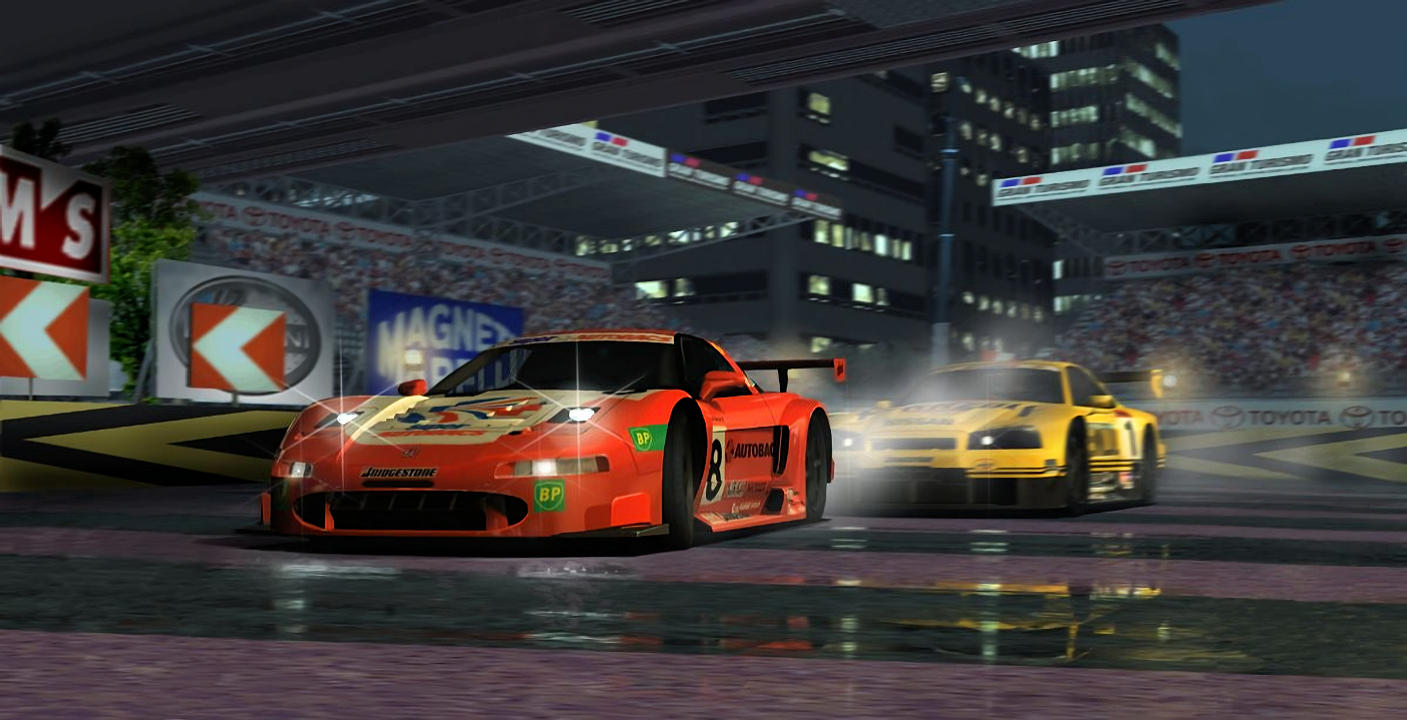
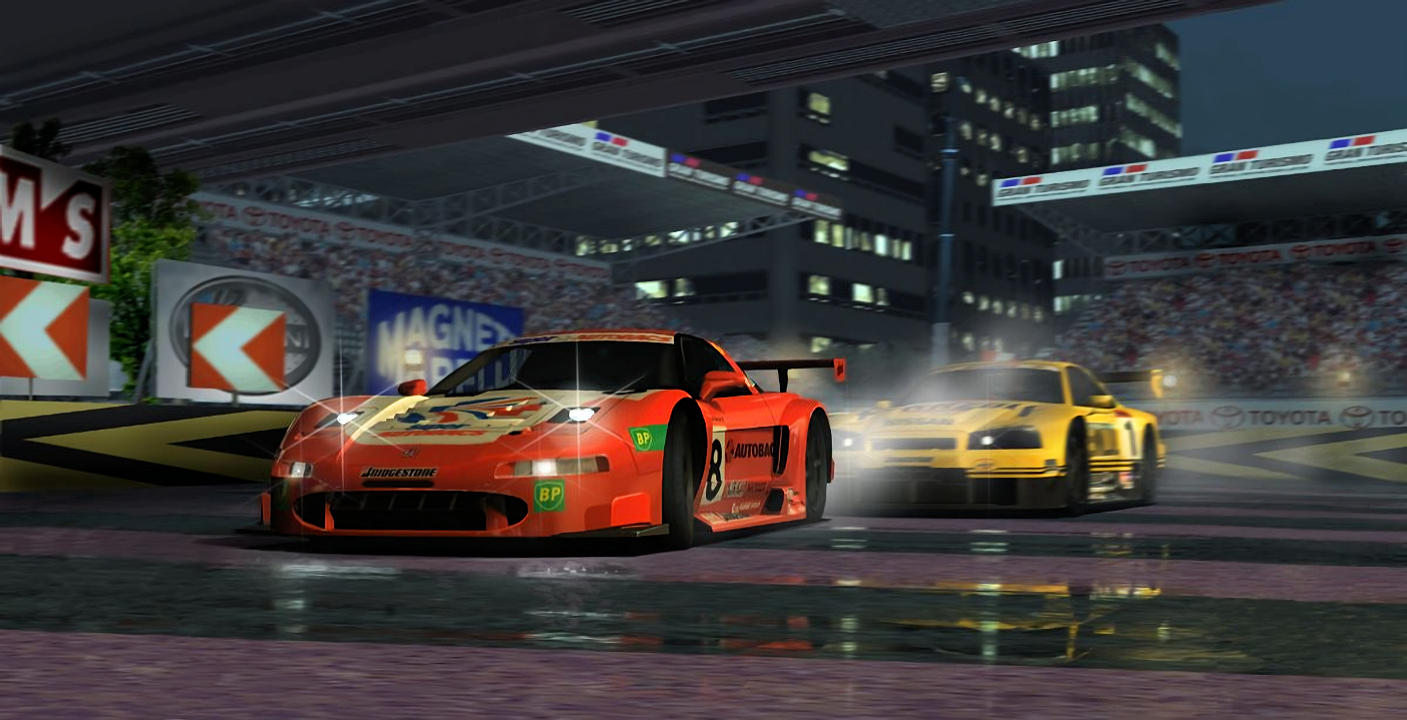
By the time the PS2 moved into my little hardware zoo, I regularly had amazed — and sometimes slightly jealous — PC gamers sitting next to me. One of the reasons was Gran Turismo 3: A-Spec, released in 2001. PC players in this genre could only dream of a presentation and technology like that. Despite graphics that looked incredibly realistic by the standards of the time, GT3 ran at 60 FPS without visible slowdowns. In other words: it was a proper system seller, and it was one of my first PS2 games.
In the racing game sector, Gran Turismo 3: A-Spec was the benchmark for years.
Silent Hill 2 on Sony’s console was another real looker. Konami’s diseased horror classic had this foggy, soft, grimy look that was essential to its dense, unsettling atmosphere. On PC, the fan-made Enhanced Edition only added things like fog, soft shadows, post-processing and improved audio quality 19 years later.
There are many examples like that. The GameCube and Wii versions of Resident Evil 4 were clearly superior to the PC port in several ways; Shenmue on Dreamcast delivered the classic “How is something like this running on a console?” moment; and Devil May Cry 3 (PS2) as well as Saints Row 2 (Xbox 360 / PS3) absolutely crushed their PC counterparts when it came to playability.
Console version didn’t always mean PC version
Technically speaking, an average gaming PC obviously had more under the hood than the cost-optimized boxes under the TV. Back then, console developers solved that problem through things like simplified level geometry and the removal of oversized enemies — or by creating entirely new levels optimized for the respective hardware. In a way, studios of the time turned necessity into a virtue, because, strangely enough, some cut-down console versions actually surpassed the PC original in terms of atmosphere.
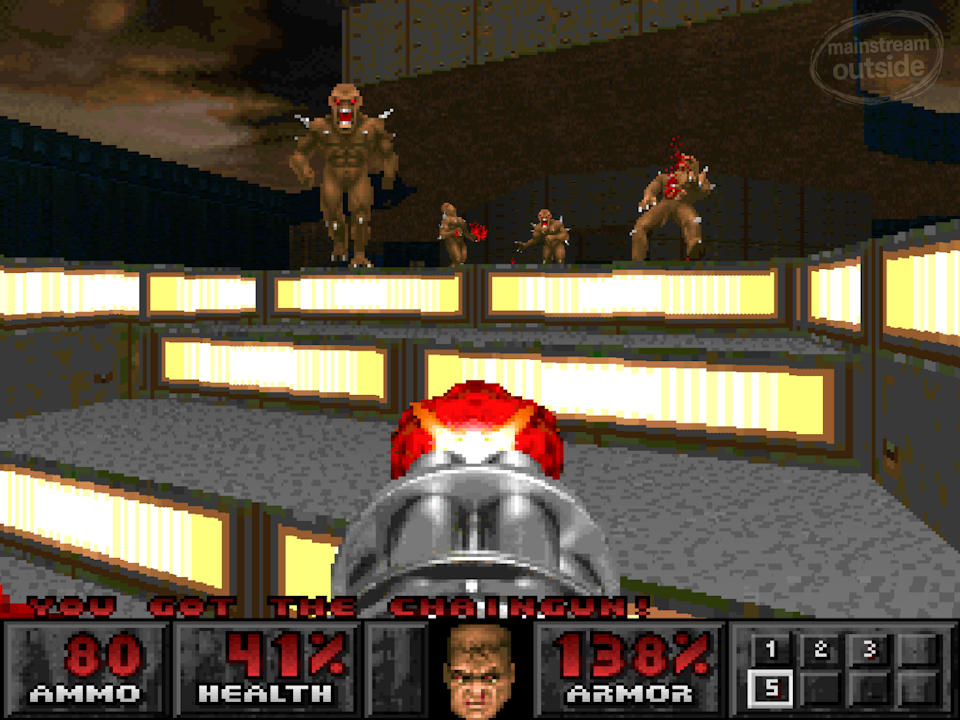
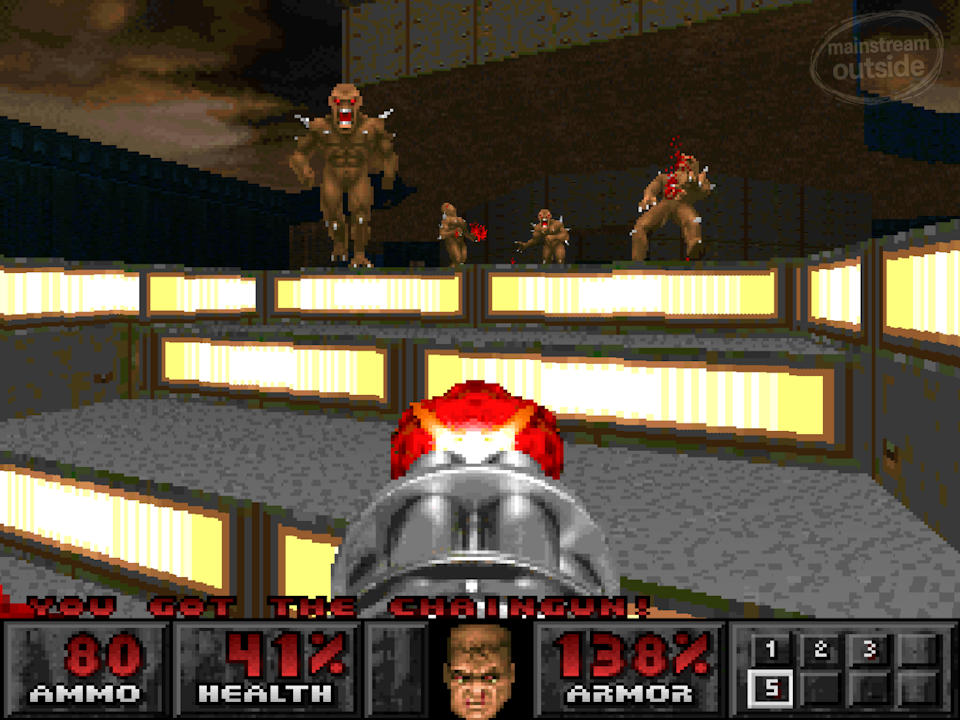
A good example of console added value born from limitation was id Software’s Doom series. On the first PlayStation, Doom, Doom II and Final Doom used colored lighting, dark ambient soundtracks, reverb and other effects to create a much stronger horror atmosphere. On top of that, the “PS1 Dooms” served up several exclusive levels and plenty of redesigned maps. So if you had already sent every hell soldier back to Satan on PC, the PS1 versions still had more demon-stomping to offer.
Dark, dark stuff: classic Doom on PlayStation.
And not only there. Doom 64 went a step further on the N64 by officially following up Doom II as a sequel. On the same machine, Quake II also offered a different technical foundation, new levels, real-time lighting effects and an exclusive soundtrack. Duke Nukem 64 and Command & Conquer likewise differed significantly from their PC versions.
Pay more, get less
So where does that leave us in 2026? What is actually left of the good old consoles? Even if I rub my temples in full thinker pose and meditate on the question for another 30 minutes, I mostly see disadvantages:
- Big new console releases are now often more expensive than their PC counterparts
- Current consoles often have to visibly sacrifice resolution, detail or ray tracing to reach 60 frames per second
- PC versions usually look better than console versions if you have the right hardware
- Mods on consoles are generally heavily limited and curated
- Multiplayer features often require paid subscriptions
Sure, consoles are easier to use than PCs and spare their owners the sometimes annoying business of fiddling with settings. But once you know that screen resolution, ray tracing, reflections, shadows and anti-aliasing are usually the main things that make a PC wave the white flag, you can get where you need to be pretty quickly on PC, too.
But, but ... the high cost? Well, if you build a new PC outside of the RAMageddon, a good setup won’t cost you that much more than what you will probably pay for the next console generation. The 1,000 mark has already been broken. It doesn’t always have to be a NASA machine. Even with a “lowly” GeForce RTX 3060, you can play a pretty Assassin’s Creed Shadows just fine.
The bitter part is this: consoles haven’t stopped being useful. They are just becoming less useful to me as a player — and more useful to those who want to keep me inside the most closed ecosystem possible. By now, consoles mostly offer advantages to manufacturers (more control), developers (a fixed hardware base) and publishers (a relatively orderly market). Sony and Nintendo in particular benefit from their closed purchasing environments. That way, they create fewer exits, less ownership, less price freedom, more subscriptions, more store control and more platform fees.
Add to that the fact that piracy on PS5 and the like is far less practical for everyday users — and that console players, compared with PC players, are more used to paying full price for games. No wonder publishers love the console segment. After all, where else can customers be herded so conveniently down the company’s own store corridor?
Platform loyalty hurts all gamers in the end
Maybe you mainly play on console and, despite my bio, now think this article is a distorted vote for the PC. So let me make one thing clear in closing: I belong to only one camp, and that is the camp of gamers. That means I care first and foremost about the state of our hobby, which has kept getting worse ever since suits in software companies started projecting growth curves onto office walls.
We should not forget that gaming was not originally about reach, retention or damn stock prices. Developers wanted — and many in the indie scene still want — to turn good ideas into reality in order to entertain other players and themselves. Game makers used to care little about industry standards, because they weren’t trying to please “everyone” in the first place. For those guys and girls, it was more about self-expression, which also made the gaming landscape more original and diverse.
Unfortunately, criticizing a team is always tricky. Because once we humans have picked a team — in this case Team PC or Team Console — we like to declare it the best team in the world and defend it with tooth and nail. But when your own team keeps treating its fans worse and worse — in terms of freedom, ownership and value — then maybe, at some point, it’s time to question your loyalty.

Read next:
Comments