

Gaming without battle passes.
Takes without paywalls.
And stories without reposts.

Interview with Soul Shell Games: “AI Remains a Tool That Depends Entirely on Human Expertise”

My Summer Love: Memories, released in June, is one of the most polished and immersive AI-powered dating sims to hit PC so far. In this exclusive interview, developer Jorge Zapotecatl talks about his indie studio Soul Shell, Korea, Blade Runner and what AI can do—beyond generating surreal images for online articles.
I’m going to be unusually open here, and for good reason. Why? Hang on, one quick disclaimer first: I’m one of those terrible people who start rolling their eyes the moment a movie gets romantic. You know the drill: sweet nothings, kissy-kissy. Dating sims, though? Bring ’em on. Especially when—thanks to LLMs—they let you talk as freely as My Summer Love: Memories does (Steam page).
When I discovered this Korea-set FMV game a few months ago, that freedom was exactly what drew me in. But something else stood out even more: the game had a "soul." Yes, a palpable soul in a game that was quite deliberately made with heavy use of AI. Sounds paradoxical? It isn’t, I promise. Then I came across a few unusually candid comments from the developer on the game’s Steam forum, and that settled it: I wanted to talk to this guy for our readers.
That guy is Jorge Zapotecatl, founder of indie studio Soul Shell and creator of My Summer Love: Memories. And the reason for my unusually personal introduction is the equally candid and personal interview I had the chance to conduct with the Mexican researcher via email. We didn’t just talk about games, ChatGPT and DLSS 5—we also talked about what it’s like to develop a game when you barely have the energy to do it.
The Story Behind Soul Shell
MO: First things first: could you briefly introduce yourself to our readers?
Jorge: Of course. My name is Jorge Zapotecatl, I'm originally from Mexico, and I currently work independently as a video game developer. I specialize in software development and have a strong interest in artificial intelligence and artificial life. For these reasons, I founded my independent studio, Soul Shell, in 2023. The studio focuses on applying artificial intelligence to explore and experiment with new gaming experiences that are possible today.
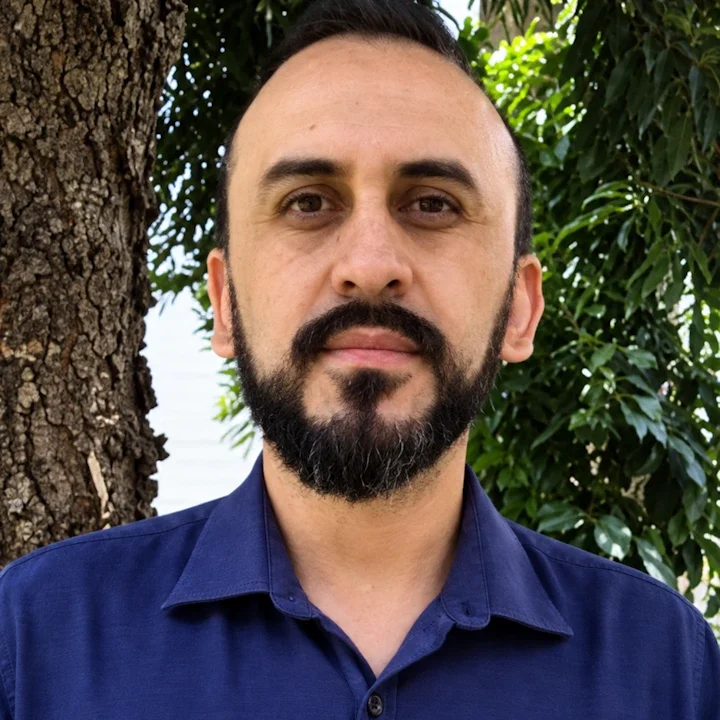
MO: Becoming a game developer was already your childhood dream. What sparked that dream?
Jorge: I grew up in a small rural town in Mexico, in a family of farmers. When I was eight, the first arcade cabinets (Mario Bros. and Yie Ar Kung-Fu) arrived at the local shops; seeing the characters on screen react to the joystick felt like pure magic. In 1992, my brothers and I saved up for a Super Nintendo. Seeing Mario and Yoshi on our TV was one of the happiest moments I ever shared with my brothers. However, I had to play in secret. I was a terrible student who hated math, so my mother wouldn't let me play, and my father would punish me harshly for my bad grades.
Then Street Fighter II came out. Its music and characters completely blew my mind, and that was when the dream of creating them was born. But life soon became difficult: my father passed away, and the 1994 economic crisis hit Mexico. During those turbulent years, video games and soccer became my refuge; Mega Man X taught me the value of persistence.
By the time I finished high school, there were no game development schools in Mexico, so I chose to study Computer Systems Engineering because I knew programmers made games. In a way, video games reconciled me with math. I taught myself algebra and calculus, and I fell in love with code from my very first 'Hello World.' Later on, I discovered artificial intelligence and became fascinated with neural networks.
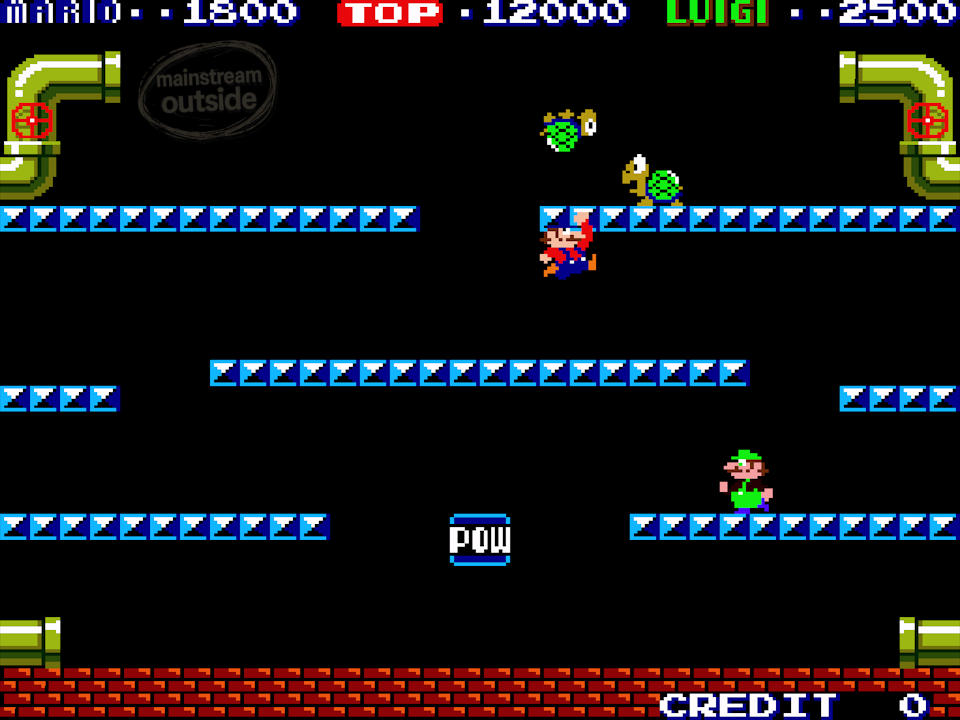

Super Mario Bros. in its arcade incarnation and—Pow! Smack! Clang!—the classic SNES fighting game Street Fighter II.
MO: Before Soul Shell, had you already found a way to live your dream? If not, what held you back?
Jorge: My dream was always hampered by a classic obstacle: a lack of time. I was completely overwhelmed, balancing my full-time job as a software developer with my academic responsibilities. I could only steal a few hours for development at night and on weekends. My first serious approach to game development began as a personal AI challenge. Inspired by Blade Runner and Ghost in the Shell, I wanted to break away from rigid dialogue trees and create characters with human-like interactions.
In 2020, I started developing More than Words in Unreal Engine 4, a game about an android that processed natural language. I started with a basic bot based on ELIZA, and after reading the paper 'Attention Is All You Need,' I experimented with GPT-2 and GPT-Neo. It was a technical headache; I had to program custom Python workarounds to serialize the models so they could run in C++. As a historical footnote, I launched the game on itch.io on November 22, 2022—exactly one week before the release of ChatGPT!
However, that excessive workload took a brutal toll on me. After releasing the game on Steam in August 2023, my health collapsed. I went through the darkest period of my life, completely bedridden due to intense pain and carrying the psychological burden of seeing my family suffer. During those difficult moments, I reevaluated my life and realized how precious it is. My only real regret was not having dedicated enough time to game development, which it truly deserved. I promised myself that if God allowed me to carry on, I would leave everything behind to dedicate myself entirely to my true dream. That is how Soul Shell was born.
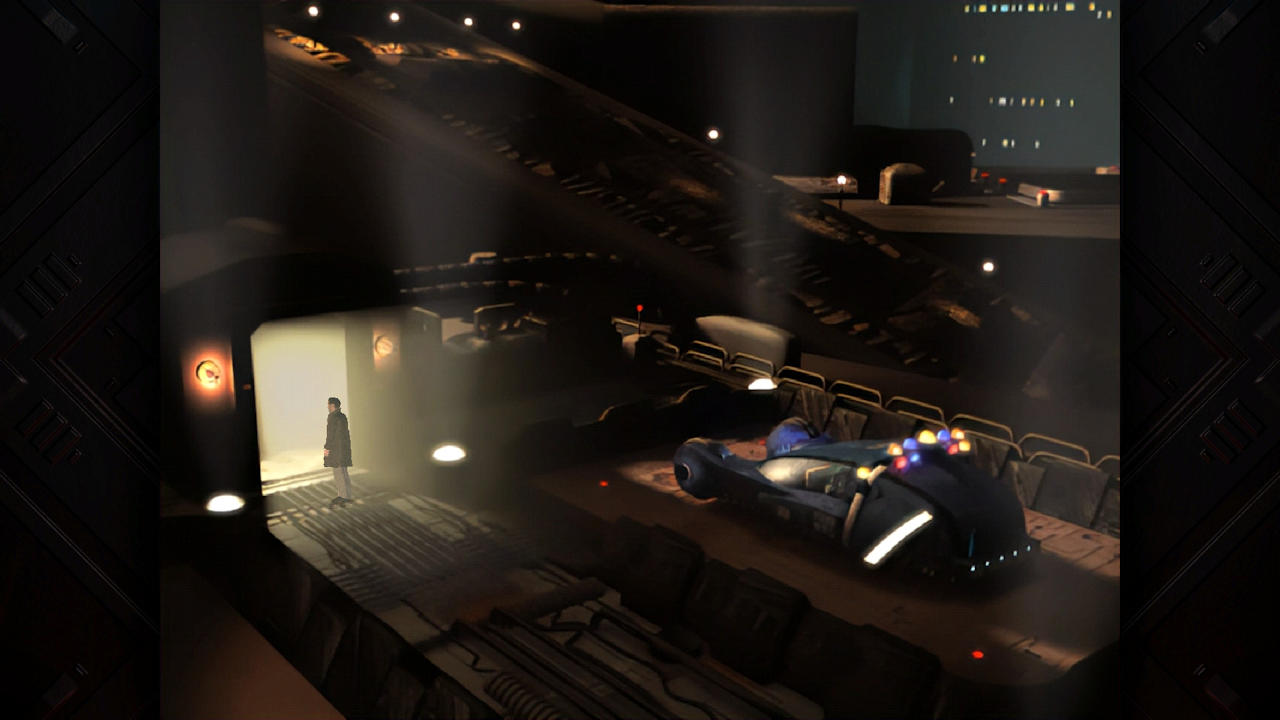
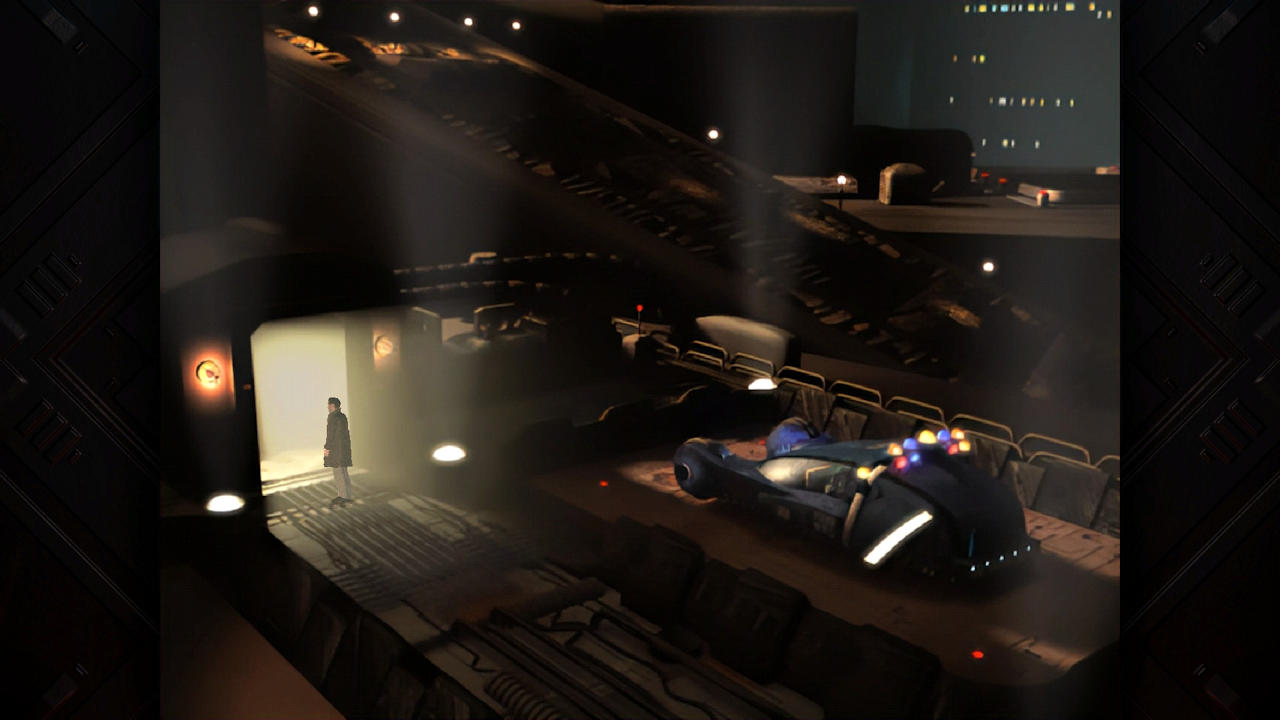
Blade Runner helped inspire the path that eventually led to My Summer Love: Memories—and became a video game itself back in 1997. Pictured here is the Enhanced Edition, released in 2022.
From Blade Runner to Kang Yuna
MO: That sounds as if you had to develop your current game, My Summer Love: Memories, under very difficult circumstances at times. How did you manage to keep the development going anyway?
Jorge: Yes, that's true. Shortly before starting development on My Summer Love: Memories, I was diagnosed with ulcerative colitis, a chronic inflammatory bowel disease. It’s a condition that drains a lot of your energy and can sometimes lead to depression, but my passion for doing what I love—programming and developing video games—has always prevailed.
Ultimately, the creative process of bringing your imagination to life is the most rewarding thing; it’s what keeps me motivated and gives my life so much meaning. Of course, family is also a massive support system. Being surrounded by the people you love drives you to achieve the best possible quality of life, no matter the circumstances.
MO: My Summer Love: Memories is a dating sim set in the 1990s. Originally, however, sci-fi classics like Blade Runner and Ghost in the Shell inspired you to create games with characters players can talk to almost like real people. Why did you choose a retro setting for My Summer Love instead of a sci-fi one?
Jorge: During the development of More Than Words (which remains my dream project), I realized it was too ambitious. The idea was to guide the android entirely through natural language, much like the Codec in Metal Gear Solid, offering complete conversational freedom. Players who tested those early mechanics immediately associated the interaction with a dating sim. Around the same time, upon upgrading to Unreal Engine 5 and experimenting with its Lumen lighting, I made artistic choices that shifted the cyberpunk atmosphere into something more Mediterranean and summery.
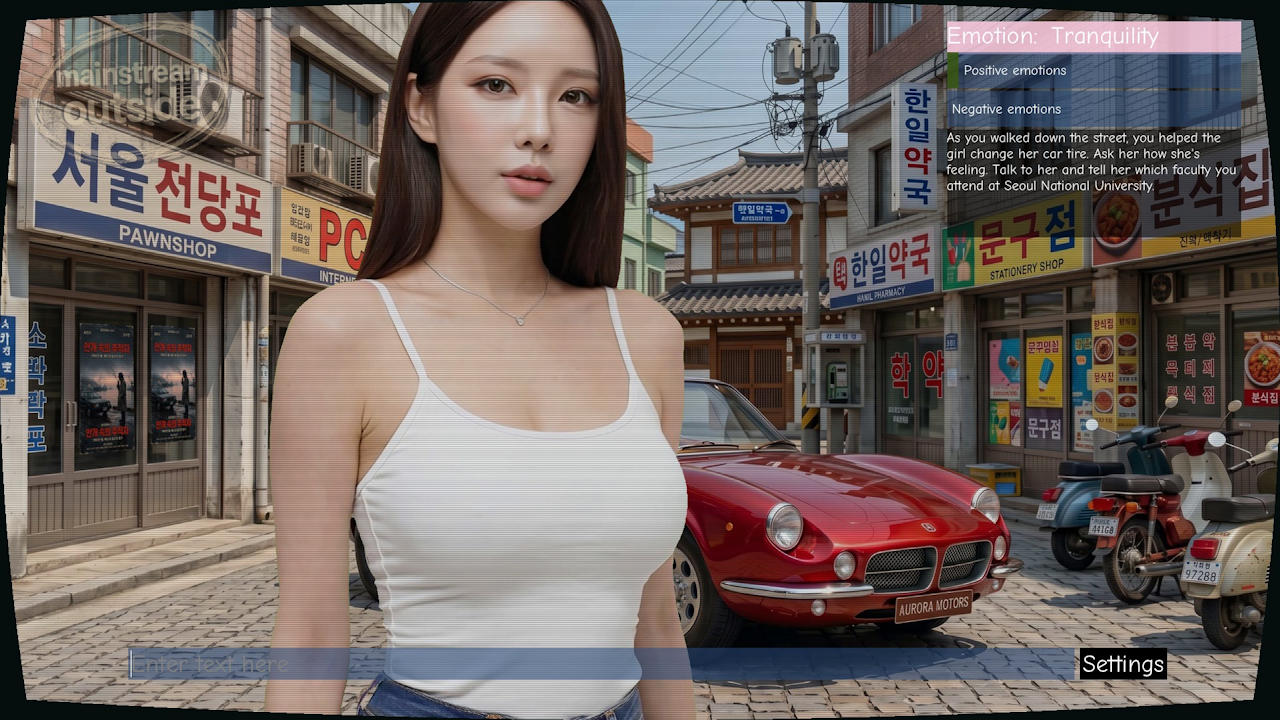
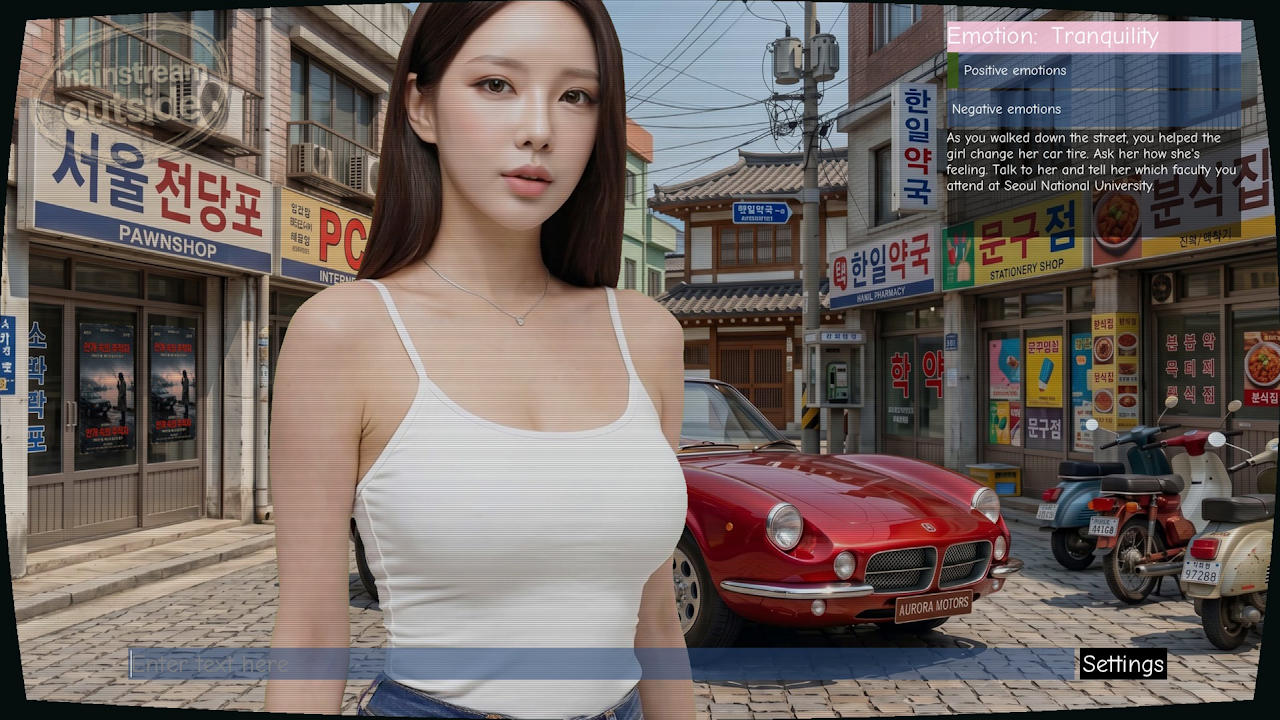
Mainstream Outside put My Summer Love: Memories through its paces. Read our full review here.
Realizing the project was drifting from its original course, I decided to put it on hold to process everything I had learned about LLMs and focus on a more compact, polished project. Since generative video AI was maturing rapidly, I chose to combine that technology with the dating sim concept players were already asking for. That’s when the idea of creating an FMV-style game from scratch clicked, giving life to My Summer Love: Memories.
Furthermore, while there are major Asian productions of romantic visual novels, I feel the genre isn’t currently taken seriously. Predefined dialogue options limit the experience of an 'authentic' romance, where the spontaneity of language is fundamental; choosing from a list removes the excitement. I am convinced that, with the latest advancements in AI, we can truly explore the romance genre and introduce groundbreaking mechanics to future games across any genre.
In My Summer Love: Memories, you have to impress a Korean student—which is easier said than done.
More Than Words Is a Long-Term Project
MO: Speaking of dream projects: Do you see More Than Words as a long-term project that you’ll keep returning to until it matches your original vision—or at least comes close?
Jorge: Absolutely! I consider the most complex aspect—specifically regarding the character's reasoning—to be quite advanced and already well covered thanks to Gemma 4. My plan is to release an FMV-style version of More Than Words with intermediate minigames in 2027. Just like with My Summer Love, I want to experiment with romantic interaction, but this time within a dystopian adventure context.
As for the 3D version, it will wait a bit longer. I need to evaluate which models best handle speech recognition and voice synthesis while maintaining solid performance, and also analyze whether Unreal Engine remains the best choice for the project. But one thing is certain: I will return to that dream sooner rather than later!
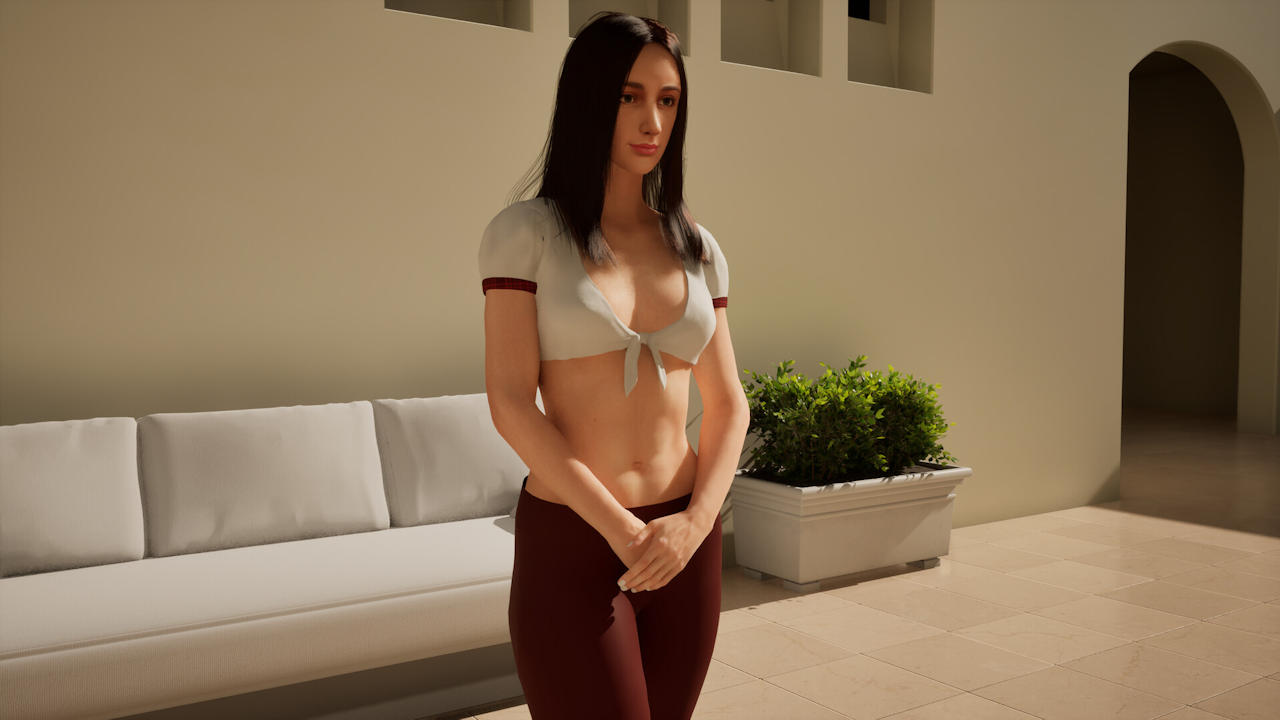
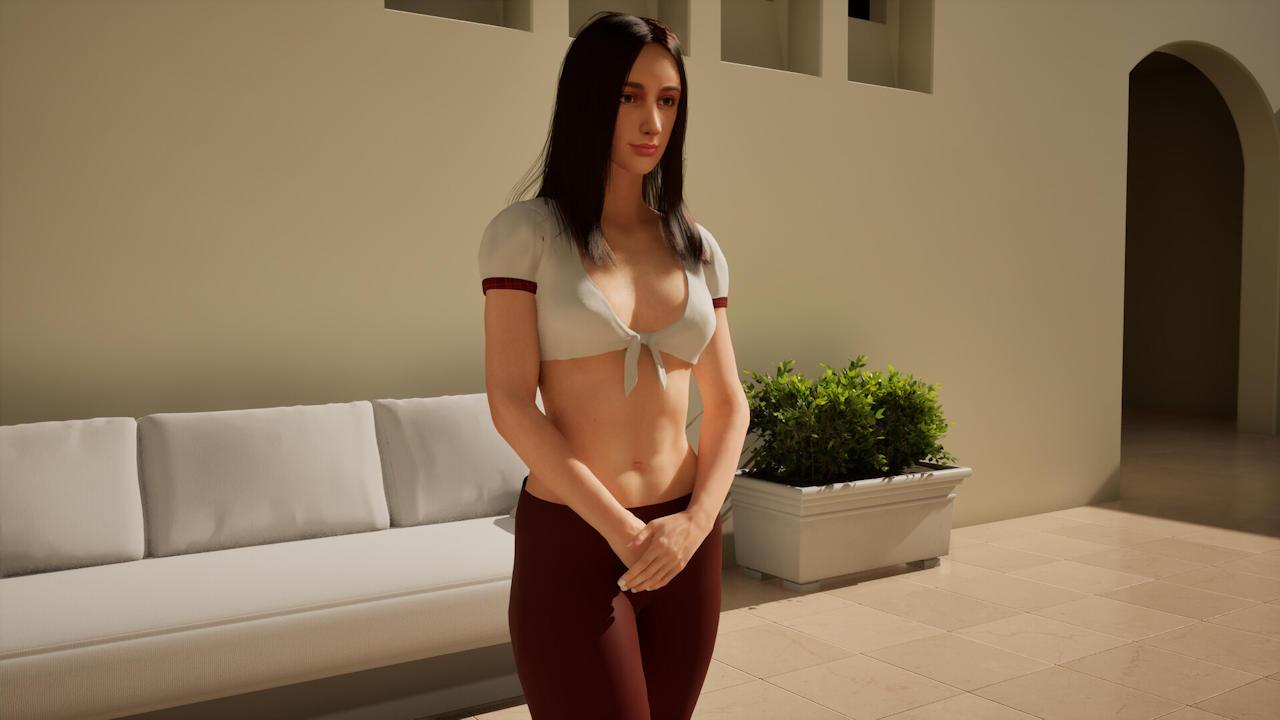
More Than Words also ventures into dating-sim territory, but unlike My Summer Love: Memories, it’s presented in 3D—and lets you flirt with an android.
MO: Even though the dating-sim direction of your games grew organically out of the development process, they can also offer something meaningful to people who are lonely. How important is that aspect to you?
Jorge: The main goal of My Summer Love: Memories is to provide a relaxing and nostalgic experience. If the game manages to make a positive and meaningful impact on someone, helping them deal with loneliness, then all the development effort will have been completely worth it. I don't intend for AI to replace real human connections, but I am aware that everyone's personal circumstances are complex and varied. Knowing that my work can offer a comforting space to someone in need is the ultimate reward.
Korea Gets Dramatic
MO: Back to My Summer Love: Memories for a moment. Another thing that stands out about it is its South Korean setting. Do you have a special connection to the country?
Jorge: As I mentioned, 2023 and 2024 were very difficult years for my health. I was bedridden for several months and had no energy to read or do anything that required even the slightest concentration. The best I could tolerate was watching Netflix series, which was much more relaxing. Korean dramas were my constant companion during those years. Because they're lighthearted and emotional, they were very helpful at that time. Also, one of my best friends is Korean. So, Korea is a country I'm very fond of.
MO: The game’s locations feel quite authentic to me. Did your Korean friend act as an advisor or help you make sure the setting felt authentic during development?
Jorge: No, actually. I'm quite an introvert and a bit of a loner by nature (though I consider myself very social when the time comes!). Unfortunately, due to some health and time constraints, I’ve been a bit disconnected from my friends lately. So the authenticity comes more from what I mentioned before: I watch a ton of Korean dramas and content! Hahaha. By the way, while discussing the game on Steam, I realized that it is also heavily influenced by Dostoevsky's White Nights—a bittersweet, melancholic romance novel that I loved reading several years ago.
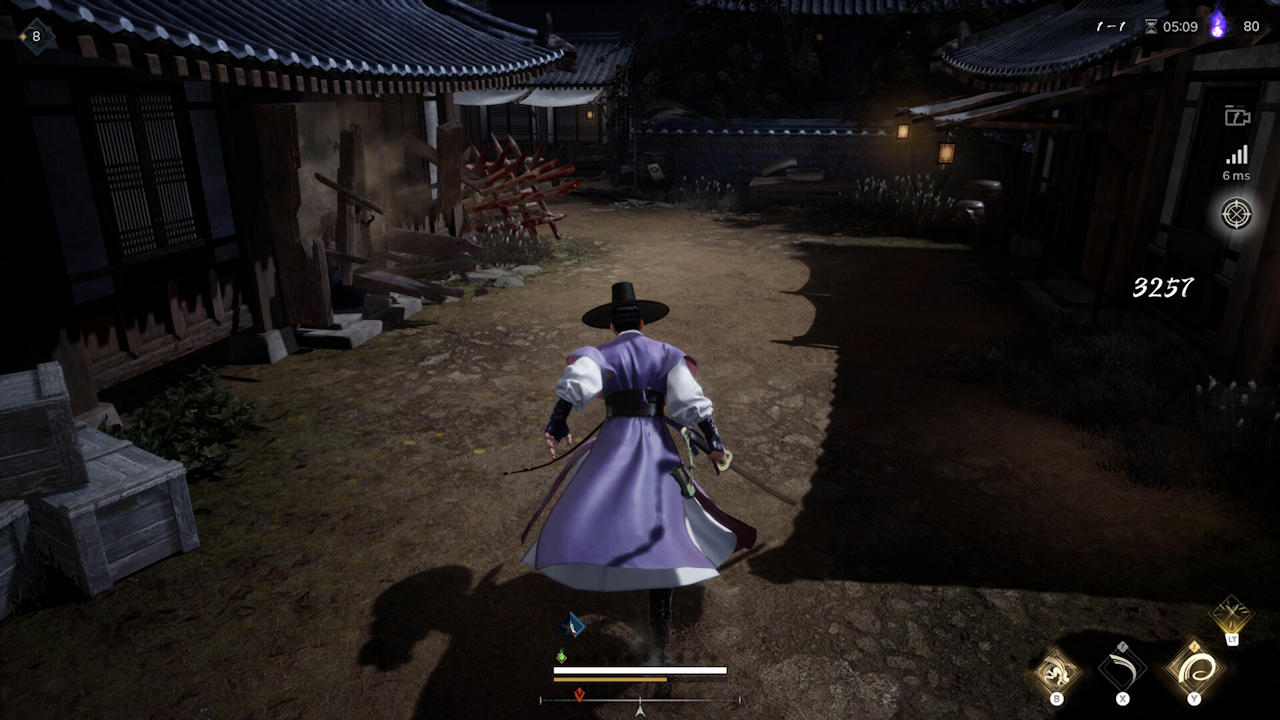
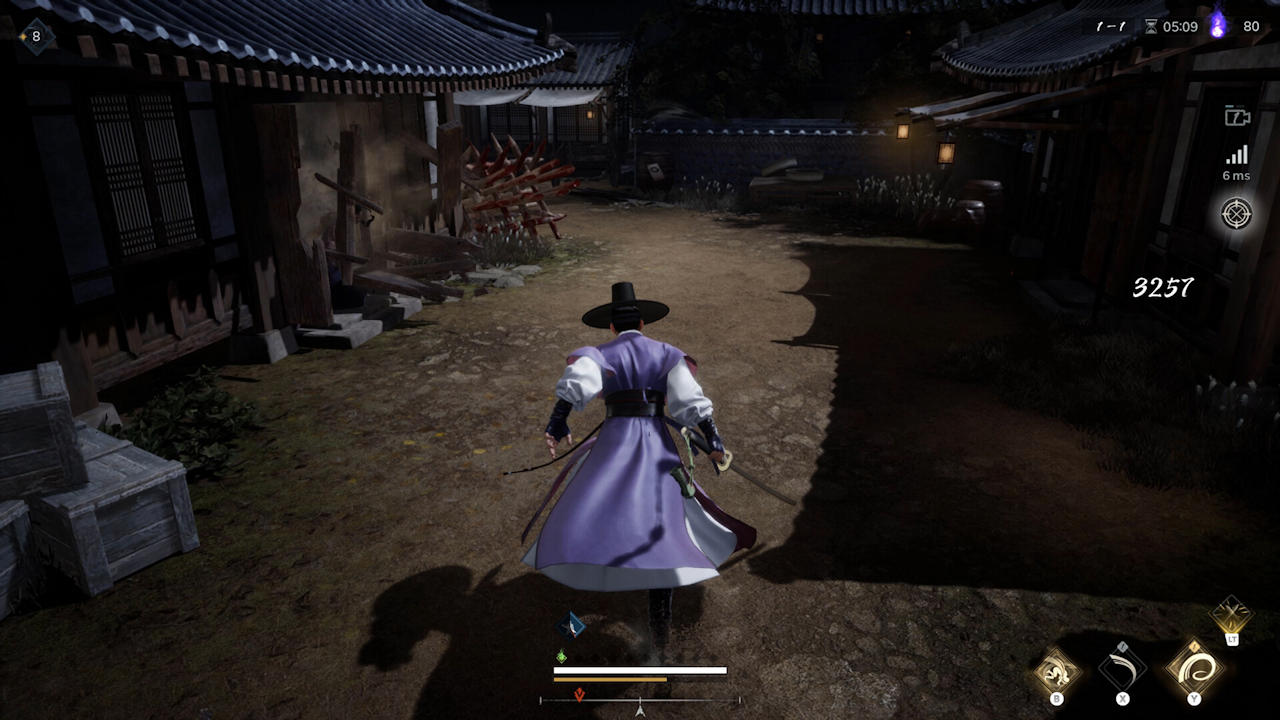
Speaking of Korean dramas: Netflix’s Kingdom became Kingdom: The Blood, but the game flopped dramatically and was pulled from sale in late 2024 amid pay-to-win criticism.
The Downsides and Potential of AI
MO: AI technology is developing at a remarkable pace and, as you’ve already said, opening up new possibilities for game development. Are there any developments already on the horizon that you think could influence future Soul Shell games?
Jorge: I find DLSS 5 technology incredibly promising. Making a character look realistic with traditional techniques without falling into the uncanny valley is extremely expensive, both in terms of development time and computational power—details like eye glints, hair strands, and skin textures are tough to perfect. I believe the future trend will be to generate the render using low-poly 3D models as the reference image, and then apply the final photorealistic finish using an AI filter like DLSS 5.
MO: AI has its downsides too, of course, and it is already playing a role in the wave of layoffs across the games industry. What do you think—could AI one day take over AAA game development entirely?
Jorge: Technological revolutions throughout history have initially faced resistance, partly because they have destroyed jobs and entire industries. However, history has shown us time and again that new opportunities eventually emerge, often yielding greater long-term benefits. While we can’t guarantee AI will follow the exact same path, we cannot ignore these historical precedents.
Right now, the entire industry is changing how it operates due to AI integration—even if some companies deny using it. Predicting the exact outcome is difficult, but my short-term forecast is that while large corporations will unfortunately continue to cut jobs, AI will simultaneously spark a wave of new indie studios. It levels the playing field by drastically lowering development costs across every stage of game creation.
From a technical standpoint, LLMs based on the Transformer architecture are already showing signs of hitting a ceiling; simply feeding them more training data is no longer making them significantly 'smarter.' While incredibly powerful, LLMs still require a skilled human hand to guide them: to accurately specify the problem to be solved, validate outputs, fix errors, and inject intent. AI remains a tool that depends entirely on human expertise, despite the overhyped nonsense some corporate CEOs like to spout.
Could an AI eventually create a AAA game on its own using a completely different, future architecture? Perhaps. But I don't see it happening anytime soon, and honestly, I’m not even sure it would make sense for the medium.
Could AI eventually take over game development entirely? Alex has explored that question in more detail here.
MO: Thanks a lot for answering my questions.

Read next:
Comments